

Colorado legislature wraps up tough budget year
Colorado lawmakers are wrapping up their work on Wednesday, closing out a year defined by the lack of fiscal flexibility, woes over Medicaid spending and a staccato of action on a host of issues, ranging from artificial regulation to a failed attempt to decriminalize prostitution.
For the second consecutive year, the Democratic‑controlled legislature confronted a budget deficit exceeding $1 billion.
The ongoing budget crisis spans multiple years. Lawmakers had already cut $1.2 billion from the 2025 budget, trimmed another $800 million during a special session, and made additional reductions this year. Those repeated cuts left little capacity to launch new programs or maintain existing services at their pace.
Of the more than 600 bills introduced this year, those with a fiscal note were mostly rejected or revised to decrease estimated costs.
Democrats argued that federal decisions under the Trump administration contributed to the state’s financial strain. Republicans countered that the shortfall stemmed from years of overspending and the failure by legislators make the hard decisions.
Ultimately, Gov. Jared Polis, serving his final year as governor, signed the $47 billion “long bill” into law.
Reflecting on the difficult process of balancing the budget, Republican Rep. Rick Taggart summed up the sentiment in a few blunt words: “Nobody won in this budget.”

Medicaid drive up Colorado costs
Medicaid has been a major driver of overspending in both the 2025–26 fiscal year and the upcoming state budget, largely due to higher-than-expected service use. The program, which provides health coverage for low‑income residents, is also facing allegations of waste, fraud, and abuse, and its leadership has been criticized for mismanagement.
As fraud investigations ramp up, the Joint Budget Committee had to make tough decisions on Medicaid. The committee also sponsored a bill in the 2026 session to establish a commission to review Medicaid spending.
Overall, the 2026 budget increased by $776 million, with an estimated $503 million from additional federal Medicaid funds.
Addressing the broader challenges in health care — especially within Medicaid, which ran $1 billion more than the budget last year — Polis said the state cannot sustain annual cost increases of at least 10%.
Legislators spare education from cuts
Although nearly every state program and service faced cuts, K–12 education funding remained largely intact.
Republican Sen. Barbara Kirkmeyer, who is running for her party’s nomination for governor, praised the Joint Budget Committee for fully funding K–12 education.
Meanwhile, Democrats advanced a ballot measure asking voters to give up more than $7,000 in Taxpayer’s Bill of Rights refunds over the next decade, with the redirected funds going to education.
Senate Bill 135 places a measure on the November ballot that would raise the TABOR cap by the full amount the state currently spends on K–12 education — about $4.5 billion.
A nonpartisan staff analysis estimates that the change could generate up to $9 billion over the first 10 years. However, only about 25% of that revenue would actually go to schools. The remaining 75% would flow into the state’s general fund, where lawmakers could allocate it for any purpose.

Legislators tackle prison overcrowding
As many state services, departments, and programs face budget cuts, the Colorado Department of Corrections may see an increase in funding to address a growing capacity crisis. While the budget currently has a placeholder for prisons, the final amount won’t be approved by the JBC until a later date.
For the 2026–27 budget, the Department of Corrections received authorization to add 941 beds for male inmates, though the locations for those beds have not yet been determined.
Polis requested funding for two new prisons, but the Joint Budget Committee rejected the proposal. Instead, the committee approved a placeholder allowing the department to contract for beds at two previously closed private prisons in Trinidad and Burlington.
With state prisons reaching capacity in 2024 and 2025, legislators also introduced three bills to address the problem.
Senate Bill 36 would require the state parole board to consider releasing more people when the prison system becomes overcrowded.
Senate Bill 158 would create a working group to develop recommendations for a long‑term corrections capacity management plan, incorporating input from affected parties. The bill also proposes changes to earned time, a provision that drew opposition from district attorneys.
The third measure, Senate Bill 159, would change how earned time is calculated for certain people in prison.
As previously reported by Colorado Politics, the system is under strain largely because — some advocates argued — more than 5,000 inmates approved for parole remain incarcerated due to a lack of parole officers, available beds in community corrections, and required transition programs.
Others, such as District Attorney George Brauchler of the 23rd Judicial District, have countered that prison overcrowding is an artificial crisis, manufactured by what he described as a “Democrat-led prison-closing frenzy. In an opinion piece, he said it’s the result of the “predictable, deliberate and unnecessary outcome of Democrat political decision-making that has long prioritized offenders over public safety and victims.”

Ethics fights boil over
The 2026 saw moments of tension, including an ethics dispute in which the budget bill became a procedural vehicle in an attempt to force the issue.
When the 661‑page budget was introduced in the House last month, Republican Rep. Brandi Bradley used the occasion to highlight what she described as a broken ethics investigation process. Bradley had accused fellow Republican Rep. Ron Weinberg of using campaign funds for personal expenses, possessing a master key to Capitol rooms, carrying a gun in the building, and behaving inappropriately toward her and other lawmakers.
After reviewing the allegations, the House ethics committee recommended in March that Weinberg receive sexual harassment training and a formal admonishment. Dissatisfied with the outcome, Bradley forced the full reading of the 661‑page budget, slowing House work over an April weekend.
On social media, Bradley insisted the move was not political stalling but an attempt to draw attention to issues she believed were being “buried” from the public.

The Opportunity Caucus also came under fire this session after allegations that more than a dozen of its Democratic members accepted more than $25,000 for a Vail retreat.
Near the end of the session, the House ethics committee found probable cause to continue investigating Rep. Mandy Lindsay, the Democratic caucus co‑chair, following a complaint from fellow Democrat Robert Marshall, who accused her of mismanaging party caucus funds.
Earlier in the year, former state Rep. Sonya Jaquez Lewis received two years of supervised probation, 150 hours of community service, and a $3,000 fine after an investigation into misconduct. She had been indicted in 2023 for submitting forged letters to the Senate ethics committee during a probe into her treatment of legislative aides.

No vetoes yet from the governor
Polis has not vetoed any bills this session, but speculation is growing that a few measures are at risk.
One of them revisits a long‑running labor dispute. Despite Polis vetoing a similar proposal in 2025, Democrats once more passed the legislation this year, sending the measure to the governor’s desk.
House Bill 1005, passed on a party‑line vote, would repeal an 80‑year‑old requirement that unionized workplaces hold a second election before adopting a “union security agreement,” which allows labor groups to collect dues from all employees, regardless their union membership.
Supporters argued the change would strengthen workers’ ability to organize and negotiate higher wages. Opponents said removing the second vote would compel all employees to pay union fees. The bill does not deal with workers’ ability to unionize, since that is governed by federal law.
Early in the session, Polis signaled he was likely to veto the bill again, as he did in 2025.
There is also uncertainty about whether Polis will support the legislature’s challenge to the Colorado Lottery Commission’s decision to allow credit card purchases of lottery products.
In November, the commission approved a rule permitting credit card transactions, prompting objections from more than two dozen lawmakers, who questioned whether the agency had the authority to make such a change.
Beyond worries that credit card access could make gambling more addictive, legislators broadly agreed that lottery purchases should remain cash‑only.
Polis is also expected to veto a measure aimed directly at his own staff and lobbyists.
Senate Bill 147 would require legislative liaisons, judicial lobbyists, and anyone lobbying on behalf of the governor’s office to register with the Secretary of State.
Sponsors said the bill stemmed from growing frustration with the governor and his lobbyists, both within his office and across state agencies.
Although the bill passed with broad support, a veto would kill it — lawmakers no longer have the ability to override gubernatorial vetoes, as the 2026 legislative session ends on Wednesday.
Meanwhile, hundreds of lobbyists are closely anticipating Polis’ decision on a proposal dealing with credit card “swipe fees.”
Senate Bill 26-134 would prohibit credit card companies from charging businesses a transaction fee based on the amount of sales tax. That is, they may not include the sales tax portion of a transaction when calculating the percentage-based “swipe” fee.
The clash pits groups urging Polis to sign the bill — restaurants, hotels, breweries, liquor stores, small businesses, and big‑box retailers — against the financial industry players pushing for a veto. The latter include banks, credit unions, credit‑card companies, and airlines, which argue the measure would wipe out credit‑card rewards programs that consumers use to earn and redeem points for everyday purchases and travel.

Fighting the feds
While Polis has long insisted that Colorado is not a “sanctuary” state, his party mates pushed for a slate of bills designed to counter the Trump administration’s immigration enforcement efforts and doubled down on policies prohibiting cooperation with federal authorities.
Lawmakers failed to pass Senate Bill 176, which would have allowed individuals to sue for civil damages within two years if they experienced a “deprivation of any rights, privileges or immunities” guaranteed by the U.S. Constitution. Although the bill preserved absolute and qualified immunity for federal officials, both protections included exceptions.
A broad coalition that included district attorneys, victims’ rights groups, and child welfare advocates opposed the measure not because of its implications for federal agents — but because, they said, it could expose local officials to significant legal risk.
The same sponsors also advanced Senate Bill 005, which would permit residents to sue federal immigration officers for alleged constitutional violations.
A third measure, House Bill 1276, increases penalties for local authorities who share personal information with federal immigration agencies and expands the state’s authority to inspect immigration detention facilities.

Other key moments
A Senate loss: In November, the Colorado Senate lost one of their own when longtime Sen. Faith Winter was killed in a crash on Interstate 25. It was later determined that the senator had an alcohol level three times the legal limit. The Senate held a special tribute to Winter this year.
Vacancies: Continuing a multi‑year pattern, the vacancy committee filled several seats during the 2026 session. In April, Colorado lawmakers once again rejected a proposal — now for the third year in a row — that would have barred members of the Colorado General Assembly who were appointed by a vacancy committee from serving in the immediately following term.
Prostitution: A bill that would have decriminalized prostitution in Colorado, Senate Bill 97, was shelved early in the session after sponsors said it was largely misunderstood.
Pinnacol: The governor and legislators continue their search for a solution that would allow Pinnacol Assurance, the state’s workers’ compensation provider, to sever its ties with the state. A bill dealing with the issue was shelved late in the session, and the matter will likely be decided by voters in November.
Battle for roads: Initiative No. 175 seeks to ask voters to approve $700 million for Colorado road improvements. Meanwhile, Democrats have crafted a countermeasure intended to fully offset those costs. The proposal, House Bill 1430, remained listed as “under consideration” on Wednesday, the final day of the legislative session.
Marianne Goodland and Marissa Ventrelli contributed to this report


Colorado legislature wraps up tough budget year
Thelma Grimes
thelma.grimes@coloradopolitics.com
Updated 1 hour ago
Colorado lawmakers are wrapping up their work on Wednesday, closing out a year defined by the lack of fiscal flexibility, woes over Medicaid spending and a staccato of action on a host of issues, ranging from artificial regulation to a...
Colorado legislature wraps up tough budget year
Thelma Grimes
thelma.grimes@coloradopolitics.com
Updated 2 hours ago
Colorado lawmakers are wrapping up their work on Wednesday, closing out a year defined by the lack of fiscal flexibility, woes over Medicaid spending and a staccato of action on a host of issues, ranging from artificial regulation to a...

AI’s rapid growth spurs regulatory reaction in Colorado
Marissa Ventrelli
marissa.ventrelli@coloradopolitics.com
Updated 3 hours ago
The 2026 legislative session was marked by a major push to regulate artificial intelligence, a technology advancing at breakneck speed. Colorado is at the forefront of AI policy, becoming the first state to pursue regulation on “algorithmic discrimination” by passing...
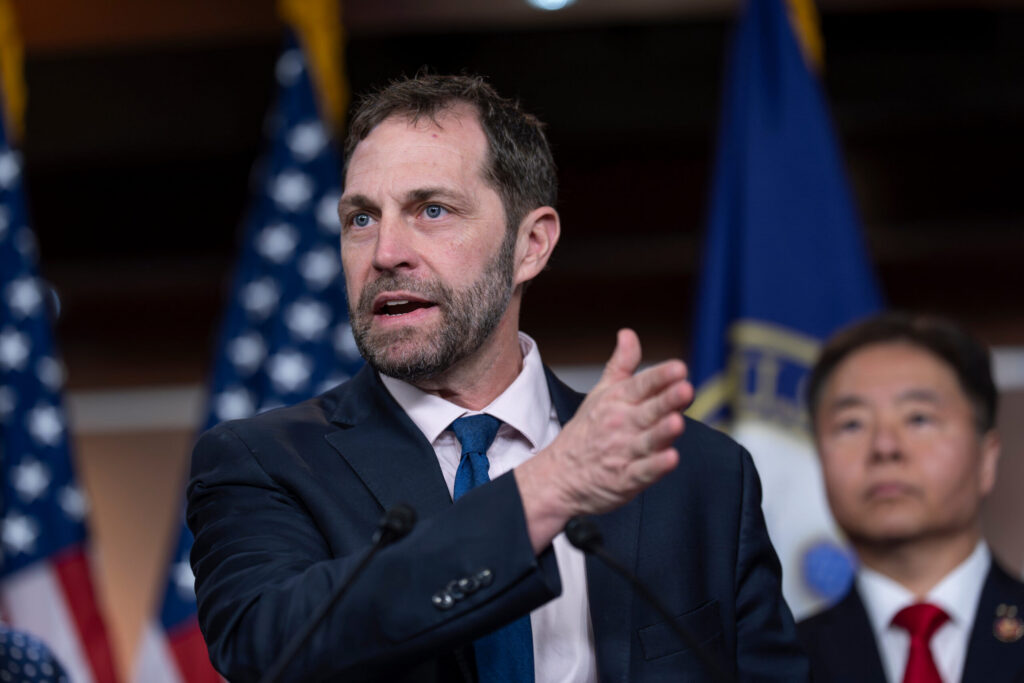
Colorado Democrat Jason Crow calls on House leadership to ban trading on prediction markets
Ernest Luning
ernest.luning@coloradopolitics.com
Updated 3 hours ago
U.S. Rep. Jason Crow on Monday joined a bipartisan call asking House Speaker Mike Johnson to adopt new rules banning the chamber’s lawmakers, their families and staff from participating in prediction markets, in a move the Aurora Democrat said can...
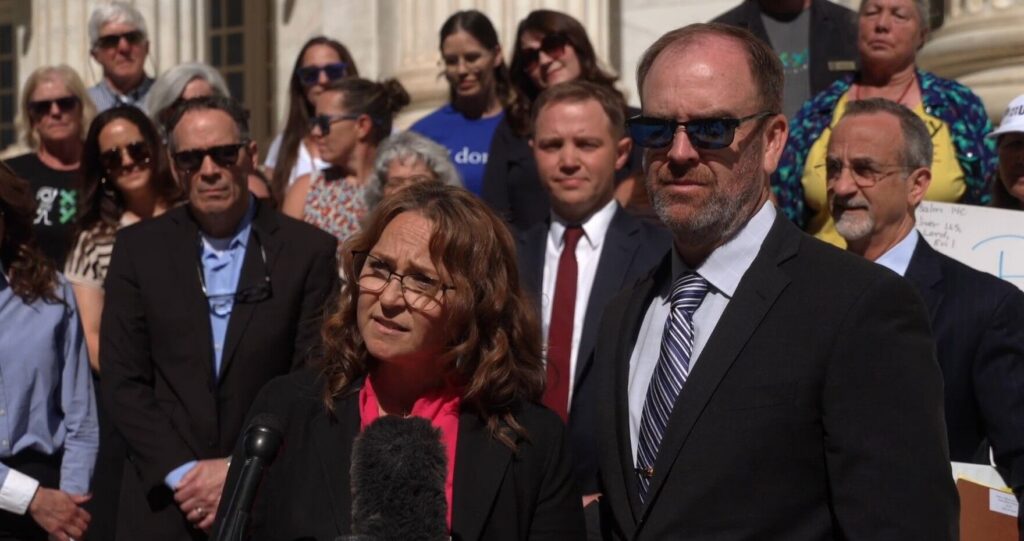
Federal judges hear arguments over Colorado school district’s gender identity rooming policy
Nicholas Fogleman
nicholas.fogleman@denvergazette.com
Updated 13 hours ago
A panel of judges at the 10th U.S. Circuit Court of Appeals heard arguments Tuesday in a lawsuit challenging JeffCo Public School’s policy of assigning students to overnight accommodations on school trips based on gender identity. The lawsuit, filed in...
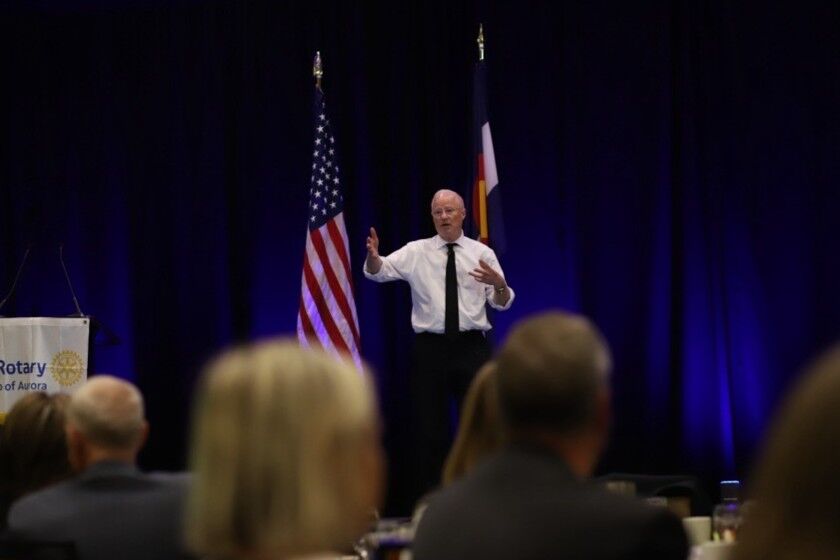
Aurora is ‘strong and getting stronger,’ mayor says in State of City speech
Kyla Pearce
kyla.pearce@gazette.com
Updated 13 hours ago
Aurora is “strong and getting stronger,” the city’s mayor said on Tuesday, citing successes in a new homeless navigation campus. Mayor Mike Coffman said he leaves work every Friday and goes straight to the Regional Navigation Campus, where he then...

Colorado lawmakers kill both major data center bills
Scott Weiser
scott.weiser@gazette.com
Updated 14 hours ago
Colorado lawmakers killed competing bills aimed at regulating large data centers, meaning regulation of the facilities is left in the hands of the Colorado Public Utilities Commission for now. The action leaves the state without new statewide rules even as...

Colorado Politics’ 8th CD primary debate canceled after Democrat Shannon Bird withdraws
Ernest Luning
ernest.luning@coloradopolitics.com
Updated 1 day ago
Organizers on Tuesday canceled next week’s Democratic primary debate in Colorado’s toss-up 8th Congressional District after former state Rep. Shannon Bird withdrew, leaving just one candidate planning to take the stage. Three Democrats are seeking the nomination in the state’s...

Colorado eyes expansion of state inspection authority over immigration detention centers
Marissa Ventrelli
marissa.ventrelli@coloradopolitics.com
Updated 3 hours ago
A proposal to add new inspection requirements for detention centers and increases the civil liability for sharing information with federal immigration authorities passed both chambers of the Colorado Legislature. The proposal is now headed to Gov. Jared Polis’ desk. House...

Colorado ethics panel finds probable cause in complaint against Democrat caucus leader
Marissa Ventrelli
marissa.ventrelli@coloradopolitics.com
Updated 2 days ago
The colleagues of a Democrat unanimously concluded they have probable cause to believe she committed an ethical violation by mismanaging her party caucus’s funds as its co-chair. The House Ethics Committee was charged with examining a complaint from Rep. Marshall,...
PREV
PREVIOUS

Colorado legislature wraps up tough budget year
Colorado lawmakers are wrapping up their work on Wednesday, closing out a year defined by the lack of fiscal flexibility, woes over Medicaid spending and a staccato of action on a host of issues, ranging from artificial regulation to a failed attempt to decriminalize prostitution. For the second consecutive year, the Democratic‑controlled legislature confronted a […]
Colorado legislature wraps up tough budget year
Colorado lawmakers are wrapping up their work on Wednesday, closing out a year defined by the lack of fiscal flexibility, woes over Medicaid spending and a staccato of action on a host of issues, ranging from artificial regulation to a failed attempt to decriminalize prostitution. For the second consecutive year, the Democratic‑controlled legislature confronted a […]