

Colorado legislature enters final 10 days with hundreds of bills still unresolved
With less than two weeks left in the 2026 session, Colorado lawmakers are staring down the final stretch of a crowded agenda, with 228 bills still unresolved as of Monday and several major measures that have yet to even be introduced.
There are 228 bills still awaiting final resolution, including 78 House bills and 53 Senate bills.
So far, 156 bills have been sent to the governor, who has not issued any vetoes this year.
Monday’s report from the Office of Legislative Legal Services shows that, of the 619 bills introduced so far, 430 originated in the House and 189 in the Senate.
The large gap between the chambers stems not only from their different membership sizes but also from the annual budget process. In February, the House introduced supplemental budget bills, and later the chamber carried the Long Bill and its 64 accompanying “orbital” measures that adjust state law to keep the budget in balance.
So, what major bills are still on the calendar?
One of the biggest is Senate Bill 189, the long‑awaited measure meant to finalize changes to the state’s 2024 artificial‑intelligence law. It was introduced on Friday, one of 10 new Senate bills filed last week.
Seven new bills were introduced in the House last week, including House Bill 1430, which would reduce specific transportation taxes and fees. Additionally, it would a new cash fund and modify spending on road transportation.
The bill, sponsored by Speaker Pro Tem Andrew Boesenecker, D-Fort Collins and Rep. Emily Sirota, D-Denver, is a referred measure to voters in the 2026 general election. Titled the “Colorado Budget Protection Act,” it would take effect only if Initiative No. 175, backed by the Colorado Contractors Association, is approved by voters in November.
On Friday, the Secretary of State’s office announced that Initiative No. 175, a proposed constitutional amendment, has collected 75% of the signatures needed to qualify for the November ballot. Petitions are due May 27.
The ballot measure would generate up to $700 million for road and transportation projects and requires that all revenue raised for those purposes be spent accordingly.
HB 1430 is designed to offset that revenue by reducing gas excise taxes and late vehicle‑registration fees, effectively cutting transportation funding by the same amount.
In its legislative declaration, HB 1430 argues that lawmakers must respond to the ballot measure to “avoid reductions of up to seven hundred million dollars in appropriations for critical state services, including K‑12 public education, health care, and higher education.”
The bill warns that passage of the measure would create new funding shortfalls for schools and lead to higher tuition costs. It also asserts that the state has taken “unprecedented steps over the last seven years to increase funding for transportation programs.”
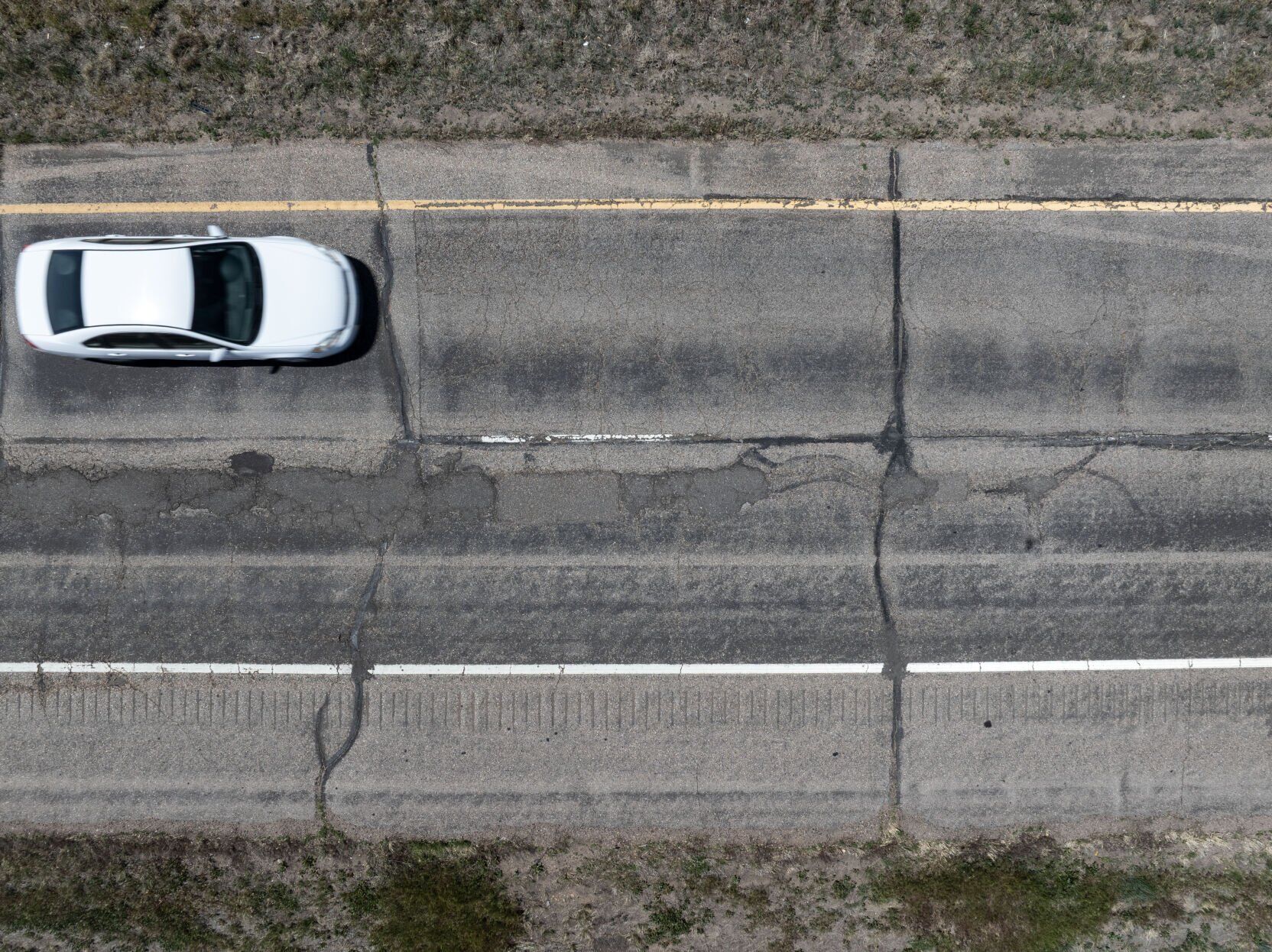
That claim drew pushback from the contractors association, which said the state’s argument “rings hollow when Colorado roads rank among the worst in the nation, largely due to years of inadequate investment.”
The group pointed to a 2025 Reason Foundation report showing Colorado’s rural interstate pavement conditions rank No. 47 in the country.
“Lawmakers are trying to make an end run around the will of the voters so they can spend money on projects they want, not what voters want, which is to fix the damn roads,” Tony Milo, president and CEO of the Colorado Contractors Association, said in a statement on May 1 in response to the legislation’s introduction. “Coloradans are sick of paying car and gas taxes and fees that don’t fix potholes or cut down on congestion. But instead of working with us on a real fix, the governor and lawmakers are trying to blow up a simple, no new tax, voter driven plan without trying to craft a real solution.”


New Colorado laws going into effect cover AI disclosures, medical marijuana access and gambling limits
Marissa Ventrelli
marissa.ventrelli@coloradopolitics.com
Updated 18 hours ago
More than 100 new Colorado laws take effect Aug. 12, bringing changes to chatbot safety rules, psychedelic research, campus wellness checks and sports betting restrictions. Here is a look at some of those laws set to take effect. The law:...

Early bird pricing ends soon for Fill a Plate for Hunger fundraiser | NONPROFIT REGISTER
Joanne Davidson Special to Colorado Politics
joanne-davidson-special-to-colorado-politics@coloradopolitics.com
Updated 2 days ago
WE DON’T WASTE Denver News: Early bird pricing for Fill a Plate for Hunger, the signature fundraiser for We Don’t Waste, ends on Aug. 10 when the Foodie-level tickets jump in price from their current $225. The 15th edition of this popular event takes place Sept. 10...

Pickleball, anyone? It’s for a good cause | NONPROFIT REGISTER
Joanne Davidson Special to Colorado Politics
joanne-davidson-special-to-colorado-politics@coloradopolitics.com
Updated 2 days ago
ROCKY MOUNTAIN CHILDREN’S HEALTH FOUNDATION Arvada News: Pickleball is still quite the rage, and to capitalize on its popularity, the Rocky Mountain Children’s Health Foundation will host its first fundraising tournament on Aug. 23. It will be from 2-5 p.m. at Chicken & Pickle, 14225...
Colorado joins 2 lawsuits against Trump administration over TANF, tariffs authority
Marissa Ventrelli
marissa.ventrelli@coloradopolitics.com
Updated 3 days ago
Colorado has joined a coalition of states in filing two new lawsuits against the Trump administration. The first lawsuit alleges the Trump administration’s move to expand the U.S. health department’s oversight of the Temporary Assistance for Needy Families would illegally...

Colorado farmers, ranchers wrestle with hurdles amid extreme drought conditions
Shen Wu Tan (Special to The Denver Gazette)
shen-wu-tan@gazette.com
Updated 3 days ago
Some producers take drastic steps to adapt to dry climate, record-low snowpack This is the first time that Jim Magnuson, who operates a family farm in the rural town of Eaton, can ever recall planting only 75% of his acreage. ...

Federal biotech commission examines Colorado’s role in critical minerals production
Scott Weiser
scott.weiser@gazette.com
Updated 6 days ago
China’s dominance over critical mineral supplies has left U.S. manufacturers vulnerable. Colorado’s biotech and research community is working to ease that dependence. Leaders from the National Security Commission on Emerging Biotechnology met last week at the Colorado School of Mines...
Douglas County schools to consolidate administrative offices into $29M headquarters to cut costs
Nicholas Fogleman
nicholas.fogleman@denvergazette.com
Updated 6 days ago
The Douglas County School Board is moving forward with a $29 million plan to consolidate district administrative operations into a new headquarters. It’s part of an effort to reduce annual costs as the district faces ongoing budget pressures. In June,...

Veo scooter clutter, sidewalk riders frustrate Denverites
Deborah Grigsby
deborah.smith@denvergazette.com
Updated 6 days ago
Denver resident Mike Miller was on a downtown sidewalk recently when a Veo scooter rider traveling at full speed passed him as the scooter blasted a “do not ride on sidewalks” warning. In a letter to Veo Policy and Partnerships...

Colorado’s 72-hour social media warrant law takes effect Aug. 12
Marissa Ventrelli
marissa.ventrelli@coloradopolitics.com
Updated 7 days ago
A law requiring social media platforms to respond to search warrants within 72 hours goes into effect on Aug. 12. Senate Bill 011 also requires platforms to create a staffed hotline for Colorado law enforcement agencies to contact regarding pending...
El Paso County rejects multi-family zoning request near Monument Academy
Savannah Eller
savannah-eller@coloradopolitics.com
Updated 1 week ago
The El Paso County Board of Commissioners narrowly rejected a developer’s bid to convert land from low- to high-density residential zoning. The request, made by MA Infrastructure, LLC, would have allowed 12 units per acre on half of a 14-acre...
PREV
PREVIOUS

Colorado ethics committee flags irregularities in Democratic caucus spending
The House ethics committee said Monday that reviewing the financial records connected to an ethics complaint against Aurora Democrat Rep. Mandy Lindsay is proving more complex than usual. The committee is examining a complaint from Rep. Bob Marshall, D‑Highlands Ranch, alleging that Lindsay mishandled and improperly used funds for her own personal benefit in a […]

Colorado justices recognize limited right to evidence in postconviction challenges
The Colorado Supreme Court ruled on Monday that defendants challenging their convictions may, in certain circumstances, be entitled to receive the information the prosecution already handed over for trial at no cost. The justices rejected the argument that defendants seeking postconviction relief must use the open records law specific to criminal justice records, which prosecutors’ […]