

Pinnacol separation bill delayed as Colorado budget remains in flux due to $1.5B deficit
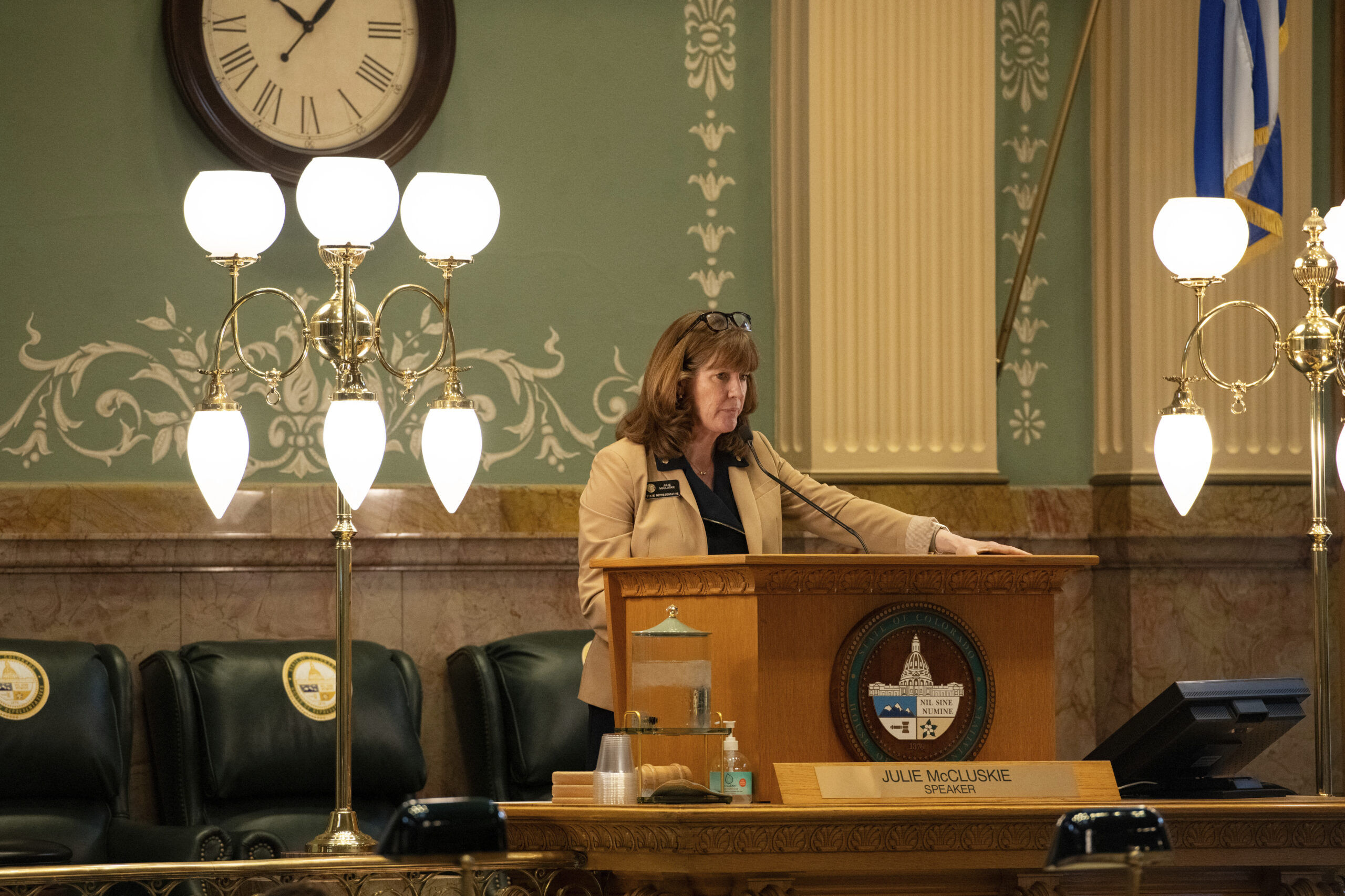
A bill that would allow Pinnacol Assurance to formally sever its remaining ties with the state appears unlikely to emerge anytime soon, as House leaders juggle a massive budget shortfall, unresolved negotiations with key stakeholders, and growing doubts about whether the insurer’s proposed $400 million payment could be counted on to help balance next year’s budget.
The House is expected to begin work on the 2026–27 state budget in the next week or two. But its approval is far from certain. The Joint Budget Committee, the six‑member bipartisan panel that drafts the budget, has yet to produce a balanced plan. As of Wednesday, the committee was grappling with a nearly $1.5 billion shortfall in the general fund.
A Pinnacol source told Colorado Politics the group hasn’t seen a draft of the proposed measure nor spoken to House Speaker Julie McCluskie, D-Dillon, the bill’s likely sponsor.
McCluskie pushed back on the claim of lack of outreach on Thursday, telling reporters she’s been working on the issue since last fall and has been meeting with Pinnacol.
But she also said that she hasn’t met with the parties involved for the last six to eight weeks. Instead, she said, she had been doing research on the issue. She she hasn’t shared a draft, she said.
“I am working on a bill, but I am not yet ready to bring anything forward,” she said, pledging she wouldn’t introduce it “cold.”
McCluskie noted Gov. Jared Polis’ interest in severing Pinnacol’s official ties to the state.
The governor has included the Pinnacol issue as part of his budget-balancing recommendations for the 2026-27 budget. Under his proposal, Pinnacol would pay the state about $400 million, with half of that to be used to cover the cost of the senior and disabled veterans’ homestead exemption in the budget.
That program would have to be paid for with general fund dollars, as there will be no Taxpayer’s Bill of Rights surplus in 2026, which normally pays for it.
McCluskie said, given the governor’s proposal, she feels that it is the legislature’s responsibility to explore it and that she wants to take the time to get it right.
With the budget nearing the time it must be reviewed by the legislature, the question is whether that $400 million — assuming the bill passes and is signed into law — would be available in time to provide that funding for the 2026-27 budget.
And that’s without the threat of litigation if any of the interested parties — which, in addition to Pinnacol, includes organized labor and workers’ compensation attorneys — aren’t happy with the final result.
McCluskie indicated she’s aware of that risk.
“Part of the reason I don’t want to just throw something into the system is I do want to make sure that whatever we propose has a viable path. How it impacts our budget or complements the budget will be important,” she said.
The Joint Budget Committee (JBC) on Wednesday began working through a list of 150 potential general fund cuts to begin covering the nearly $1.5 billion general fund hole. Among those proposed cuts is the senior homestead exemption, which would require legislation.
That deficit is the result of several factors, notably an explosion in the cost of the state Medicaid program, which faces claims of fraud and abuse in some areas. Democrats have also blamed the federal budget for changes to the tax code, which they said have resulted in Colorado’s revenue shrinking. Republicans have countered that actions by the Democratic majority, including overspending, are the culprit for the state’s fiscal woes.
The JBC must budget in accordance with current law and, as a result, cannot include a placeholder for the Pinnacol money.
But the likelihood of the JBC sponsoring a Pinnacol bill is considered remote, given that such a bill would require unanimous consent by the committee and several members have expressed serious misgivings about the proposal, as well as relying on one-time Pinnacol money to help balance the budget.

McCluskie noted that there have been several past instances when lawmakers canceled the exemption, most notably during the Great Recession of 2008. They also considered it during the COVID-19 pandemic, she pointed out.
“It’s a weighty decision,” she said, adding that she knows seniors on fixed income rely on that property tax exemption and that she’s been talking with the JBC about that potential decision.
“Obviously, our partners in labor matter and we’re listening to them and considering their concerns,” she said. But, she added, it’s also the legislature’s responsibility to consider every possible option for balancing the budget.
While the potential for Pinnacol money to find its way into the 2026-27 budget seems remote, McCluskie also advocated for the JBC to maintain the state’s general fund reserve at 13%, down from its current 15%, since about $250 million of the pot was tapped to cover the general fund budget shortfall in the 2025-26 budget — action taken by Polis following a special session in August.
The House speaker noted that during the pandemic, the reserve dropped to 7.25%, and funds were also tapped to cover an expected shortfall. She indicated she worries about the potential for even a low-to-moderate recession, which the reserve is intended to cover.
State economists updated their expectations for a moderate recession to about 40% last week, down from 50% in December.
The idea of allowing Pinnacol to fully separate from the state has floated around the Capitol for decades, dating back to 2002, when the state directed the group to operate as an independent mutual insurance company under the ownership of its members. However, Pinnacol, the state’s workers’ compensation insurance of last resort, is still considered a quasi-state entity.
And that keeps the insurer from offering workers’ compensation insurance to Colorado companies with workers in other states. While the insurer is still the largest workers’ compensation insurance provider in the state, with about a 50% market share, that share has dropped substantially in recent years, and the change would be key to the insurer’s long-term success.
“We’re trying to ground folks” on the dollars, said Wes Parham, vice president for public affairs at Pinnacol.
The state shed its liability for Pinnacol in 2002, when the company became a mutual insurance company. Since then, the law has been clear — the state assumes no risk or liability for Pinnacol’s financial condition, and the company is solely funded by employers’ premiums.
He noted that the $80.8 million transferred to Pinnacol in 2002 is valued at around $147.7 million today.
Of greater concern, Parham said, was the unexpected repeal of the regional home office tax during last August’s special session, given that Pinnacol is the biggest insurer headquartered in Colorado. Once the company separates from the state, that could cost Pinnacol about 1% of premiums, or about $5 million annually, he estimated
That change was not expected when the conversations about separating Pinnacol from the state started last year, he said.
Waiting in the wings is a ballot measure proposed by Colorado Succeeds, a coalition of business CEOs, that would allow Pinnacol to separate without payments to the state that could be used for balancing the budget. Under that proposal, Pinnacol would pay $150 million into a state-managed skilled workers and trades fund for workforce training.
The ballot measure was approved for its title on March 18. The title could be challenged for a rehearing in one of the title board’s final two hearings of the 2026 election season on April 1 or April 15.


Colorado joins 2 lawsuits against Trump administration over TANF, tariffs authority
Marissa Ventrelli
marissa.ventrelli@coloradopolitics.com
Updated 6 hours ago
Colorado has joined a coalition of states in filing two new lawsuits against the Trump administration. The first lawsuit alleges the Trump administration’s move to expand the U.S. health department’s oversight of the Temporary Assistance for Needy Families would illegally...

Colorado farmers, ranchers wrestle with hurdles amid extreme drought conditions
Shen Wu Tan (Special to The Denver Gazette)
shen-wu-tan@gazette.com
Updated 13 hours ago
Some producers take drastic steps to adapt to dry climate, record-low snowpack This is the first time that Jim Magnuson, who operates a family farm in the rural town of Eaton, can ever recall planting only 75% of his acreage. ...

Federal biotech commission examines Colorado’s role in critical minerals production
Scott Weiser
scott.weiser@gazette.com
Updated 4 days ago
China’s dominance over critical mineral supplies has left U.S. manufacturers vulnerable. Colorado’s biotech and research community is working to ease that dependence. Leaders from the National Security Commission on Emerging Biotechnology met last week at the Colorado School of Mines...
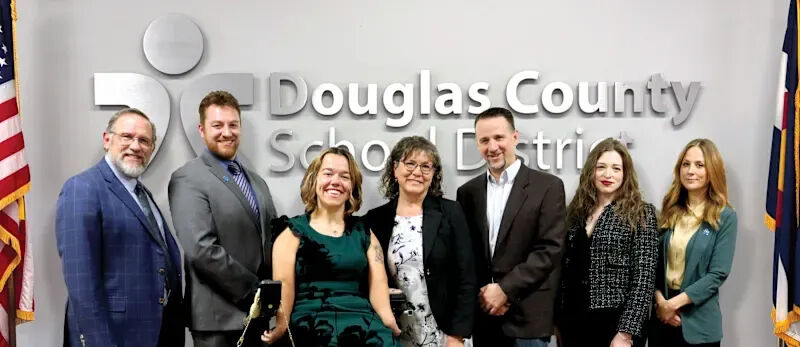
Douglas County schools to consolidate administrative offices into $29M headquarters to cut costs
Nicholas Fogleman
nicholas.fogleman@denvergazette.com
Updated 4 days ago
The Douglas County School Board is moving forward with a $29 million plan to consolidate district administrative operations into a new headquarters. It’s part of an effort to reduce annual costs as the district faces ongoing budget pressures. In June,...

Veo scooter clutter, sidewalk riders frustrate Denverites
Deborah Grigsby
deborah.smith@denvergazette.com
Updated 4 days ago
Denver resident Mike Miller was on a downtown sidewalk recently when a Veo scooter rider traveling at full speed passed him as the scooter blasted a “do not ride on sidewalks” warning. In a letter to Veo Policy and Partnerships...

Colorado’s 72-hour social media warrant law takes effect Aug. 12
Marissa Ventrelli
marissa.ventrelli@coloradopolitics.com
Updated 5 days ago
A law requiring social media platforms to respond to search warrants within 72 hours goes into effect on Aug. 12. Senate Bill 011 also requires platforms to create a staffed hotline for Colorado law enforcement agencies to contact regarding pending...

El Paso County rejects multi-family zoning request near Monument Academy
Savannah Eller
savannah-eller@coloradopolitics.com
Updated 6 days ago
The El Paso County Board of Commissioners narrowly rejected a developer’s bid to convert land from low- to high-density residential zoning. The request, made by MA Infrastructure, LLC, would have allowed 12 units per acre on half of a 14-acre...

Denver City Council sends Xcel franchise deal to voters
Deborah Grigsby
deborah.smith@denvergazette.com
Updated 6 days ago
This November, Denver voters will decide whether to renew the city’s longstanding franchise agreement with Xcel Energy. Members of the Denver City Council approved on Monday sending a proposed 20-year franchise agreement with Xcel that would deliver more than $180...

Chamber names its Top 25 Most Powerful Women in Business | NONPROFIT REGISTER
Joanne Davidson Special to Colorado Politics
joanne-davidson-special-to-colorado-politics@coloradopolitics.com
Updated 2 days ago
COLORADO WOMEN’S CHAMBER OF COMMERCE Denver News: Marielena DeSanctis, chancellor of the Colorado Community College System; Terri Jackson, executive director and co-founder of the African American Trade Association and Emily Trujillo, chief operating officer at HCA HealthONE Centennial, are among the 2026 Top 25 Most Powerful Women...

Colorado produce not tied to nationwide cyclospora outbreak, agriculture officials say
Marissa Ventrelli
marissa.ventrelli@coloradopolitics.com
Updated 1 week ago
There is no indication that the recent outbreak of cyclospora, a fecal parasite that has contaminated food and water across nearly every state, can be linked to produce grown in Colorado, according to the state’s Department of Agriculture. “Colorado growers...
PREV
PREVIOUS

U.S. Sen. Michael Bennet qualifies by petition for Colorado’s Democratic gubernatorial primary
U.S. Sen. Michael Bennet on Tuesday became the first gubernatorial candidate to qualify for Colorado’s June primary ballot after state election officials determined the three-term Democrat’s campaign submitted enough valid petition signatures. Bennet is running against Attorney General Phil Weiser in the Democratic primary to determine the nominee for the office held by term-limited Gov. […]

Democratic bill would let recipients of ‘conversion therapy’ sue Colorado providers with no statute of limitations
Colorado lawmakers have advanced a proposal that would allow people who underwent conversion therapy to sue licensed providers for damages, moving the measure forward on a party-line vote in the House Judiciary Committee. House Bill 1322, proposed by Democratic Reps. Alex Valdez of Denver and Karen McCormick of Hygiene will move to a full-floor debate […]