

Colorado joins 2 lawsuits against Trump administration over TANF, tariffs authority
Colorado has joined a coalition of states in filing two new lawsuits against the Trump administration.
The first lawsuit alleges the Trump administration’s move to expand the U.S. health department’s oversight of the Temporary Assistance for Needy Families would illegally allow the office to share detailed records of recipients’ personal information with other agencies, including the U.S. Department of Homeland Security.
The states’ attorneys general argue such data sharing violates federal law and the U.S. Constitution, calling it a “blatant effort to politically target those who are lawfully receiving critical TANF benefits.”
In a statement, Colorado Attorney General Phil Weiser, who has filed some 70 lawsuits against the federal government, said the rule would undermine states’ trust with the communities they serve and discourage eligible low-income families from seeking help. He warned it would also force states to spend more of their own resources to keep families housed and fed.
He said when the administration withheld TANF funds from Colorado and four other states earlier this year, Colorado won a court order blocking the move.
“We’re now suing to stop this latest attempt to weaken federal confidentiality protections and use baseless fraud claims to target antipoverty programs,” Weiser, who is running for governor, said in news release.
In the spring of 2025, the Administration of Children and Families, a division of the Department of Health and Human Services, notified states that the Trump administration was planning to end benefits for immigrants who are in the country illegally.
“Illegal aliens have already violated United States law, and we will not be spending taxpayer dollars to take care of their needs,” said ACF Assistant Secretary Andrew Gradison. “President Trump’s executive order reaffirms this important national policy and puts the needs of Americans first. To implement the president’s executive order, ACF will use all available legal authority to end any incentives in human services programs that encourage illegal immigration.”
The Personal Responsibility and Work Opportunity Reconciliation Act of 1996 (PRWORA) prohibits individuals in the country illegally from receiving federal assistance benefits, Gradison in the letter.
“Nearly three decades after the enactment of welfare reform, the promise of that law has been eroded. That ends now,” he said.
Also established under the Reconciliation Act, TANF provides funding for childcare subsidies, emergency housing for domestic violence survivors, emergency food assistance and support for grandparents caring for grandchildren. The program provides more than $16 billion in assistance across all 50 states. Colorado received more than $150 million in federal block grants in 2022, according to the National Center for Children in Poverty.
The lawsuit argues that ACF’s new policy violates the Administrative Procedure Act and the Spending Clause of the U.S. Constitution by failing to comply with restrictions on data sharing in TANF programs.
The attorneys general also noted that PRWORA requires states to verify TANF applicants’ eligibility, not the federal government.
Colorado joins lawsuit over tariffs
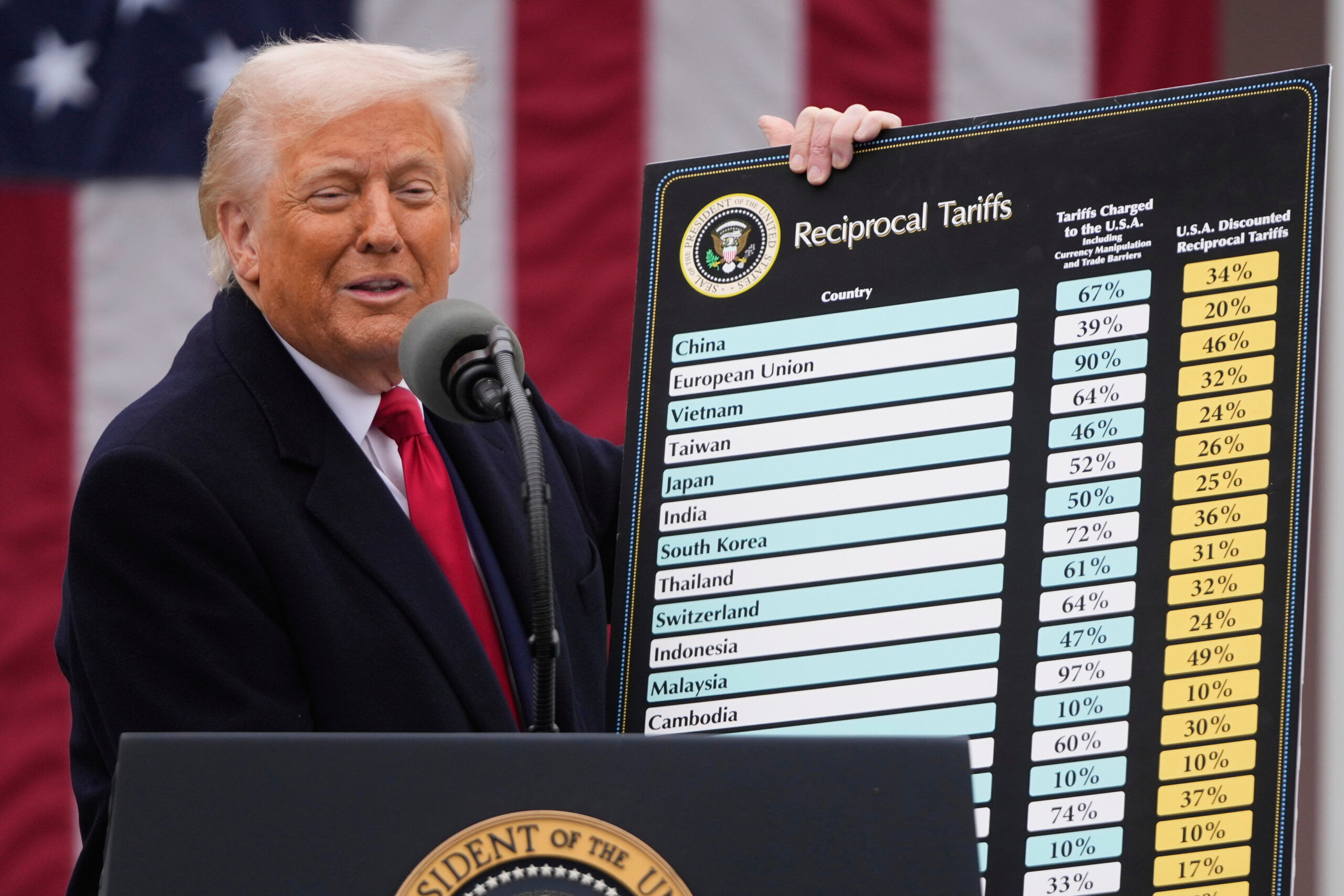
Colorado also joined a coalition of 25 states in filing another lawsuit against the Trump administration’s efforts to impose tariffs.
This lawsuit stems from the administration’s recent decision to increase tariffs on more than 80 countries, accounting for 99.4% of all U.S. imports.
The lawsuit argues that this round of tariffs exceeds the administration’s legal authority and violates the Administrative Procedure Act. In a statement, Weiser also said the cost of the tariffs would be passed on to Colorado residents. He added that nearly 90% of the costs of tariffs in 2025 were paid by American consumers and businesses.
Trump earlier said the International Emergency Economic Powers Act authorized him to impose tariffs of any amount on any country. The U.S. Supreme Court rejected that argument in February.
The Trump administration has argued that the tariffs are necessary to correct a significant trade imbalance between the U.S. and other countries and to try and bring back manufacturing jobs to America. His administration had said even some of America’s closest partners were imposing protectionist measures, with higher barriers for entry for American goods, and that the new tariffs would move trade toward parity.
Following the Supreme Court decision, Trump became the first president to use Section 122 of the Trade Act of 1974 to impose 10% tariffs on most imports.
In May, the U.S. Court of International Trade ruled that he had acted unlawfully. After that, Trump turned to Section 301 of the Trade Act of 1974, which allows the Office of the United States Trade Representative to investigate the policies of foreign governments that are believed to harm U.S. commerce. In June, Trade Representative Jamieson Greer determined that 60 countries had enacted economic policies that are “unreasonable and burden or restrict U.S. commerce.”
Greer subsequently imposed 10% and 12.5% tariffs on all 60 countries, arguing that they have adopted “forced labor” practices that conflict with American law.
“The United States has had a forced labor import ban for nearly a century, and rigorously enforces it; it’s well past time for our trading partners to do the same,” Greer said in a news release.
The countries affected by the tariffs have denied allegations of forced labor.


Federal biotech commission examines Colorado’s role in critical minerals production
Scott Weiser
scott.weiser@gazette.com
Updated 3 days ago
China’s dominance over critical mineral supplies has left U.S. manufacturers vulnerable. Colorado’s biotech and research community is working to ease that dependence. Leaders from the National Security Commission on Emerging Biotechnology met last week at the Colorado School of Mines...

Denver mayor promises universal childcare, housing expansion in city address
Deborah Grigsby
deborah.smith@denvergazette.com
Updated 2 weeks ago
Nearly a year after Denver cut city jobs to close a $250 million budget gap, Mayor Mike Johnston used his third State of the City address to promise universal childcare and 20,000 homes as part of a new redevelopment vision...

Colorado allows big polluters to buy credits as it mandates local engagement
Scott Weiser
scott.weiser@gazette.com
Updated 1 week ago
Colorado air quality regulators on Friday decided to require major industrial plants to hold in-person meetings with nearby communities and to cut certain pollutants on site. The same rules allow those plants to meet most of their greenhouse gas targets...

Record utility rate requests hit $9.2 billion nationwide in second quarter
Scott Weiser
scott.weiser@gazette.com
Updated 3 weeks ago
Colorado had no requests last quarter Electric and gas utilities sought a record $9.2 billion in rate increases nationwide during the second quarter, according to a new analysis by the consumer advocacy organization PowerLines, as utilities continue seeking billions for...

Colorado GDP trails direct competitor states, though slightly ahead of U.S. average
Mark Samuelson Special to The Denver Gazette
mark.samuelson@denvergazette.com
Updated 3 weeks ago
Colorado’s economy is marginally outperforming the national average but lags behind those of direct competitor states, such as Arizona, Texas and Utah, according to a report by a nonpartisan policy group. And while some indicators for the Centennial State appear...

Job leads in Denver show comparative strength, but salary offers run low
Mark Samuelson Special to The Denver Gazette
mark.samuelson@denvergazette.com
Updated 3 weeks ago
‘One of the most active hiring markets in the Mountain West,’ study shows At a moment when job growth will likely be a political issue in fall elections, a European-based job referral service has released a study showing employers have...

Denver launches $100 million effort to support 10,000 new jobs
Deborah Grigsby
deborah.smith@denvergazette.com
Updated 4 weeks ago
The City of Denver is aiming to support 10,000 quality jobs citywide over the next three years, Mayor Mike Johnston announced on Thursday. The Denver Jobs Agenda is a new city-backed strategy that will invest $100 million to support in-demand job training...

Colorado business confidence improves but still pessimistic
Bernadette Berdychowski
bernadette.berdychowski@denvergazette.com
Updated 1 month ago
Halfway into the year, business confidence across Colorado has improved but is still negative, a new report found. The Leeds Business Confidence Index, a measurement of how business leaders across Colorado feel about the future of the national and state...

Xcel franchise renewal clears first Denver City Council committee hurdle
Scott Weiser
scott.weiser@gazette.com
Updated 1 month ago
More than $180 million a year in franchise fees, infrastructure relocation savings and undergrounding funds would continue flowing to Denver under a proposed 20-year franchise agreement with Xcel Energy. It cleared a major City Council hurdle Tuesday, while adding new...

Colorado’s haze lawsuit tests coal plant closure | ANALYSIS
Scott Weiser
scott.weiser@gazette.com
Updated 1 month ago
Colorado is asking a federal appeals court to overturn the U.S. Environmental Protection Agency’s decision to reject the state’s plan to reduce haze at national parks and wilderness areas. At the center of the fight is a straightforward but difficult...
PREV
PREVIOUS

Democratic group maps out path to Colorado House and Senate supermajorities
A national organization that works to elect Democrats to state legislatures has its sights on Colorado, unveiling a road map to establish a supermajority in both the House and Senate. Democrats have held a majority in the House since 2013 and the Senate since the 2019 session. There are currently 43 Democrats in the House […]

Group submits signatures for proposed Colorado graduated income tax
The measure, which eliminates Colorado’s flat tax, is expected to raise $2 billion in new revenue The proposal to amend the Colorado constitution to change the state’s flat rate into a graduated income tax came in under the wire Monday, the deadline for groups to turn in petition signatures for November’s ballot, setting up a […]