

10th Circuit rejects ‘penalty’ for children of naturalized citizens seeking visas

The Denver-based federal appeals court joined three of its peers earlier this month and determined the child of a newly naturalized U.S. citizen is not moved to a longer visa line as a result of his parent gaining citizenship, and the government acted outside its authority by reclassifying the son of a new citizen into a less-favorable category.
A three-judge panel of the U.S. Court of Appeals for the 10th Circuit interpreted the provisions of the 2002 Child Status Protection Act. The law sought to solve the problem of “minor children” — meaning those under 21 — aging out of the opportunity to immigrate with family members solely because of bureaucratic processing delays. Consequently, the CSPA freezes the child’s age at the time their U.S. citizen parent files a visa petition on their behalf.
The process is similar for children of lawful permanent residents.
However, when Dalila Dekovic became a naturalized citizen in 2021, the National Visa Center changed the designation for her son, Alejandro Jimenez Ramirez, who was under 21 as calculated by the law. He was no longer the minor child of a lawful permanent resident who would have had immediate access to a visa. Instead, the government relabeled him the adult son of a U.S. citizen.
“Although a visa had been available for Mr. Jimenez Ramirez when his mother naturalized, the reclassification decision removed his current visa availability and placed him on a waitlist that is approximately twenty years long, meaning that Mr. Jimenez Ramirez may need to wait for two decades or more before he can rejoin his family in the United States based solely on the fact that his mother became a U.S. citizen,” wrote Judge Carolyn B. McHugh in the March 10 opinion.
“Nothing in the statute seems to anticipate the Government reclassifying a beneficiary” in that way, she continued. “Thus, the statutory text as written did not permit the National Visa Center to engage in the reclassification decision that occurred in this case.”
Case: Dekovic v. Rubio
Decided: March 10, 2026
Jurisdiction: U.S. District Court for Colorado
Ruling: 3-0
Judges: Carolyn B. McHugh (author)
Joel M. Carson III
Veronica S. Rossman
The Ninth, Second, and, as of last year, First Circuits previously reached that same conclusion. However, a trial judge in Colorado read the law differently.
In addressing Dekovic’s challenge to her son’s reclassification, U.S. District Court Senior Judge Robert E. Blackburn acknowledged the significant wait times for adult children seeking admission to the country, compared to minor children, who can obtain an immediate-relative visa “shortly after” the government approves their petition.
However, he believed the law relied upon the child’s age on the date of their parent’s naturalization as the standard.
“No doubt, in passing the CSPA, Congress sought to reduce or eliminate the phenomenon of children aging out on their coveted status as visa applicants under 21 years of age,” he wrote in December 2024. But the language of the law “is not rendered ambiguous.”
Dekovic and Jimenez Ramirez appealed, noting he would be living in the U.S. if his mother had remained a lawful permanent resident.
“However, because his mother became a U.S. citizen, an action that one might reasonably think would improve Alejandro’s lot, he is now facing a wait of approximately two decades or more before he can enter the U.S.,” wrote attorney Mark Robert Barr.

The 10th Circuit panel rejected the government’s argument that it could not adjudicate the underlying petition. McHugh observed that, under the government’s logic, Jimenez Ramirez could not challenge the National Visa Center’s decision to reclassify him until he finally receives a visa interview, perhaps 20 years in the future.
“The Government’s position, if accepted by this court, would effectively insulate a rights-determining agency decision from judicial review,” she wrote.
The panel also rejected the government’s view that Jimenez Ramirez’s reclassification was proper under the Child Status Protection Act.
The record of Congress’ actions “strongly points to the conclusion that the CSPA was intended to prevent precisely the outcomes that the Government wants to achieve in this case — penalizing child petitioners who turn twenty-one before they can obtain a visa due to bureaucratic processing delays, and penalizing beneficiaries for their parents’ decision to become naturalized citizens rather than remaining (lawful permanent residents),” wrote McHugh.
The case is Dekovic et al. v. Rubio et al.


Judge grants partial injunction to GEO in fight against state health inspection law
Kyla Pearce
kyla.pearce@gazette.com
Updated 4 hours ago
A judge ruled Thursday that The GEO Group does not have to follow parts of a new state law requiring more frequent health and safety inspections at the U.S. Immigration and Customs Enforcement processing center in Aurora. Under the order...

Parker man faces 20 years to life for serial sexual assaults
Nicholas Fogleman
nicholas.fogleman@denvergazette.com
Updated 6 hours ago
A 25-year-old Parker man who sexually assaulted three women in 2025 pleaded guilty Wednesday and will serve 20 years to life in prison. Javier Rodriguez-Andrade pleaded guilty to charges stemming from three sexual assaults involving women ages 19 to 24. ...
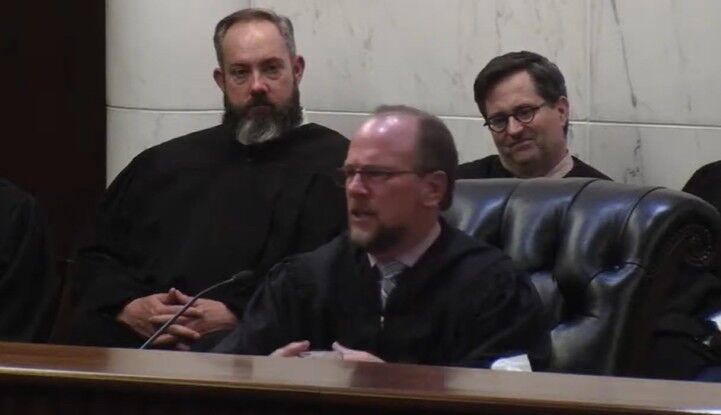
Divided appeals court upholds warrantless DNA collection in Colorado cold case, cautions of government overreach
Michael Karlik
michael.karlik@coloradopolitics.com
Updated 5 hours ago
Colorado’s second-highest court upheld the warrantless collection of a suspect’s DNA from a discarded soda can as constitutional on Thursday, while warning about potential abuse of DNA privacy in the absence of further guardrails. By 2-1, a three-judge Court of...

Man charged in Northglenn homicide of wife
Matt Kyle
matt.kyle@denvergazette.com
Updated 6 hours ago
A man has been formally charged with murder and burglary relating to a homicide last week in Northglenn. Alexei Munive-Rodriguez, 48, was arrested Sunday after he was at large following the homicide, which occurred Friday. Police were dispatched around 10:30...

10th Circuit grants immunity to officers for fatal Manitou Springs shooting
Michael Karlik
michael.karlik@coloradopolitics.com
Updated 8 hours ago
The Denver-based federal appeals court ruled on Wednesday that responding officers from Manitou Springs and El Paso County cannot be held constitutionally liable for shooting and killing a man after a 20-minute standoff. Wilford Deweese allegedly pulled out a gun...
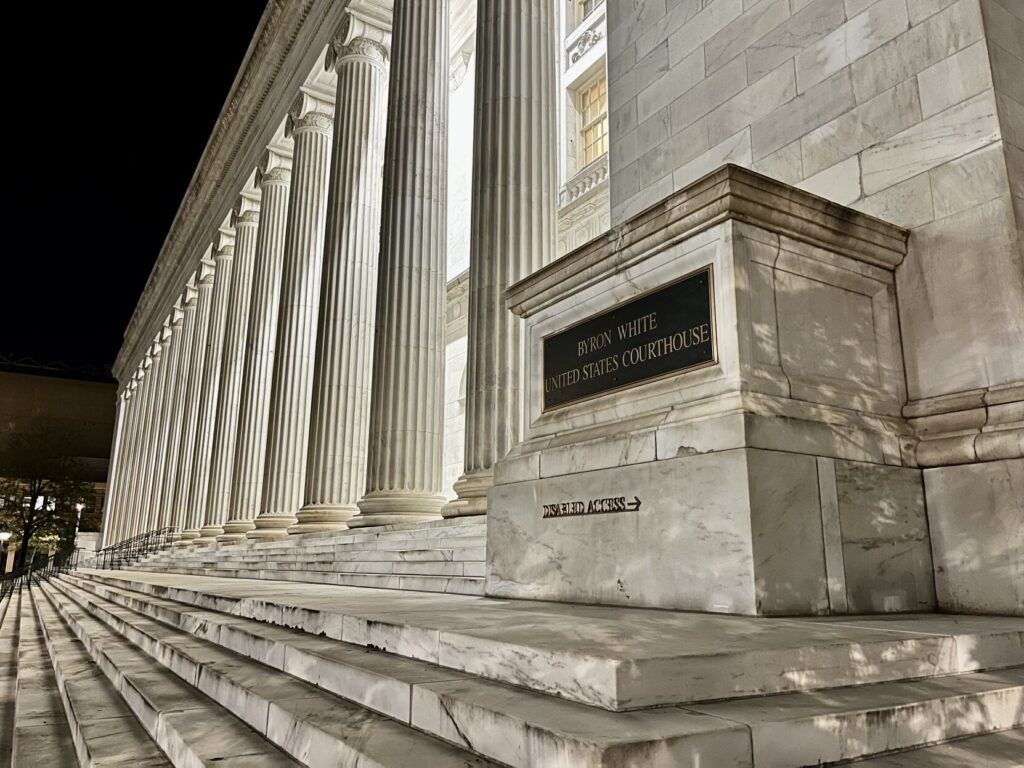
10th Circuit rejects invitation for full-court review of tax-avoidance case
Michael Karlik
michael.karlik@coloradopolitics.com
Updated 1 day ago
The Denver-based federal appeals court declined to reconsider the standards for holding entities liable for their tax-avoidance schemes, with a majority of judges voting against full-court review on Monday. In April, a three-judge panel of the U.S. Court of Appeals...

Colorado judge blasts state forensics lab in dismissing child sex case
Jenny Deam
jenny.deam@gazette.com
Updated 1 day ago
In a potentially widely consequential action, a Weld County district judge dismissed a child sexual assault case, citing the ongoing scandal at the Colorado Bureau of Investigation’s forensic lab that “has left a dark mark on the history of Colorado...
10th Circuit sympathetic to Colorado consumer protection law governing interest rates
Michael Karlik
michael.karlik@coloradopolitics.com
Updated 2 days ago
Members of the Denver-based federal appeals court appeared sympathetic on Tuesday to Colorado’s assertion that it can lawfully require certain out-of-state banks to abide by the state’s own ceilings on interest rates when they lend to consumers in Colorado. The...

Colorado justices to decide insurance companies’ obligation to disclose relevant policies
Michael Karlik
michael.karlik@coloradopolitics.com
Updated 1 day ago
The Colorado Supreme Court announced on Monday that it will decide whether an insurance company violated state law by withholding an at-fault driver’s policy for nearly a year when there was no dispute that the policy was not in effect...

Judicial performance evaluations released, Montezuma County judge disciplined | COURT CRAWL
Michael Karlik
michael.karlik@coloradopolitics.com
Updated 3 days ago
Welcome to Court Crawl, Colorado Politics’ roundup of news from the third branch of government. Colorado’s citizen-led judicial performance commissions released their voter narratives for the judges standing for retention in November, plus a disciplinary panel imposed consequences on a...
PREV
PREVIOUS

Colorado lawmakers mull renaming César Chávez Day to Farm Workers Day
A Colorado House committee has voted to rename the March 31 state holiday from César Chávez Day to Farm Workers Day, following a national shift prompted by sexual abuse allegations against the labor leader. The State, Civic, Veterans, and Military Affairs Committee on Monday heard and passed House Bill 1339, sponsored by House Majority Leader […]

Hickenlooper primary challenger Julie Gonzales endorsed by national progressive group Indivisible
State Sen. Julie Gonzales’ bid to challenge U.S. Sen. John Hickenlooper in Colorado’s Democratic primary got a boost Tuesday from Indivisible when the national arm of the progressive grassroots group endorsed the Denver lawmaker. The national group’s endorsement comes less than a week before Gonzales is expected to land a top-line designation on the June […]