

Appeals court decides free speech cases, error-prone judge reversed again | COURT CRAWL
Welcome to Court Crawl, Colorado Politics’ roundup of news from the third branch of government.
The state’s Court of Appeals decided multiple cases implicating free speech rights, plus Colorado’s most error-prone judge was reversed on appeal yet again.
Heard on appeal
• The Colorado Supreme Court agreed a defendant couldn’t be faulted for failing to cooperate in a court-ordered mental condition evaluation because she lacked the competency to proceed. Yet, by 4-3, a slim majority of the court agreed a new trial was necessary due to the wrongly excluded mental health evidence.
• The justices seemed inclined to hold a debt collector to precisely what state lawmakers have required when suing people for unpaid debts.
• The Court of Appeals agreed a defendant who confronted an El Paso County judge in an elevator hadn’t made “true threats” that could form the basis of a criminal prosecution, and instead her criticisms were protected speech.
• The Court of Appeals decided public figures may not bring defamation claims simply because someone characterizes their actions as a crime, but rather when they make true-or-false assertions about the underlying conduct.
• Juries aren’t obligated to use any particular price when deciding the value of stolen goods in theft cases, the Court of Appeals ruled.
• Judges aren’t required to recuse themselves from sentencing a criminal defendant just because they also learned about the nature of a conflict between the defendant and his appointed attorney, and the defendant may have had a negative reaction.
• The Court of Appeals reversed a Douglas County defendant’s convictions because then-District Court Judge Patricia Herron didn’t hold a hearing to resolve an evidentiary dispute. It is the third reversal in Herron’s cases since December, atop a long list of prior reversals. Herron remains on the bench as a part-time senior judge under a contract with the chief justice.
In federal news
• A federal judge seemingly recognized, as a rule, that police can reasonably assume a vehicle occupant will turn violent and reach for a weapon if officers arrest their romantic partner during a traffic stop. No, that’s not how it works, the U.S. Court of Appeals for the 10th Circuit responded.
• A federal judge formalized his injunction blocking the U.S. Department of Agriculture from forcing Colorado into a “pilot project” that would’ve required mass recertification of 100,000 food assistance recipients on extremely short notice and for no compelling reason.
• A federal judge said he couldn’t reduce the sentence of a prisoner solely because he has been in solitary confinement for eight years, but that the man may renew his request with specific details about how the isolation is affecting him.
• A Denver officer will face a civil jury trial on allegations that he engaged in racially selective law enforcement.
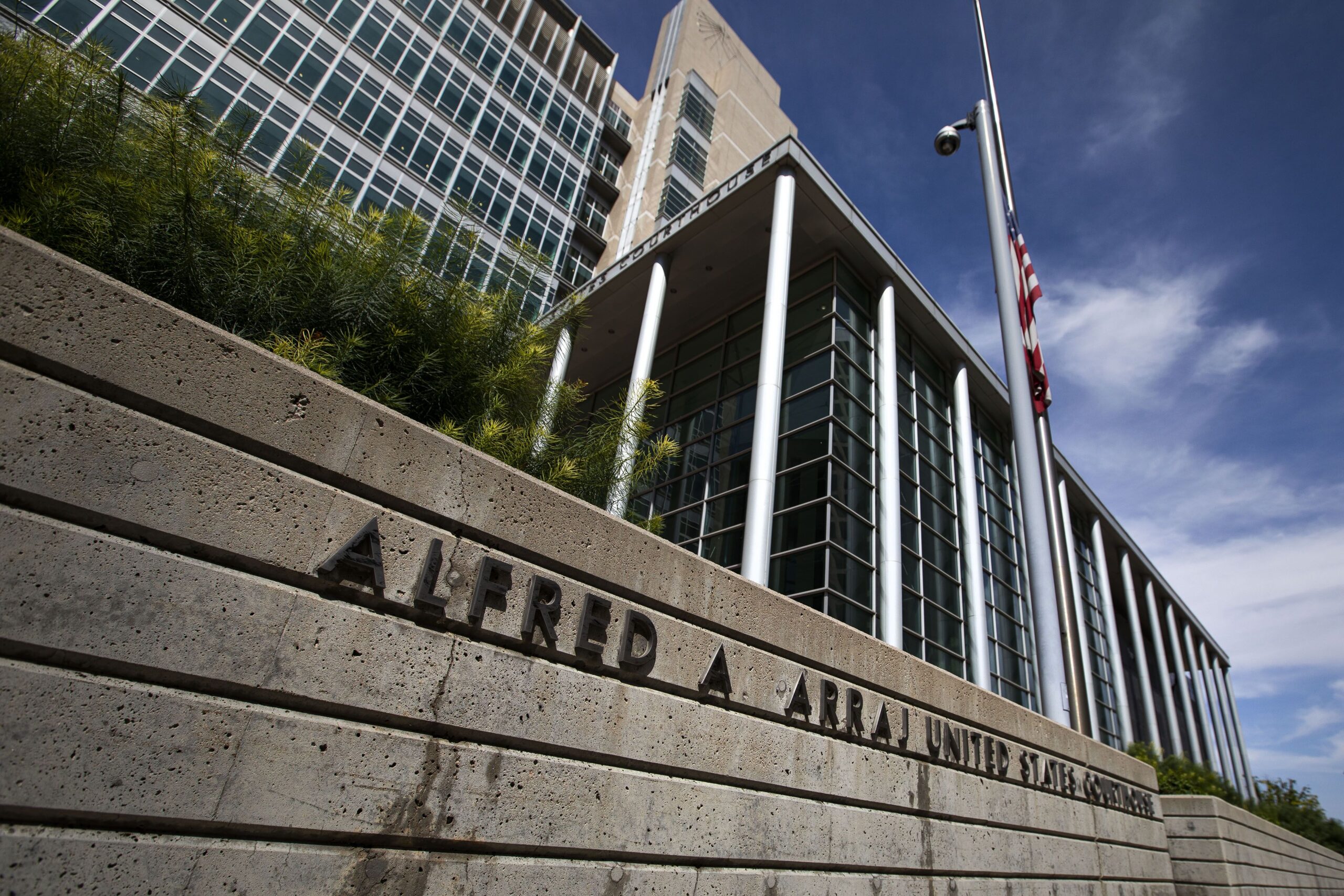
• Colorado’s former director of judicial discipline will have to explain why an out-of-state federal judge shouldn’t sanction him for his seeming misrepresentations during a lawsuit against the Colorado Supreme Court and related entities.
• A federal judge preliminarily approved a class of Aurora firefighter trainees who can sue the city for allegedly depriving them of overtime pay in violation of the law.
• A medical contractor for the Eagle County jail can’t be held liable for a man’s death in custody, as the jail staff were the ones who allegedly vetoed a higher level of medical intervention.
Immigration detention update
• Readers are likely aware that Colorado’s federal district court is facing a flood of “habeas corpus” petitions from those in immigration detention. The most common allegation is that the government is improperly denying bond hearings to people who are eligible by law. Colorado’s judges, like the vast majority of their peers nationwide, have agreed with that argument.
• However, there are interesting developments occurring across these cases, which are flowing in at a rate of approximately eight per weekday to Colorado’s U.S. District Court.
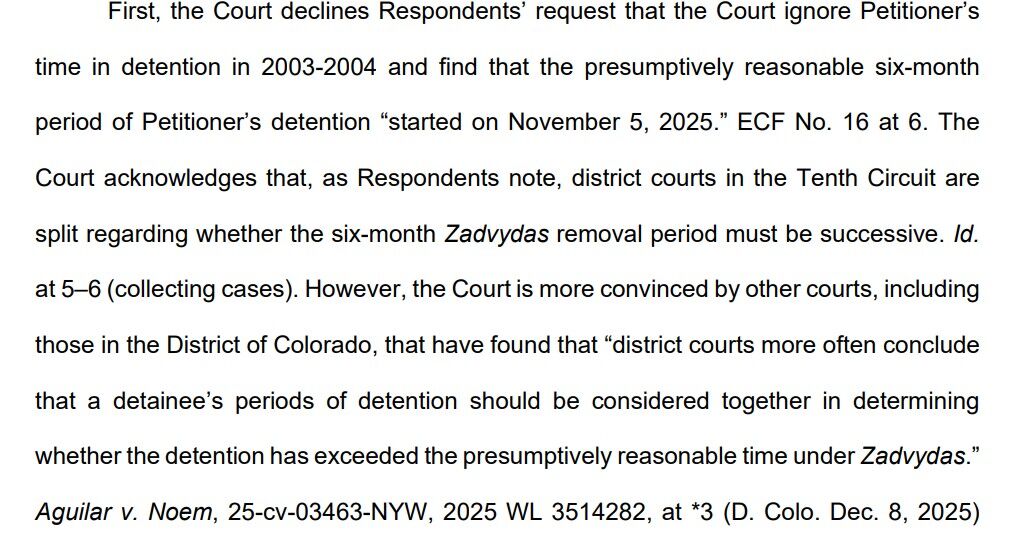
• Judge Charlotte N. Sweeney concluded she could consider a man’s current period in immigration custody, plus his previous incarceration 20 years ago, when determining if his length of detention violates his rights:
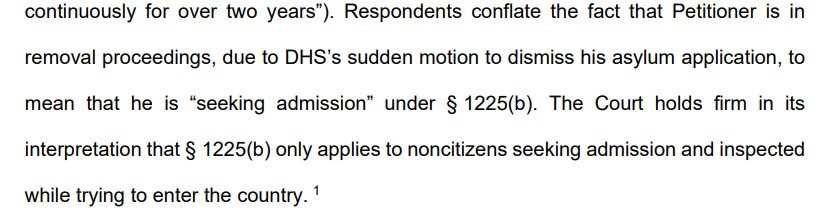
• Judge Regina M. Rodriguez wrote that the government’s abrupt dismissal of a man’s asylum proceedings, only to arrest him immediately upon leaving the courtroom, didn’t transform him into someone “seeking admission” to the country who could be detained without bond:
Vacancies and appointments
• Applications are due by March 28 to succeed retiring District Court Judge Philip J. McNulty in the First Judicial District (Jefferson and Gilpin counties).
Miscellaneous proceedings
• Applications are due by April 16 for counties seeking grants to help with courthouse security costs. Up to $2.8 million in funding is available from the state’s Judicial Department.


10th Circuit partially revives lawsuit over 2020 Denver protest injuries
Michael Karlik
michael.karlik@coloradopolitics.com
Updated 11 hours ago
The Colorado-based federal appeals court revived a man’s claims against Denver on Friday after concluding a trial judge resolved the case in the city’s favor without analyzing two of the three instances of alleged excessive force and other constitutional violations....
Federal judges find Colorado immigration judge violated several orders
Michael Karlik
michael.karlik@coloradopolitics.com
Updated 12 hours ago
Multiple federal judges in Colorado have freed people from immigration custody after determining that one immigration judge violated their directives for properly conducting bond hearings. For nearly a year, Colorado’s U.S. District Court has faced a flood of “habeas corpus” petitions...

Misconduct complaints from ex-Colorado judicial discipline director dismissed against federal judges
Michael Karlik
michael.karlik@coloradopolitics.com
Updated 1 day ago
The administrative body for the Denver-based federal appeals court upheld a finding last week that misconduct complaints against Colorado’s chief federal trial judge and the chief appeals judge warranted dismissal and appeared to be a “litigation tactic” by the complaining...

First-ever Red Rocks naturalization ceremony draws most diverse group of new citizens
Michael Karlik
michael.karlik@coloradopolitics.com
Updated 13 hours ago
Colorado’s federal trial court held its first-ever naturalization ceremony for nearly 300 new citizens on Thursday at Red Rocks Park and Amphitheatre. “We’re doing it to commemorate the 250th anniversary of the Declaration of Independence and the United States. Red...
Jeffco taxpayers could be on the hook for a possible child sex assault settlement
Matt Kyle
matt.kyle@denvergazette.com
Updated 17 hours ago
Taxpayers may end up on the hook for a child sexual assault settlement, possibly worth up to $15 million, after Jeffco Public Schools failed to notify its insurance company in a timely manner about the case. The incident stems from...
10th Circuit finds no fair housing violation by Littleton landlord for worker’s alleged rape of tenant
Michael Karlik
michael.karlik@coloradopolitics.com
Updated 11 hours ago
The Denver-based federal appeals court concluded on Monday that Littleton’s housing authority could not be held liable for a maintenance worker’s alleged rape of a tenant, as the worker’s employment did not provide any special access to the victim. A...

Jeffco Public Schools sues Trump administration to protect funding after alleged transgender policies violation
Matt Kyle
matt.kyle@denvergazette.com
Updated 2 days ago
In the wake of several threats by the Trump administration to revoke federal funding, Jeffco Public Schools filed a lawsuit against the Department of Education seeking to protect that badly needed money. Jeffco has been under investigation by the DOE’s...

Denver detox center did not violate man’s rights with 10-hour hold, 10th Circuit says
Michael Karlik
michael.karlik@coloradopolitics.com
Updated 3 days ago
The Colorado-based federal appeals court concluded on Tuesday that Denver’s detoxification facility did not violate a man’s rights by holding him against his will for 10 hours until his blood alcohol content was projected to reach zero. Unusually, Brian Garrett’s...

Federal judge clarifies ex-GOP treasurer candidate’s burden to prove defamation claims
Michael Karlik
michael.karlik@coloradopolitics.com
Updated 3 days ago
A federal judge clarified last week that businessman and former Republican statewide candidate Brian Watson will need to surmount a higher hurdle in proving his claim that a party guest’s alleged description of him as a “criminal” amounted to defamation....
Colorado board permits state to appeal injunction against arthritis drug price cap
Marissa Ventrelli
marissa.ventrelli@coloradopolitics.com
Updated 4 days ago
A Colorado board voted Friday to allow the Attorney General’s Office to fight an injunction against a price cap on a drug that treats arthritis. A U.S. district court judge had granted the company Amgen a preliminary injunction, temporarily blocking...
PREV
PREVIOUS

Denver's violent crime has dropped — but not everywhere in the city
On April 27, 2022, Garry Arellano, a longtime Denver resident, stepped in to break up a fight between two teen girls. Court documents show the girls had started the fight downtown, but texted each other to continue fighting that night at La Alma-Lincoln Park at 13th Avenue and Osage Street. Arellano, a 63-year-old man described […]
Appeals court recognizes longer window to sue insurers for withholding policy details
Colorado’s second-highest court split with its own prior decision earlier this month and concluded injured motorists have two years, not one, to sue insurance companies for withholding relevant information about an at-fault driver’s policy. In 2019, Colorado lawmakers enacted a measure to help motorists determine which insurance coverage is available in the event of an injury. To […]