

Colorado justices say utilities commission overreached by immunizing Xcel in rate document
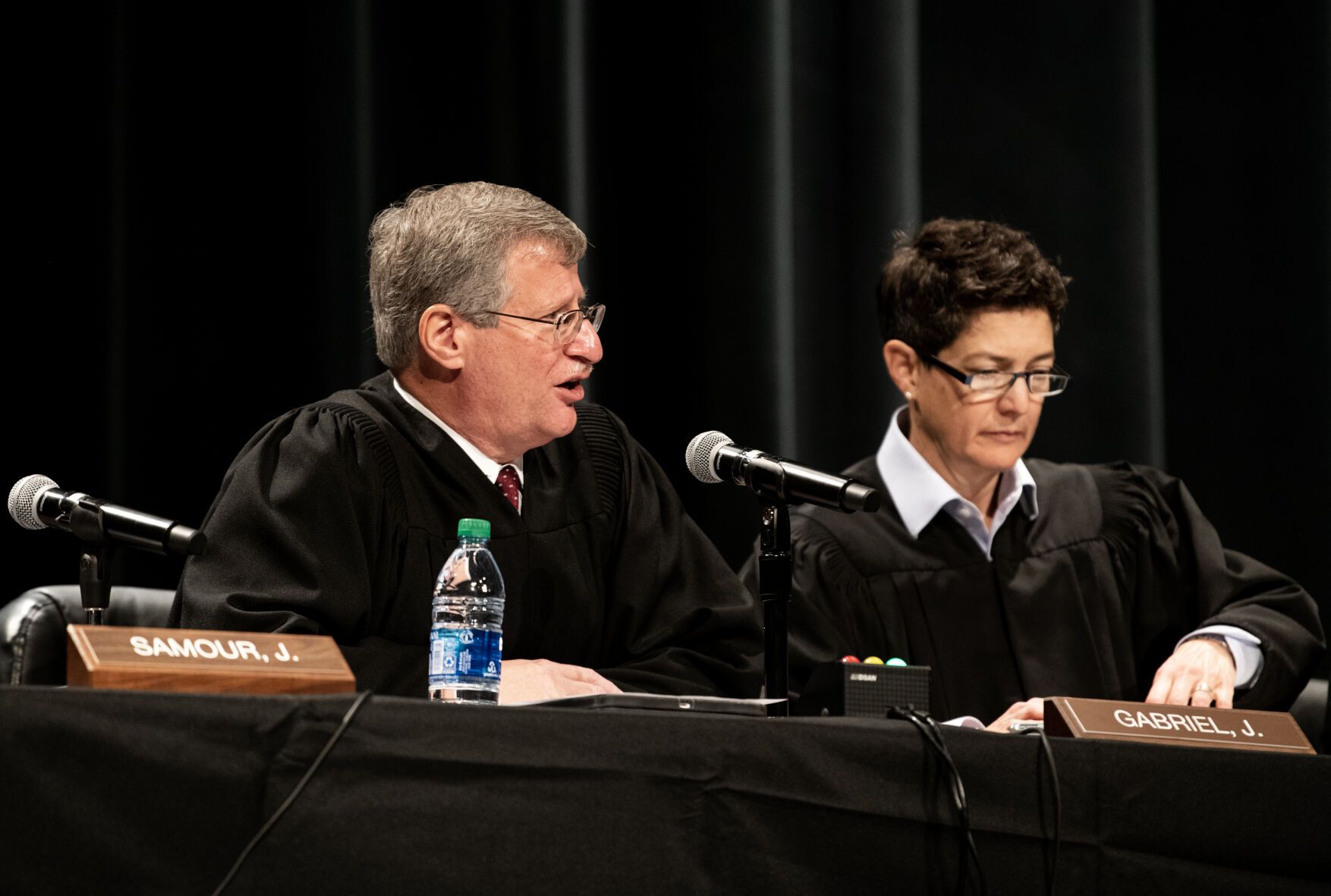
Xcel Energy cannot rely upon a rate-setting document to broadly immunize itself from liability against electrocutions, the Colorado Supreme Court ruled on Monday.
The justices originally heard the electrocution-related lawsuit from Francisco Cuevas to decide whether Xcel’s tariff, which sets the rates and terms of service for its customers, shielded the utility from liability when its power lines injure someone who is not a customer.
But by 5-1, the Supreme Court did not decide whether the tariff actually went that far, instead concluding that the Colorado Public Utilities Commission had no authority, to begin with, to approve a tariff that immunizes Xcel under those circumstances.
While the state constitution and law “grant broad authority to the PUC to regulate utilities’ facilities, services, rates, and charges, nothing in those provisions either expressly or by necessary implication grants the PUC the authority to limit a utility’s liability to non-customers,” wrote Justice Richard L. Gabriel in the Jan. 26 opinion.

Chief Justice Monica M. Márquez dissented. She did not believe the Public Utilities Commission needed specific authorization to approve a tariff with immunity because its authority is broad by default.
“As relevant here, although it has the power to do so, the legislature has not restricted the PUC’s authority to approve tariff provisions that limit a utility’s liability to non-customers,” she wrote. “Accordingly, the PUC retains such authority.”
Cuevas, the owner of Outdoor Design Landscaping, was hanging Christmas lights at a Lakewood woman’s home in late 2017 when he received a debilitating shock from nearby power lines. On the theory that the close proximity of the power lines electrified the tree, Cuevas sued the homeowner and Xcel for his injuries.
The Court of Appeals allowed the lawsuit to proceed in part, reasoning that Xcel’s tariff could not, on its own, provide immunity in such scenarios.
Tariffs have “contractual roots and regulate a utility’s provision of services to its customers,” wrote Judge Timothy J. Schutz, adding the legislature had said nothing about the wider immunity Xcel claimed it had.
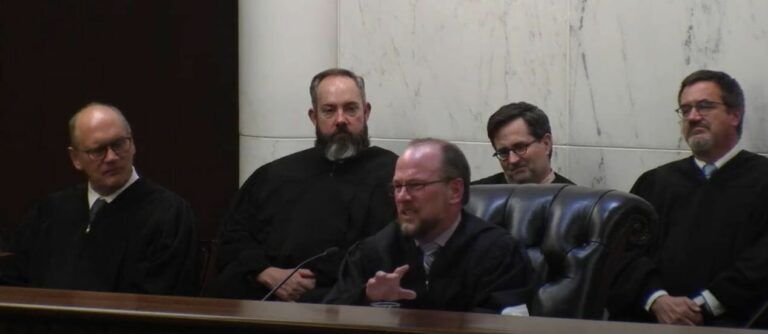
Xcel appealed, pointing out the Colorado Constitution gives “all power to regulate the facilities, service and rates and charges” of utilities to the Public Utilities Commission — which approved the tariff containing immunity language for Xcel. To the Supreme Court, Xcel argued its tariff immunity for “injury to persons” meant what it said, without any limitation to customers. The company noted that tariffs have the force of law and argued that the Court of Appeals was wrong to view them as merely a contract between the utility and the customer.
But during oral arguments, multiple justices were uncomfortable with the idea that the commission’s constitutional power included granting immunity for electrocutions seemingly without restriction.
“It’s highly troubling to say that a tariff can give a utility the right to limit its own liability to anybody in the world,” said Gabriel.
For its part, Cuevas’ company, Outdoor Design, appealed the Court of Appeals’ determination that it violated the High Voltage Safety Act by engaging in activity that reasonably could have brought employees within 10 feet of the power lines, yet failed to notify Xcel. That meant Outdoor Design would have to reimburse Xcel if a jury found the utility liable for Cuevas’ injuries — an outcome that Cuevas’ attorney acknowledged would end the lawsuit.
The Supreme Court largely upheld the appellate panel’s decision, while going further and concluding the Public Utilities Commission could not approve of a tariff that includes immunity for non-customers’ injuries, notwithstanding the narrow exception for defective power lines.
Upholding the tariff language “would afford the PUC essentially limitless regulatory power, including the power to grant utilities full immunity from liability to any injured persons or entities,” wrote Gabriel.
Márquez believed the immunity in the tariff was constrained to “highly specific (and relatively unlikely) circumstances.” Because lawmakers had not restricted the Public Utilities Commission’s authority to approve such a provision, she concluded the constitution allows for it.
The case is Public Service Company of Colorado v. Outdoor Design Landscaping, LLC et al.

Colorado justices suggest father entitled to appeal of custody decision
Michael Karlik
michael.karlik@coloradopolitics.com
Updated 20 hours ago
Members of the Colorado Supreme Court signaled strongly on Tuesday that a father deserved some avenue for challenging a temporary child custody order that no lower court believed it could review due to the unusual circumstances of the case. Because...

Court snuffs out challenge to Denver’s flavored tobacco ban
Deborah Grigsby
deborah.smith@denvergazette.com
Updated 1 hour ago
The smoke finally cleared in Denver’s battle over a citywide ban on flavored tobacco products when a Denver court dismissed a challenge from local vape shop owners seeking to declare the ordinance unconstitutional and block its enforcement. On Wednesday, Denver...
Colorado justices agree fraud claims belong in corporate dispute
Michael Karlik
michael.karlik@coloradopolitics.com
Updated 22 hours ago
The Colorado Supreme Court decided on Tuesday that a corporate plaintiff validly pursued fraud claims over conduct that was not covered by a contract or by a set of interrelated business agreements leading up to the contract. Previously, the Court...
Colorado Supreme Court says intimate messages irrelevant to assault case
Michael Karlik
michael.karlik@coloradopolitics.com
Updated 1 day ago
The Colorado Supreme Court decided on Tuesday that a Douglas County judge acted reasonably by blocking evidence of a defendant’s BDSM-related conversations with the victim in his trial for assault and false imprisonment. While the Court of Appeals believed that...
Trump’s 10th Circuit nominee declines to name 2020 election winner, defends immigration decisions
Michael Karlik
michael.karlik@coloradopolitics.com
Updated 1 day ago
President Donald Trump’s nominee to the Denver-based federal appeals court declined to say who won the 2020 presidential election during his appearance before the U.S. Senate Judiciary Committee on Wednesday, and defended his recent rulings in immigration detention cases. U.S....
Colorado law allowing lawsuits against ‘conversion therapy’ providers takes effect July 1
Marissa Ventrelli
marissa.ventrelli@coloradopolitics.com
Updated 17 hours ago
With a new law taking effect July 1, Colorado is creating a legal pathway for people to sue licensed providers of “conversion therapy,” even as debate over the practice’s constitutionality continues in the wake of a recent U.S. Supreme Court...
Colorado justices expand ability for civil defendants to avoid participating, win after trial
Michael Karlik
michael.karlik@coloradopolitics.com
Updated 1 day ago
The Colorado Supreme Court decided on Tuesday that a civil defendant, whose non-participation in the case meant that he legally admitted to the sexual assault allegations against him, could nonetheless prevail after he showed up to testify at trial. A...
Colorado justices find ability to extend appeal deadline applies equally to prosecutors, defendants
Michael Karlik
michael.karlik@coloradopolitics.com
Updated 2 days ago
The Colorado Supreme Court decided on Tuesday that prosecutors have the same ability as criminal defendants to freeze their deadline to appeal a trial judge’s ruling when they ask for reconsideration, even though the rules do not explicitly say so....
Colorado justices confirm leaving-the-scene prosecutions require no proof of driver’s knowledge
Michael Karlik
michael.karlik@coloradopolitics.com
Updated 16 hours ago
The Colorado Supreme Court confirmed on Tuesday that its 20-year-old decision involving drivers who leave the scene of an accident remains good law and prosecutors do not have to prove that such defendants knew they were involved in an accident....
Judge blocks Colorado’s proposed ban on using SNAP benefits for soda
Marissa Ventrelli
marissa.ventrelli@coloradopolitics.com
Updated 22 hours ago
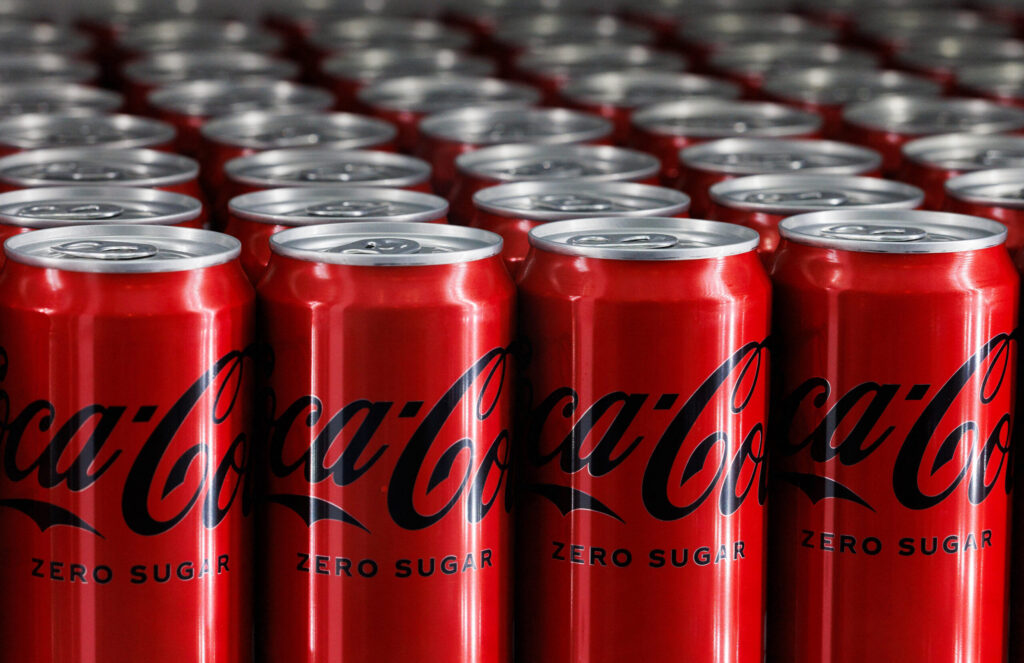
A federal judge has temporarily blocked Colorado and several other states from enforcing a proposed “Healthy Choice Waiver” that would have barred Supplemental Nutrition Assistance Program (SNAP) recipients from using their benefits to buy soda and other sugary drinks. Under...
PREV
PREVIOUS
Colorado snowpack still at all-time low after weekend snow
The big snow of the last few days has come and gone, and Colorado is set to move forward into the end of January while it continues to set new all-time low records in terms of snowpack. Per the National Weather Service, some spots did get big snow since Friday. Mountains west of Crested Butte […]
Divided Colorado Supreme Court curtails use of laced-substances defense
The Colorado Supreme Court on Monday walked back the ability of criminal defendants to claim their conduct was the result of consuming an intoxicating substance that secretly contained another behavior-altering substance. Under state law, “involuntary intoxication” is an affirmative defense, meaning the prosecution has to disprove some component of that defense for the jury to […]