

Boulder prosecutors to re-try man accused of murder; case part of CBI DNA scandal
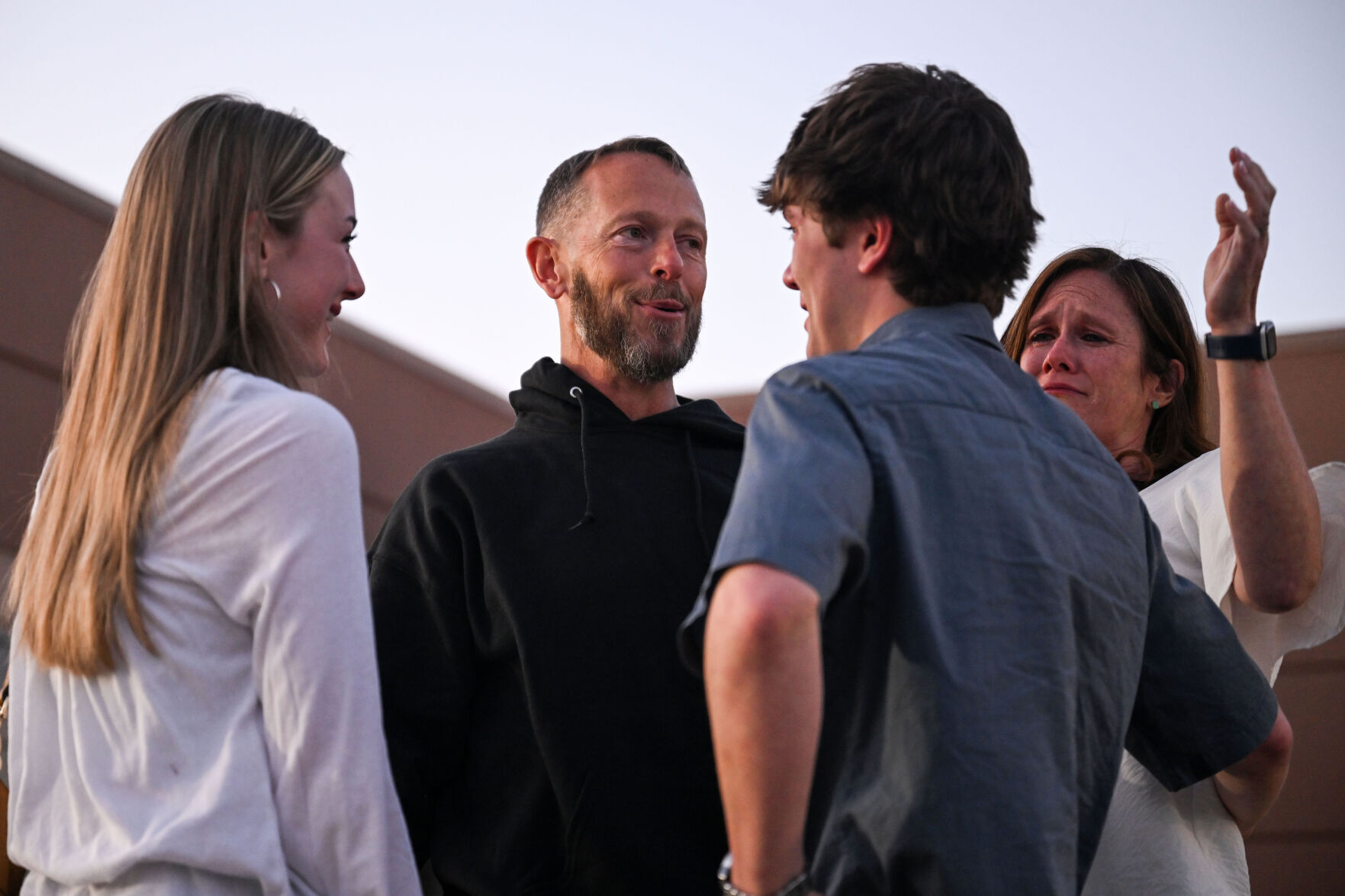
Michael Clark, the man accused of a 31-year-old Boulder murder case but freed from prison on bail in April when his original conviction was set aside, will be tried for second time, a Boulder County prosecutor announced on Thursday.
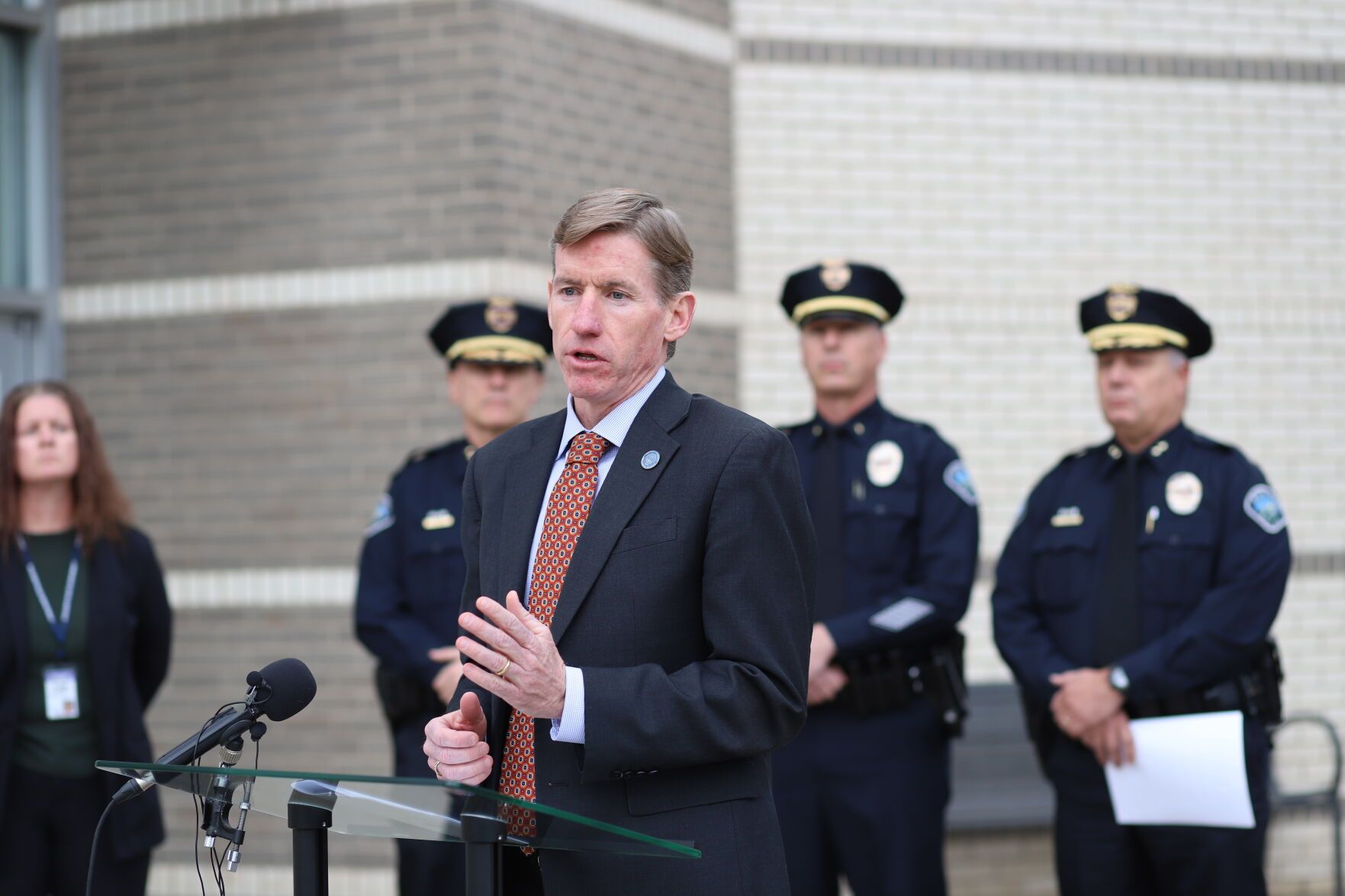
The decision comes after months of speculation on whether Boulder County District Attorney Michael Dougherty, who is running for state attorney general, would seek a new trial or drop the case against Clark after a retest of the original DNA evidence used to convict him was found to be potentially suspect.
It is a case that has become intrinsically entangled in the ongoing scandal at the Colorado Bureau of Investigation’s forensic lab where a former DNA expert is accused of compromising evidence for years.
Clark, 50, continues to maintain his innocence. He was first convicted in October 2012 more than a decade after the murder and served 12 years of a life sentence without parole.
At the brief hearing Thursday, Boulder County Assistant District Attorney Kenneth Kupfner said his office believes “we can prove beyond a reasonable doubt (Clark) was responsible for the death of Marty Grisham.”
Adam Frank, Clark’s defense attorney, bristled at the announcement of a second trial, declaring “the fact he is being re-prosecuted is a moral failing.”
Salomone set Nov. 17 as a deadline for both sides to file motions series and scheduled a multiple-day hearing on those motions for Feb. 23, 2026. The May 2026 second trial is expected to last roughly nine days.
Dougherty said in a statement on Thursday that vacating the first conviction “was the right thing to do.” But he added that his office subsequently “carefully and thoroughly analyzed all the remaining evidence to determine the right path forward. Our request for trial dates is a reflection of that process and our decision of what justice requires. We look forward to the trial.”
Clark was 19 when Boulder city employee Marty Grisham was fatally shot Nov. 1, 1994, after answering the door at his apartment. There was no eyewitness to the crime, no physical evidence and the gun used was never recovered.
Still, back then Clark emerged quickly as the prime suspect in the murder after it was discovered he had previously stolen a fistful of checks about a month prior when he had been in Grisham’s apartment. Clark was friends with Grisham’s daughter in high school and had agreed to feed her father’s cat.
Clark admitted to forging about $4,000 in checks and that he once owned the type of gun that could have fired the fatal bullets, but he has insisted from the beginning he was not at Grisham’s apartment the night of the murder and he did not kill him.
Police long believed Clark killed Grisham to cover up stealing the checks.
Still, the case stalled for more than a decade after it was determined the evidence against Clark was too shaky to charge him. It was not until 2011, when Boulder Police Department investigators sent a small jar of Carmex lip balm found outside Grisham’s apartment to the Colorado Bureau of Investigation for DNA analysis by forensic scientist Yvonne Woods, that the case found new life.
Woods, who goes by the name Missy, concluded and later testified at Clark’s first trial that the DNA profile found inside a Carmex container was a partial match to a swab taken from Clark, presumably placing him at the scene.
It was enough to convince the jury, and Clark was convicted of first-degree murder.
This was years before the scandal at the CBI lab broke open and it was revealed Woods allegedly had been altering and manipulating DNA results in criminal cases during her nearly 30-year tenure as the state’s go-to forensic expert.
CBI has now acknowledged that of the more than 10,780 cases Woods worked on in her career, it has found 1,045 irregularities, or roughly one-in-10.
Notably, the Clark case has never been included in CBI’s list of troubled cases.
Earlier this year Woods, 65, was charged with 102 felonies in connection with the alleged misconduct between 2008 and 2023, including cybercrime, perjury, forgery and attempting to influence a public servant. She retired in November 2023 rather than be fired just prior to the scandal becoming public. She is now awaiting trial in Jefferson County.

Armando Saldate III, the new director of CBI, told The Denver Gazette last month he was confident that the problems inside the state lab did not go beyond Woods. In an interview with Fox31 he reiterated what CBI has said all along: officials believe no one has been wrongfully imprisoned because of Woods’ alleged manipulation of DNA evidence.
Frank, Clark’s attorney, as far back as 2019, asked the Boulder County district court to hold an evidentiary hearing as part of his client’s appeal to discuss findings by an outside DNA expert that cast doubt on Wood’s methods and findings. The judge refused.
It was not until December 2023 that the Colorado Court of Appeals ruled that the judge had erred, and a hearing was needed not only on the DNA question but also due to alleged jury misconduct. An investigator for the defense found that a juror during trial had visited the scene despite strict prohibitions from the judge.
By then, the CBI scandal was just starting to explode, and as more and more revelations of wrongdoing emerged, the appellate court’s decision for a hearing on the DNA findings took on new relevance.
Late last year Dougherty agreed that the Carmex jar’s contents should be tested by an independent lab in Virginia for comparison to what Woods’ found. In some of the new results, released in March, Clark was considered “statistically excluded” from the DNA found in the Carmex, according to a motion filed by Dougherty on April 11.
In a statement sent to The Denver Gazette Thursday, Frank criticized Dougherty decision.
“Now, in what appears from the outside to be an attempt to protect Ms. Woods and CBI from that damning conclusion, Michael Dougherty is prosecuting an innocent man for murder 30 years after the incident based on the same evidence his office had in 1994 when they concluded they should not charge Mr. Clark,” Frank said.
The district attorney’s office then said it would no longer object to vacating the first conviction because of the “totality” of problems surrounding the case, even though prosecutors still believed they had a strong circumstantial case against Clark. Setting aside a murder conviction is considered extremely rare.
Three days later, on April 14, Clark was released from Fremont Correctional Facility on $100,000 bond.
In a May interview with The Denver Gazette, Clark acknowledged he and his family knew he could face a retrial or return to prison but remained hopeful.
“I feel out,” he said then, “and I feel perfectly confident that I am staying out.”
Just prior to the hearing, Clark’s wife, Amy Clark, clutched her husband’s hand and then kissed it before he walked to the defense table.

Colorado justices say insurers may access policyholders’ medical info in denied-benefits litigation
Michael Karlik
michael.karlik@coloradopolitics.com
Updated 2 days ago
The Colorado Supreme Court declined on Monday to expand its narrow prohibition on insurance companies accessing policyholders’ medical information, clarifying that a dispute over an insurer’s bad-faith decision to deny benefits is the only situation where a company is limited...
Colorado Supreme Court declines to loosen requirements for insurance company defendants
Michael Karlik
michael.karlik@coloradopolitics.com
Updated 15 hours ago
The Colorado Supreme Court declined last week to reconsider its longstanding expectations for insurance company defendants, and agreed that an insurer failed to properly raise its defenses against a policyholder’s breach-of-contract lawsuit. When an insured driver has an accident with...

Teen defendant properly transferred from youth detention to jail, Colorado justices conclude
Michael Karlik
michael.karlik@coloradopolitics.com
Updated 2 days ago
Colorado law required the transfer of a teenage murder suspect from youth detention to the county jail when he turned 18, the state Supreme Court ruled last week. Prosecutors have accused Issac James Lawrence of killing a younger boy and attempting to...
Divided Colorado Supreme Court finds parental anonymity in ‘safe haven’ law
Michael Karlik
michael.karlik@coloradopolitics.com
Updated 14 hours ago
Parents who surrender their newborns under Colorado’s “safe haven” law are entitled to anonymity and confidentiality in any subsequent adoptive proceedings involving the child, the state Supreme Court ruled on June 8. Colorado’s law, like its counterparts across the country,...
Safe2Tell tip, corroborated details provided grounds to search backpack, Colorado justices rule
Michael Karlik
michael.karlik@coloradopolitics.com
Updated 13 hours ago
The Colorado Supreme Court decided this month that a tip submitted through the state’s confidential school safety system, plus a Douglas County administrator’s corroboration of some details, provided reasonable suspicion to search a student’s backpack for drugs. Someone submitted a...
Appeals court finds opening in Colorado Supreme Court’s framework for child neglect cases
Michael Karlik
michael.karlik@coloradopolitics.com
Updated 3 days ago
Colorado’s second-highest court squeezed through an opening last week in a controversial state Supreme Court decision from 2025, concluding that the justices had not prohibited a child’s legal representative from being the one to request termination of parental rights in...
Colorado Supreme Court upholds police search of car based on arm movements
Michael Karlik
michael.karlik@coloradopolitics.com
Updated 15 hours ago
The Colorado Supreme Court decided last week that Denver officers’ search of a vehicle was constitutional, based on their perception of the occupants’ arm movements that a trial judge found to not be credible. Officers Keegan Grubb and Richard Eberharter...
10th Circuit tosses Pueblo County sheriff defendants’ appeal in fatal shooting lawsuit
Michael Karlik
michael.karlik@coloradopolitics.com
Updated 13 hours ago
The Denver-based federal appeals court rejected an attempt from Pueblo County sheriff’s employees on Wednesday to rely on their own version of the facts to escape liability for fatally shooting an unarmed man outside a middle school. A trial judge...
Colorado justices uphold strict interpretation of consumer protection law against debt collector
Michael Karlik
michael.karlik@coloradopolitics.com
Updated 15 hours ago
The Colorado Supreme Court concluded last month that a debt collector failed to comply with state law by suing a woman for an unpaid credit card debt without documentation that it owned her account. Portfolio Recovery Associates LLC filed a...
Colorado justices say judges can nearly eliminate parenting time without it being a ‘restriction’
Michael Karlik
michael.karlik@coloradopolitics.com
Updated 15 hours ago
The Colorado Supreme Court concluded last month that judges can reduce the number of days a parent spends with their child post-divorce to just above zero without it rising to the level of a “restriction” that requires more rigorous justification...
PREV
PREVIOUS

Thousands remember Charlie Kirk at Colorado State University vigil Thursday
Thousands gathered into Colorado State University’s Canvas Stadium Thursday evening to remember the late conservative activist Charlie Kirk. In the first official event hosted by Turning Point USA — the youth advocacy group Kirk founded — since Kirk’s assassination at Utah Valley University last week, supporters, students, and free speech advocates littered a crowd dotted […]

FTC sues Ticketmaster, saying it forces fans to pay more for concerts and events
The Federal Trade Commission and a bipartisan group of state attorneys general sued Ticketmaster and its parent company Thursday, saying they are forcing consumers to pay more to see live events through a variety of illegal tactics. The FTC said Live Nation and its subsidiary, Ticketmaster, have deceived artists and consumers by advertising lower ticket […]