

Del Norte officials violated open meetings law in deciding to censure board member, appeals court rules
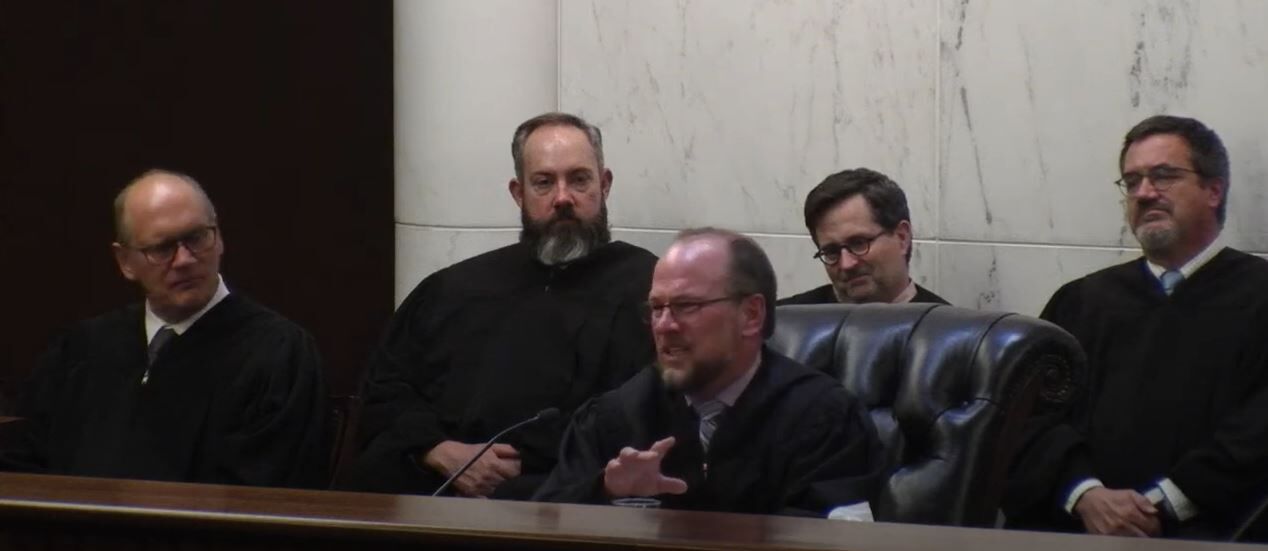
The town board of Del Norte violated Colorado’s open meetings law when it went into a closed-door session and reached a decision to censure one of its members, Colorado’s second-highest court ruled on Thursday.
A trial judge previously concluded the town board’s decision to reprimand former Trustee Laura Anzalone represented its “opinion” on her “performance,” and was not a matter requiring public decision-making. A three-judge panel for the Court of Appeals disagreed with that characterization.
“What is an issue is the public’s right to observe the discussion and exercise of the Town’s policy-making functions,” wrote Judge Timothy J. Schutz in the Feb. 22 opinion. “Irrespective of its impact on Anzalone, the censure resolution constituted a formal action of the Board and was thus part of its policy-making function.”
The decision came months after a different appellate panel concluded the Aurora city council similarly committed an open meetings violation by taking action to end censure proceedings against one of its members behind closed doors.
In the precedent-setting opinion in Anzalone’s case, the Court of Appeals wrote in the summary of its decision that the dispute involved “what appears to be an increasing practice of using public censures and executive sessions to control the actions/statements of board members.”
The opinion itself did not reference an “increasing practice” of censures or the goal of “controlling” board members. The Court of Appeals’ clerk did not immediately respond to an email asking how the decision’s summary came to include those assertions.
Case: Anzalone v. Board of Trustees
Decided: February 22, 2024
Jurisdiction: Rio Grande County
Ruling: 3-0
Judges: Timothy J. Schutz (author)
Terry Fox
Michael H. Berger
Background: Del Norte Trustee Anzalone gives an update on court case
Anzalone was a town board member from 2018-2022. At an October 2021 special meeting, four trustees and the mayor went into closed-door, executive session for the stated purposes of receiving legal advice “concerning Trustee removal” and “Action by Town Board … relating to Trustee removal.”
The meeting lasted approximately 95 minutes, fewer than 10 of which were held in open session. Anzalone did not attend. After the board exited executive session, Mayor Chris Trujillo immediately announced there would be a “motion for censure,” rather than a removal of Anzalone from office.
Trustee Shelly Burnett then read from a document censuring Anzalone for allegedly “encouraging citizens to file complaints” about an ordinance, being “deceptive” when requesting a special meeting, and “creating unnecessary tension in the work environment” for town staff. The board members present approved the censure.
Anzalone then filed suit against the board, arguing it violated Colorado’s open meetings law by going behind closed doors to discuss whether to censure her, only coming back out to “rubberstamp” the decision.
In an October 2022 order, District Court Judge Crista Newmyer-Olsen sided with Del Norte. The open meetings law did not apply to the censure decision, she wrote, because it did not constitute a “formal action” by a public body.
“The Censure represents the Board’s opinion on Plaintiff’s performance as a Trustee. The Censure does not have anything to do with laws or measures that affect the general public,” wrote Newmyer-Olsen. “Simply put, without a showing that the Censure concerned the formation of public policy and/or was somehow connected to the Board’s policy-making responsibility, the (open meetings) Claim does not pass muster.”

Anzalone turned to the Court of Appeals, where the appellate panel heard arguments last month. The town reiterated Anzalone’s censure was not a matter affecting the general public and was instead a “pure political opinion by elected officials.”
“This is a discharge of the duties of public officials,” responded attorney Katayoun A. Donnelly, representing Anzalone. She added that board members clearly discussed public business during the closed-door session.
“It is easy to put the two and two together: They went in based on a motion to remove. They came out and immediately had the motion to censure,” she said.
The Court of Appeals agreed.
“It is important to recall the context that gave rise to the executive session and the resulting censure,” Schutz wrote. “Irrespective of the propriety of Anzalone’s alleged discussions with Del Norte’s residents about code enforcement, her efforts to call a special meeting of the Board, or her discussions with Town employees … these topics related to matters that affect the residents of Del Norte and Anzalone’s role as a trustee.”
The board’s own conduct in calling the meeting suggested it intended to take formal action, Schutz elaborated, which would trigger the open meetings law. The panel found it unnecessary to return the case to Newmyer-Olsen for a trial on Anzalone’s claim because the facts showed the board spent no time formulating the censure motion in public.
“There is no rational way to conclude that the substance of the censure resolution was not discussed and agreed upon during the executive session,” Schutz wrote.
The panel voided Anzalone’s censure.
The decision bolstering transparency comes as state lawmakers are seeking to exempt themselves from some of the open meetings law’s requirements. Proponents have characterized it as an attempt to clarify the law’s applicability to legislative discussions, while critics have warned against permitting policymaking to occur in secret.
The case is Anzalone v. Board of Trustees et al.


Colorado justices say insurers may access policyholders’ medical info in denied-benefits litigation
Michael Karlik
michael.karlik@coloradopolitics.com
Updated 2 days ago
The Colorado Supreme Court declined on Monday to expand its narrow prohibition on insurance companies accessing policyholders’ medical information, clarifying that a dispute over an insurer’s bad-faith decision to deny benefits is the only situation where a company is limited...
Colorado Supreme Court declines to loosen requirements for insurance company defendants
Michael Karlik
michael.karlik@coloradopolitics.com
Updated 14 hours ago
The Colorado Supreme Court declined last week to reconsider its longstanding expectations for insurance company defendants, and agreed that an insurer failed to properly raise its defenses against a policyholder’s breach-of-contract lawsuit. When an insured driver has an accident with...

Teen defendant properly transferred from youth detention to jail, Colorado justices conclude
Michael Karlik
michael.karlik@coloradopolitics.com
Updated 2 days ago
Colorado law required the transfer of a teenage murder suspect from youth detention to the county jail when he turned 18, the state Supreme Court ruled last week. Prosecutors have accused Issac James Lawrence of killing a younger boy and attempting to...
Divided Colorado Supreme Court finds parental anonymity in ‘safe haven’ law
Michael Karlik
michael.karlik@coloradopolitics.com
Updated 13 hours ago
Parents who surrender their newborns under Colorado’s “safe haven” law are entitled to anonymity and confidentiality in any subsequent adoptive proceedings involving the child, the state Supreme Court ruled on June 8. Colorado’s law, like its counterparts across the country,...
Safe2Tell tip, corroborated details provided grounds to search backpack, Colorado justices rule
Michael Karlik
michael.karlik@coloradopolitics.com
Updated 12 hours ago
The Colorado Supreme Court decided this month that a tip submitted through the state’s confidential school safety system, plus a Douglas County administrator’s corroboration of some details, provided reasonable suspicion to search a student’s backpack for drugs. Someone submitted a...
Appeals court finds opening in Colorado Supreme Court’s framework for child neglect cases
Michael Karlik
michael.karlik@coloradopolitics.com
Updated 3 days ago
Colorado’s second-highest court squeezed through an opening last week in a controversial state Supreme Court decision from 2025, concluding that the justices had not prohibited a child’s legal representative from being the one to request termination of parental rights in...
Colorado Supreme Court upholds police search of car based on arm movements
Michael Karlik
michael.karlik@coloradopolitics.com
Updated 14 hours ago
The Colorado Supreme Court decided last week that Denver officers’ search of a vehicle was constitutional, based on their perception of the occupants’ arm movements that a trial judge found to not be credible. Officers Keegan Grubb and Richard Eberharter...

10th Circuit tosses Pueblo County sheriff defendants’ appeal in fatal shooting lawsuit
Michael Karlik
michael.karlik@coloradopolitics.com
Updated 12 hours ago
The Denver-based federal appeals court rejected an attempt from Pueblo County sheriff’s employees on Wednesday to rely on their own version of the facts to escape liability for fatally shooting an unarmed man outside a middle school. A trial judge...
Colorado justices uphold strict interpretation of consumer protection law against debt collector
Michael Karlik
michael.karlik@coloradopolitics.com
Updated 14 hours ago
The Colorado Supreme Court concluded last month that a debt collector failed to comply with state law by suing a woman for an unpaid credit card debt without documentation that it owned her account. Portfolio Recovery Associates LLC filed a...
Colorado justices say judges can nearly eliminate parenting time without it being a ‘restriction’
Michael Karlik
michael.karlik@coloradopolitics.com
Updated 14 hours ago
The Colorado Supreme Court concluded last month that judges can reduce the number of days a parent spends with their child post-divorce to just above zero without it rising to the level of a “restriction” that requires more rigorous justification...
PREV
PREVIOUS

Colorado lawmakers vote to give themselves a pay raise beginning in 2025
Colorado House Democrats on Thursday voted to boost the pay of General Assembly lawmakers beginning in the 2025-26 fiscal year, with those living in the Denver metro area getting substantially more in actual dollars and rate increase than policymakers who reside outside. The cost to taxpayers for the higher per diems is just shy of […]

Debate over proposals tackling drug use, treatment illustrates ideological divide in Colorado
Colorado lawmakers on Tuesday tackled two proposals that offer convergent – and divergent – approaches to combatting drug abuse during a discussion that starkly illuminated on ideological disagreements at the state Capitol. Both bills emerged out of ad hoc panel, which met over the summer as a response to soaring addiction rates nationwide and […]