

Colorado lawmakers vote to give themselves a pay raise beginning in 2025

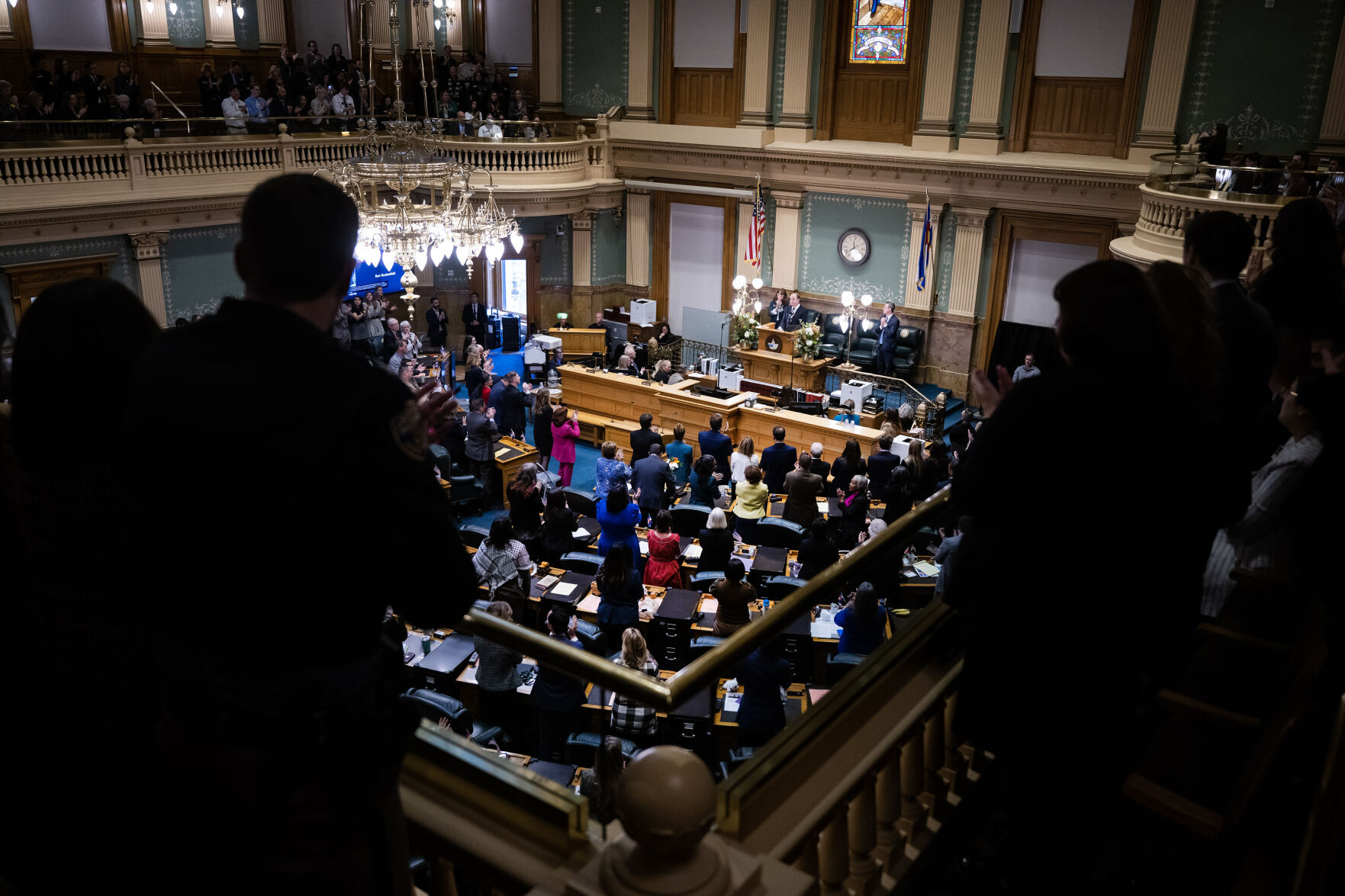
Colorado House Democrats on Thursday voted to boost the pay of General Assembly lawmakers beginning in the 2025-26 fiscal year, with those living in the Denver metro area getting substantially more in actual dollars and rate increase than policymakers who reside outside.
The cost to taxpayers for the higher per diems is just shy of $300,000 in 2025-26.
Metro-area legislators’ per diem has not increased for more than three decades.
Under House Bill 1059, the per diem rate claimed by lawmakers who reside in the Denver metro area will increase to 25% of the federal per diem rate set for the city and county of Denver by the U.S. General Services Administration.
For lawmakers who live more than 50 miles from Denver, that increase will be 90% of the federal per diem.
Here’s what that means in practical terms.
Currently, lawmakers who live within 50 miles of Denver can claim $45 per day. Under HB 1059, that increases to $71 per day.
For a 120-day session, that hikes the per diem from $5,400 to $8,520 or $3,120 more per person, a nearly 60% increase.
There are 40 House members and 21 senators who live within that 50-mile radius of Denver.
Meanwhile, the current per diem for non-metro lawmakers is $240 per day, a higher amount that is intended to help cover the cost of apartment rentals, since they have to be in Denver for four months. Some apartment buildings near the Capitol rent almost exclusively to lawmakers during the session.
The new rate for non-metro lawmakers under HB 1059 will go to $254 per day.
That means an increase to $30,480 from $28,800 – $1,680 more per lawmaker for 120 days.
That rate increase for non-metro legislators translates to about 6%.
Most lawmakers can claim per diem only during the legislative session of 120 days, although those in leadership and others who serve on interim committees may also claim the daily allowance outside of the session.
Per diem, according to the Legislative Council staff, is “intended to compensate members for expenses they incur, other than travel expenses, while they are serving during a session, or during the interim for specific functions authorized in state law.”
Lawmakers are not required to submit receipts for those expenses.
Per diems for metro lawmakers haven’t increased since 1990, although non-metro lawmakers have seen several increases in the last several years. The non-metro per diem in 2021 stood at $219 per day.
Under IRS rules, per diem for metro lawmakers is treated as salary, subject to taxes and withholding for the Public Employees’ Retirement Association pension.
That actually reduces the value of the current $45 per day per diem to around $38, according to former Sen. Chris Holbert, R-Douglas County, who had toyed with legislation on upping the metro per diem a few years ago.
It doesn’t work that way for non-metro legislators, in which per diem is treated as expense reimbursement, not taxable and not subject to PERA withholding.
Per diem for non-metro lawmakers is also indexed (at 85%) to the federal rate, a change enacted in 2008. No such provision in law exists for metro area per diem, one of the reasons why it hasn’t increased in 31 years.
Thirty-one years without an increase means that $45 per day is worth about 42.5% of what it was in 1990, Holbert said in 2021.
For salary, House lawmakers are paid $43,977 per year, broken into 12 monthly payments; Senate lawmakers whose terms began in 2023 receive the same amount, but those whose terms began before that will see $41,499 annually through 2025.
But that could change, too, under the second part of HB 1059.
The bill calls for the establishment of a compensation commission. The nine-member Independent State Elected Official Pay Commission will meet every four years to set the compensation for members of the General Assembly, the governor, the lieutenant governor, the attorney general, the secretary of state, and the state treasurer.
Under the bill, the commission’s first meeting will be held on Sept. 1, 2025. Members will be appointed by the governor and by legislative leaders.
State Rep. Regina English, D-Colorado Springs, told the House State, Civic, Military and Veterans Affairs Committee on Thursday that the commission would recommend increases but would not be able to suggest reductions in pay.
Rep. Naquetta Ricks, D-Aurora, said the bill will ensure lawmakers get a fair review on compensation. A good way to make government reform is through public process, where regular Coloradans can set compensation for elected officials, she said.
Ricks said 14 states utilize similar models on compensation commissions.
Jan Johnson, the only person to testify against the bill, said the money that HB 1059 would require can be better spent elsewhere.
Instead of increasing per diem, she suggested only those lawmakers who qualify for temporary assistance to needy families (TANF) should be allowed increased pay.
Those in favor of raising the per diem included the League of Women Voters of Colorado, Colorado Common Cause, the ACLU of Colorado, America Votes and Young Invincibles.
Everyone who meets the minimum qualifications should be able to run for office and not worry about jeopardizing their family or future, said former state Rep. Jonathan Singer, D-Longmont.
Singer, who served from 2012 to 2020 and was paid $30,000 a year, almost had to resign his seat a month after he was first elected because the salary was not enough to cover rent. He lucked out, he told the committee, finding a place he could afford just weeks before the session started.
He said he once had a conversation with his then-5-year-old daughter about public service, in which she said one day it will be her turn.
“I don’t want to have the conversation about whether or not she could afford the job,” he said.
Political science professor Seth Masket, who runs the Center on American Politics at the University of Denver, said the pay does not cover the work lawmakers must do outside of the session. Lower pay makes it difficult, if not impossible for all but the retired or independently wealthy to serve in elected office, he said.
In the 40 states where lawmakers are paid a salary, they’re each paid about $40,000 per year.
Former Rep. Said Sharbini, a Democrat from Adams County, who resigned his seat last December, cited both the vitriolic nature of the House and the low pay as factors for his resignation.
The bill passed on a 7-4 vote, with Rep. Elisabeth Epps, D-Denver, voting against the measure, along with the Republican members of the committee.
“We’re ignoring the premise that $42,000 a year is not livable” but that $42,000 for four months’ work is okay, she said during the hearing.
She also asked why the discussion over salary is framed as if the only way to rectify the “gaping inequity” is by changing the amount, rather than modifying the structure of the work.
That’s a reference to lawmakers who have pointed out that, despite the 120-day session, they work year-round on constituent issues and other related matters.
Full-time legislators spend about 84% of their time on legislative work during the course of a year, while part-time lawmakers spend 74% of their annual year on legislative work, according to the National Conference of State Legislatures.
Maggie Gómez of the State Information Exchange cited that NCSL data, saying the bill just looks at one piece of the structure.
The bill now moves on to the House Appropriations Committee.


Homeless recruits of ‘The Program’ say they were told to sign NDAs amid investigations in Colorado
David Migoya
david.migoya@gazette.com
Updated 2 weeks ago
Several formerly homeless people — each drawn into an Aurora-based enterprise known as “The Program” that promised free housing and cash in return for letting a home-health business administer prescriptions they were given — said they were pressed into signing...
Homeless recruits of ‘The Program’ say they were told to sign NDAs amid investigations in Colorado
David Migoya
david.migoya@gazette.com
Updated 2 weeks ago
Several formerly homeless people — each drawn into an Aurora-based enterprise known as “The Program” that promised free housing and cash in return for letting a home-health business administer prescriptions they were given — said they were pressed into signing...
Medicaid suspends agency behind ‘The Program,’ citing ‘credible’ fraud allegations
David Migoya
david.migoya@gazette.com
Updated 2 weeks ago
The agency overseeing Colorado’s federal Medicaid program has suspended an Aurora home-health agency that is the focus of an investigation into an enterprise that lured dozens of homeless people with promises of free housing and cash and reaped tens of...

July 1 brings new Colorado rules on gun ammo, wildfire-risk scoring, wildlife enforcement
Marissa Ventrelli
marissa.ventrelli@coloradopolitics.com
Updated 5 days ago
Colorado will usher in a new set of laws on July 1 that affect everything from ammunition sales to insurance transparency and wildlife trafficking enforcement. Here is a look at some of the state’s new laws: Ammunition sales House Bill...

A tale of two debates | Vince Bzdek
Vince Bzdek
vince.bzdek@gazette.com
Updated 1 month ago
Ballots go out Monday as the June 30 state primary elections bear down on us. As a result, it is suddenly the season of proliferating political debates, and there have been some doozies already. I had the chance to see two very...
‘The program’: Caretakers got millions, some homeless were evicted
David Migoya
david.migoya@gazette.com
Updated 4 weeks ago
Editor’s Note: This article is part of a Colorado Watch series that looked into how homeless people were offered housing and “donations” from a church in return for becoming clients of a home health care agency that billed Medicaid millions. Read the other...

‘The program’: Using the homeless to reap Medicaid millions is not new
David Migoya
david.migoya@gazette.com
Updated 4 weeks ago
Editor’s Note: This article is part of a Colorado Watch series that looked into how homeless people were offered housing and “donations” from a church in return for becoming clients of a home health care agency that billed Medicaid millions. Read the other...
‘The program’: Church’s cash ‘donations’ are an anomaly; requests to attend services were ignored
David Migoya
david.migoya@gazette.com
Updated 4 weeks ago
Editor’s Note: This article is part of a Colorado Watch series that looked into how homeless people were offered housing and “donations” from a church in return for becoming clients of a home health care agency that billed Medicaid millions. Read the other...

‘The program’: On Going HHC roots deeply intertwined with others
David Migoya
david.migoya@gazette.com
Updated 1 month ago
Editor’s Note: This story is part of a series. Read about how “the program” exploits Colorado’s homeless using housing and cash, and how home health in Colorado is a complex setup. Seska Bell is a licensed practical nurse who has...

‘The program’: Medicaid for home health in Colorado is complex setup
David Migoya
david.migoya@gazette.com
Updated 4 weeks ago
Editor’s Note: This story is part of a series. Read about how “the program” exploits Colorado’s homeless using housing and cash and about the group On Going HHC. Read the other articles here. Home health care in Colorado is a...
PREV
PREVIOUS

Colorado House bill to add school, special districts to ethics commission oversight raises concerns
A bill approved by the House Transportation, Housing and Local Government Committee Wednesday could mean hundreds of thousands of Coloradans who have been frustrated by their interactions with metropolitan districts could have a venue for redress. But those who run the Colorado Independent Ethics Commission are hoping people will take some time to learn about […]
Del Norte officials violated open meetings law in deciding to censure board member, appeals court rules
The town board of Del Norte violated Colorado’s open meetings law when it went into a closed-door session and reached a decision to censure one of its members, Colorado’s second-highest court ruled on Thursday. A trial judge previously concluded the town board’s decision to reprimand former Trustee Laura Anzalone represented its “opinion” on her “performance,” […]