

Colorado’s Timothy Tymkovich tapped by chief justice to serve on surveillance appeals court
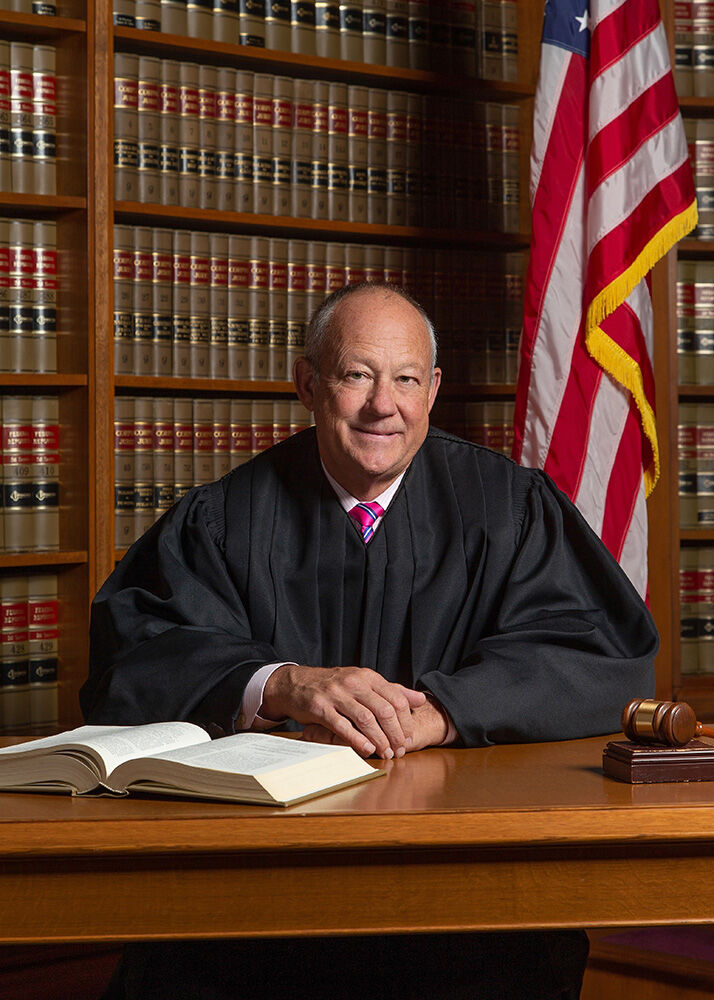
Judge Timothy M. Tymkovich recently became the first Coloradan to sit on the bench of the nation’s secretive surveillance court system, which is charged with reviewing the government’s applications for gathering foreign intelligence inside the United States.
Tymkovich, who has been a judge on the Denver-based U.S. Court of Appeals for the 10th Circuit since 2003, began his seven-year term on the Foreign Intelligence Surveillance Court of Review on Nov. 1. Chief Justice John G. Roberts Jr. tapped Tymkovich and two other federal judges for the part-time assignment on the equivalent of a wiretapping appeals court.
“I’m sure I did express an interest in international matters in the past, primarily because of my judicial education projects in Ukraine and the fact that we’ve hosted here in Denver, at the 10th Circuit, numerous delegations of foreign judges over the years,” Tymkovich told Colorado Politics.
As for why Roberts chose him specifically, Tymkovich could only speculate that his previous tenure as chief judge of the 10th Circuit, coupled with his service on various judicial committees, put him “somewhat on the radar” by the time Roberts’ staff called and asked if Tymkovich was willing to sit on the surveillance court.
Congress enacted the Foreign Intelligence Surveillance Act of 1978 (FISA) to set out a framework for national security-related intelligence gathering, reining in the executive branch’s previous reliance on warrantless surveillance. The law created two FISA courts: the Foreign Intelligence Surveillance Court, which handles surveillance applications from the government, and a reviewing court that hears the government’s appeal when an application is denied.
Unlike the rest of the court system, FISA judges almost always hear from just one party: the government. According to the FISA courts’ statistics, in 2022 there were 358 applications for surveillance, only 23 of which – 6% – were partially or fully denied.
“This is designed by Congress to review applications for documents, electronic surveillance and the like, along the lines of federal subpoenas or probable cause warrants,” Tymkovich said. “Coloradans ought to be interested in it like they are interested in the Department of Justice and the 10th Circuit and the National Security Agency.”
Most work takes place at the lower court, where 11 federal trial judges from around the country are appointed by the chief justice. They rotate to Washington, D.C. for one week at a time to review the government’s requests to monitor suspected foreign agents. The application prompts a back-and-forth between the government, the judge and a staff attorney to address concerns or obtain further information about the parameters of the request.
The judge may approve an application, modify its scope, impose conditions, conduct a hearing or deny the application. In uncommon instances of denial, the government may appeal to the reviewing court. In addition to Tymkovich, a George W. Bush appointee, current members include a Barack Obama appointee from the New Orleans-based Fifth Circuit and a Bush appointee from the Southern District of Georgia’s trial court.

Critics have taken issue with several aspects of the FISA courts: A lack of transparency means judges’ full rulings are not subject to public scrutiny. Republican-appointed judges have historically outnumbered Democratic appointees. Appeals can only help the government, and not overturn an approved surveillance application.
Civil liberties watchdogs have also warned about the program now known as Section 702, in which the government seeks court approval for a surveillance framework that broadly targets “non-U.S. persons,” while potentially sweeping up the communications of American citizens or U.S. residents in the process. Congress will next decide whether to reauthorize Section 702 in April.
Tymkovich declined to say whether he has heard any FISA appeals to date, but noted the reviewing court operates differently from the main FISA court, only traveling to D.C. or meeting remotely as needed. He has reviewed the past public and confidential decisions of the FISA courts and asked one of his current law clerks to work with him on surveillance matters.
“Congress set it up this way because the system involves mostly classified information, so there’s a need for secrecy in large part,” Tymkovich said. “To the extent more information should be available, I think that’s really a part of the congressional, political oversight.”
Tymkovich did approve of one unique aspect of the FISA courts: the ability to appoint an “amicus” – or friend of the court – as an expert who can weigh in on a novel or significant legal issue in addition to the government’s perspective.
“I’ve always advocated for more amicus participation at the circuit court level,” he said. “We do have a lot of novel and interesting issues where the court would benefit from multiple voices. I’ve always told the public defenders and the U.S. attorneys to be paying closer attention to our docket because they might want to provide amicus support even if it’s a case from a different state or a different region.”
Overall, Tymkovich felt other judges would be interested in taking on the FISA courts’ unique work, even if it still resembles the larger judicial process.
“It’s really no different than getting a new case before you and you have to research and analyze and understand the statutory scheme,” he said. “Coming up to speed on the court is really like coming up to speed on a case involving a complex statute. … In that sense, it’s quite comparable to what I do on a day-to-day basis.”

Federal judge dismisses ex-Colorado judicial discipline director’s conspiracy lawsuit
Michael Karlik
michael.karlik@coloradopolitics.com
Updated 18 hours ago
A federal judge dismissed a lawsuit from Colorado’s former judicial discipline director on Tuesday, finding that he failed to adequately state claims for conspiracy or constitutional violations. Christopher S.P. Gregory, who served as the executive director of the Colorado Commission on Judicial...
Federal judge allows retaliation claims to proceed against prison officials
Michael Karlik
michael.karlik@coloradopolitics.com
Updated 16 hours ago
A federal judge agreed last week that a man incarcerated at Sterling Correctional Facility had credibly alleged that employees retaliated against him for filing grievances, including by taking away his disability accommodations and turning off his electricity. Louis Peoples Jr.,...

U.S. Rep. Lauren Boebert’s son arrested, faces charges of sexual exploitation of minor
Matt Kyle
matt.kyle@denvergazette.com
Updated 2 days ago
U.S. Rep. Lauren Boebert’s son Tyler Jay Boebert has been arrested and accused of recording and sharing a video depicting himself having intercourse with a minor, according to court records. The case originated in Garfield County in Western Colorado and...

Adams County water district may proceed with cost-recovery lawsuit against Denver for contamination
Michael Karlik
michael.karlik@coloradopolitics.com
Updated 1 day ago
A federal judge rejected Denver’s arguments last week for pausing or dismissing a lawsuit brought by an Adams County special district seeking to recover its costs for addressing water contamination as a result of Denver firefighting activities. In January, the...
Federal judge declines to dismiss First Amendment retaliation claim against prison official
Michael Karlik
michael.karlik@coloradopolitics.com
Updated 1 day ago
A federal judge agreed last month that an incarcerated Native American woman may pursue her claim of First Amendment retaliation against a prison official who allegedly interfered with her religious exercise. Yvonne Peterson resided at Buena Vista Correctional Facility for...

Colorado’s troubled guardianship office pursues ‘cultural reset’
Marianne Goodland
marianne.goodland@coloradopolitics.com
Updated 2 days ago
Colorado’s guardianship program, long criticized for mismanagement and high staff attrition, is undergoing a “cultural reset,” as its new director works to repair partnerships and prepare for a major expansion under recent legislation. Created by lawmakers in 2017, the Office...

Local party leaders, incoming judge among members of judicial performance commission that violated law
Michael Karlik
michael.karlik@coloradopolitics.com
Updated 4 days ago
A local Democratic leader and 2024 presidential elector. A legislative aide and leader in the Young Republicans. An incoming county court judge freshly appointed by the governor. They are among the eight members of the northeastern Colorado judicial performance commission...

Judge dismisses lawsuit seeking records from Colorado Democratic group
Marianne Goodland
marianne.goodland@coloradopolitics.com
Updated 5 days ago
A lawsuit seeking to obtain records from Democratic lawmakers affiliated with a caucus has been thrown out by a Denver District Court judge. On July 17, Judge Ericka Englert dismissed the April lawsuit filed by progressive activist Derrick Blanton, who...
Colorado Springs mother Deborah Nicholls’ murder conviction overturned
Nick Smith
nick-smith@coloradopolitics.com
Updated 6 days ago
A Colorado Springs mother convicted in 2008 of murdering her three children in a house fire might get a new trial after a judge ruled that prosecutors withheld key evidence that could have impacted the jury’s verdict. Deborah Nicholls, whose...
Colorado court overturns illegal $7,000 restitution order
Michael Karlik
michael.karlik@coloradopolitics.com
Updated 5 days ago
Colorado’s second-highest court overturned a Weld County defendant’s obligation to pay more than $7,000 in crime victim restitution on Thursday because a trial judge failed to issue a legally compliant restitution order at the time of sentencing. In Colorado, as...
PREV
PREVIOUS
Chris Christie’s exit from GOP race lifts Nikki Haley’s White House chances
Former New Jersey Gov. Chris Christie’s surprise presidential campaign suspension on Wednesday was a much-needed boon to former U.N. Ambassador Nikki Haley’s campaign as she battles Gov. Ron DeSantis (R-FL) for second place in the primary. Christie’s exit comes just five days before the Jan. 15 Iowa caucuses and 13 days before the Jan. 23 […]

Denver mayor launches 'safe, clean' initiative to bring back 'joy' to downtown
Denver Mayor Mike Johnston on Monday rolled out an initiative aimed at creating a “safe, clean and joyful” downtown Denver, whose image has been battered in the last several years by incessant woes, notably homelessness, drug use and crime. Homelessness and housing affordability have perennially topped the list of priorities for Denver voters, followed by […]