

Biden appointee talks about first year as judge, public defender budget in jeopardy | COURT CRAWL

Welcome to Court Crawl, Colorado Politics’ roundup of news from the third branch of government.
One of the more recent appointees to Colorado’s U.S. District Court gave lawyers a wide-ranging view from the bench last week, and the top federal public defender for Colorado warned about Congress’ planned spending cuts to public defense.
A federal judge’s first year
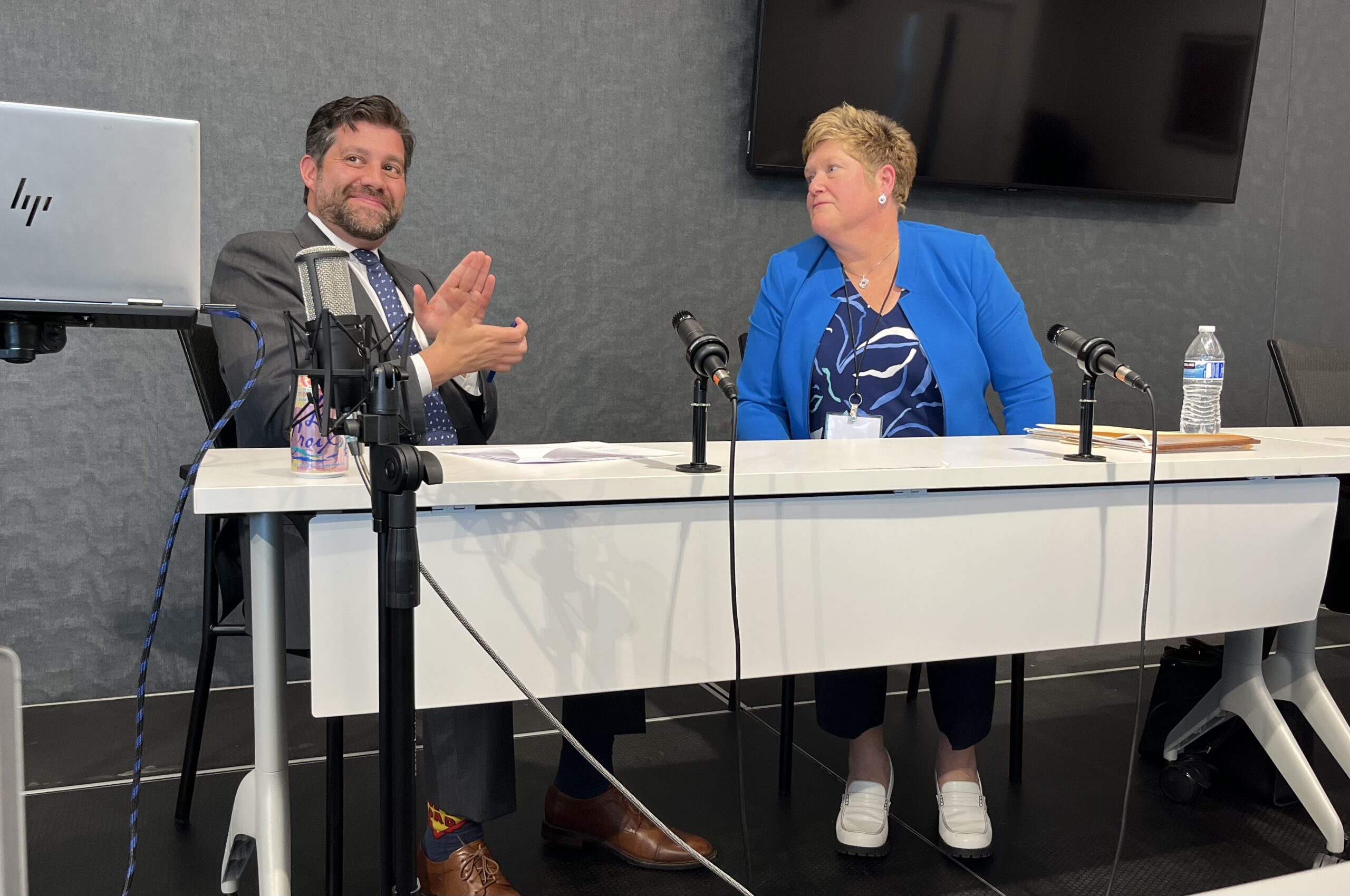
? One year ago, President Joe Biden appointed workers’ rights attorney Charlotte N. Sweeney to Colorado’s U.S. District Court, one of four trial judges he has installed so far (a fifth is on the way). On Friday, Sweeney sat down with attorneys to talk about what the experience has been like, including her determination to break through the backlog of cases she inherited.
? “I’m bringing back oral argument,” she said. “To me, that’s the fastest way to handle it. This district has gotten out of that habit, I think, largely due to the size of the docket. The only way I was going to get through my originally assigned motions was to do some of them from the bench. There was no way we could write up that many orders.”
? Sweeney also suggested the newer judges are more likely to be out in the community talking with legal groups, and she gave words of advice to lawyers participating in jury trials.
? “Judges can get overly concerned about being reversed,” she said. “All I can do is offer the best I can, the quickest I can.”
michael.karlik@coloradopolitics.com
? As a reminder, there are seven active judges on Colorado’s federal trial court, and there is currently one vacancy. To date, Biden has appointed the majority of the court in his first two years alone.
Public defenders blast Congress’ proposed cuts
? Last week, national news outlets reported the U.S. Senate and House of Representatives’ appropriations committees had committed to cutting the federal public defenders’ budget by tens of millions of dollars. Virginia L. Grady, the public defender for Colorado and Wyoming, spoke to Colorado Politics about what the lower spending levels would mean for her office. Here is an excerpt:
Colorado Politics: Let’s say the more restrictive amount, the Senate’s amount, takes effect. What will that mean for your office’s budget?
Virginia Grady: I don’t know yet. We’re already getting hurt. And everyone is. Because as soon as this news came out, Defender Services declared a hiring freeze. Basically instructed we could not hire. We all have vacancies, but we could not fill them.
We were just studied by the Administrative Office of the U.S. Courts. There was a study done to evaluate our staffing needs, and that revealed we were already operating at a pretty big deficit of staff. We haven’t begun to add those staff. These budgets just obliterated these additional FTE (full-time equivalent workers).
Do three vacancies that I can’t fill hurt us? Yes, they do. So, we are already underwater. Our budget consists of around 80-82% salary and benefits. Add on rent – because we’re all paying rent for our space – that takes you up to almost 90% of money that’s already committed. It’s not as though, “Oh, we can’t buy furniture.”

ABA comes to town
? The American Bar Association will hold its annual meeting in Denver from Aug. 3-8, featuring a speech from Attorney General Merrick Garland. Denver District Court Judge Adam J. Espinosa will also speak on a panel about misconduct from lawyers and judges. Other topics include water rights, artificial intelligence and the First Amendment.
Heard on appeal
? Colorado Politics’ cover story for this week explored a recent Court of Appeals decision in the long-running, expensive effort by the state’s ethics commission to assert jurisdiction over the mayor of Glendale.
? Once again, the Court of Appeals has clarified what needs to happen for trial judges to comply with state law when awarding restitution to crime victims.
? Xcel Energy is not immune from being sued when its power lines electrocute a non-customer, the Court of Appeals decided.
? An Arapahoe County judge didn’t provide a required jury instruction, prompting the Court of Appeals to overturn a man’s 10-year sentence for assault and order a new trial.
? A Denver judge didn’t afford a man the proper procedural safeguards when she sent him to jail for contempt over his failure to pay child support.
? Due to an apparent typo in the jury instructions, a Weld County man was convicted of a crime that didn’t exist, prompting the Court of Appeals to order a new trial for attempted murder.
? Although Adams County challenged the longstanding assumption that sheriffs’ offices are “public entities” able to be sued for certain conduct by their employees, the Court of Appeals reinforced that yes, they are public entities.
In federal news
? The 10th U.S. Circuit Court of Appeals provided little direction for how trial judges should view the constitutionality of police using dogs to bite unarmed suspects, while simply saying that Lafayette officers couldn’t be liable for letting their dog bite a man who was lying on the ground in the fetal position.
? A portion of El Paso County’s land use code discriminated against disabled residents in violation of federal law, the 10th Circuit concluded.
? The 10th Circuit reinstated a lawsuit against two Adams County deputies who arguably arrested a man simply for heckling them on the sidewalk.
? Because an incarcerated woman filed her grievances too quickly, she can’t sue a corrections officer for allegedly slamming her to the ground, the 10th Circuit decided.
? Although Chaffee County strung a woman along without giving her a clear answer, the 10th Circuit ruled the county didn’t violate her property rights by finding her land use violated its code.
Vacancies and appointments
? There are three finalists to succeed soon-to-be-District Court Judge LaQunya Baker on the Arapahoe County Court: Garen Gervey, John Moon and Amy Danielle Touart.
Miscellaneous proceedings
? After several media outlets (including Colorado Politics) succeeded in asking a Denver judge to order the city’s school board to release a recording of a closed-door meeting, the tape confirmed board members made a policy decision out of public view about bringing police officers back into schools.


Colorado justices say insurers may access policyholders’ medical info in denied-benefits litigation
Michael Karlik
michael.karlik@coloradopolitics.com
Updated 2 days ago
The Colorado Supreme Court declined on Monday to expand its narrow prohibition on insurance companies accessing policyholders’ medical information, clarifying that a dispute over an insurer’s bad-faith decision to deny benefits is the only situation where a company is limited...
Colorado Supreme Court declines to loosen requirements for insurance company defendants
Michael Karlik
michael.karlik@coloradopolitics.com
Updated 16 hours ago
The Colorado Supreme Court declined last week to reconsider its longstanding expectations for insurance company defendants, and agreed that an insurer failed to properly raise its defenses against a policyholder’s breach-of-contract lawsuit. When an insured driver has an accident with...

Teen defendant properly transferred from youth detention to jail, Colorado justices conclude
Michael Karlik
michael.karlik@coloradopolitics.com
Updated 2 days ago
Colorado law required the transfer of a teenage murder suspect from youth detention to the county jail when he turned 18, the state Supreme Court ruled last week. Prosecutors have accused Issac James Lawrence of killing a younger boy and attempting to...
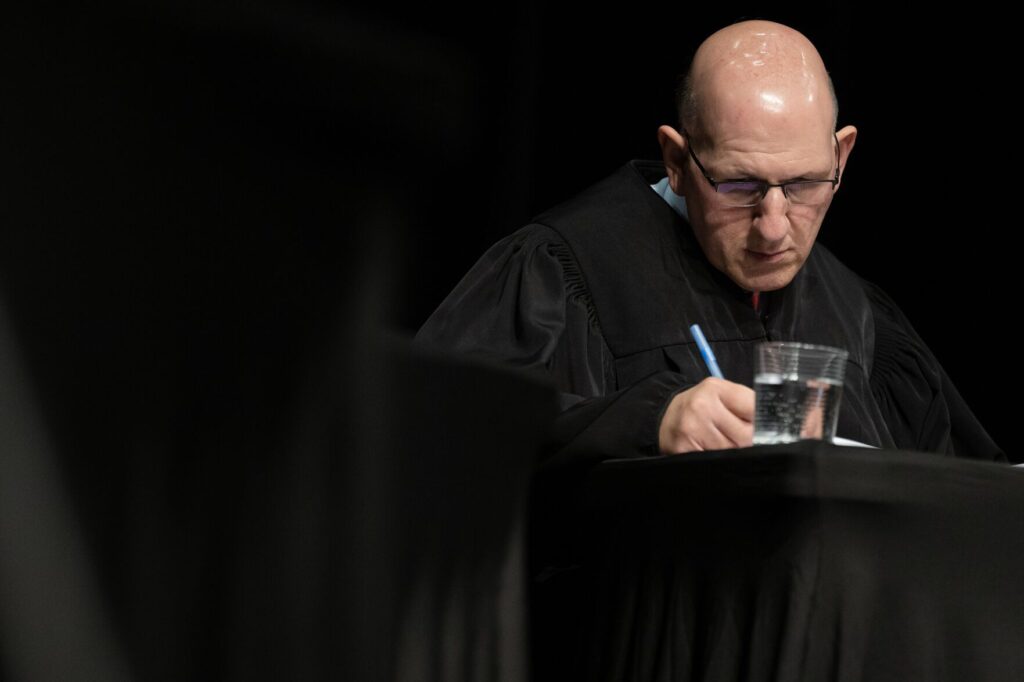
Divided Colorado Supreme Court finds parental anonymity in ‘safe haven’ law
Michael Karlik
michael.karlik@coloradopolitics.com
Updated 15 hours ago
Parents who surrender their newborns under Colorado’s “safe haven” law are entitled to anonymity and confidentiality in any subsequent adoptive proceedings involving the child, the state Supreme Court ruled on June 8. Colorado’s law, like its counterparts across the country,...
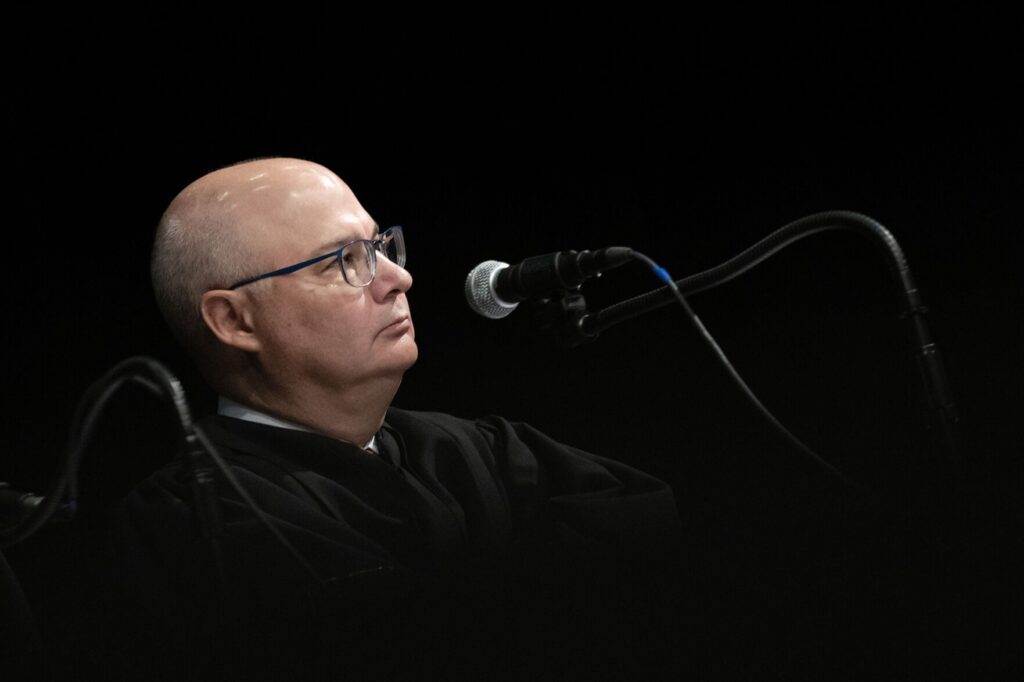
Safe2Tell tip, corroborated details provided grounds to search backpack, Colorado justices rule
Michael Karlik
michael.karlik@coloradopolitics.com
Updated 14 hours ago
The Colorado Supreme Court decided this month that a tip submitted through the state’s confidential school safety system, plus a Douglas County administrator’s corroboration of some details, provided reasonable suspicion to search a student’s backpack for drugs. Someone submitted a...
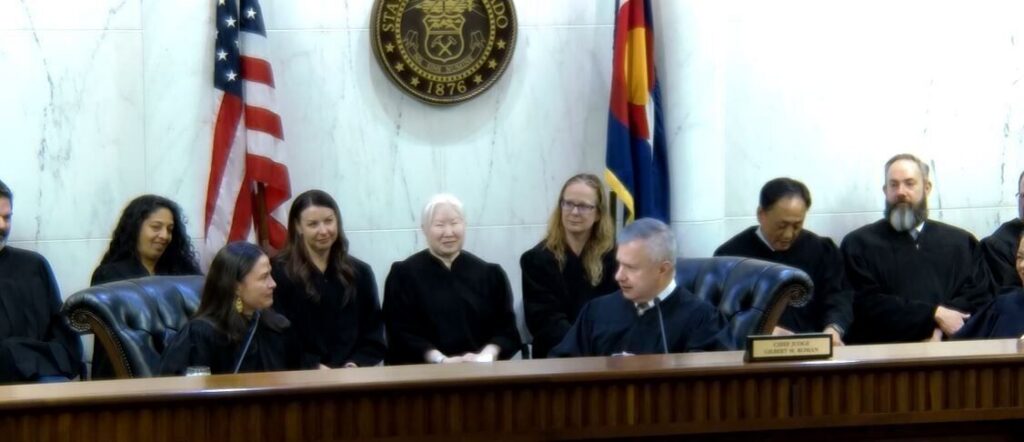
Appeals court finds opening in Colorado Supreme Court’s framework for child neglect cases
Michael Karlik
michael.karlik@coloradopolitics.com
Updated 3 days ago
Colorado’s second-highest court squeezed through an opening last week in a controversial state Supreme Court decision from 2025, concluding that the justices had not prohibited a child’s legal representative from being the one to request termination of parental rights in...
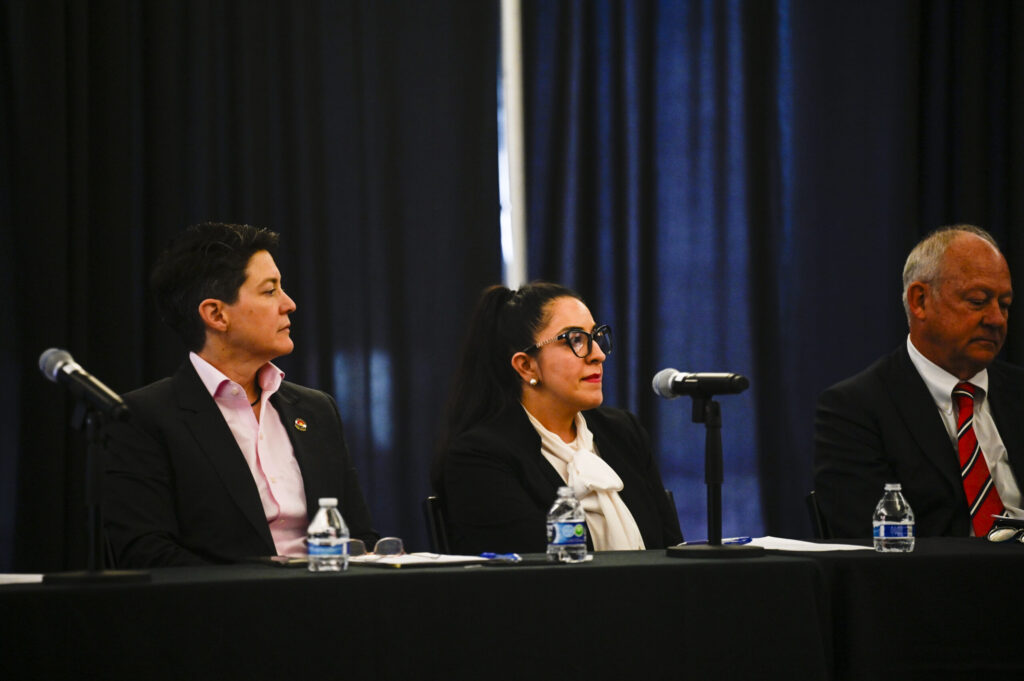
Colorado Supreme Court upholds police search of car based on arm movements
Michael Karlik
michael.karlik@coloradopolitics.com
Updated 16 hours ago
The Colorado Supreme Court decided last week that Denver officers’ search of a vehicle was constitutional, based on their perception of the occupants’ arm movements that a trial judge found to not be credible. Officers Keegan Grubb and Richard Eberharter...

10th Circuit tosses Pueblo County sheriff defendants’ appeal in fatal shooting lawsuit
Michael Karlik
michael.karlik@coloradopolitics.com
Updated 14 hours ago
The Denver-based federal appeals court rejected an attempt from Pueblo County sheriff’s employees on Wednesday to rely on their own version of the facts to escape liability for fatally shooting an unarmed man outside a middle school. A trial judge...
Colorado justices uphold strict interpretation of consumer protection law against debt collector
Michael Karlik
michael.karlik@coloradopolitics.com
Updated 16 hours ago
The Colorado Supreme Court concluded last month that a debt collector failed to comply with state law by suing a woman for an unpaid credit card debt without documentation that it owned her account. Portfolio Recovery Associates LLC filed a...
Colorado justices say judges can nearly eliminate parenting time without it being a ‘restriction’
Michael Karlik
michael.karlik@coloradopolitics.com
Updated 16 hours ago
The Colorado Supreme Court concluded last month that judges can reduce the number of days a parent spends with their child post-divorce to just above zero without it rising to the level of a “restriction” that requires more rigorous justification...
PREV
PREVIOUS

New faces, new approach: Charlotte Sweeney talks about transformation of Colorado's federal court
In just two years, the Biden administration appointed four – soon to be five – judges to Colorado’s seven-member federal trial court. One of them spoke on Friday about how she and the other new members are taking a different approach to the job. “It certainly seems like we’re moving back to being out more in the […]
Eagle County sex assault conviction overturned for improper testimony
An Eagle County judge improperly allowed a law enforcement witness to testify about her belief that the victim’s account supported the filing of sex assault charges, Colorado’s second-highest court decided on Thursday in reversing the defendant’s conviction. Previous court decisions in Colorado have established that prosecutors may not present evidence of the “screening” process that […]