

New faces, new approach: Charlotte Sweeney talks about transformation of Colorado’s federal court

In just two years, the Biden administration appointed four – soon to be five – judges to Colorado’s seven-member federal trial court. One of them spoke on Friday about how she and the other new members are taking a different approach to the job.
“It certainly seems like we’re moving back to being out more in the community and speaking at events,” said U.S. District Court Judge Charlotte N. Sweeney. “We don’t have a problem with that anymore, at least the new judges. We get the value of that.”
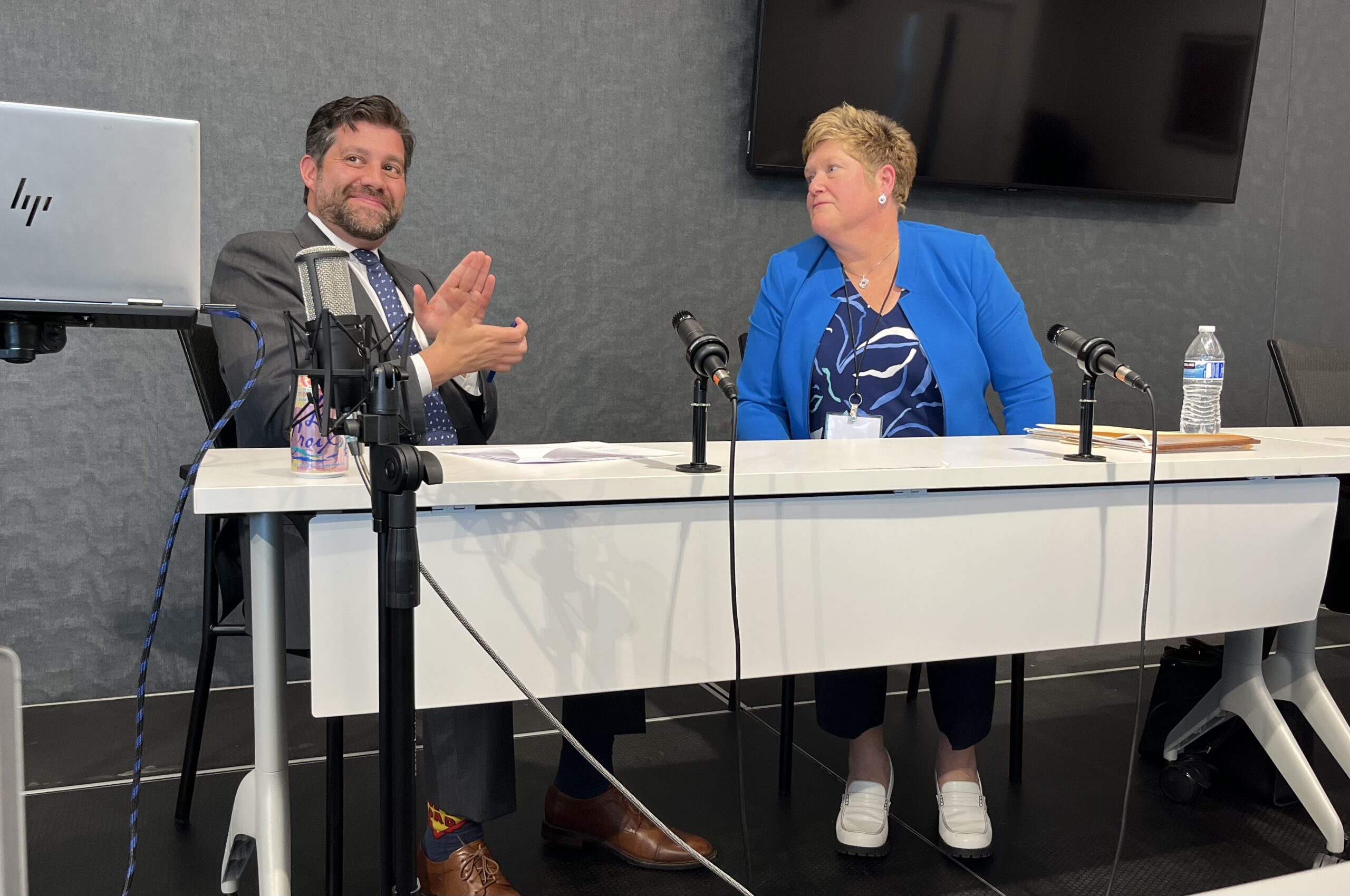
Sweeney, who President Joe Biden placed on the bench one year ago, participated in a wide-ranging discussion at a legal education event sponsored by the Colorado Bar Association, the Faculty of Federal Advocates and the Federal Bar Association’s Colorado chapter.
A former workers’ rights attorney who litigated cases in the same court where she is now a judge, Sweeney recalled hundreds of pending motions waiting for her on day one – some of which had been sitting for two years. She has since reduced her backlog, but observed the problem is systemic.
“Congress is aware,” Sweeney said. “But there’s been little talk about how to fix that other than adding judges, which seems to be a stalemate. No one wants to add judges depending on the political environment in the state.”
The topics Sweeney addressed in a session moderated by attorney David Gartenberg included her work to speed up the resolution of cases, the rapid diversification of Colorado’s federal bench, and the pitfalls lawyers should avoid at trial.
Sweeney also briefly touched on the protocols for detecting financial conflicts of interest judges may have in a case – a problem that ensnared her predecessor, Senior Judge R. Brooke Jackson, who had numerous undisclosed conflicts over several years.
“I can tell you we’re all on high alert,” she said. “That is a very serious issue now.”
Bringing back oral arguments
Sweeney said she has between 210-230 civil cases at any given time, along with 40-70 criminal cases. The best advice she received upon taking office was: “Whatever you do, you have to dig out of what you’ve been handed.”
“You have to,” she emphasized, “or you will never, ever, ever catch up.”
Sweeney implemented measures to speed up her docket. She addressed the cases that she was more knowledgeable about first because she could resolve those faster. Based on her experience representing workers who were discriminated against – who may not have had an income stream while their cases were pending – Sweeney also prioritized based on the stakes of the controversy.
“I might put a case where someone isn’t getting something they claim they need in prison over a corporate contract dispute. I just might, because there’s a different harm involved,” she said. “People should be comforted that we are reading these things as they come in. They’re not just going in a pile and we randomly pick.”
More significantly, Sweeney began to hold oral arguments over motions and rule from the bench, rather than issuing more time-consuming written decisions. As a result of catching up, Sweeney said, she only has 10 cases where a motion has been waiting for a decision for longer than six months.
“To me, it was about how do we move things faster,” she said. “This can’t take this long. People are waiting.”
She recalled some attorneys being out-of-step with oral argument protocols, or failing to understand the “lost art” of arguing before a judge. Sweeney believed Colorado’s federal court largely shied away from oral arguments because of the already-enormous workload. But she hoped in-person arguments would become the norm again, and would help lawyers hone their speaking skills for jury trials.
“It helps everybody, honestly. You need a fast answer and we need to not write everything up,” Sweeney said.
New faces, new approach
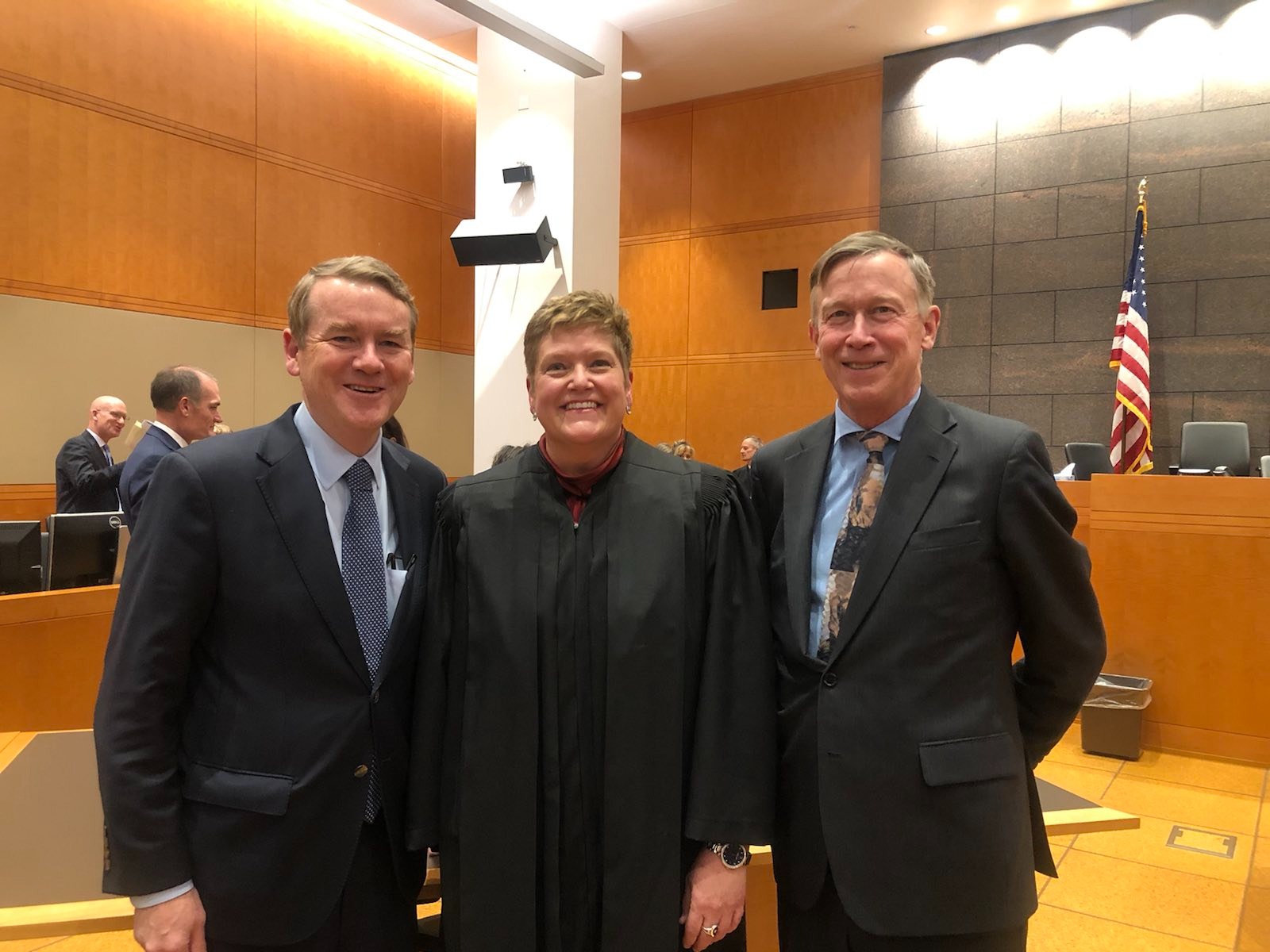
Between mid-2021 and early 2023, four new judges joined the U.S. District Court, all of whom were familiar with the institution as lawyers or as sitting magistrate judges. The appointees were also demographically diverse – with a female majority, two people of color and Sweeney as the first openly gay judge.
“It is exciting not because it changes what the court is going to do, but for practitioners and clients, it’s a different feeling to walk in and be met with a more diverse group of people and feel, ‘maybe my issues relate more,'” she said.
In a novel development, Sweeney joined with two of the new arrivals, Regina M. Rodriguez and Nina Y. Wang, and one semi-retired judge, Christine M. Arguello, to establish uniform procedures across all four courtrooms. Sweeney believed the most recent appointee, Gordon P. Gallagher, will sign on soon, as will U.S. Magistrate Judge S. Kato Crews, whose nomination for a district judgeship is stalled in the Senate.
The newer judges, she added, seem more likely to communicate with the magistrate judges who handle the administrative or procedural aspects of cases. They are also more receptive to engaging with the legal community, and perhaps society more broadly.
“We don’t have a question of whether we can maintain being nonpartisan and objective. Judges have an obligation to be out in the community,” Sweeney said.
Warnings to lawyers
Sweeney has only presided over one jury trial so far, noting that the overwhelming majority of civil cases settle and criminal cases result in plea deals. Still, she had words of caution from her experience.
“Jurors are smarter than they’ve ever been. They don’t need to have things drilled into their head six times,” she said.
In her trial, an insurance dispute, Sweeney said jurors expected the lawyers to be savvy with technology, and they got bored very fast.
“If you have problems pulling up an exhibit, there’s zero patience from a jury right now,” she warned. “They’re like, ‘I can pull that up on my phone in half a second. What’s your problem?’ It’s not just from younger jurors. All ages expect this.”
More generally, Sweeney cautioned that the large number of insurance cases is problematic. Due to the lack of insurance companies incorporated in Colorado, corporate defendants will often transfer state-level lawsuits to the federal court. That cluster of disputes, she said, is “really hurting our ability to process other cases.”
michael.karlik@coloradopolitics.com

Colorado justices say insurers may access policyholders’ medical info in denied-benefits litigation
Michael Karlik
michael.karlik@coloradopolitics.com
Updated 2 days ago
The Colorado Supreme Court declined on Monday to expand its narrow prohibition on insurance companies accessing policyholders’ medical information, clarifying that a dispute over an insurer’s bad-faith decision to deny benefits is the only situation where a company is limited...
Colorado Supreme Court declines to loosen requirements for insurance company defendants
Michael Karlik
michael.karlik@coloradopolitics.com
Updated 14 hours ago
The Colorado Supreme Court declined last week to reconsider its longstanding expectations for insurance company defendants, and agreed that an insurer failed to properly raise its defenses against a policyholder’s breach-of-contract lawsuit. When an insured driver has an accident with...

Teen defendant properly transferred from youth detention to jail, Colorado justices conclude
Michael Karlik
michael.karlik@coloradopolitics.com
Updated 2 days ago
Colorado law required the transfer of a teenage murder suspect from youth detention to the county jail when he turned 18, the state Supreme Court ruled last week. Prosecutors have accused Issac James Lawrence of killing a younger boy and attempting to...
Divided Colorado Supreme Court finds parental anonymity in ‘safe haven’ law
Michael Karlik
michael.karlik@coloradopolitics.com
Updated 13 hours ago
Parents who surrender their newborns under Colorado’s “safe haven” law are entitled to anonymity and confidentiality in any subsequent adoptive proceedings involving the child, the state Supreme Court ruled on June 8. Colorado’s law, like its counterparts across the country,...
Safe2Tell tip, corroborated details provided grounds to search backpack, Colorado justices rule
Michael Karlik
michael.karlik@coloradopolitics.com
Updated 12 hours ago
The Colorado Supreme Court decided this month that a tip submitted through the state’s confidential school safety system, plus a Douglas County administrator’s corroboration of some details, provided reasonable suspicion to search a student’s backpack for drugs. Someone submitted a...
Appeals court finds opening in Colorado Supreme Court’s framework for child neglect cases
Michael Karlik
michael.karlik@coloradopolitics.com
Updated 3 days ago
Colorado’s second-highest court squeezed through an opening last week in a controversial state Supreme Court decision from 2025, concluding that the justices had not prohibited a child’s legal representative from being the one to request termination of parental rights in...
Colorado Supreme Court upholds police search of car based on arm movements
Michael Karlik
michael.karlik@coloradopolitics.com
Updated 14 hours ago
The Colorado Supreme Court decided last week that Denver officers’ search of a vehicle was constitutional, based on their perception of the occupants’ arm movements that a trial judge found to not be credible. Officers Keegan Grubb and Richard Eberharter...

10th Circuit tosses Pueblo County sheriff defendants’ appeal in fatal shooting lawsuit
Michael Karlik
michael.karlik@coloradopolitics.com
Updated 12 hours ago
The Denver-based federal appeals court rejected an attempt from Pueblo County sheriff’s employees on Wednesday to rely on their own version of the facts to escape liability for fatally shooting an unarmed man outside a middle school. A trial judge...
Colorado justices uphold strict interpretation of consumer protection law against debt collector
Michael Karlik
michael.karlik@coloradopolitics.com
Updated 14 hours ago
The Colorado Supreme Court concluded last month that a debt collector failed to comply with state law by suing a woman for an unpaid credit card debt without documentation that it owned her account. Portfolio Recovery Associates LLC filed a...
Colorado justices say judges can nearly eliminate parenting time without it being a ‘restriction’
Michael Karlik
michael.karlik@coloradopolitics.com
Updated 14 hours ago
The Colorado Supreme Court concluded last month that judges can reduce the number of days a parent spends with their child post-divorce to just above zero without it rising to the level of a “restriction” that requires more rigorous justification...
PREV
PREVIOUS

Developers await details of Mike Johnston's homelessness plan
When Denver Mayor Mike Johnston announced he would issue an emergency declaration regarding homelessness – with the goal of housing 1,000 people by the end of the year – it also came with the promise to expedite permitting and construction for homelessness and affordable housing projects. It’s not yet clear how the city will execute that plan […]

Biden appointee talks about first year as judge, public defender budget in jeopardy | COURT CRAWL
Welcome to Court Crawl, Colorado Politics’ roundup of news from the third branch of government. One of the more recent appointees to Colorado’s U.S. District Court gave lawyers a wide-ranging view from the bench last week, and the top federal public defender for Colorado warned about Congress’ planned spending cuts to public defense. A federal […]