

Eagle County sex assault conviction overturned for improper testimony
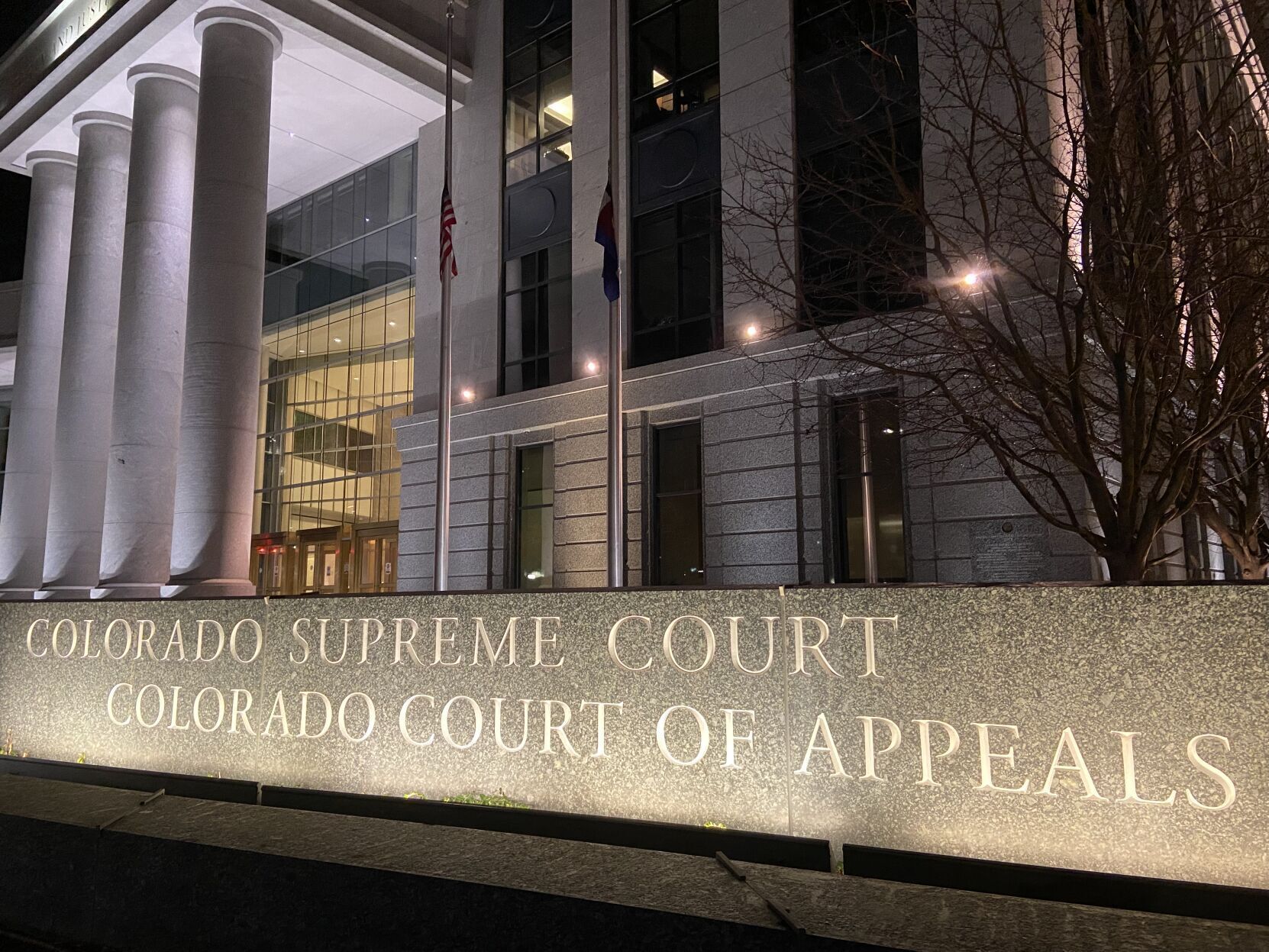
An Eagle County judge improperly allowed a law enforcement witness to testify about her belief that the victim’s account supported the filing of sex assault charges, Colorado’s second-highest court decided on Thursday in reversing the defendant’s conviction.
Previous court decisions in Colorado have established that prosecutors may not present evidence of the “screening” process that leads to criminal charges because the implication is that only someone deemed guilty is charged with an offense. Further, investigating officers may not testify about a witness’s credibility.
However, both of those occcured in the 2020 trial of Christian Arman Garcia-Chevez, where the dispute revolved around whether he and the victim had consensual sex or whether Garcia-Chevez sexually assaulted her.
A three-judge panel for the Court of Appeals, in ordering a new trial, also cautioned the prosecution against committing misconduct.
The question at Garcia-Chevez’s trial was whether the sex between him and the alleged victim was consensual. Although a jury found Garcia-Chevez guilty, it did not believe he used force, and it acquitted him of other offenses against the victim. He received a sentence of 10 years to life in prison.
Case: People v. Garcia-Chevez
Decided: July 20, 2023
Jurisdiction: Eagle County
Ruling: 3-0
Judges: Lino S. Lipinsky de Orlov (author)
Elizabeth L. Harris
Michael H. Berger
Background: Jeffco sex assault conviction reversed after appeals court says judge allowed expert to vouch for victim
The prosecution questioned Karen Waddell, a former sheriff’s detective who had since joined the district attorney’s office, about how she developed probable cause to arrest Garcia-Chevez.
“The sexual assault was obviously her (the victim’s) description of the events, of the incident, and then his corroboration of what took place, his description of the event,” Waddell responded.
Garcia-Chevez’s attorney objected, but County Court Judge Rachel J. Olguin-Fresquez allowed Waddell to continue.
Waddell elaborated that she was able to verify “both individuals were telling me the basic information that supported the criminal -“
The defense interrupted her again with an objection. Olguin-Fresquez ruled Waddell was not commenting on the parties’ credibility, but just the fact that “they corroborated” each other.
On appeal, Garcia-Chevez argued Waddell’s testimony effectively gave the jury reason to believe the victim over Garcia-Chevez. The Colorado Attorney General’s Office denied that her statements were improper, as she was merely describing “what prompted her to take the next step in the investigation, which was Defendant’s arrest.”
The Court of Appeals panel disagreed with the government’s benign interpretation of the testimony.
Waddell “offered an opinion on the only issue the jury had to resolve on the sexual assault count: whether (the victim) was credible in claiming that she had not consented to engage in sex,” wrote Judge Lino S. Lipinsky de Orlov in the July 20 opinion.
It was not true, he elaborated, that the two parties’ statements “corroborated” each other, given the discrepancy over consent.
“By testifying she had probable cause to arrest Garcia-Chevez,” Lipinsky explained, “the investigator effectively told the jury that she believed (the victim’s) allegations but not Garcia-Chevez’s version of events.”
Given the lack of other evidence against Garcia-Chevez, the panel believed Waddell’s testimony likely affected the verdict. It ordered a new trial.
Garcia-Chevez also argued the prosecutor committed misconduct by asking the jury to place itself in the shoes of the victim – which is inappropriate – and by inserting his own legal views of Garcia-Chevez’s arrest. The panel did not address whether the prosecutor crossed the line, but suggested the allegations had merit.
“On remand, we are confident the prosecutor will conform to, and the trial court will enforce, the legal standards applicable to prosecutorial misconduct,” Lipinsky wrote.
Heidi McCollum, the elected district attorney for the 5th Judicial District, did not respond to an email asking her to identify the prosecutor at trial.
The case is People v. Garcia-Chevez.


Colorado’s chief federal judge orders return of wrongfully deported man, second judge to explore ‘series’ of violations
Michael Karlik
michael.karlik@coloradopolitics.com
Updated 10 hours ago
Colorado’s chief federal judge took the extraordinary step of directing the government on Tuesday to do everything it can to return a man it deported in violation of his order. At the same time, Colorado’s chief magistrate judge has set...
Denver murder, assault convictions reversed due to faulty jury instructions
Michael Karlik
michael.karlik@coloradopolitics.com
Updated 8 hours ago
Colorado’s second-highest court reversed a defendant’s convictions for murder and assault last week after concluding a Denver judge incorrectly omitted key jury instructions that could have affected the verdict and sentencing. Stephen C. Swainson fatally stabbed Israel Casillas in downtown...
‘Understand people for who they are’: 2 federal judges talk about compassion in courtroom
Michael Karlik
michael.karlik@coloradopolitics.com
Updated 16 hours ago
Before taking the bench in 2022, U.S. District Court Judge Charlotte N. Sweeney was an employment discrimination attorney. While the cases could be emotionally charged, they were different from the criminal proceedings she is now handling. “It wasn’t necessarily affecting...
Denver murder conviction reversed for incomplete self-defense instruction
Michael Karlik
michael.karlik@coloradopolitics.com
Updated 1 day ago
Colorado’s second-highest court reversed a defendant’s murder conviction last week because a Denver judge gave an incomplete instruction to the jury about the man’s right to self-defense. Donald R. Gonzales and Gary McLaughlin met up in a Capitol Hill parking...
Colorado lawmaker, House leaders named in workplace-retaliation lawsuit
Marianne Goodland
marianne.goodland@coloradopolitics.com
Updated 1 day ago
A former legislative aide has filed a lawsuit alleging she was mistreated, illegally directed to perform campaign work and harmed by a House leadership structure she charged was fragmented, politicized and ineffective at protecting employees. The lawsuit, filed by Jennifer...
Federal judge hears arguments about Colorado’s 3-day gun purchase waiting period
Michael Karlik
michael.karlik@coloradopolitics.com
Updated 2 days ago
A federal judge heard arguments on Monday about the constitutionality of a 2023 Colorado law that generally imposes a three-day waiting period on firearm purchases after the initiation of a background check. The test that the U.S. Supreme Court created...
Colorado Supreme Court intervenes in Weld County prosecution dismissed due to Missy Woods misconduct
Michael Karlik
michael.karlik@coloradopolitics.com
Updated 1 day ago
The Colorado Supreme Court ordered a Weld County trial judge last week to respond to the district attorney’s claim that he improperly dismissed a criminal case because of “outrageous” conduct by the Colorado Bureau of Investigation. Daniel Lee Eatinger stood...
Schoolchildren’s presence at child sex-related trial did not harm Arapahoe County defendant, appeals court says
Michael Karlik
michael.karlik@coloradopolitics.com
Updated 4 days ago
Colorado’s second-highest court decided on Thursday that the presence of a group of schoolchildren on the first day of a child sexual exploitation trial did not violate an Arapahoe County defendant’s constitutional right to a fair trial. Prosecutors charged Jerry...
Appeals court cites week-old Colorado law to reinstate child neglect case at child, father’s request
Michael Karlik
michael.karlik@coloradopolitics.com
Updated 4 days ago
Colorado’s second-highest court invoked a new state law for the first time on Thursday and reinstated a child neglect case that both the child and her father wished to reopen. House Bill 1227 took effect on Aug. 12, reversing a...
Colorado Supreme Court names William Hood as next chief justice
Michael Karlik
michael.karlik@coloradopolitics.com
Updated 5 days ago
The Colorado Supreme Court has selected Justice William W. Hood III to be the next chief justice, the judicial branch announced on Friday. Hood will succeed Chief Justice Monica M. Márquez, who took over the role in July 2024. “I...
PREV
PREVIOUS

Biden appointee talks about first year as judge, public defender budget in jeopardy | COURT CRAWL
Welcome to Court Crawl, Colorado Politics’ roundup of news from the third branch of government. One of the more recent appointees to Colorado’s U.S. District Court gave lawyers a wide-ranging view from the bench last week, and the top federal public defender for Colorado warned about Congress’ planned spending cuts to public defense. A federal […]

Colorado's first human case of West Nile virus in 2023 confirmed amid 'historic' mosquito activity
Colorado’s first human case of West Nile virus in 2023 has surfaced in La Plata County, according to a Monday news release from the Colorado Department of Public Health and Environment. West Nile virus is a mosquito-borne virus that can be passed to humans through mosquito bites. The virus can be fatal and resulted in […]