

Colorado eyes expansion of state inspection authority over immigration detention centers
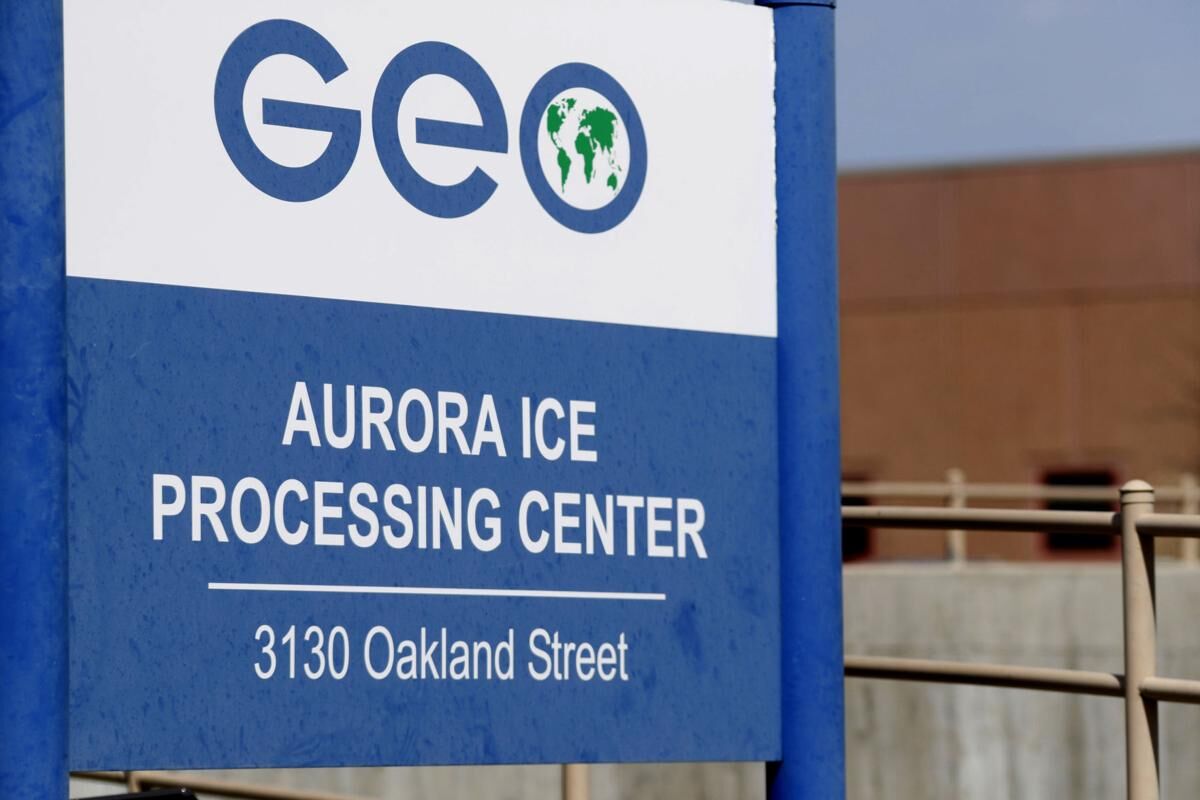
A proposal to add new inspection requirements for detention centers and increases the civil liability for sharing information with federal immigration authorities passed both chambers of the Colorado Legislature.
The proposal is now headed to Gov. Jared Polis’ desk.
House Bill 1276 expands a current law prohibiting employees of state agencies or political subdivisions from disclosing an individual’s immigration status to federal authorities by extending the civil penalty liability to the employer.
The bill also expands the Colorado Department of Health and Environment’s inspection authority over immigration detention centers by requiring more frequent visits to ensure — backers said — that standards for food safety, water quality, and confinement conditions are met.
It’s among a slew of proposals to come out to come out of the state Capitol, which has embraced so-called “sanctuary laws” that limit or prohibit cooperation with federal authorities on enforcing immigration laws.
Colorado currently has one immigration detention facility in Aurora, but there are several temporary holding facilities across the state.
“We have seen consequences of a system that prioritizes cruelty, profit, and enforcement quotas over human lives,” said Sen. Iman Jodeh, D-Aurora, one of the bill’s sponsors. “At the core of this bill, we are making sure that if our political subdivisions share persons’ identifying information not related to a criminal matter, that both employee and employer can be held responsible.”
The bill’s other sponsors include Reps. Elizabeth Velasco, D-Glenwood Springs, and Lorena Garcia, D-Adams County, and Sen. Weissman, D-Aurora/
While the Senate advanced the bill without debate, House Republicans highlighted the large number of amendments and raised worries about its fiscal note.
Rep. Ryan Gonzalez, R‑Greeley, argued that lawmakers should focus on issues like deteriorating roads, strained health care systems, lagging K‑12 performance, and budget pressures, rather than federal immigration policy.
“I wanted to get to a yes — I really did — but I just couldn’t get there,” he said.
Sponsors have argued that the bill would be budget‑neutral because its costs are supposed to be covered by new fee revenue from immigration‑detention facilities. If that revenue does not materialize, the state could end up paying more than $131,000 in FY 2026‑27 and more than $72,000 in FY 2027‑28.
The measure passed the House on a 42-21 party-line vote last month. It met a similar fate in the Senate on Monday, with 23 Democrats voting in favor and 12 Republicans voting against.
Additionally, it requires the state’s Peace Officers Standards and Training Board to train law enforcement officers on federal immigration law and mandates the Attorney General’s Office to develop policies on the sharing of personally identifying information with federal immigration authorities.
The state’s drug “sanctuary” label comes amid rising tensions between local and federal law enforcement in Colorado, especially after the state attorney general last year filed a lawsuit against a Mesa County sheriff’s department deputy for providing a woman’s personal information to federal officials during a traffic stop.
The woman arrested, a University of Utah student, was born in Brazil, came to the U.S. under a tourist visa when she was 7, and has been living in Utah for 12 years. She overstayed her visa about a decade ago and has a pending asylum case.
Backers of the non-cooperation law have long argued that Colorado’s local police officers should not be commandeered to conduct the work of federal immigration authorities. Others have raised worries about violating due process rights for immigrants living illegally in the country who might be swept up in the Trump administration’s illegal immigration crackdown.
Critics of the “sanctuary” statutes, meanwhile, countered that they are making it more difficult for local law enforcement to work with federal agents to interdict crime, and that, ultimately, negatively affects residents, whether they are in the country illegally or not.
Polis is expected to sign HB 1276 into law.


Parenting from prison: Inmates hope to be present in their children’s lives, while physically absent
Marianne Goodland
marianne.goodland@coloradopolitics.com
Updated 3 days ago
The room was decorated with balloons, the tables sparking bright with colors as the smell of pizza and cake wafted through the air. As did music. This was, after all, a father-daughter dance. Except this was not a typical father-daughter...

Colorado House ethics committee issues ‘stern letter’ to Democrat over caucus funds mismanagement
Marianne Goodland
marianne.goodland@coloradopolitics.com
Updated 2 days ago
The Colorado House ethics committee on Friday voted unanimously to issue a “stern letter” to Rep. Mandy Lindsay, D-Aurora, regarding her mismanagement of House Democratic caucus funds. The committee further voted to request that Lindsay resign as Democratic Caucus co-chair...

State seeks $50K penalty against GOP candidate Victor Marx over alleged campaign finance violations
Deborah Grigsby
deborah.smith@denvergazette.com
Updated 1 day ago
Republican gubernatorial candidate Victor Marx is looking at more than $50,000 in fines in what the Elections Division of the Office of the Secretary of State calls “unprecedented” campaign finance violations. The state has not imposed that fine yet, and...

Judge puts Colorado Libertarians’ secretary of state candidate on ballot after party’s 1st nominee drops out
Ernest Luning
ernest.luning@coloradopolitics.com
Updated 22 hours ago
A Denver judge ruled Friday that the Colorado Libertarian Party’s pick for secretary of state will appear on the November ballot after the party’s original nominee withdrew one day after the deadline to replace minor party candidates. Following a hearing...

Regulators knew this marijuana product was harming people. It stayed on shelves for more than a year
Christopher Osher
chris.osher@gazette.com
Updated 19 hours ago
Colorado’s Marijuana Enforcement Division can take months or even years to issue formal safety warnings about marijuana products even when it receives reports that the products are harming people’s health, The Denver Gazette and ProPublica found. This article was produced...
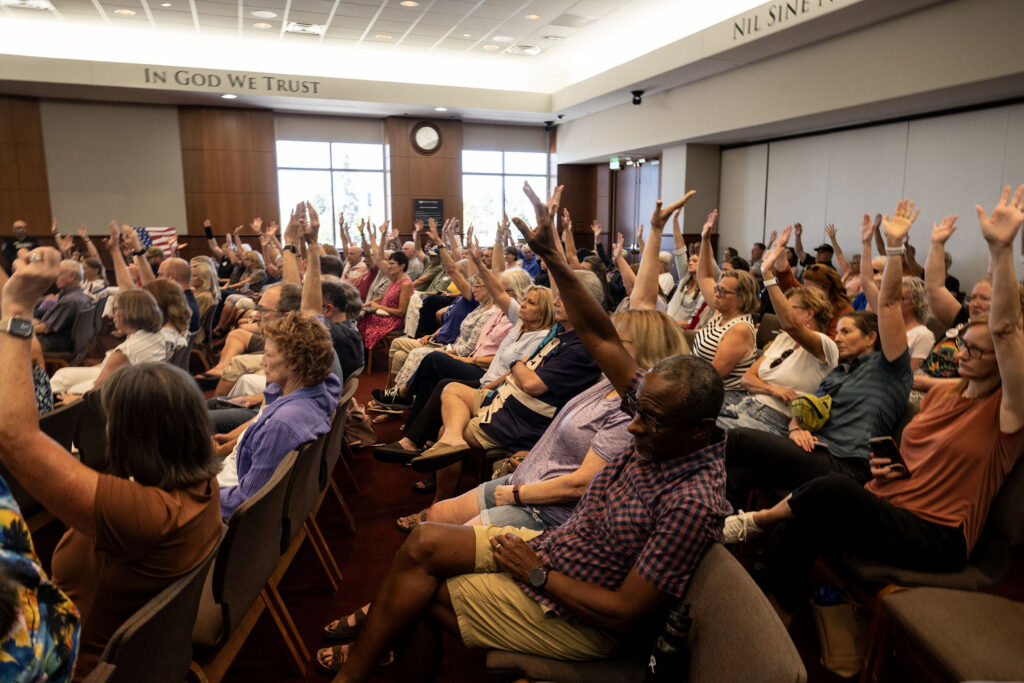
Douglas County commissioners reject challenge to ballot language for 3 to 5 petition
Nicholas Fogleman
nicholas.fogleman@denvergazette.com
Updated 2 days ago
Douglas County commissioners denied a challenge Thursday to the language of a ballot initiative that would expand the board from three to five members. Following a contentious hearing that saw multiple audience members escorted out by police for disruptions, commissioners...

Favorability rating of Mayor Mike Johnston, Denver City Council slides
Nico Brambila
nico.brambila@denvergazette.com
Updated 2 days ago
Denver Mayor Mike Johnston’s favorability rating fell 7 percentage points over the past year, while the City Council’s favorability rating dropped 3 percentage points, a new poll has found. A little more than a year after taking office, Johnston had...

Judge orders home confinement for Barry Morphew
Dennis Huspeni
dennis.huspeni@gazette.com
Updated 3 days ago
An Alamosa County district judge has ordered home confinement for Barry Morphew, who is accused of murdering his wife. Barry Morphew, 59, faces a first-degree murder charge in the death of his wife, Suzanne Morphew, who disappeared Mother’s Day weekend...

Ikon Pass company Alterra to move into former Denver Post building, create downtown ‘outdoor hub’
Bernadette Berdychowski
bernadette.berdychowski@denvergazette.com
Updated 3 days ago
What was once the home of two of Colorado’s longest-running daily newspapers could soon become a central location for the state’s ski resort and outdoor companies, city and state leaders said Thursday. Alterra Mountain Co. is moving its headquarters to...
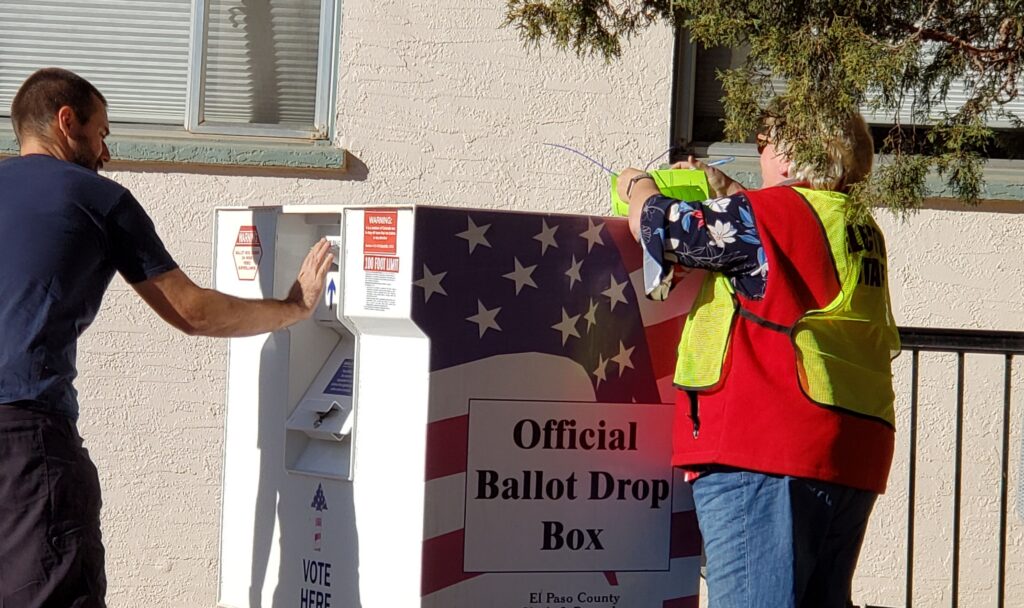
Fentanyl sentencing, tax overhauls and transgender‑related issues anchor Colorado’s 14 ballot measures
Marissa Ventrelli
marissa.ventrelli@coloradopolitics.com
Updated 3 days ago
Fourteen statewide ballot measures await Colorado voters this November, offering a mix of criminal justice crackdowns, tax overhauls, and constitutional tweaks that ensure no one will accuse the ballot of being boring this year. Colorado’s 14 statewide ballot measures match...
PREV
PREVIOUS

Superintendent Michael Gaal on why schools work better without union contracts | The OpEdge Podcast
In the latest episode of The OpEdge — The Gazette’s new opinion podcast — Colorado Springs District 11 Superintendent Michael Gaal reveals why teachers’ union contracts hold schools back. Gaal tells OpEdge host and investigative columnist Jimmy Sengenberger how ending D-11’s labor contract unleashed flexibility on teacher pay, staffing and accountability, while arguing school choice and […]

Colorado bill on lobbyist registration awaits final decision from the governor
A bipartisan bill requiring more disclosure from legislative liaisons and state agency lobbyists is in limbo, despite broad support in both the Colorado House and Senate as Gov. Jared Polis is reportedly considering a veto. Senate Bill 147, sponsored by Sens. Lisa Cutter, D-Evergreen, and Rod Pelton, R-Cheyenne Wells, and Reps. Dusty Johnson, R-Fort Morgan, […]