

Boulder’s bleak oil-and-gas legal entanglements | Paula Noonan
Good neighbor policy in the fossil-fuel-energy industry stops at Boulder’s door. If any other county or municipality decides to rumble with Exxon Mobil and Suncor Energy over their legal exposure to climate lawsuits, those entities will no doubt face “Bleak House” type legal entanglements also.
Charles Dickens’ Bleak House records the estate case of Jarndyce v. Jarndyce during which the assets of the case are eaten up by the legal proceedings to settle the case. The suit goes on for generations. Boulder is likely to experience similar longitudinal delays to hold Exxon Mobil and Suncor Energy to account for deceiving the public as to the effects of fossil-fuel development and processing on the increasingly carbon-filled atmosphere.
As with many lawsuits of this nature, Exxon and Suncor do not want to face Boulderites incensed by the companies’ failures to come clean on the effects of their industrial activities on climate. Exxon scientists in the 1970s and 1980s studied carbon accumulation in the atmosphere. Their modeling indicated increases in carbon would ultimately result in a hotter climate. Despite these internal analyses, Exxon argued in the public square the science was unclear.
By the late 1980s and early 1990s, Exxon went full bore on publicizing uncertainties underlying climate-change modeling to influence the public all was well. Boulder argues Exxon’s disingenuous campaigns debunking climate science became a public nuisance, fell into misrepresentation and resulted in violations of state consumer-protection law.
Suncor is pulled into the case because it piled on in the public disinformation campaign even though it was well aware of accumulating science that its oil sands and other fossil-fuel operations would exacerbate carbon accumulation in the atmosphere.
Boulder won the legal battle that went to the state Supreme Court. That court found Boulder’s lawsuit could be heard at the state level. Exxon Mobil and Suncor argue the case can only be heard in federal court. The two companies assert the federal Clean Air Act supersedes and controls oversight of the fossil-fuel industry. If the U.S. Supreme Court takes up the case over who has jurisdiction, its decision will be historic. It will frame a fundamental relationship of local authority versus federal authority in legal precedent based on Boulder’s claims for jurisdiction and the two corporations’ rebuttals.
No doubt local litigation is a nuisance to these corporations. If they don’t nip Boulder’s case at this stage, then corporate disruption and unpredictability ensues.
In this conflict of jurisdictions, Boulder will assert the fundamental local claims of public nuisance, misrepresentation and violations of state consumer protections. It will show the direct effects of these claims including increased wildfire risk, remember the Marshall fire, deleterious public health effects, and costs of infrastructure adaptations. It will also argue these mega corporations knew their products would heat up the planet, misled the public’s understanding of climate change risk, and benefitted from profits despite the risks by pushing remediation costs onto taxpayers, including Boulder’s citizens.
Boulder will assert its claim Exxon Mobil and Suncor violated state law and should be held accountable under state regulations. Federal law does not supersede the state in tort cases in which entities violate state statute when violations involve misrepresentation and deception rather than physical emissions regulated by the Clean Air Act, such as it was.

Exxon Mobil and Suncor will counter Boulder’s claim with its argument of “displacement.” This assertion states greenhouse gases are regulated by federal rules. This federal regulation “displaces” local communities from pursuing climate nuisance claims. The basis of this assertion is local suits will interfere with national policy and create conflicting standards across states.
The companies will also argue whatever has happened with climate change, many entities, national and international, have created the problems, including governments, vehicle drivers, utilities and manufacturing. The accumulation of carbon has occurred over centuries. The market demanded their products. They are heavily regulated. Their profits benefitted communities through taxes and royalties. They didn’t mislead the public. They exercised their rights to advocacy.
All-in-all, the companies assert energy production is governed by national and international policy. Localities disrupting this governance will be folly for the industry and the nation. And by the way, say Exxon Mobil and Suncor, it’s not fair to just pick on us.
This Boulder v. ExxonMobil and Suncor suit will be conducted against the following state backdrop. Golfers have played as many games in February as in the middle of summer and skiers are left yearning for snow. Agriculture, AI warehouses and even oil-and-gas fracking will suffer if Colorado’s water scene doesn’t improve.
Meanwhile, the state has just fined Chevron $1.53 million (it received a 10% discount for accepting the purpose of the fine) for its blowout in Weld County near Galeton. Goop spread across a 1.5-mile radius over four days landing on Galeton Elementary School that closed for a week while the company worked to stop the blow-out. Clean-up won’t complete until 2030. Measurements showed dangerous levels of benzene and other toxins in the air. In this Galeton case, the state issued the fine and international Chevron will pay.
Paula Noonan owns Colorado Capitol Watch, the state’s premier legislature tracking platform.


Democratic group aims Spanish-language TV ad at Gabe Evans in Colorado’s battleground 8th CD
Ernest Luning
ernest.luning@coloradopolitics.com
Updated 11 hours ago
A national group tied to House Democratic leadership launched a six-figure Spanish-language TV ad in Colorado this week targeting Republican U.S. Rep. Gabe Evans and the GOP’s signature budget legislation. The 30-second spot is part of $15 million in new...
Judge dismisses lawsuit seeking records from Colorado Democratic group
Marianne Goodland
marianne.goodland@coloradopolitics.com
Updated 14 hours ago
A lawsuit seeking to obtain records from Democratic lawmakers affiliated with a caucus has been thrown out by a Denver District Court judge. On July 17, Judge Ericka Englert dismissed the April lawsuit filed by progressive activist Derrick Blanton, who...
Colorado must continue finding common ground on wildfire policy | GUEST COLUMN
Colorado Politics
colorado-politics@coloradopolitics.com
Updated 2 days ago
By John Herrick Colorado has never lacked for opinions about wildfire policy. We debate forest management, climate change, prescribed burns, land use, air quality and budgets. Those debates are familiar territory, but a new discussion is beginning to happen around...

Proposition NN is the best investment for Colorado’s students and schools | GUEST COLUMN
Colorado Politics
colorado-politics@coloradopolitics.com
Updated 2 days ago
By Justin Ogden Colorado families know what it means to make difficult budget decisions. Inflation has driven up the cost of groceries, housing, utilities and just about everything else. Families like mine work hard to stretch every dollar while still...

Right-to-natural-gas proposal in Colorado qualifies for ballot
Marissa Ventrelli
marissa.ventrelli@coloradopolitics.com
Updated 2 days ago
A citizen initiative that seeks to enshrine the right to natural gas has qualified for the November ballot, Colorado’s election office confirmed on Thursday. Petitions containing signatures for Initiative No. 177 were turned in to the Secretary of State’s Office for review...
Former VP Mike Pence joining Colorado Christian University faculty
Marissa Ventrelli
marissa.ventrelli@coloradopolitics.com
Updated 2 days ago
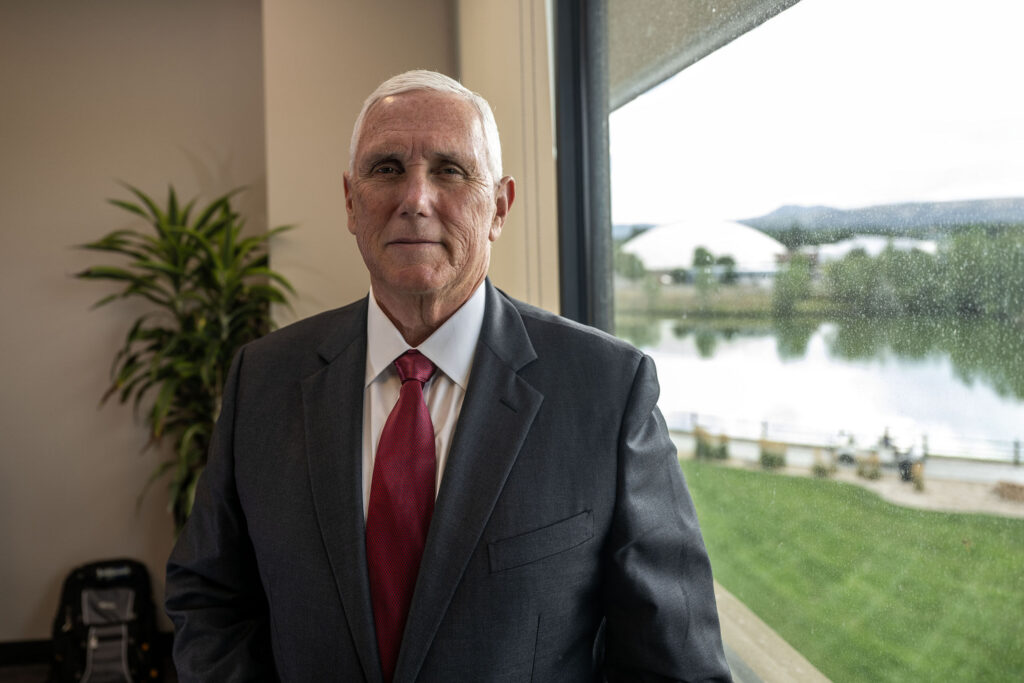
Former Vice President Mike Pence has been hired as a visiting faculty member at Colorado Christian University, the Lakewood-based private evangelical university announced Tuesday. Pence will be on campus about once a month during the 2026-2027 school year to give...

Were the primaries a preview for consequential general election? | Paula Noonan
Paula Noonan
paula-noonan@coloradopolitics.com
Updated 3 days ago
Colorado’s political future will go the way of this election. Historically, the state has not had both chambers controlled by a supermajority. This election may change that. The primaries suggest how the general election may play out. Democrats had solid...
Disagreement doesn’t have to mean disrespect | GUEST COLUMN
Colorado Politics
colorado-politics@coloradopolitics.com
Updated 3 days ago
By Vincent Atchity These days, it doesn’t take long to feel overwhelmed by politics. Turn on the news, scroll through social media or read the comments on almost any political post and you’ll find anger, outrage and personal attacks. For...
What happens if voters pass Colorado’s two competing income tax measures?
Marianne Goodland
marianne.goodland@coloradopolitics.com
Updated 2 days ago
The battle between two competing ballot measures — one seeking to cap Colorado’s income tax rate, the other pushing for a tiered system depending on income levels — might come down to whichever ballot proposal gets one more vote. The...

New Colorado laws going into effect cover AI disclosures, medical marijuana access and gambling limits
Marissa Ventrelli
marissa.ventrelli@coloradopolitics.com
Updated 2 days ago
More than 100 new Colorado laws take effect Aug. 12, bringing changes to chatbot safety rules, psychedelic research, campus wellness checks and sports betting restrictions. Here is a look at some of those laws set to take effect. The law:...
PREV
PREVIOUS

How a mobile STEM lab showed lawmakers the power of online schools | OPINION
If you want lawmakers to get online school, don’t hand them a brochure. Put them next to a student who can show real work and explain why it matters. That’s the smart lesson from the Colorado Coalition of Cyberschool Families’ (CCCF) 2026 Day at the Capitol. This year, on Feb. 12, CCCF built the morning […]

Colorado lawmakers want to crack down on sports betting companies
A coalition of legislators has introduced a bill that backers said would help combat sports gambling addiction, particularly among children. Colorado voters approved Proposition DD in 2019, legalizing sports betting statewide. The majority of the state’s sports betting revenue goes to the Colorado Water Plan Grant Program, which funds water conservation, storage, and supply projects. […]