

Wirth downplays Social Security disaster talk | A LOOK BACK

Forty-five years ago this week: “As time goes on,” said Democratic U.S. Rep. Tim Wirth, of the 2nd Congressional District, “we are finding that the safety net, which was proposed earlier this year, has some very large holes in it,” referring to a recently debated Social Security policy change.
Wirth had joined with the majority of Congress to vote for a measure that would restore the Social Security minimum monthly benefit of $122 to individuals who were retired and already receiving it. Wirth told The Colorado Statesman that it made no sense to eliminate it for the truly needy seniors in the country.
“People have worked hard for this benefit, many of them are widows in their 80s or 90s,” Wirth said. “They’ve been receiving it for a long time, and elimination of the minimum benefit will simply force many of these people onto the welfare rolls.”
In 1981, the minimum benefit was distributed to three million Americans, of which 85-90% were women. But Wirth disagreed with Rep. Pat Schroeder, CD-1 and Sen. Bill Armstrong who had both told meetings of constituents that Social Security faced bankruptcy if changes weren’t implemented soon.
“It’s dangerous for politicians to demagogue on the very important Social Security system,” Wirth said. “We simply need a careful, balanced and fair approach to the problems of the system.”
Wirth recommended a three-pronged approach that he said would be fair and equitable to all participants in the system, so that no one group bore more than their fair share of the problem.
“I favor an alternative approach,” Wirth said. “The first step would be to gradually increase the retirement age from 65 to 68, and then encourage people, through incentives, to work longer, and finally change the base on which adjustments for inflation are made to an index which better reflects the rate of inflation and the needs of seniors. These steps will generate the necessary revenue to make the system solvent over the long term, while asking all participants to share equally in this effort.”
Wirth said that while there wasn’t a consensus on what exactly should be done to the system, he wanted to stress that Social Security would not go broke.
“The sky is not falling in. Fair and equitable short- and long-term solutions are available,” Wirth said.
Twenty-five years ago: U.S. Rep Tom Tancredo, R-CD6 and former Democratic governor Dick Lamm held a press conference to point out what they saw as the real culprit of the explosive growth in Colorado: immigration.
“This issue is fraught with controversy and a great deal of emotion is built into immigration and immigration reform,” Tancredo said. “But we should concentrate on one aspect of immigration: the numbers.”
Tancredo said that immigration from 1980-2000 had “an impact economically, culturally and politically” on the state. While he argued that the growth debate in Colorado couldn’t be addressed at the national level, he was introducing “a massive immigration reform bill” in Congress, HR-2112, which would lower immigration numbers from 1 million a year to 300,000 per year over a five-year period.
“We can’t separate immigration from growth,” Lamm said. “We can either live in a Colorado of 16 million people or have some sanity for our grandchildren with it stabilized around 6 million people.”
Raul Armendariz, president of the board of directors of the Latin American Research and Service Agency, did not see Lamm’s plan as “sanity.”
“When you look at immigration policies in this country, they are very uneven in preference of immigrants from Europe versus Latin American and Asia,” Armendariz said. “That runs counter to the changing demography of this country.”
Armendariz said that immigrants performed vital services and contribute to the economy, rather than the other way around.
“If anything, immigrants are proving up the economy,” he said. “When you look at the extent of immigrants involved in service sectors … a lot of those jobs would be unfilled but for these immigrants who are ensuring that the business enterprises continue to grow and prosper.”
Rachael Wright is the author of several novels including The Twins of Strathnaver, with degrees in political science and History from Colorado Mesa University and is a contributing columnist to Colorado Politics, the Colorado Springs Gazette and The Denver Gazette.

The relevance of Watergate more than a half-century later | SONDERMANN
By Eric Sondermann
by-eric-sondermann@coloradopolitics.com
Updated 3 days ago
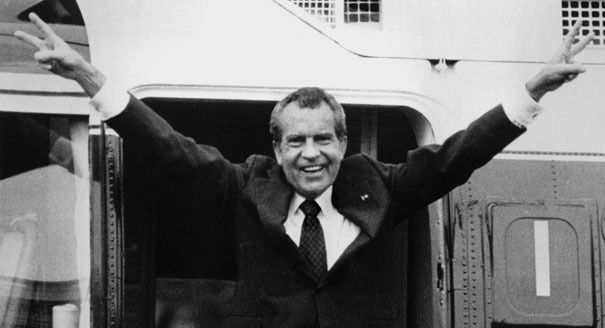
It was the scandal for which all other scandals are now named. In June 1972, a small group of Cuban burglars with high-level connections broke into the headquarters of the Democratic National Committee. Those headquarters were located in the Watergate...

Colorado Politics Calendar Aug. 10-16
Rachael Wright, Special to Colorado Politics
rachael.wright@coloradopolitics.com
Updated 2 days ago
CoPo’s weekly political calendar will help you find political and public-policy events throughout Colorado. It includes candidate and issue campaign events, public policy meetings, court hearings, state and local party conventions, assemblies, debates, rallies, parades, speaking engagements, traveling dignitary appearances,...

Democratic group aims Spanish-language TV ad at Gabe Evans in Colorado’s battleground 8th CD
Ernest Luning
ernest.luning@coloradopolitics.com
Updated 9 hours ago
A national group tied to House Democratic leadership launched a six-figure Spanish-language TV ad in Colorado this week targeting Republican U.S. Rep. Gabe Evans and the GOP’s signature budget legislation. The 30-second spot is part of $15 million in new...

Colorado School of Mines lands major share in Trump’s $100M mining-education plan
Thelma Grimes
thelma.grimes@coloradopolitics.com
Updated 11 hours ago
President Donald Trump on Friday named the Colorado School of Mines among roughly a dozen institutions that will share in a $100 million commitment “to train the next generation of American miners.” Paul Johnson, the university’s president, said he is...
Local party leaders, incoming judge among members of judicial performance commission that violated law
Michael Karlik
michael.karlik@coloradopolitics.com
Updated 11 hours ago
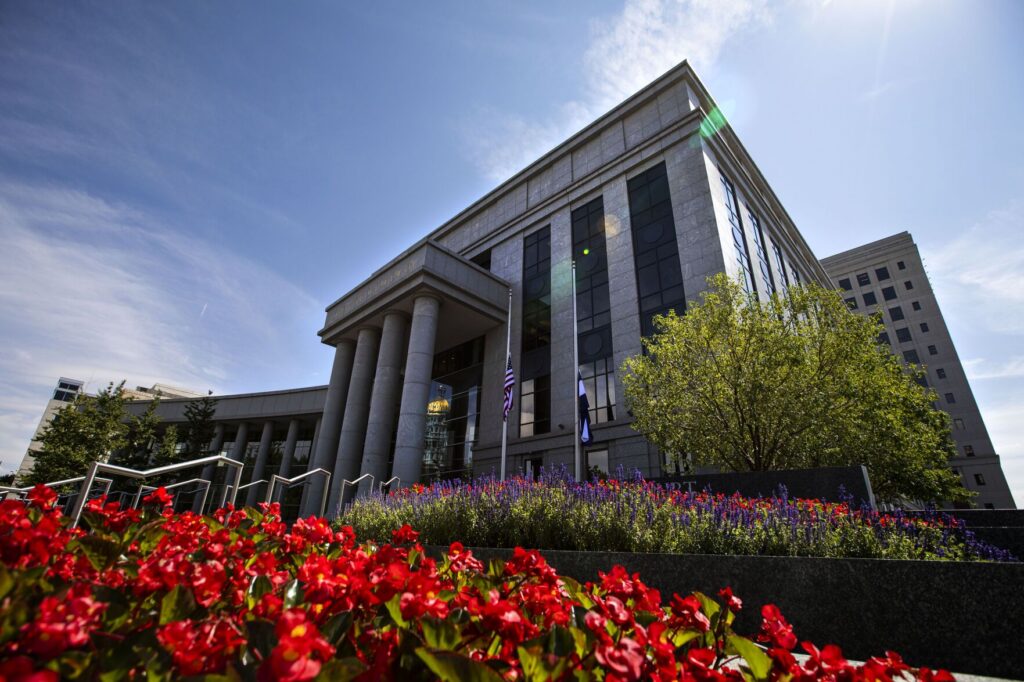
A local Democratic leader and 2024 presidential elector. A legislative aide and leader in the Young Republicans. An incoming county court judge freshly appointed by the governor. They are among the eight members of the northeastern Colorado judicial performance commission...
Judge dismisses lawsuit seeking records from Colorado Democratic group
Marianne Goodland
marianne.goodland@coloradopolitics.com
Updated 12 hours ago
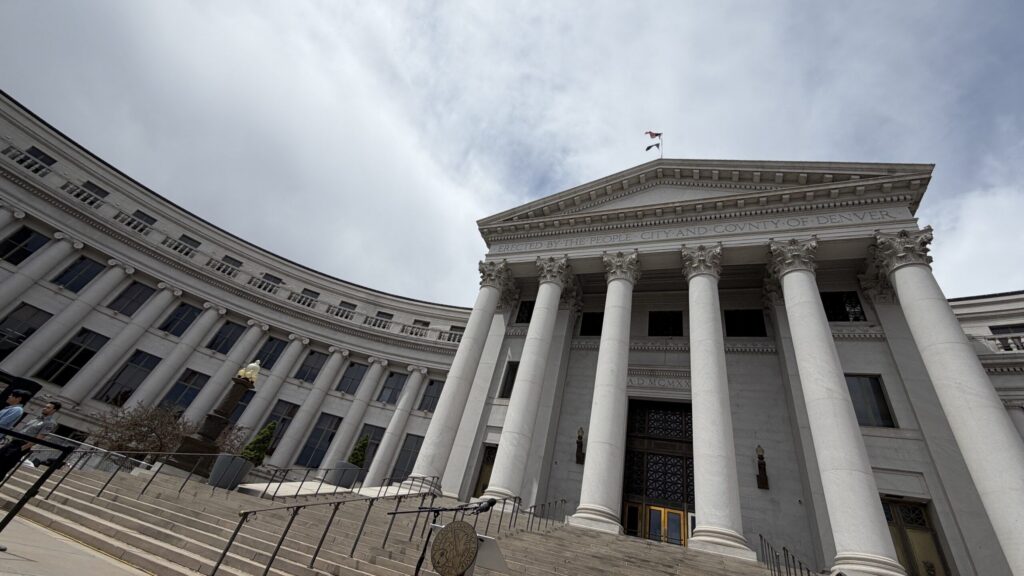
A lawsuit seeking to obtain records from Democratic lawmakers affiliated with a caucus has been thrown out by a Denver District Court judge. On July 17, Judge Ericka Englert dismissed the April lawsuit filed by progressive activist Derrick Blanton, who...

DOJ official decries ‘nonsense’ in Jeffco schools at fundraising gala
Matt Kyle
matt.kyle@denvergazette.com
Updated 16 hours ago
Amid a legal battle between Jeffco Public Schools and the federal government, a Department of Justice official spoke at a fundraising gala and decried “crazy stuff” and “nonsense” in the school district. The gala was for Jeffco Kids First, an...
Colorado Springs mother Deborah Nicholls’ murder conviction overturned
Nick Smith
nick-smith@coloradopolitics.com
Updated 1 day ago
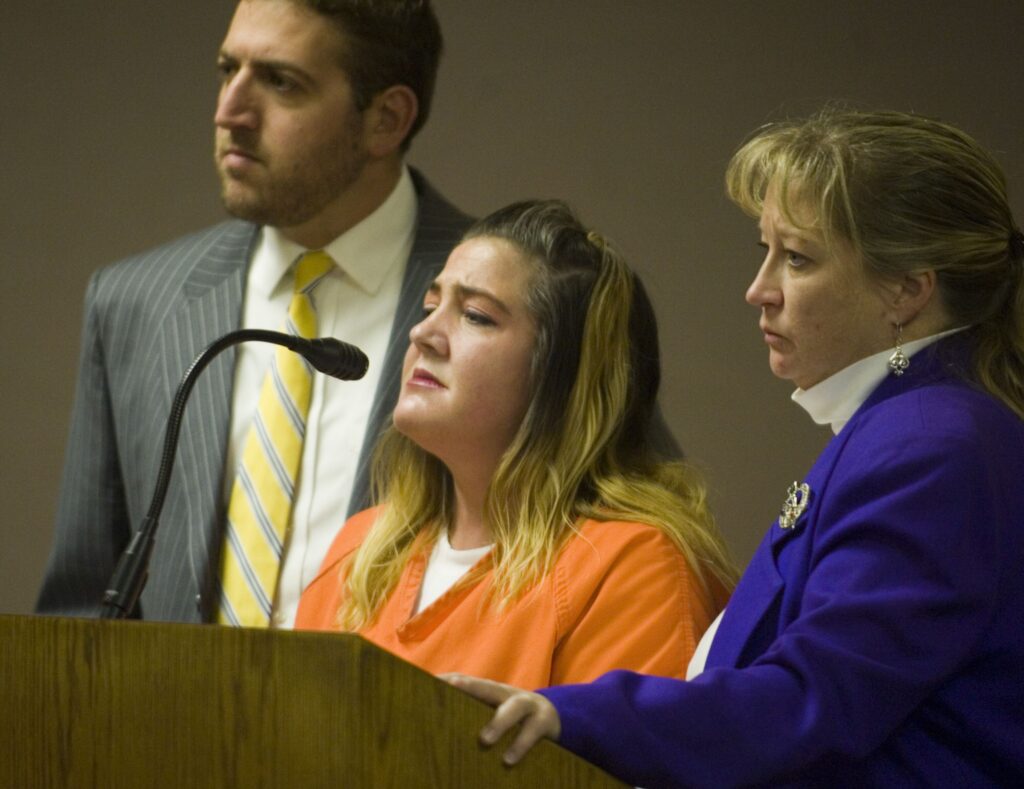
A Colorado Springs mother convicted in 2008 of murdering her three children in a house fire might get a new trial after a judge ruled that prosecutors withheld key evidence that could have impacted the jury’s verdict. Deborah Nicholls, whose...

Aurora Community College student journalist accuses college of ‘unconstitutional gag order’
Kyla Pearce
kyla.pearce@gazette.com
Updated 19 hours ago
An Aurora Community College student is accusing the college of putting an “unconstitutional gag order” on his student-run publication, saying the college banned it from publishing until students jumped through “countless bureaucratic hoops.” A college spokesperson said the college is...

Polis administration relaunches Colorado e-bike rebates with $3 million
Scott Weiser
scott.weiser@gazette.com
Updated 13 hours ago
Gov. Jared Polis and the Colorado Energy Office announced Thursday the return of the state’s popular e-bike rebate program, with registration set to open later this month. The office plans to provide point-of-sale rebates totaling $3 million from the Community...
PREV
PREVIOUS

The relevance of Watergate more than a half-century later | SONDERMANN
It was the scandal for which all other scandals are now named. In June 1972, a small group of Cuban burglars with high-level connections broke into the headquarters of the Democratic National Committee. Those headquarters were located in the Watergate complex of offices, residences and a hotel. Hence, the name of the scandal that dominated […]

Colorado Politics Calendar Aug. 10-16
CoPo’s weekly political calendar will help you find political and public-policy events throughout Colorado. It includes candidate and issue campaign events, public policy meetings, court hearings, state and local party conventions, assemblies, debates, rallies, parades, speaking engagements, traveling dignitary appearances, water meetings, book signings, county commission hearings, city council meetings and more. As a subscriber, […]