

10th Circuit reinstates constitutional challenge to Colorado ‘doxing’ law
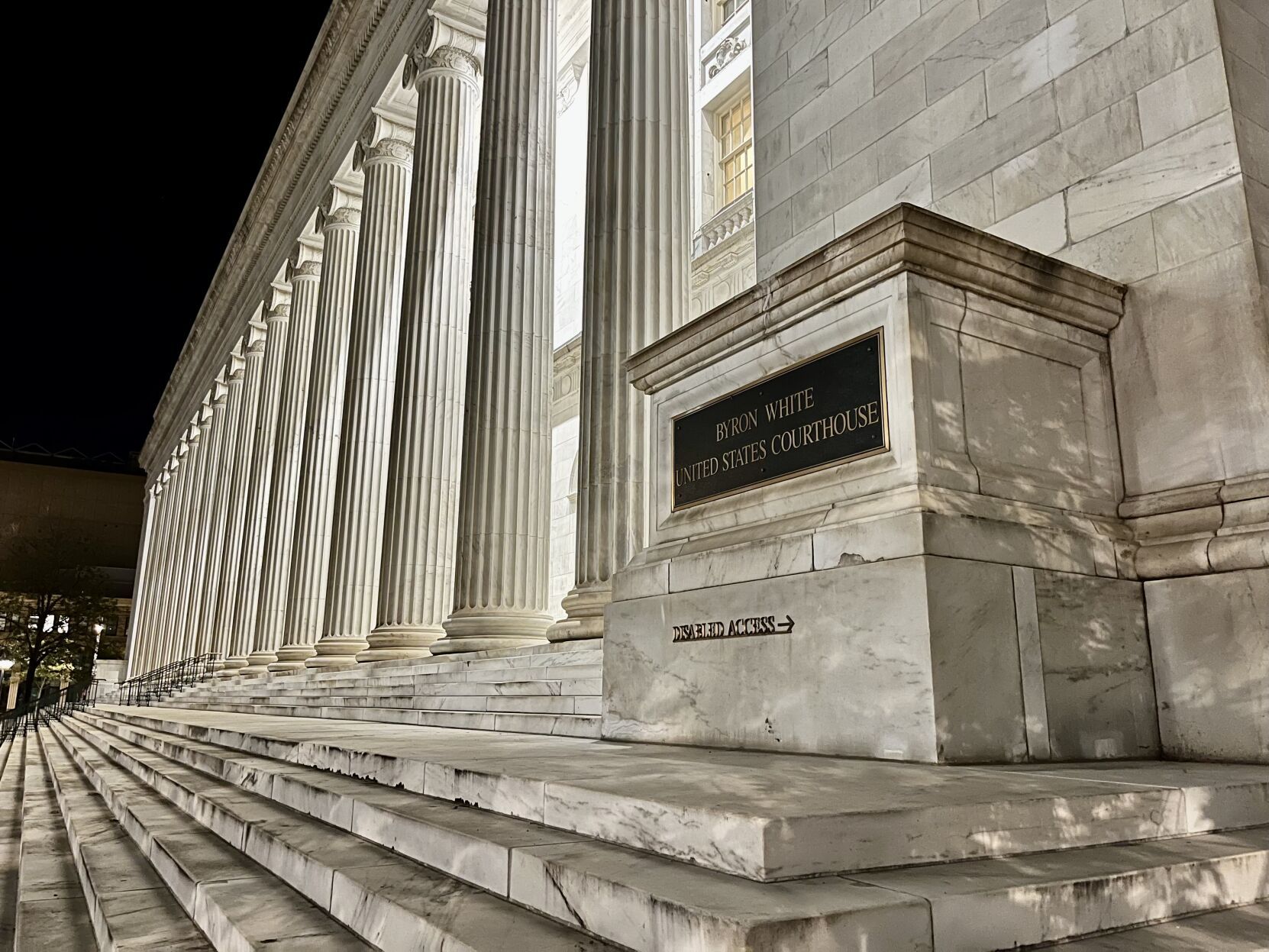
The Denver-based federal appeals court reinstated a man’s constitutional challenge on Wednesday to a law prohibiting the online dissemination of certain personal identifying information, including the details of police officers, if doing so poses an imminent safety threat.
Andrew Thomas Scott is a process server who attempted to deliver a subpoena at the home of Trooper Charles Hiller. Hiller subsequently filed a professional complaint against Scott for including Hiller’s personal information on the subpoena paperwork for “the criminals” to see. As a result, Scott was expelled from his trade association for the way he handled Hiller’s identifying details.
Scott then filed suit challenging the constitutionality of the law prohibiting the online posting of personal information for certain categories of people. He argued that it chilled his speech and precluded his launch of a law enforcement accountability website. A trial judge dismissed the lawsuit, finding the evidence did not show Scott would violate Colorado law by speaking out as he wished.
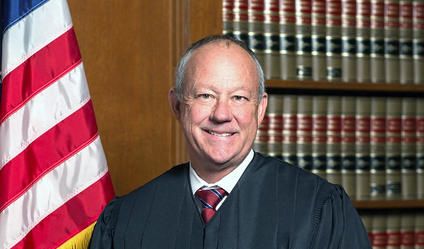
But a three-judge panel of the U.S. Court of Appeals for the 10th Circuit disagreed that Scott lacked grounds to challenge Colorado’s law. In a Sept. 3 opinion, Judge Timothy M. Tymkovich explained that Scott’s stated goal of publishing content with officers’ personal information presented the possibility of criminal prosecution, even if he never wound up being charged.
“Scott maintains his conduct would be lawful, but that does not mean he concedes that he lacks standing, nor that a prosecutor would see his conduct differently,” wrote Tymkovich. “Scott need not show that his intended conduct actually violates the law, just that it arguably does.”
The disputed law pertains to “protected persons,” which include law enforcement officers, educators, healthcare workers and others. Colorado makes it unlawful for someone to post on the Internet personal information about protected persons — such as a home address or phone number — if the details would pose an imminent and serious threat to the protected person’s safety.
In the underlying case, Scott was hired to deliver a subpoena to Hiller for him to appear at a hearing. After unsuccessful attempts to serve him with the notice, Scott went to Hiller’s Colorado Springs home one morning in March 2021. Recording on a body-worn camera, Scott spoke to Hiller’s wife at the door, but ultimately Hiller did not make himself available.
Scott filled out a public affidavit describing his unsuccessful attempt at serving Hiller, and included personal details like Hiller’s address, phone number and license plate.
Hiller filed a complaint with the state and with the Process Servers Association of Colorado about Scott’s inappropriate inclusion of his personal information for “the criminals” to see. The Colorado Department of Regulatory Agencies found no discipline was warranted, but the trade association expelled Scott based on his decision to include Hiller’s personal information on the affidavit.
Scott’s lawsuit explained he wished to publish the video footage and his affidavit online to “corroborate his version of events and to defend against Trooper Hiller’s accusations,” but he feared prosecution under the law covering protected persons. As a defendant, Scott named Michael Allen, the elected district attorney for El Paso and Teller counties.
Case: Scott v. Allen
Decided: September 3, 2025
Jurisdiction: U.S. District Court for Colorado
Ruling: 3-0
Judges: Timothy M. Tymkovich (author)
Robert E. Bacharach
Gregory A. Phillips
After both sides moved to end the lawsuit in their favor without a trial, U.S. District Court Judge Nina Y. Wang did not ultimately consider the free speech arguments at play. In an unusual move, she concluded Scott’s plans to post the video and affidavit with Hiller’s identifying information — plus Scott’s assertion that he wished to launch a website to assist Coloradans in serving police officers with legal papers — were not inherently illegal.
“First, the Statute only proscribes publication if it presents an imminent and serious threat,” Wang wrote in August 2024. “In reviewing the docket as a whole, this Court cannot find any reference to Trooper Hiller’s identification (as) an imminent and serious threat to his safety.”
Because Scott’s actions in disseminating personal information in the absence of a threat would fall outside the scope of the law, Wang determined he lacked standing to challenge its constitutionality.
Scott appealed to the 10th Circuit, arguing he was not obligated to “confess that he will in fact violate” the law. Instead, he contended it was enough that neither Hiller nor Allen promised they would never seek to enforce the law against him.
The appellate panel agreed with him.
The process servers association “terminated Scott’s membership because it believed he violated the statute, and the district attorney for Colorado’s Fourth Judicial District has refused to disavow any intention to prosecute,” wrote Tymkovich. Moreover, “Hiller himself claims that publishing his personal information would put him at threat from individuals he has interacted with.”
Although Wang was within her rights to determine if she could even hear Scott’s claim, she took “a step too far” in concluding Scott faced no specter of prosecution, Tymkovich added.
The panel declined to consider Scott’s arguments about the constitutionality of the law. It returned the case to Wang for her to perform the analysis.
The case is Scott v. Allen.

Federal judge green-lights excessive force, retaliation claims for trial against Fort Collins officers
Michael Karlik
michael.karlik@coloradopolitics.com
Updated 1 day ago
A federal judge green-lit a jury trial last week against multiple Fort Collins police officers on claims that they used excessive force on one man who was standing unarmed in his underwear, and retaliated against another man for exercising his...

10th Circuit revives wage violation lawsuit against Papa John’s operator
Michael Karlik
michael.karlik@coloradopolitics.com
Updated 2 days ago
The Denver-based federal appeals court on Tuesday reinstated a former Papa John’s delivery driver’s lawsuit alleging violations of federal and state wage law. Steve Mighell worked for one month at a Denver Papa John’s location in summer 2023. He alleged...
Colorado appeals judge’s delays in releasing opinions noted by performance commission
Michael Karlik
michael.karlik@coloradopolitics.com
Updated 2 days ago
The citizen-led performance commission that provides guidance to voters about whether to retain members of Colorado’s second-highest court raised concerns by judges and attorneys that Judge Elizabeth L. Harris sometimes struggles with releasing opinions promptly. Harris, who joined the Court...

Colorado judge explores sanctions against DOJ, ICE for rearresting man 4 days after release on bond
Michael Karlik
michael.karlik@coloradopolitics.com
Updated 3 days ago
A federal judge in Colorado is considering sanctions against the government after immigration agents rearrested a man four days after an immigration judge found him suitable for release on bond. On July 28, U.S. Magistrate Judge N. Reid Neureiter ordered...
Divided disciplinary panel censures Montezuma County judge after agreement reached
Michael Karlik
michael.karlik@coloradopolitics.com
Updated 3 days ago
A disciplinary panel formally imposed a public censure, suspension, and further training on Montezuma County Court Judge Ian J. MacLaren on Tuesday by a 2-1 vote. Under constitutional Amendment H, which voters adopted in November 2024, MacLaren was set to...
Colorado’s Western Slope magistrate judges describe unique role in federal judiciary
Michael Karlik
michael.karlik@coloradopolitics.com
Updated 4 days ago
Two of Colorado’s federal judges stationed on the Western Slope spoke to lawyers on Wednesday about their unique roles, the ways their workloads differ, and the need for more criminal defense lawyers to take cases outside the Front Range. “Here...

Denver sues Philip Morris, other tobacco companies over cigarette butt litter
Deborah Grigsby
deborah.smith@denvergazette.com
Updated 3 days ago
Denver is demanding that some of the biggest tobacco companies in the world pay for the cleanup of discarded cigarette butts on its streets, following a similar campaign that cities in other states have pursued. Denver’s lawsuit, filed this week...
Federal judge rules that request for bond hearing not necessary to challenge immigration detention
Michael Karlik
michael.karlik@coloradopolitics.com
Updated 3 days ago
A federal judge in Colorado ruled last week that it is not mandatory for a person to seek a bond hearing with an immigration judge before they challenge the lawfulness of their detention in federal court. For the past year,...

Boulder Valley School District introduces new policies following antisemitism lawsuit
Marissa Ventrelli
marissa.ventrelli@coloradopolitics.com
Updated 3 days ago
The chief of Boulder Valley School unveiled new policies for the 2026-2027 school year following a lawsuit filed on behalf of a student alleging antisemitic harassment. In June, the Anti-Defamation League filed a federal civil rights complaint against the school...

Colorado NRA chapter seeks injunction against new gun‑training requirement
Marissa Ventrelli
marissa.ventrelli@coloradopolitics.com
Updated 4 days ago
The Colorado chapter of the National Rifle Association is seeking an injunction to stop the state from enforcing a new law that took effect earlier this month. The new law requires anyone buying or selling certain firearms to first complete...
PREV
PREVIOUS
Federal judge declines to dismiss excessive force claim against Denver
A federal judge last week declined to dismiss Denver from an excessive force lawsuit, finding the plaintiff had sufficiently alleged the city’s lack of training was behind an officer’s decision to slam him head-first into the ground. Elijah Smith alleged he was among the crowd of people in Lower Downtown celebrating the Denver Nuggets’ NBA […]
Here's how this graduated income tax proposal would affect Colorado residents' take-home pay
The measure that seeks to eliminate Colorado’s flat rate in favor of a graduated income tax contains a dozen brackets, with the highest levels set to accrue tens of thousands more in liabilities, while cutting them for individuals at the lower ends of the proposed spectrum. How it would impact individuals will depend on their […]