

Legislators should ‘first, do no harm’ | OPINION
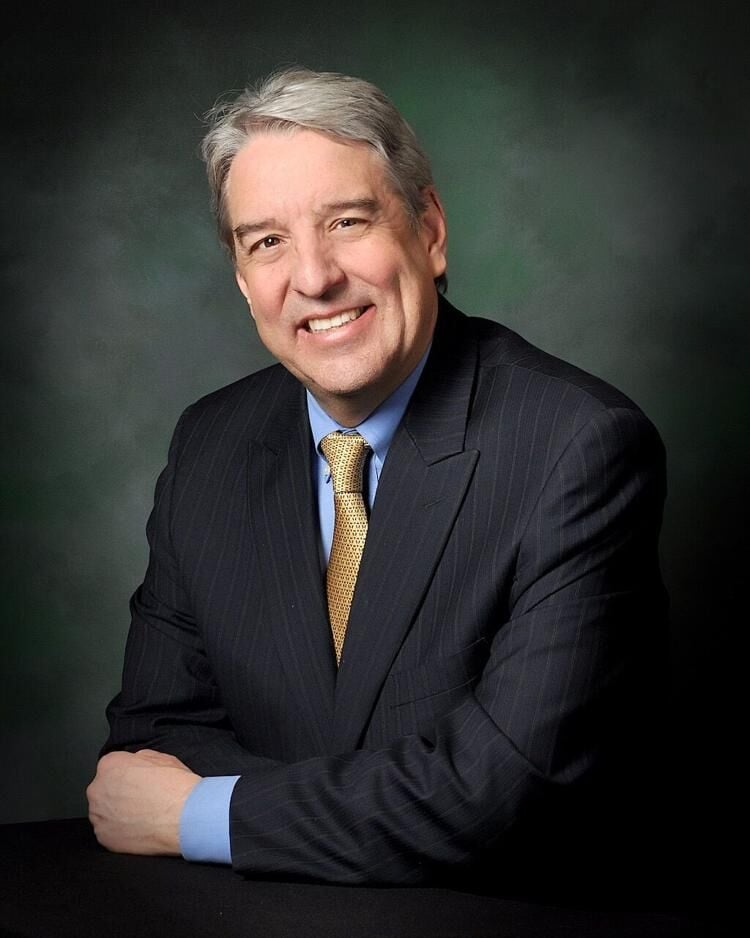
Greg Fulton

Recently, Gov. Jared Polis’ budget director, Mark Ferrandino, presented to legislators the effect of HR 1, the “Big Beautiful Bill”, on Colorado’s budget. He noted as a result of the bill, the state would have $1.2 billion less in revenue in the next fiscal year than the current one.
In response, Gov. Polis announced he may call a special session of the legislature to address the projected shortfall
The challenge facing the General Assembly and governor related to the state budget is a daunting one. After making substantial cuts in the prior session of more than $1 billion, legislators will once again need to adjust the state budget to align it with anticipated revenues.
The governor has already taken some steps by instructing state agencies to submit budgets with a 2.5% reduction over the current year. That will help but not be nearly enough to cover the shortfall. Some consideration is given to tapping the state’s Rainy Day Fund but drawing down too much out of that fund could create a problem in the future if the state’s economy takes a downturn or certain emergencies arise that may place demands on that fund.
Stay up to speed: Sign up for daily opinion in your inbox Monday-Friday
The temptation for many lawmakers in these situations is to take actions to make up for the lost revenue to preserve existing programs and services as they are today. This may involve increasing certain fees and creating additional enterprise funds, which do not count against the Taxpayer’s Bill of Rights (TABOR) limit, to offset some of the losses. A second approach voiced by some is to remove or modify TABOR which sets limits regarding the growth of the state budget. That would remove the cap on spending that exists in our Colorado Constitution today. Such a change though would require approval of the voters and there is no guarantee voters would support it. Other possibilities involve staff layoffs, a freeze on hiring, and reductions in travel and curtailing state contracts.
As the General Assembly and governor weigh what actions to take, it would be good for them to consider the Latin phrase, primum non nocere which means “first, do no harm”. This is one of the principal precepts all students in medicine are taught. This phrase simply means a primary obligation for health care professionals is to avoid actions that may cause greater harm to a patient while striving to treat their condition.
Colorado legislators in their efforts to address the state’s budget problem should adhere to this philosophy. It’s important as our lawmakers rush to consider options to “cure” the budget shortfall they don’t inadvertently inflict more injury or pain on their patients, the public and taxpayers. Increasing a variety of fees on businesses and individuals, when unemployment has risen, inflation is up and many are struggling, is an action that could prove more detrimental than good.
State lawmakers should also be cautious not to take actions that may add to the state’s budget woes. Passing legislation to add new rules or allowing state agencies or commissions to make major modifications to existing ones, requires the state agency or commission to conduct a public rulemaking process.
Few, outside of government insiders, lobbyists and regulatory specialists may understand or appreciate the public rulemaking process and the amount of time and cost involved. Developing and instituting a new rule or making a major modification to an existing one may span months and require hundreds of hours of staff time, possibly from multiple agencies. In many cases state staff from the Attorney General’s Office may also be involved. The overall costs, when fully totaled, may run well into six figures. Add to this the costs to the state to defend the new rule if it is challenged in court which may easily exceed the cost of the rulemaking.
Though a state agency may program funds in their budget for a rulemaking process, estimating the costs of these processes, at best, may be a “swag” and in many cases the costs and time far exceed the estimate. The reason is there are multiple variables and parties involved that can affect the amount of time and effort required. It’s also important to realize these rulemaking processes require substantial staff time and, in an environment where vacancies may not be filled and even layoffs possibly occur, spending time and money on a new rule or regulation doesn’t appear prudent nor make much sense.
Based on the current dire budgetary straits, lawmakers should consider a freeze on rulemaking with the exception being those that represent a minor change to an existing rule or a new one that may be essential due to an imminent hazard to the safety and welfare of the public. Taking this one action that could produce substantial savings for state government and also provide a welcome break to those in the private sector who are struggling to digest the flurry of previous regulations adopted over the past few years.
State legislators and senior managers of state agencies should also look at this time to make some tough decisions on existing programs such as streamlining, revamping, or even scrapping them. When funds are flush, the tendency is to defer taking such actions. Some of this is due to the difficulty in eliminating even poor programs as certain constituencies who benefit from these programs contact their elected officials and pushback on any changes. In addition, these programs have internal support within the agencies from the staff affected by those cuts and in some cases public employee unions concerned regarding the effect.
Greg Fulton is the president of the Colorado Motor Carriers Association, which represents more than 600 companies directly involved in, and affiliated with trucking in Colorado.


Colorado, like America, past due for generational change in politics | Miller Hudson
Miller Hudson
miller-hudson@coloradopolitics.com
Updated 12 hours ago
I was 27 before I ever voted for president. At 19, in 1964, the Constitution had not yet been amended establishing 18-year-old voting eligibility. In 1968, I was serving overseas with the U.S. Navy at a time when there was...

Farmers and ranchers win on NIETC cancellation | Rachel Gabel
Rachel Gabel
rachel-gabel@coloradopolitics.com
Updated 11 hours ago
The Department of Energy rolled into Lamar last week and Office of Electricity Assistant Secretary Katie Jereza stood in her neat, green suit in front of a room filled with farmers, ranchers and landowners. The crowd was filled with straw...

Going after the wrong butts | Jon Caldara
Jon Caldara
jon-caldara@coloradopolitics.com
Updated 3 days ago
Mayor Mike Johnston proclaimed, “It is past time Big Tobacco cleaned up the big mess it’s created.” Yep. Denver is suing tobacco companies for the cigarette butts littering the city. Because Denver’s Big Mess couldn’t possibly be the fault of...
Three districts that will answer key Colorado political questions | Paula Noonan
Paula Noonan
paula-noonan@coloradopolitics.com
Updated 4 days ago
Colorado’s legislature used to be a place where neither party was dominant. Dozens of seats were competitive and House and Senate majorities switched regularly. From 2010 to 2020, the House was predominantly Democratic with one two-year assembly under Republicans. The...

Hunting is a privilege, not a constitutional right | PODIUM
Colorado Politics
colorado-politics@coloradopolitics.com
Updated 4 days ago
By Roland Halpern Colorado voters may soon be asked to place hunting and fishing in the state constitution. Proposition 302 would establish the right to hunt, fish and take wildlife using “traditional methods,” while declaring hunting and fishing are the...

DEA’s Miguel Chino describes Colorado’s place on the ‘fentanyl pill superhighway’ | The OpEdge Podcast
Tony Olivero
tony.olivero@gazette.com
Updated 5 days ago
Miguel Chino, Acting Special Agent in Charge of the Drug Enforcement Administration’s Rocky Mountain Field Division, joins The OpEdge to paint the picture of Colorado’s place on America’s “fentanyl pill superhighways.” Chino updates Gazette and Colorado Politics Deputy Opinion Editor...
A right to buy a product? | Hal Bidlack
Hal Bidlack
hal-bidlack@coloradopolitics.com
Updated 6 days ago
A recent story in Colorado Politics caught my eye, as I learned of a “citizen initiative” that has qualified for the November ballot. It seems supporters of Initiative 177 have collected enough signatures, 146,165 legitimate ones out of a total...

Fourteen years after Aurora — we can’t afford to go backward | GUEST COLUMN
Colorado Politics
colorado-politics@coloradopolitics.com
Updated 6 days ago
By John Hickenlooper and Gabby Giffords Two Saturdays ago, a gunman shot and killed three people and wounded several others in Twin Falls, Idaho. This latest deadly shooting comes only days after we remembered the lives we lost 14 years...

A daring and fearless rescuer — is afraid of a debate | Dick Wadhams
Dick Wadhams
dick-wadhams@coloradopolitics.com
Updated 1 week ago
Victor Marx, the Republican nominee for governor who says he can exorcize demons and who claimed he has fearlessly rescued 45,000 women and children during 150 “high-risk” missions around the world, appears to be intimidated by the notion of debating...
Colorado’s ballot-initiative process again a battleground for deep pockets, special interests — not the people | Miller Hudson
Miller Hudson
miller-hudson@coloradopolitics.com
Updated 4 days ago
The Oxford English Dictionary defines a constitution as, “The set of fundamental principles according to which a state is constituted and governed, a body of rules prescribing the major elements of the structure and activities of any organization.” Somewhere in...
PREV
PREVIOUS

Loophole lets off Jeffco sheriff in K-9 attack | BRAUCHLER
George Brauchler It is the position of the Jefferson County Sheriff’s Office (JCSO) that their K-9 deputies are not accountable under the law for any injuries or destruction caused by their dogs, including broken bones, maiming and even death. Jeffco deputies advanced and defended just such an outrageous argument after one of their “trained” dogs […]

The threat is real | SLOAN
Kelly Sloan There are few things that serve to focus the mind as sharply as a looming existential threat, and minds in Taiwan are focusing rather sharply these days. Alexander Tah-ray Yui, Taiwan’s ambassador to the U.S. (of course we can’t call him that), made a quick, quiet trip to Denver a fortnight ago, during […]