

Appeals judge suggests legislature clarify law providing compensation to exonerated defendants
A member of Colorado’s second-highest court suggested last month that lawmakers clarify whether defendants are only supposed to be eligible for compensation when they are innocent of the specific crime they were convicted of, even if there is evidence their conduct still amounted to a different crime.
In 2013, the legislature passed the Exoneration Act, which provides up to $70,000 per year for people who were wrongly convicted of a felony and served time in prison. To be eligible, defendants have to demonstrate they were “factually innocent of any participation in the crime at issue.”
Isaac Aryee spent nearly a decade in prison after an Adams County jury convicted him in 2011 of sexually assaulting a child. A judge eventually vacated his convictions based on new evidence suggesting the victim was not a child at the time Aryee had sex with her. Prosecutors declined to pursue the case further.
Aryee then sought nearly $700,000 under the Exoneration Act for his incarceration, which the government opposed. A trial judge sided against Aryee and a three-judge panel for the Court of Appeals upheld that decision on Oct. 31. The panel reasoned the new evidence used to overturn Aryee’s conviction was unreliable and did not demonstrate Aryee was innocent.
Judge Ted C. Tow III wrote separately to identify another issue: Even if Aryee did not stand convicted of raping a child, the evidence would support a guilty verdict for sexual assault of an adult. To that end, it was unclear to Tow whether lawmakers intended defendants to receive compensation under such circumstances.
“(D)oes ‘crime’ mean the specific charge? Or does it mean the criminal act?” he wrote. “Again, I recognize that it is not entirely clear and suggest that the General Assembly may wish to revisit this language.”
In the underlying case, Aryee had a sexual relationship with 15-year-old. Prosecutors charged him with multiple counts of child sex assault. A jury found him guilty and he received an indefinite sentence of 30 years to life.
Following his conviction, Aryee worked to establish the teenage girl was not 15 at the time of the sexual encounter, but rather was four years older. The teenager was born in a refugee camp in Sierra Leone. Immigration documents listed her birth year as 1993 and testimony corroborated that timeframe, but there was no documentation of her birth.
Aryee enlisted the help of an investigator in Sierra Leone, who produced a birth certificate claiming the girl was actually born in 1989. A trial judge held a hearing in 2019 and concluded the new evidence undermined the case for Aryee’s guilt. Prosecutors were unable to challenge the birth certificate or gain the cooperation of witnesses, leading them to dismiss the criminal charges.
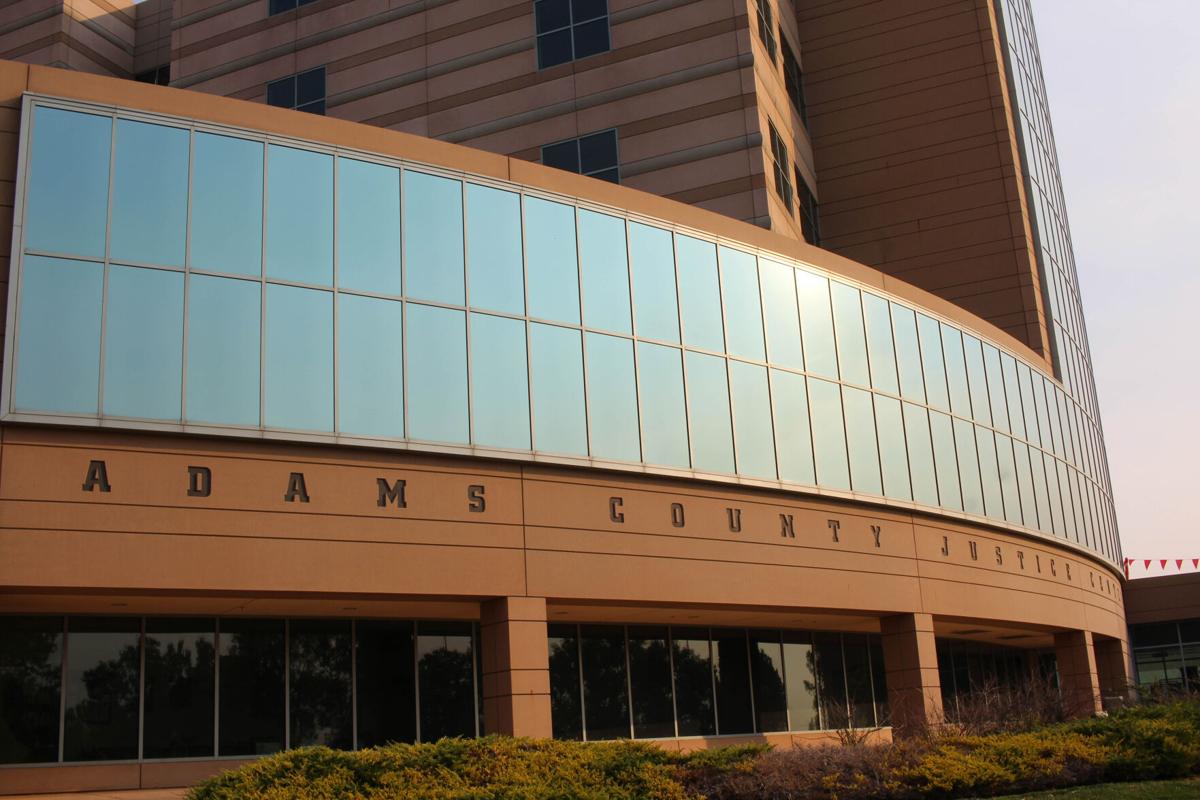
The Adams County Justice Center
Photo by Liam Adams

The Adams County Justice Center
Aryee then sought compensation under the Exoneration Act. The Colorado Attorney General’s Office, representing the state, initially argued Aryee was not entitled to money even if he had not committed a sex crime against a child. Because one of his convictions involved sex assault by use of force, and the new birth certificate did not exonerate him of that piece, Aryee had still committed the related crime of sex assault.
District Court Judge Kyle Seedorf believed a trial was necessary to resolve Aryee’s claim.
The state then enlisted its own Sierra Leonean investigator to look into the birth certificate. The investigator reported that the document Aryee produced did not comply with Sierra Leone’s requirements to register a birth and was likely fraudulent.
Then-District Court Judge Roberto Ramírez subsequently ended the case in the state’s favor, noting the birth certificate could not be authenticated. Therefore, there was no “new evidence” of the victim’s age and Aryee was not factually innocent based on the other evidence of his actions.
Representing himself, Aryee appealed to the Court of Appeals. He argued that requiring defendants to prove their actual innocence is unconstitutional.
“Reversal of a conviction is reversal, regardless of the reason, and an invalid conviction is no conviction at all,” Aryee wrote.

The Ralph L. Carr Colorado Judicial Center in downtown Denver houses the Colorado Supreme Court and Court of Appeals. (Michael Karlik/Colorado Politics)
Michael Karlik/Colorado Politics

The Ralph L. Carr Colorado Judicial Center in downtown Denver houses the Colorado Supreme Court and Court of Appeals. (Michael Karlik/Colorado Politics)
The appellate panel rejected Aryee’s constitutional challenge. As for the documentation Aryee produced about the girl’s age, those files “are clearly at odds with the controlling Sierra Leone laws” and “they lack trustworthiness,” wrote Judge Timothy J. Schutz for himself and Judge Neeti V. Pawar.
Tow, in his concurrence, resurrected the argument the government initially made: Aryee was not actually innocent because jurors still convicted him of unlawfully using force, even if the victim was an adult.
Tow elaborated that the Exoneration Act requires a person to prove themselves factually innocent of “the crime at issue.” But he was uncertain whether lawmakers meant to limit exoneration to the defendant’s specific conviction, as other clues in the law suggested a person is not factually innocent if their underlying actions were still criminal in nature.
“I submit that this language can support either reading — it could mean factually related to the actual charge or factually related to the criminal act,” Tow wrote. “As this case makes clear, there are situations in which the petitioner’s evidence reflects guilt of a factually related crime.”
The case is Aryee v. Colorado.

10th Circuit rejects invitation for full-court review of tax-avoidance case
Michael Karlik
michael.karlik@coloradopolitics.com
Updated 2 hours ago
The Denver-based federal appeals court declined to reconsider the standards for holding entities liable for their tax-avoidance schemes, with a majority of judges voting against full-court review on Monday. In April, a three-judge panel of the U.S. Court of Appeals...
Colorado judge blasts state forensics lab in dismissing child sex case
Jenny Deam
jenny.deam@gazette.com
Updated 3 hours ago
In a potentially widely consequential action, a Weld County district judge dismissed a child sexual assault case, citing the ongoing scandal at the Colorado Bureau of Investigation’s forensic lab that “has left a dark mark on the history of Colorado...
10th Circuit sympathetic to Colorado consumer protection law governing interest rates
Michael Karlik
michael.karlik@coloradopolitics.com
Updated 1 day ago
Members of the Denver-based federal appeals court appeared sympathetic on Tuesday to Colorado’s assertion that it can lawfully require certain out-of-state banks to abide by the state’s own ceilings on interest rates when they lend to consumers in Colorado. The...
Colorado justices to decide insurance companies’ obligation to disclose relevant policies
Michael Karlik
michael.karlik@coloradopolitics.com
Updated 3 hours ago
The Colorado Supreme Court announced on Monday that it will decide whether an insurance company violated state law by withholding an at-fault driver’s policy for nearly a year when there was no dispute that the policy was not in effect...

Judicial performance evaluations released, Montezuma County judge disciplined | COURT CRAWL
Michael Karlik
michael.karlik@coloradopolitics.com
Updated 2 days ago
Welcome to Court Crawl, Colorado Politics’ roundup of news from the third branch of government. Colorado’s citizen-led judicial performance commissions released their voter narratives for the judges standing for retention in November, plus a disciplinary panel imposed consequences on a...

DA justifies CSPD officers in fatally shooting man at McDonald’s
Cleo Westin
cleo-westin@coloradopolitics.com
Updated 1 day ago
The deadly shooting of a man by Colorado Springs police officers at a McDonald’s was ruled justified by the 4th Judicial District Attorney’s Office on Monday, the office announced in a news release. The ruling determined officers Daniel White, Mitchell...
Federal judge holds off on dismissing formerly bankrupt medical contractor from Jeffco jail death lawsuit
Michael Karlik
michael.karlik@coloradopolitics.com
Updated 24 hours ago
A federal judge declined on Monday to dismiss the formerly bankrupt medical contractor from a lawsuit over a detainee’s death in Jefferson County jail, but indicated she would do so if the plaintiffs’ attorneys go through the process to ensure...
Castle Rock caregiver sentenced after stealing more than $110,000 in jewelry from family
Nicholas Fogleman
nicholas.fogleman@denvergazette.com
Updated 1 day ago
A judge sentenced a Castle Rock caregiver to 90 days in jail after she pleaded guilty to stealing more than $110,000 worth of jewelry from the family of a disabled son under her care. Elsa Montejo-Fuentes, 32, had worked for...
Federal judge green-lights excessive force, retaliation claims for trial against Fort Collins officers
Michael Karlik
michael.karlik@coloradopolitics.com
Updated 4 days ago
A federal judge green-lit a jury trial last week against multiple Fort Collins police officers on claims that they used excessive force on one man who was standing unarmed in his underwear, and retaliated against another man for exercising his...

10th Circuit revives wage violation lawsuit against Papa John’s operator
Michael Karlik
michael.karlik@coloradopolitics.com
Updated 5 days ago
The Denver-based federal appeals court on Tuesday reinstated a former Papa John’s delivery driver’s lawsuit alleging violations of federal and state wage law. Steve Mighell worked for one month at a Denver Papa John’s location in summer 2023. He alleged...