

Early signs signal wolf reintroduction lacked ‘ecosense’ | HUDSON
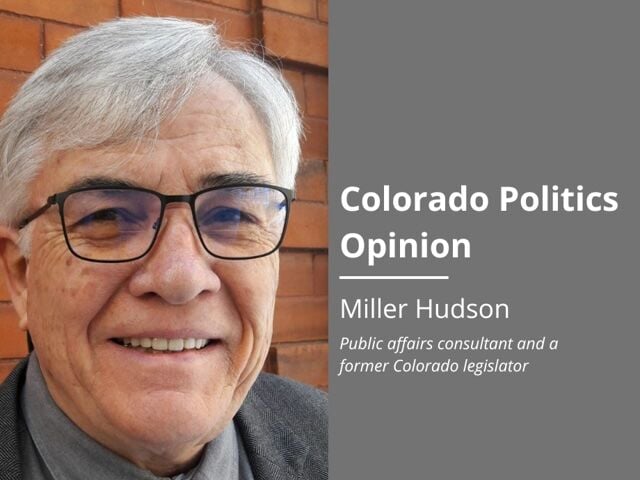
Miller Hudson

Miller Hudson
British philosopher Isaiah Berlin observed, “Freedom for the wolves has often meant death to the sheep.” Or, in Colorado, death to 2024’s spring calves. Let’s face it, these killings aren’t instances of apex predators culling the weakest members from wild herds of elk and deer as promised by proponents for wolf re-introduction. After more than 30 generations of cattle grazing without wolves, mothers have long lost the memory of protecting their calves against nighttime predators, leaving a lone calf as a ready meal for a prowling wolf. All the happy talk about restoring the primitive strengths of Colorado’s alpine and prairie ecosystems presumes wolves are being released into a 19th century wilderness. To the contrary, they’re thrust into an Anthropocene turmoil of fences, roads and constant human presence.
Coyotes have proven adept at accommodating themselves to modern civilization. Though they nab the occasional stray cat or small dog, they know to steer clear of people and their guns. It will require several decades for wolves to adapt to the threats posed by the true apex predator in their environment — man, the hunter. Aside from the nostalgic and romantic attraction of a howling wolf standing alone, throat uplifted on a moonlit prairie, what are the ethics of releasing these animals into a world they cannot comprehend?
Stay up to speed: Sign up for daily opinion in your inbox Monday-Friday
Being torn to pieces by a ravenous wolf pack seems a remarkably unpleasant demise, even in the case of creatures otherwise destined for a trip to the slaughterhouse. To reacquaint yourself with the truth of this primordial terror, I recommend Jack London’s short story, “To Build a Fire.” My grandfather, who traveled to the Yukon gold fields in 1901 as a mining engineer, first read this story to my brother and I nearly 70 years ago. I can still conjure up the goosebumps I experienced then — imagining the ravenous eyes of encircling wolves reflecting flames about to be snuffed out by falling snow.
For all the attention directed toward the declining health of our global environment, we tend to overlook humanity’s place within ecosystems — viewing ourselves as remaining somewhat outside the environments we inhabit. While working on the challenge of isolating radioactive wastes from the biosphere during the 1990s, I speculated on creating a new word into that debate: “ecosense,” linked to common sense, but encompassing an awareness of our integral role in shaping lived environments.
ec•o•sense (noun) 1. Perception of the symbiotic interaction
that operates between biological and cultural systems; also, an
appreciation of the essentially organic character and evolutionary
principles governing change within both systems. 2. The
recognition that cultural technologies are the product of
thousands of years of historical and scientific momentum,
while biological habitats represent the results of natural selection
operating over millions of years. 3. An understanding that both
cultural and biological ecosystems are relatively brittle and
prone to sudden collapse under stress. 4. Awareness that systemic
resilience proves fragile against invasive forces, especially
pollutants. 5. Understanding that the maintenance of symbiotic
balance within bio-cultural relationships demands repeated,
conscious socio-economic adjustments in response to changes
in environmental indicators. Etymology: A word intended to
capture the dynamic that rapid or drastic changes in social and
cultural patterns, however beneficial or damaging in the near term,
are likely to precipitate equally powerful forces whose consequences
are unpredictable and that may demand subsequent interventions.
— antonym ecosenseless
Colorado is distinguished by having the longest constitution of any state. This is partly a result of unique circumstances related to the ease of amending the underlying document. Consequently, everything from a prohibition on bear trapping to the byzantine provisions of TABOR have found their way into the document. In a classic instance of slamming the barn door shut once the horses have fled, the legislature has made it increasingly difficult, and signature thresholds more demanding, for citizen referendums. The perverse result is that the opportunity for citizen-initiated legislation has grown out of reach for grassroots activists. A recent estimate found it takes $2 million dollars just to reach the ballot.
This is, of course, no obstacle for powerful economic interests that can benefit from tinkering with Colorado’s economic rules. Thus, we have witnessed a decade of alcohol retailing initiatives on our ballots proposing to place beer, wine and, ultimately, liquor sales in grocery stores. Naturally, these campaigns were presented as unselfish concern for consumers — providing expanded “convenience.”
The predictable consequences included the demise of neighborhood retailers as mom-and-pop liquor stores closed their doors. Forty years ago, I was supervising the Denver Excise and Licenses Department. We discovered when a national chain can load a train at the Budweiser brewery in St. Louis (at the time), they could profitably resell discounted cases cheaper than small retailers could purchase them wholesale from a local distributor. No surprise then that the legislature is attempting to roll back liquor sales at groceries.
Trying to put this toothpaste back in the tube will fund new SUVs for half the corporate attorneys in Denver. Unspooling wolf introduction is likely to find its way to court as well, long before we have sufficient data to assess its merits. Term limits have reduced long-range thinking at the Capitol to eight years. No wonder the state’s road conditions rank down there alongside Mississippi and Arkansas, not to mention starting teacher salaries. Now we are considering the return of wolverines to the Rockies. I understand the natural affinity for vicious weasels among politicians, but maybe a deep breath and a little caution are called for.
Miller Hudson is a public affairs consultant and a former Colorado legislator.

The relevance of Watergate more than a half-century later | SONDERMANN
By Eric Sondermann
by-eric-sondermann@coloradopolitics.com
Updated 3 days ago
It was the scandal for which all other scandals are now named. In June 1972, a small group of Cuban burglars with high-level connections broke into the headquarters of the Democratic National Committee. Those headquarters were located in the Watergate...
Colorado must continue finding common ground on wildfire policy | GUEST COLUMN
Colorado Politics
colorado-politics@coloradopolitics.com
Updated 2 days ago
By John Herrick Colorado has never lacked for opinions about wildfire policy. We debate forest management, climate change, prescribed burns, land use, air quality and budgets. Those debates are familiar territory, but a new discussion is beginning to happen around...
Proposition NN is the best investment for Colorado’s students and schools | GUEST COLUMN
Colorado Politics
colorado-politics@coloradopolitics.com
Updated 2 days ago
By Justin Ogden Colorado families know what it means to make difficult budget decisions. Inflation has driven up the cost of groceries, housing, utilities and just about everything else. Families like mine work hard to stretch every dollar while still...
Were the primaries a preview for consequential general election? | Paula Noonan
Paula Noonan
paula-noonan@coloradopolitics.com
Updated 3 days ago
Colorado’s political future will go the way of this election. Historically, the state has not had both chambers controlled by a supermajority. This election may change that. The primaries suggest how the general election may play out. Democrats had solid...
Disagreement doesn’t have to mean disrespect | GUEST COLUMN
Colorado Politics
colorado-politics@coloradopolitics.com
Updated 3 days ago
By Vincent Atchity These days, it doesn’t take long to feel overwhelmed by politics. Turn on the news, scroll through social media or read the comments on almost any political post and you’ll find anger, outrage and personal attacks. For...

Keeping Colorado’s kids’ trust online | PODIUM
Colorado Politics
colorado-politics@coloradopolitics.com
Updated 4 days ago
By Stuart Jenkins Almost every day, the kids and teens we serve across Colorado are introduced to new generative artificial intelligence and other emerging technology, including conversational AI systems designed to simulate human conversation. These tools are no longer a...

Marx’s ‘through line’ predates Trump, connects to Maes | FEEDBACK
Colorado Politics
colorado-politics@coloradopolitics.com
Updated 4 days ago
Eric Sondermann is of course correct Victor Marx is an unserious, unelectable, embarrassing Republican nominee for governor of Colorado. But I respectfully submit that the “through line,” as Mr. Sondermann describes it, is not from Trump to Marx, despite their...

Cedric Pride’s blueprint for opportunity through the trades | The OpEdge Podcast
Tony Olivero
tony.olivero@gazette.com
Updated 4 days ago
Cedric Pride, CEO of the nonprofit Pride Initiative in Denver, joins The OpEdge with a blueprint for workforce development, skilled trades, and economic opportunity. Pride tells host and investigative columnist Jimmy Sengenberger why he believes the trades offer a path...
Colorado’s No. 1 education ranking should raise our ambition | GUEST COLUMN
Colorado Politics
colorado-politics@coloradopolitics.com
Updated 5 days ago
By Scott Laband Colorado has earned the right to celebrate its new No. 1 ranking in education from U.S. News & World Report. Gov. Jared Polis called it “one of the proudest moments” of his time in office and shared the...

Colorado’s No. 1 education ranking reflects the power of school choice | GUEST COLUMN
Colorado Politics
colorado-politics@coloradopolitics.com
Updated 5 days ago
By Peter Mason Colorado is now the No. 1 state in the nation for education, according to the 2026 U.S. News & World Report Best States rankings. That is a distinction worth celebrating. It is also a distinction worth understanding....