

‘Cowbelles’ carry on legacy with new cattle plate | GABEL
Rachel Gabel

Rachel Gabel
The women who make up the cattlewomen’s groups around the state are changing, but they’re also beautifully balancing the history the groups are built upon and the future they’re penning for themselves. Once often called the “Cowbelles,” the groups raffled quilts, handed out beef recipes and made available napkins printed with the brands from ranches within their county or region. Several groups are building on that sturdy foundation, and making their own way.
Ranch women are an interesting lot, and they range from women who work a job in town to support the household to those who are better cattlemen than many of their male contemporaries. No matter which cow camp cattlewomen find themselves in, the groups today are focused and are a respected voice that should still be audible over the chaos and din of noise surrounding the beef industry in Colorado.
Cattlewomen groups have led the way in agriculture education, be it donating accurate agriculture-themed books to schools, reading books and answering questions in classrooms, or handing out recipe cards to frazzled, decision-fatigued grocery shoppers. They make time to visit classrooms to teach about the many ways beef byproducts are used in everyday products as modern processing uses, as they say, everything but the moo. For example, cowhides can be made into 144 baseballs, 20 footballs, 18 soccer balls, 18 volleyballs, or 12 basketballs. Even adults may learn beef byproducts are found in building insulation, hydraulic fluid, asphalt, fire extinguishing foam and medicines.
Stay up to speed: Sign up for daily opinion in your inbox Monday-Friday
One of the state’s most active groups is the Logan County Cattlewomen in northeastern Colorado. Their membership includes ranchers, bankers, teachers, medical professionals, writers, commodity brokers and beef processors. This year, in addition to all of the educational outreach and the four scholarships they awarded to students pursuing a degree or career in agriculture (particularly impressive as the group was only established in 2020) the group also designed a license plate slowly making its way through the legislative process.
The design committee went to lengths to ensure Colorado’s $47 billion agriculture industry was well represented, which is no easy task to accurately depict on a small license plate border. The bill, HB24-1369, “Colorado Agriculture Special License Plate,” carried by Rep. Richard Holtorf, Rep. Matthew Martinez, Sen. Byron Pelton, and Sen. Janice Marchman, passed the House Agriculture, Water and Natural Resources Committee and is, at press time, awaiting a vote in the Senate Finance Committee. The center of the plate features a cow, not of the clip art variety but a brockle-faced broad actually out grazing grass in Colorado and making a living. She doesn’t have a cute name or a cartoon face. She, not unlike the cattlewomen she represents, is the real deal. She’s solid, dependable and the foundation of her industry.
The plate isn’t going to ease the burdens the state’s agriculture industry is shouldering. It won’t decrease input costs, keep the price of feeder cattle from plummeting, predict the weather or keep the bad ideas of the legislature from seeing the light of day. It won’t make a dependable and affordable ag labor force magically appear. It won’t decrease the price of red diesel fuel. It won’t slow the Biden administration’s regulatory red tape parade, and it won’t keep ballot-box biology at bay. It will, however, be a tiny nod of support from lawmakers to the giant of an industry. It is, as President John F. Kennedy, while still a senator, said, “(the farmer) is the only man in our economy who must buy everything he buys at retail — sell everything he sells at wholesale — and pay the freight both ways.”
The plate will carry two one-time fees, one in the amount of $25 credited to the Colorado DRIVES vehicle service account and one in the amount of $50 credited to the highway users tax fund. The remainder will make its way to the agriculture management fund and will be designated for supporting or expanding marketing programs designed to help consumers, restaurants and retailers identify and purchase Colorado agricultural products.
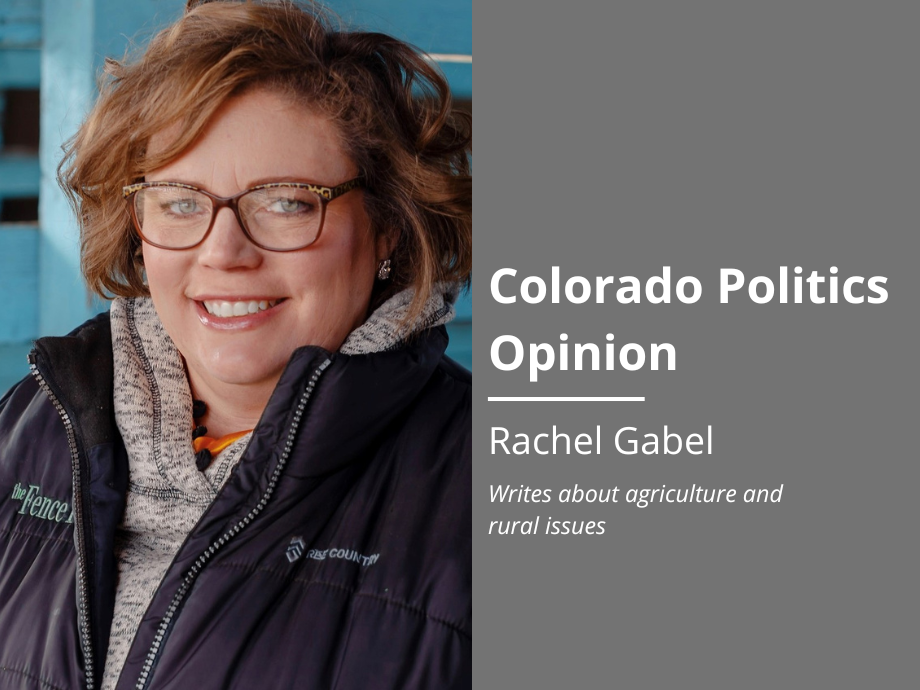
Rachel Gabel writes about agriculture and rural issues. She is assistant editor of The Fence Post Magazine, the region’s preeminent agriculture publication. Gabel is a daughter of the state’s oil and gas industry and a member of one of the state’s 12,000 cattle-raising families, and she has authored children’s books used in hundreds of classrooms to teach students about agriculture.

The relevance of Watergate more than a half-century later | SONDERMANN
By Eric Sondermann
by-eric-sondermann@coloradopolitics.com
Updated 3 days ago
It was the scandal for which all other scandals are now named. In June 1972, a small group of Cuban burglars with high-level connections broke into the headquarters of the Democratic National Committee. Those headquarters were located in the Watergate...
Colorado must continue finding common ground on wildfire policy | GUEST COLUMN
Colorado Politics
colorado-politics@coloradopolitics.com
Updated 2 days ago
By John Herrick Colorado has never lacked for opinions about wildfire policy. We debate forest management, climate change, prescribed burns, land use, air quality and budgets. Those debates are familiar territory, but a new discussion is beginning to happen around...
Proposition NN is the best investment for Colorado’s students and schools | GUEST COLUMN
Colorado Politics
colorado-politics@coloradopolitics.com
Updated 2 days ago
By Justin Ogden Colorado families know what it means to make difficult budget decisions. Inflation has driven up the cost of groceries, housing, utilities and just about everything else. Families like mine work hard to stretch every dollar while still...
Were the primaries a preview for consequential general election? | Paula Noonan
Paula Noonan
paula-noonan@coloradopolitics.com
Updated 3 days ago
Colorado’s political future will go the way of this election. Historically, the state has not had both chambers controlled by a supermajority. This election may change that. The primaries suggest how the general election may play out. Democrats had solid...
Disagreement doesn’t have to mean disrespect | GUEST COLUMN
Colorado Politics
colorado-politics@coloradopolitics.com
Updated 3 days ago
By Vincent Atchity These days, it doesn’t take long to feel overwhelmed by politics. Turn on the news, scroll through social media or read the comments on almost any political post and you’ll find anger, outrage and personal attacks. For...

Keeping Colorado’s kids’ trust online | PODIUM
Colorado Politics
colorado-politics@coloradopolitics.com
Updated 4 days ago
By Stuart Jenkins Almost every day, the kids and teens we serve across Colorado are introduced to new generative artificial intelligence and other emerging technology, including conversational AI systems designed to simulate human conversation. These tools are no longer a...
Marx’s ‘through line’ predates Trump, connects to Maes | FEEDBACK
Colorado Politics
colorado-politics@coloradopolitics.com
Updated 4 days ago
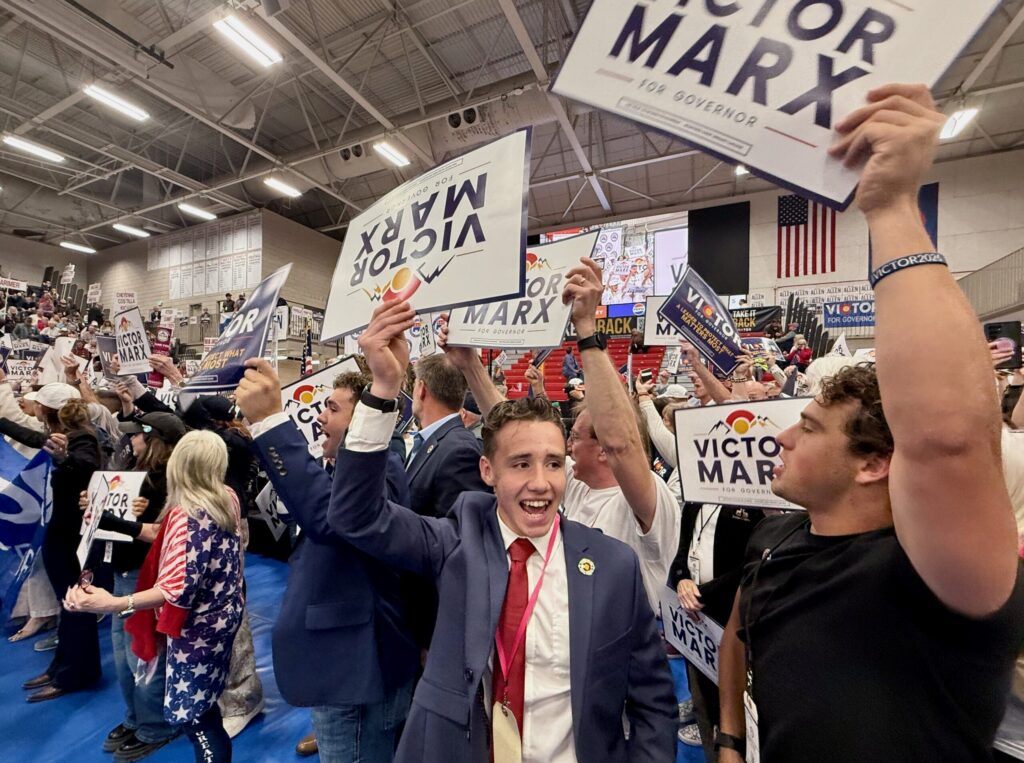
Eric Sondermann is of course correct Victor Marx is an unserious, unelectable, embarrassing Republican nominee for governor of Colorado. But I respectfully submit that the “through line,” as Mr. Sondermann describes it, is not from Trump to Marx, despite their...

Cedric Pride’s blueprint for opportunity through the trades | The OpEdge Podcast
Tony Olivero
tony.olivero@gazette.com
Updated 4 days ago
Cedric Pride, CEO of the nonprofit Pride Initiative in Denver, joins The OpEdge with a blueprint for workforce development, skilled trades, and economic opportunity. Pride tells host and investigative columnist Jimmy Sengenberger why he believes the trades offer a path...
Colorado’s No. 1 education ranking should raise our ambition | GUEST COLUMN
Colorado Politics
colorado-politics@coloradopolitics.com
Updated 4 days ago
By Scott Laband Colorado has earned the right to celebrate its new No. 1 ranking in education from U.S. News & World Report. Gov. Jared Polis called it “one of the proudest moments” of his time in office and shared the...

Colorado’s No. 1 education ranking reflects the power of school choice | GUEST COLUMN
Colorado Politics
colorado-politics@coloradopolitics.com
Updated 5 days ago
By Peter Mason Colorado is now the No. 1 state in the nation for education, according to the 2026 U.S. News & World Report Best States rankings. That is a distinction worth celebrating. It is also a distinction worth understanding....