

Author: Rachel Gabel
-
Private property rights challenge rural Colorado communities | Rachel Gabel
If there were ever a topic I believe deeply in, it’s private property rights. If there were ever a topic that leaves me in a moral conundrum more often than not, it’s private property rights. The northern portion of Weld County is where towns like Grover and Hereford are hunkered down against the wind. It’s…
-
Livestock grazing regulations need flexible updates | Rachel Gabel
The Bureau of Land Management last updated their livestock grazing regulations the year I graduated from high school. I am 49. Assessing rangeland health can’t be done once and not revisited. This year is a prime example that managers must be able to make decisions not just year by year, but week by week. This…
-
Farmers and ranchers win on NIETC cancellation | Rachel Gabel
The Department of Energy rolled into Lamar last week and Office of Electricity Assistant Secretary Katie Jereza stood in her neat, green suit in front of a room filled with farmers, ranchers and landowners. The crowd was filled with straw cowboy hats, sweat-stained ball caps, tee shirts and button-down chambray shirts that had seen more…
-
Proposed EPA changes could save truckers billions | Rachel Gabel
Agriculture is in distress across nearly every segment across much of the nation, and certainly to a more dire degree in the western United States. If it were not a historic drought, some pressures could be eased. Others can be eased through common sense and a rollback of regulations. And, perhaps, the passage of a…
-
A historic moment during another major drought | Rachel Gabel
Gustav Sumnick emigrated from Germany, traveled to Oklahoma and decided rather than be a Sooner, he wanted to be a farmer. He moved north to Nebraska and married an Irish immigrant farmer’s daughter. They farmed near Fremont, Nebraska, where the Platte and the Elkhorn rivers meet and grew the family farming operation to more than…
-
Weiser’s leadership crucial for rural win-win | Rachel Gabel
Attorney General Phil Weiser is going to win the gubernatorial election. That said, Colorado agriculture and rural communities have a 30-year track record of finding the win-win be it for species or industries or habitat. Former Governor Roy Romer possessed what Gov. Jared Polis has demonstrated repeatedly he doesn’t have: the willingness to find compromise…
-
Colorado Commission prioritizes feelings over science | Rachel Gabel
The Colorado Parks and Wildlife Commission voted Thursday and prioritized feelings over science-based management. Meanwhile, Rancher X is the beneficiary of those feelings-driven decisions. Well played, Governor. The newest appointees to the CPW Commission are just the parting gift you had in mind for rural Colorado. The Commission voted Thursday 6-5 to reject CPW staff…
-
Agriculture’s workforce act addresses H-2A program issues | Rachel Gabel
A bill recently introduced by U.S. Rep. G.T. Thompson (Pennsylvania-15) making changes to the accessibility and cost of agricultural labor has wide support from growers who utilize H-2A visa program workers, including in Colorado. The H-2A program hasn’t been statutorily reformed in 40 years. It is widely used in Colorado by producers with seasonal labor…
-
Patchwork laws challenge nationwide hog production | Rachel Gabel
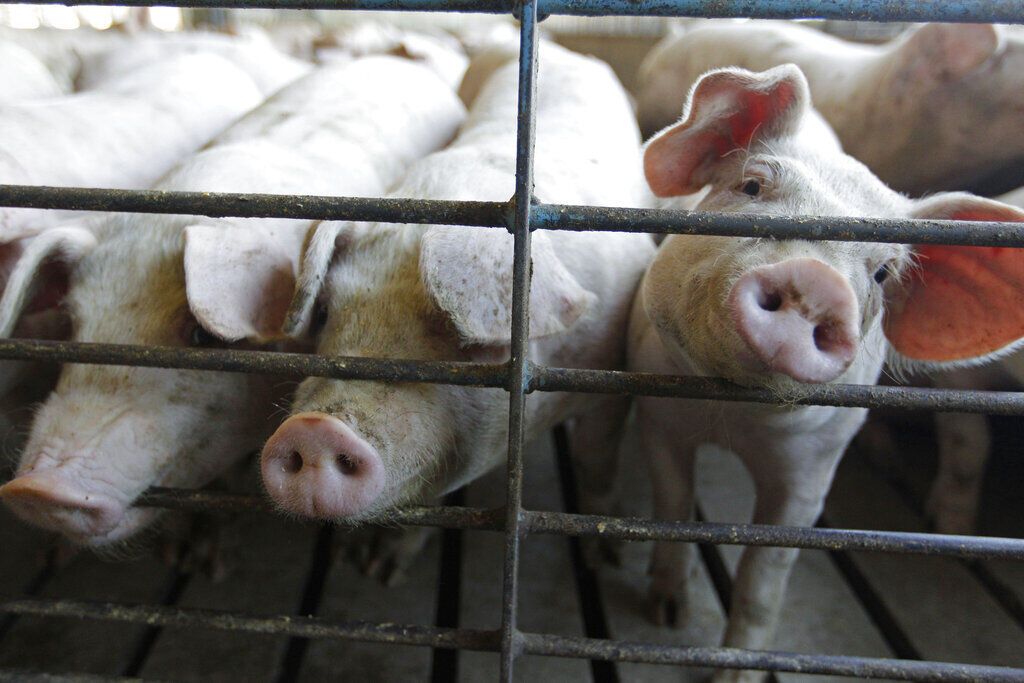
The newest iteration of the long-overdue Farm Bill leaves intact California’s Prop 12. There’s an obscene amount of information within the bill, but animal welfare laws have the potential to shape the food systems here in America. A country unable to feed itself is a country unable to defend itself. In terms of Prop 12,…
-
Conservation efforts emphasize the lesser prairie chicken | Rachel Gabel
Reid DeWalt, deputy director of Colorado Parks and Wildlife, spoke to the Water Resources and Agriculture Review Committee about the Lesser Prairie Chicken and moving conservation forward. He said in 2026, CPW staff counted 77 males on 13 leks, a number that has dropped year over year since 2024. There are fewer than 1,000 chickens…