

If we want to save the chicken, we have to save ranching | Rachel Gabel

In southeastern Colorado, a slew of green energy projects are being planned — some in partnership with landowners and some despite landowners. At the same time, the lesser prairie chicken is dominating many of my conversations as of late, due in part to the birds’ unique April dance marathon that makes the bird more observable and visible than during the remainder of the year. Perhaps green energy projects can share habitats with species like the LPC, but ranchers most certainly can. If we want to save the LPC, we need to save ranching.
There are conservation programs available to compensate ranchers for managing the land for the benefit of, for example, chickens. The problem that has historically plagued these compensatory mitigation programs is the failure to compensate landowners where the work is being done and in Colorado, requiring mitigation would remedy that. The demand for placement of powerlines and green energy projects in southeastern Colorado will remain, and leaving money on the table is foolish.
With energy companies paying millions in mitigation, participation in conservation programs is in high demand. Particularly in western Kansas and southeastern Colorado in chicken habitat, there is a market among energy companies for credits to offset power and energy projects. The challenge is to ensure compensatory mitigation is paid where the work is being done. Much compensation for work done in Colorado to improve chicken habitat was paid in Kansas because Colorado doesn’t require it. If the utility companies are required to do mitigation, then they can petition for reimbursement by the PUC. If ranchers are paid mitigation for doing the good work they’re already doing, that translates to less financial strain, the ability to expand and bring home interested younger generations, and to keep ranching.
The U.S. Fish and Wildlife Service recognizes Colorado as chicken habitat, but not as high quality as the habitat in other areas. Colorado has an estimated 200 birds and decent habitat, but Kansas bird numbers are greater. CPW is reporting great improvement in habitat through participation in voluntary conservation programs and the presence and return of chickens as evidenced by the observation of feathers and tracks. If you build it, they will come, if you will. The habitat is good enough to list as threatened, so it should be good enough to allow for required mitigation.
USFWS is currently initiating a status review of LPC under the Endangered Species Act. In a letter from CPW Director Laura Clellan, the agency offered their comments and asked for “regulatory mechanisms that provide added incentive to assess and mitigate the effects of potential habitat-altering activities.” In short, Clellan is requesting mitigation banking, an offset project that allows a rancher to keep ranching for the benefit of the land and the chicken. The mitigation bank would be approved by CPW with an associated number of credits that can offset habitat disruption by energy projects. Colorado chicken habitat is continually listed federally as threatened, so it ought to be recognized and worth the requirement of mitigation banking.
Powerlines have and will continue to fundamentally change southeast Colorado. The lines have the potential to have a more significant effect on the area than the buy and dry water deals of recent years that have caused farms and small towns to dry up and blow away. The disturbance exists. The chickens don’t differentiate between the source of energy in the lines, making them less bothered by energy produced through green methods. There is a deal to be made that allows a win for all and if those landowners were approached in an air of partnership rather than in an adversarial way, the energy goals would be reached faster.
Southeastern Colorado has a long history of distrust of conservation easements, due in large part to bad easements in the early 2000s based on wildly inappropriate land valuations. Once the state recognized the fraud committed by the companies gathering easements, landowners were required to pay back hundreds of thousands of dollars in penalties and fees on bad tax credits. It broke the bottom line, the land is still saddled with the easement even though the company that made the scam deals is long gone, and legitimate easements were blocked by the state in the years that followed. In reporting from that time, one of the cases disputed was a parcel in Prowers County near Lamar that sold for $776,000 and appeared to qualify for easement credits of $8 million. The resentment of conservation easements and government overreach remains in that area, so approaching landowners requires some level of consciousness of the win-win possible and the work they’ve done and continue doing.
There is still much work to be done, but the first step is requiring mitigation so ranchers stewarding their ranches for the best outcome for cows and chickens can be incentivized. If we want to save the chicken, we have to save ranching.
Rachel Gabel writes about agriculture and rural issues. She is assistant editor of The Fence Post Magazine, the region’s preeminent agriculture publication.

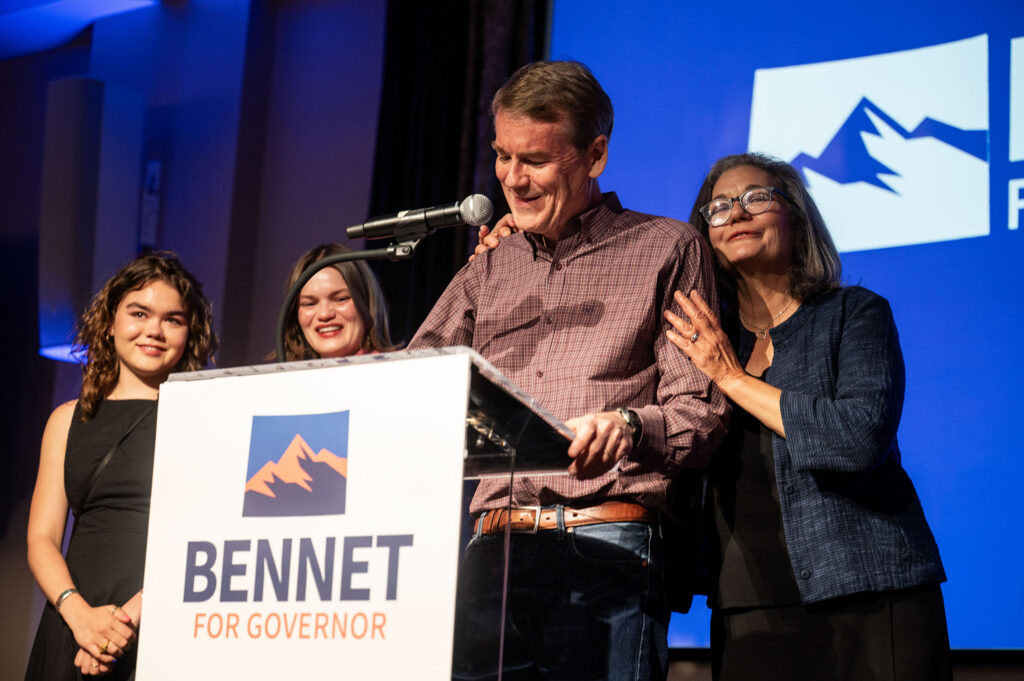
U.S. Sen. Michael Bennet settles campaign finance complaints, admits violating state law
Marianne Goodland
marianne.goodland@coloradopolitics.com
Updated 27 minutes ago
U.S. Sen. Michael Bennet’s gubernatorial campaign has agreed to pay a $7,433 fine for using his U.S. Senate campaign account to pay for gubernatorial travel expenses. The July 31 settlement includes an admission by Bennet and his campaign that they...

Colorado to implement new laws on jail standards, safe haven rules, and agricultural labeling
Marissa Ventrelli
marissa.ventrelli@coloradopolitics.com
Updated 44 minutes ago
In mid-August every year, a slew of recently passed laws in Colorado go into effect 90 days after the end of the legislative session. This year, all bills without a specified effective date or safety clause — a provision stating...
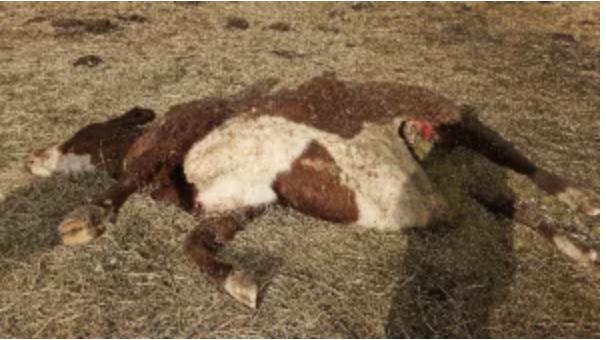
Colorado records 17th wolf death as CPW kills yearling tied to livestock losses
Marianne Goodland
marianne.goodland@coloradopolitics.com
Updated 1 hour ago
A yearling male wolf in Grand County has become the 17th wolf to die in Colorado in the past two years. Colorado Parks and Wildlife announced the wolf was killed by staff on Aug. 4, because it was believed responsible...

Keeping Colorado’s kids’ trust online | PODIUM
Colorado Politics
colorado-politics@coloradopolitics.com
Updated 15 hours ago
By Stuart Jenkins Almost every day, the kids and teens we serve across Colorado are introduced to new generative artificial intelligence and other emerging technology, including conversational AI systems designed to simulate human conversation. These tools are no longer a...

Marx’s ‘through line’ predates Trump, connects to Maes | FEEDBACK
Colorado Politics
colorado-politics@coloradopolitics.com
Updated 15 hours ago
Eric Sondermann is of course correct Victor Marx is an unserious, unelectable, embarrassing Republican nominee for governor of Colorado. But I respectfully submit that the “through line,” as Mr. Sondermann describes it, is not from Trump to Marx, despite their...

Federal judge rejects DOJ bid to force Colorado to hand over voter information
Marissa Ventrelli
marissa.ventrelli@coloradopolitics.com
Updated 21 hours ago
A U.S. district court judge has dismissed a lawsuit filed by the U.S. Department of Justice against Colorado Secretary of State Jena Griswold for refusing to provide the agency with personal voter information. Last December, the DOJ’s Civil Rights Division asked...

Cedric Pride’s blueprint for opportunity through the trades | The OpEdge Podcast
Tony Olivero
tony.olivero@gazette.com
Updated 1 day ago
Cedric Pride, CEO of the nonprofit Pride Initiative in Denver, joins The OpEdge with a blueprint for workforce development, skilled trades, and economic opportunity. Pride tells host and investigative columnist Jimmy Sengenberger why he believes the trades offer a path...
Colorado’s No. 1 education ranking should raise our ambition | GUEST COLUMN
Colorado Politics
colorado-politics@coloradopolitics.com
Updated 1 day ago
By Scott Laband Colorado has earned the right to celebrate its new No. 1 ranking in education from U.S. News & World Report. Gov. Jared Polis called it “one of the proudest moments” of his time in office and shared the...

Colorado’s No. 1 education ranking reflects the power of school choice | GUEST COLUMN
Colorado Politics
colorado-politics@coloradopolitics.com
Updated 2 days ago
By Peter Mason Colorado is now the No. 1 state in the nation for education, according to the 2026 U.S. News & World Report Best States rankings. That is a distinction worth celebrating. It is also a distinction worth understanding....

Group submits signatures for proposed Colorado graduated income tax
Marianne Goodland
marianne.goodland@coloradopolitics.com
Updated 1 day ago
The measure, which eliminates Colorado’s flat tax, is expected to raise $2 billion in new revenue The proposal to amend the Colorado constitution to change the state’s flat rate into a graduated income tax came in under the wire Monday,...
PREV
PREVIOUS

We the people are no longer the government of Colorado | Jon Caldara
We the people of Colorado no longer control our own state constitution. I found this out the hard way. In Colorado, a government for, by, and of the people is a fib. We lowly citizens no longer have much of a say in altering our own state constitution. Even though that seems to violate the […]

Colorado needs another Bill Owens — who kept up our roads | Dick Wadhams
By Dick Wadhams The silence is deafening within the Democratic primary for governor on the need to build and improve roads in Colorado after 20 years of neglect. The Democratic contestants, U.S. Sen. Michael Bennet and Attorney General Phil Weiser, talk about liberal touchstones such as mass transit and bike lanes that few Coloradans find […]