

We the people are no longer the government of Colorado | Jon Caldara

We the people of Colorado no longer control our own state constitution. I found this out the hard way.
In Colorado, a government for, by, and of the people is a fib.
We lowly citizens no longer have much of a say in altering our own state constitution. Even though that seems to violate the whole meaning of our constitution in the first place.
Like the United States Constitution, Colorado’s constitution contains a Bill of Rights making clear we are the ones who empower the state government, not the other way around.
Check out the first two of these rights:
First — All political power is vested in and derived from the people; all government, of right, originates from the people…
Second — The people of this state have the sole and exclusive right of governing themselves, as a free, sovereign and independent state; and to alter and abolish their constitution…
Did you catch that? We the people have the sole and exclusive right to alter our constitution. It used to be true, too.
We used to alter our constitution through the initiative and referendum process.
Without that process, we would not have limits on governmental power. Laws reining in politicians could never pass a vote by those same politicians. They’d never vote for open meetings laws, term limits, the Taxpayer Bill of Rights, ethics laws, and so much more.
Recently, when the legislature arrogantly exempted themselves from open meetings laws, it started a chain reaction I’ve never witnessed in all my decades in politics.
The Independence Institute, which I run, helped bring together nearly 50 highly diverse organizations that are usually at each other’s throats. We all shared a common concern: government in Colorado is turning opaque.
Open records are getting harder to access, open meetings closing. The “people’s” work is being hidden from the people.
And when I say organizations from all over the political spectrum worked together, I’m not exaggerating: Independence Institute, the ACLU, Heidi Ganahl’s conservative Rocky Mountain Voice, the progressive Colorado Times Recorder, Colorado Public Radio, League of Women Voters, Colorado Press Association, Colorado Broadcasters Association, Common Cause, Colorado Black Women for Action, and many, many more.
Over a year-and-a-half of work we crafted a constitutional reform based on what many other states already have, called “Right to Know.” It’s simple: a fundamental right for the people to access public records and deliberations, with reasonable exceptions.
But you won’t see this proposed amendment on your fall ballot.
The normally sober state Title Board voted 2–1 to block it. The appointees of Secretary of State Jena Griswold and Attorney General Phil Weiser voted against you being able to vote on governmental transparency.
Were they ordered to do so? I’ll let others speculate.
Their argument was that your “right to know” the affairs of government isn’t a single subject, and only “single subjects” may go to the ballot.
Legislators’ bills must also have a single subject. The difference is they get to decide for themselves whether a bill qualifies. By contrast, we “the people” must get permission from an unelected board. A set of rules for them; a different set for us.
The powerful Title Board said our amendment was too broad.
I countered that the state constitution is supposed to contain broad amendments. That didn’t matter.
Our team pointed to existing rights guaranteed by Colorado’s constitution, like freedom of speech, religion and the right to keep and bear arms. I asked if we were bringing one of those rights as a citizen initiative today, would it pass “single subject” muster as they now interpret it?
They essentially said no.
By their interpretation, such basic rights as freedom of speech or religion might be too broad and vague to be considered a single subject.
We considered appealing the Title Board’s bizarre decision to the state Supreme Court, but on the advice of lawyers from across the political spectrum, we decided not to.
The Supreme Court has shown little interest in expanding the public’s right to know what’s going on in their judicial branch.
So now, hiding behind the “single subject” rule, altering our constitution to include fundamental rights — like speech, religion, or even a right to know the affairs of government — can be denied to the very people who are supposed to be the government.
Some things you can’t make up.
Jon Caldara is president of the Independence Institute in Denver and hosts “The Devil’s Advocate with Jon Caldara” on Colorado Public Television Channel 12. His column appears Sundays in Colorado Politics.

Tiered or capped? Battle over Colorado’s income taxes might come down to one number
Marianne Goodland
marianne.goodland@coloradopolitics.com
Updated 38 minutes ago
The battle between two competing ballot measures — one seeking to cap Colorado’s income tax rate, the other pushing for a tiered system depending on income levels — might come down to whichever ballot proposal gets one more vote. The...

New Colorado laws going into effect cover AI disclosures, medical marijuana access and gambling limits
Marissa Ventrelli
marissa.ventrelli@coloradopolitics.com
Updated 3 hours ago
More than 100 new Colorado laws take effect Aug. 12, bringing changes to chatbot safety rules, psychedelic research, campus wellness checks and sports betting restrictions. Here is a look at some of those laws set to take effect. The law:...

Colorado background checks surge 195% ahead of new semiautomatic gun law
Marissa Ventrelli
marissa.ventrelli@coloradopolitics.com
Updated 22 minutes ago
The Colorado Bureau of Investigation processed a record number of firearm background checks in July, which the agency attributes to a new state law that went into effect on Aug. 1. In total, CBI performed 59,452 background checks in July...

National House Democrats add Colorado seats held by Lauren Boebert, Jeff Hurd to target list
Ernest Luning
ernest.luning@coloradopolitics.com
Updated 24 minutes ago
The national House Democrats’ campaign arm on Wednesday added the Colorado congressional district held by Republican U.S. Reps. Jeff Hurd and Lauren Boebert to the list of targeted seats the party believes are vulnerable in this year’s midterms. The Democratic...
U.S. Sen. Michael Bennet settles campaign finance complaints, admits violating state law
Marianne Goodland
marianne.goodland@coloradopolitics.com
Updated 25 minutes ago
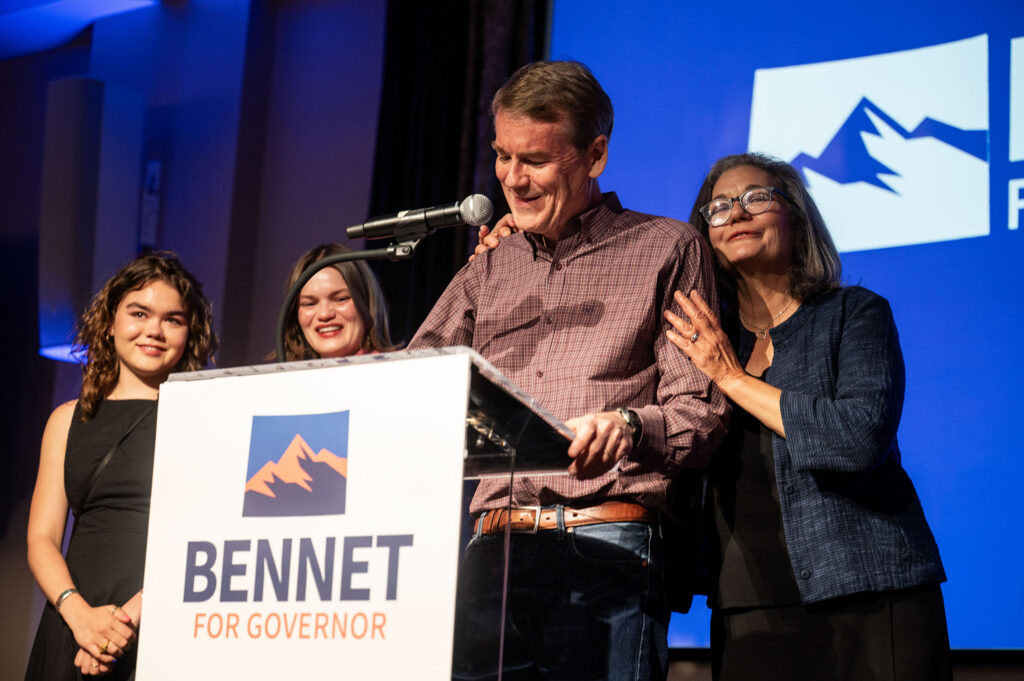
U.S. Sen. Michael Bennet’s gubernatorial campaign has agreed to pay a $7,433 fine for using his U.S. Senate campaign account to pay for gubernatorial travel expenses. The July 31 settlement includes an admission by Bennet and his campaign that they...

Colorado to implement new laws on jail standards, safe haven rules, and agricultural labeling
Marissa Ventrelli
marissa.ventrelli@coloradopolitics.com
Updated 4 hours ago
In mid-August every year, a slew of recently passed laws in Colorado go into effect 90 days after the end of the legislative session. This year, all bills without a specified effective date or safety clause — a provision stating...

Colorado records 17th wolf death, a yearling tied to livestock losses
Marianne Goodland
marianne.goodland@coloradopolitics.com
Updated 8 minutes ago
A yearling male wolf in Grand County has become the 17th wolf to die in Colorado in the past two years. Colorado Parks and Wildlife announced that its staff killed the wolf on Aug. 4 because it was believed to...

Keeping Colorado’s kids’ trust online | PODIUM
Colorado Politics
colorado-politics@coloradopolitics.com
Updated 18 hours ago
By Stuart Jenkins Almost every day, the kids and teens we serve across Colorado are introduced to new generative artificial intelligence and other emerging technology, including conversational AI systems designed to simulate human conversation. These tools are no longer a...

Marx’s ‘through line’ predates Trump, connects to Maes | FEEDBACK
Colorado Politics
colorado-politics@coloradopolitics.com
Updated 18 hours ago
Eric Sondermann is of course correct Victor Marx is an unserious, unelectable, embarrassing Republican nominee for governor of Colorado. But I respectfully submit that the “through line,” as Mr. Sondermann describes it, is not from Trump to Marx, despite their...
Federal judge rejects DOJ bid to force Colorado to hand over voter information
Marissa Ventrelli
marissa.ventrelli@coloradopolitics.com
Updated 1 day ago
A U.S. district court judge has dismissed a lawsuit filed by the U.S. Department of Justice against Colorado Secretary of State Jena Griswold for refusing to provide the agency with personal voter information. Last December, the DOJ’s Civil Rights Division asked...
PREV
PREVIOUS

Trump order aims to help more people get retirement savings plans in time for new federal match
WASHINGTON • President Donald Trump signed an executive order on Thursday calling for a new government website where people in the United States can find and compare private-sector retirement savings accounts, aiming to help millions of workers whose employers do not offer such plans. The order is intended to help more people gain access to retirement plans before […]

If we want to save the chicken, we have to save ranching | Rachel Gabel
In southeastern Colorado, a slew of green energy projects are being planned — some in partnership with landowners and some despite landowners. At the same time, the lesser prairie chicken is dominating many of my conversations as of late, due in part to the birds’ unique April dance marathon that makes the bird more observable […]