

Wyoming judge blocks law that bans all but earliest abortions | OUT WEST ROUNDUP

WYOMING
Judge blocks broad abortion ban
A Wyoming judge has blocked a new state law that bans abortions beyond the earliest stages of pregnancy while a lawsuit challenging the provision moves ahead.
It’s the first court ruling affecting the legal status of abortion in Wyoming since the state Supreme Court struck down sweeping abortion and abortion pill bans in January, finding that the laws violated the state constitution.
The new law, which would ban abortion after embryonic cardiac activity can be detected, is likely to be overturned on similar grounds, Natrona County District Judge Dan Forgey wrote in granting a temporary restraining order against it on April 24.
Wyoming’s lone abortion clinic, Wellspring Health Access, and others challenging the new law welcomed the latest ruling after they successfully got the blanket abortion bans overturned.
Currently 13 states are enforcing bans on abortion at all stages of pregnancy, with rare exceptions. Four others – Iowa, Florida, Georgia and South Carolina – have bans that kick in at either six weeks’ gestation or when cardiac activity can be detected. That’s often before women realize they’re pregnant.
The Wyoming Supreme Court found that recent abortion bans passed by the state legislature violated a voter-approved state constitutional amendment from 2012 that says competent adults have the right to make their own healthcare decisions.
The Republican-dominated Legislature responded with the ban on abortion after detection of embryonic cardiac activity. Gov. Mark Gordon, a Republican, signed it into law in March.
Wyoming should be able to uphold the latest law by “proving a compelling interest to protect human life,” Gordon said in a statement on April 27.
He called for lawmakers nonetheless to pass a state constitutional amendment banning abortion that would go to voters to consider.
Mayor shuts down livestream chat
CHEYENNE — Members of the Cheyenne City Council recently made the decision to disable commenting on Facebook livestreams due to recurring comments that Mayor Patrick Collins says were “threatening” and “not constructive.”
All City Council, committee and work session meetings are livestreamed on the city of Cheyenne Facebook and YouTube accounts. Collins said this is part of the council’s effort to be more transparent with the public, ensuring that everyone has access to the meetings if they are unable to attend in person.
However, Collins said that comments in the Facebook livestreams have recently taken a negative turn, prompting him to turn them off beginning with the April 13 city council meeting.
Among many different violent comments, Collins specifically pointed to threats that council members should start wearing bulletproof vests.
But the livestreams themselves have not been turned off, and will not be, he said.
Collins still wants people to have access to local government meetings. But if members of the public want to comment on the council’s discussion, they should do so by joining via Zoom and using the “raise hand” function, which will allow them to speak when prompted.
Collins said the commenting feature on livestreams will likely remain off permanently, and that he has been trying to figure out why people are leaving the threats, but has been unable to find a real purpose.
NEW MEXICO
Native American pageant ending
ALBUQUERQUE — Codi High Elk was a shy teenager most comfortable caring for horses on her family’s ranch on the Cheyenne River Reservation when she threw away an application to compete in a new pageant for Indigenous women — an application her brother fished out of the trash, sending her on a path to becoming the first Miss Indian World, in 1984.
But the event that transformed her from shy teen to an ambassador for her people has come to an end.
The pageant has been a headlining event at Gathering of Nations, a massive and at times controversial event that bills itself as the largest powwow in North America, for more than four decades. The competition shaped the lives of young women from across the U.S. and Canada eager to share cultural knowledge and compete for the prestigious title and iconic, intricately beaded crown.
This year will be the last for the powwow, with the final Miss Indian World named in 2025. Organizers have said the time has come for the events to end, but gave no other details.
The pageant invited Indigenous women, aged 18 to 25, to compete. Contestants had to be single, with no children and pledge to maintain specific moral standards.
Contestants described an intense five-day process with interviews, public speaking and a highly anticipated traditional talent showcase.
Many tribal nations and powwows crown royalty. But young women who dream of representing their communities on a national, Native-focused pageant stage won’t have that avenue. Five years ago, Miss Native American USA crowned its last winner. The Miss Indian Nations and Miss Indian America titles also are defunct.
Many past Miss Indian World titleholders who went on to become lawyers, teachers, entrepreneurs, language and culture bearers and sisters to one another say the crown empowered them as leaders.
NEBRASKA
Regents OK stadium renovation
LINCOLN — University of Nebraska regents on April 24 approved a $600 million overhaul of Memorial Stadium that will make the 103-year-old venue more fan-friendly and increase revenue potential for the athletic department.
The project will be funded by a mix of $250 million in philanthropic support and $350 million in private bond financing. Completion is targeted for the start of the 2028 football season.
The Cornhuskers have played at Memorial Stadium since 1923 and will enter this season with an NCAA-record sellout streak of 410 games dating to 1962.
Amenities throughout the stadium will be upgraded and a new concourse will connect the east and west sides. Planned capacity is 80,000, including 20,000 new chairback seats.
Officials said the stadium would host concerts and other events year-round and annual stadium revenue would increase 40%, to an estimated $95 million.
“Memorial Stadium is, of course, iconic in Nebraska and in all of college athletics,” university president Jeffrey Gold said, “and this project, which we are calling ‘Big Red Rebuild,’ is ambitious and strategic. The Big Red Rebuild is a fan-driven, once-in-a-multigenerational investment that modernizes Memorial Stadium while preserving its legacy, ensuring it remains a premier destination for college athletics and other year-round events.”

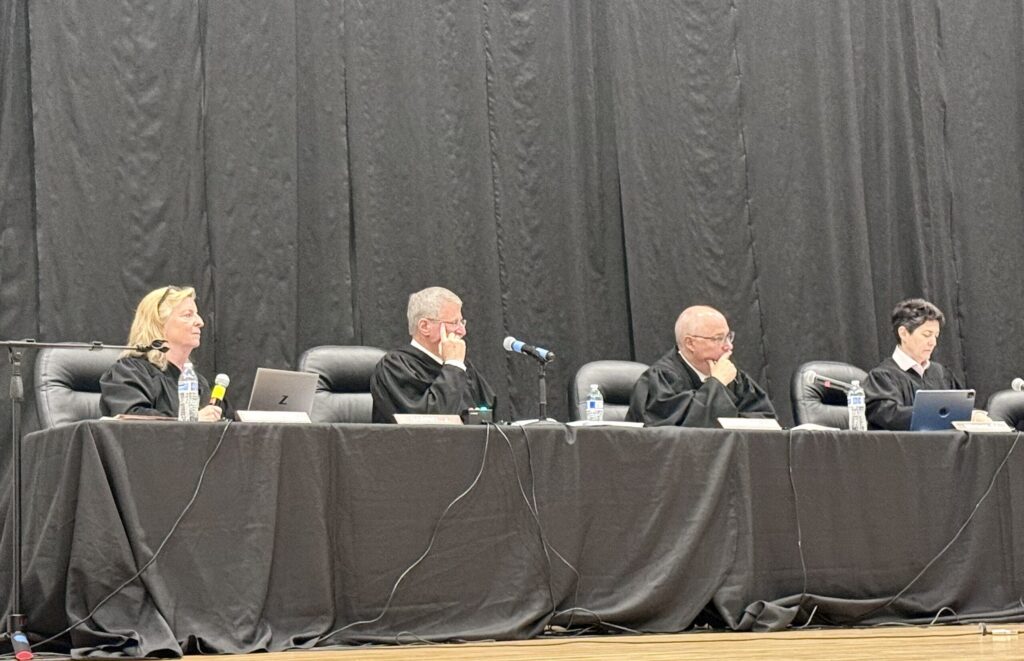
Parole, appeals deadlines and restitution: Colorado justices accept cases
Michael Karlik
michael.karlik@coloradopolitics.com
Updated 2 hours ago
The Colorado Supreme Court announced on Monday that it will determine how a defendant’s parole-eligibility date should be calculated in instances where a new trial results in a sentence being imposed retroactively to the date of the original, since-overturned sentence....

Federal judge rejects DOJ bid to force Colorado to hand over voter information
Marissa Ventrelli
marissa.ventrelli@coloradopolitics.com
Updated 1 hour ago
A U.S. district court judge has dismissed a lawsuit filed by the U.S. Department of Justice against Colorado Secretary of State Jena Griswold for refusing to provide the agency with personal voter information. Last December, the DOJ’s Civil Rights Division asked...
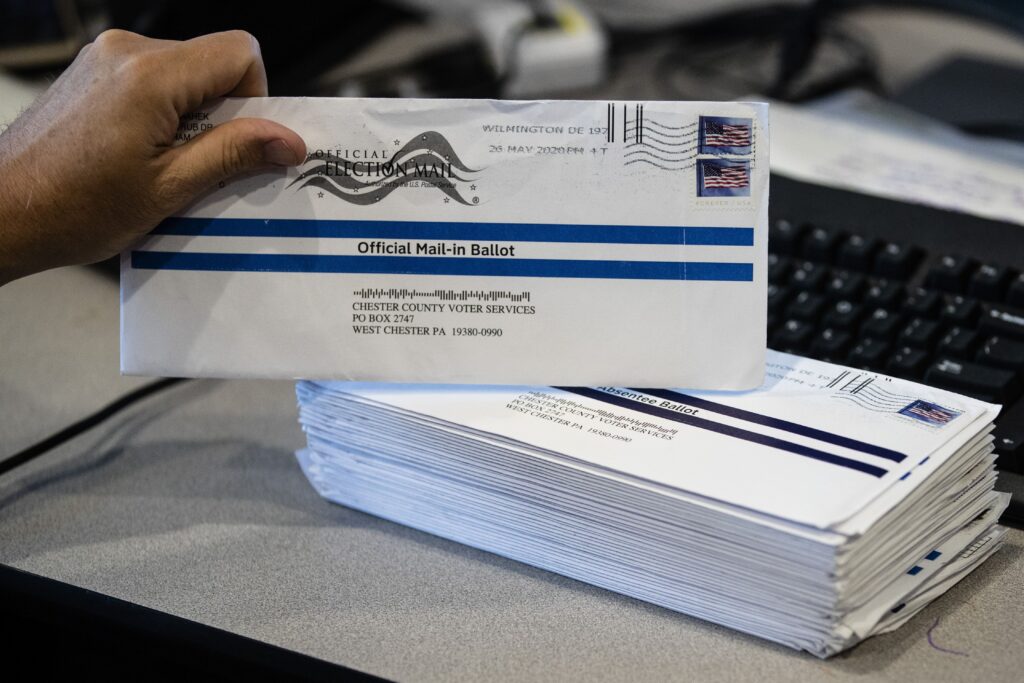
Democratic states warn Supreme Court that Trump mail ballot order would cause chaos ahead of midterm elections
Jack Birle
jack-birle@coloradopolitics.com
Updated 4 hours ago
A coalition of Democrat-led states warned the Supreme Court this week that lifting a block on President Donald Trump’s mail-voting executive order would cause “extreme” changes as states prepare to send out ballots for the midterm elections. The group of...

Trump’s lopsided losing record on ICE mandatory detention masks a closer legal fight
Kaelan Deese
kaelan-deese@coloradopolitics.com
Updated 4 hours ago
The Trump administration’s 6-2 losing record in appeals courts over its mandatory immigration detention policy looks like an overwhelming streak of losses. However, a closer examination of the judges behind those decisions suggests the policy may be less legally doomed...
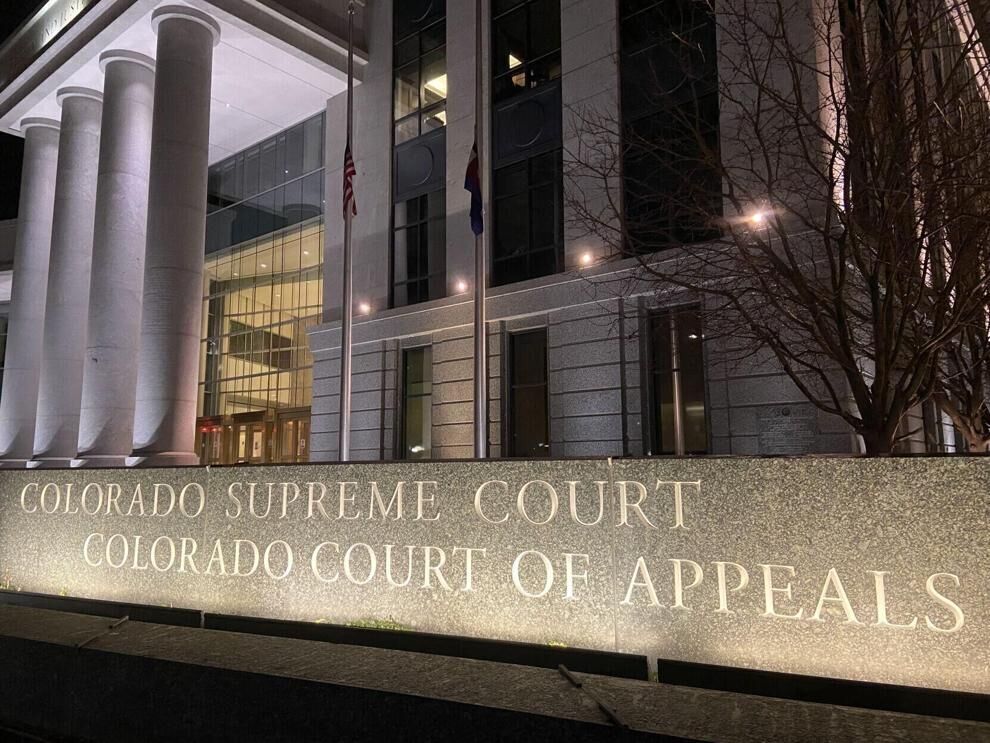
3 Colorado judges receive unfavorable retention recommendation as one performance commission violates rules
Michael Karlik
michael.karlik@coloradopolitics.com
Updated 5 hours ago
Of the 123 Colorado judges standing for retention on the November ballot, citizen-led performance commissions found that three did not meet the required performance standards. However, in an unprecedented move, the commission charged with evaluating Supreme Court and Court of...

Former Parker police sergeant pleads guilty to unlawful sexual conduct, misconduct charge
Nicholas Fogleman
nicholas.fogleman@denvergazette.com
Updated 5 hours ago
Former Parker Police Department Sgt. Troy Brienzo pleaded guilty Monday to a felony charge of unlawful sexual conduct by a police officer and first-degree official misconduct in Douglas County District Court. Brienzo entered the guilty pleas before Judge Ryan Stuart,...

U.S. News names Saint Joseph best hospital in Colorado, ending University of Colorado Hospital’s 13-year streak
Nico Brambila
nico.brambila@denvergazette.com
Updated 7 hours ago
University of Colorado Hospital is no longer Colorado’s top-ranked hospital for the first time in more than a decade, with Intermountain Health Saint Joseph Hospital taking the No. 1 spot in U.S. News & World Report’s latest rankings. Located on...

Appeals filed to send Project Taurus decision to the Colorado Springs City Council
Brennen Kauffman
brennen-kauffman@coloradopolitics.com
Updated 6 hours ago
At least one appeal has been filed over the proposed large-scale data center in Colorado Springs, sending the final decision to the Colorado Springs City Council. The filing seeks to overturn the Planning Commission’s decision on July 23 to deny...
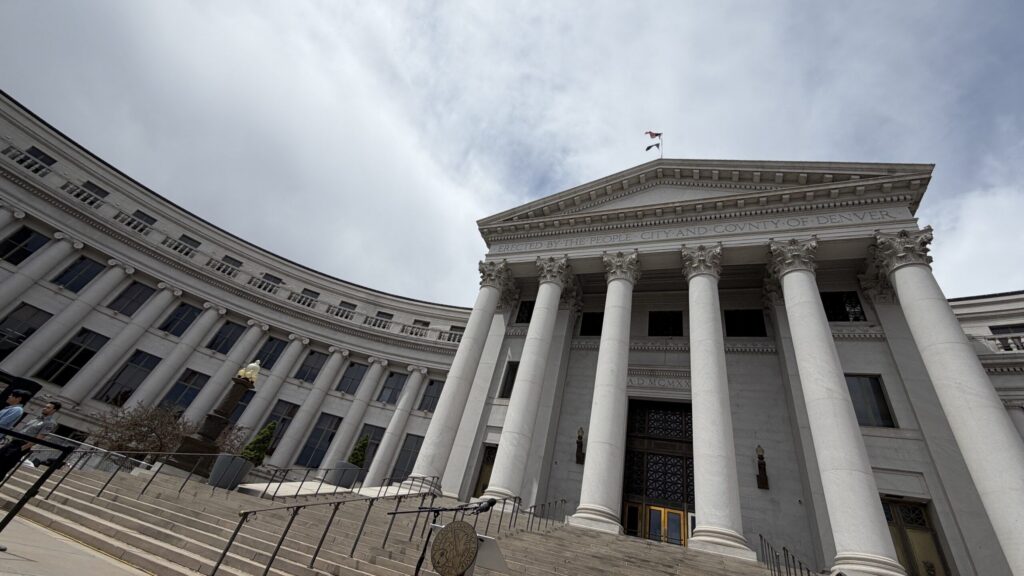
Denver City Council keeps 2 a.m. nightlife cutoff, approves $18 million for George Floyd protest claims
Deborah Grigsby
deborah.smith@denvergazette.com
Updated 7 hours ago
Nightlife establishments will not get a two-hour operating extension after the Denver City Council passed an amended version of a bill that keeps the current 2 a.m. closing time. As originally proposed, venues would have been able to keep music,...

Group submits signatures for proposed Colorado graduated income tax
Marianne Goodland
marianne.goodland@coloradopolitics.com
Updated 5 hours ago
The measure, which eliminates Colorado’s flat tax, is expected to raise $2 billion in new revenue The proposal to amend the Colorado constitution to change the state’s flat rate into a graduated income tax came in under the wire Monday,...
PREV
PREVIOUS

State official says Fort Carson employed 'unjustified threat' in negotiations over historic sites
A Fort Carson training exercise set to start this weekend in southern Colorado at the Piñon Canyon Maneuver Site has put the state office charged with historic preservation at odds the Army officials, following what the state called an “unjustified threat” to end their working relationship. Fort Carson said discussions to end the relationship were […]

Colorado Springs area retail market remains strong though challenged amid inflation, global conflict
The retail market in the greater Colorado Springs area remains strong though challenged, with residents being choosier about where and how they spend amid rising retail costs driven by inflation, tariffs and global conflict, local industry experts said. Even as the cost of doing business has increased, retail vacancies have fallen across Colorado Springs, new […]