

Air Force secretary opposes creation of Space National Guard, calls it the worst option

Creating a Space National Guard is the worst option for 14 space-focused National Guard units, Air Force Secretary Frank Kendall said Wednesday at Space Symposium.
Space Command announces new space wargaming lab
The fight over the future of space-focused Air National Guard units is also receiving much more political attention than it deserves, he said. The impact of transferring guardsman into the active-duty Space Force is “negligible” because in any of the seven states with space-focused National Guard units the units represent “at most 2% of the guard,” he said.
The units, including seven in Colorado, were left behind in the Air National Guard when space-focused active-duty units moved into the new military branch. Kendall referred to them as an artifact of creating the Space Force and after four years he would like to see the issue resolved.
Recently, the Department of Defense introduced legislation to transfer space-focused Air National Guard units into the active-duty Space Force without the consent of governors who oversee the units.
Sen. Marco Rubio, R.-Fla., has introduced competing legislation that would create a Space National Guard that would allow the units to continue operating in the same way.
Colorado Springs electronics manufacturer adding 100 jobs as part of company expansion
Colorado Gov. Jared Polis sent a letter to the Secretary of Defense Lloyd Austin last week protesting the transfer of units without the consent of governors.
“I cannot stand idly by as the servicemembers I am charged with leading are faced with the decision to either leave military service or serve in a manner that they did not originally agree to,” Polis wrote. “We know that a significant majority of Air National Guard space operators will not transfer to the U.S. Space Force, putting both their military career and national security at risk.”
A poll of guardsmen showed that 60% to 86% of about 1,000 guardsmen working in space would leave rather than transfer, leaving a major gap in expertise, said Parker White, spokesman for the Colorado Air National Guard, in a previous interview.
Kendall said he was not terribly concerned about the number of people who might leave the guard, in part, because the Space Force has not been able to outline the options for guardsmen yet.
“They are not going to see much change as I see it,” Kendall said.
The Space Force will allow guardians to work part-time within the active duty service, a model that’s been approved but has not been implemented.
Right now, the Space Force is training guardsmen, and that work can be formalized more if they are absorbed into the Space Force, Kendall said.
“The Space Force is great opportunity for these people,” he said.
Congress asked the DOD to study the options for the units, including leaving the units where they are, creating a Space National Guard and moving them into the Space Force.
Kendall said that report shows moving the units is the best option and the worst option is a new Space National Guard because of the added administration. The report has not been publicly released.
Proponents of a proposed Space National Guard argue additional administration isn’t necessary.
Gen. Chance Saltzman, chief of space operations, said a transfer of the space-focused units would be phased to minimize the risk to missions.
While the fight is ongoing for the future national guardsmen, space-focused reservists in the 310th Space Wing in Colorado Springs must transfer into the Space Force.
Saltzman said in an email he expected new part-time guardians would fill education, training and testing roles rather than going into employed-in-place operations.
White said Air National Guard space operators signed up to serve in an operational capacity and forcing them to choose between support roles and full-time would be a major change.
“At an organizational level, the United States would lose experienced operators, many with over a decade of space operations under their belt, that would take years to replace,” he said.
The National Guard Bureau estimates it would take up to nine years and as much as $1 billion to replace those who plan to quit, according to a news release from the National Guard Association.






Colorado measure redirects sales tax revenue from sporting goods, equipment to conservation programs
The Denver Gazette
the-denver-gazette@coloradopolitics.com
Updated 8 hours ago
A proposal to redirect sales tax revenues from sporting goods and equipment toward wildfire and conservation programs will appear on the ballot this November, election officials in Colorado confirmed. The measure, if approved by voters, would reduce the amount available...
Firefighters’ deaths prompt debate over 100% suppression wildfire strategy
Rachael Wright, Special to Colorado Politics
rachael.wright@coloradopolitics.com
Updated 5 hours ago
On July 22, 2026, the chief of the U.S. Forest Service testified before a House Agriculture subcommittee that his agency pursues a “full suppression” strategy to contain all fires while they are still small, rather than allowing them to burn...

A summertime all-you-can-eat political buffet | SONDERMANN
Eric Sondermann
eric-sondermann@coloradopolitics.com
Updated 5 days ago
We find ourselves in the doldrums of August with a complete dearth of political news. Yeah, right. These days, that train never stops moving. It is a 24/7/365 express amplified by 24/7/365 media. Let me respond with one of my...

GOP worker pleads guilty to campaign funds embezzlement scheme | A LOOK BACK
Rachael Wright, Special to Colorado Politics
rachael.wright@coloradopolitics.com
Updated 5 days ago
Forty-five Years ago this week: After pleading not guilty to a Denver federal grand jury indictment of five counts of bank embezzlement, Eve Lynn Lincoln, a Colorado Republican Party employee, decided to plead guilty to one count: using bank credit...
Schoolchildren’s presence at child sex-related trial did not harm Arapahoe County defendant, appeals court says
Michael Karlik
michael.karlik@coloradopolitics.com
Updated 1 day ago
Colorado’s second-highest court decided on Thursday that the presence of a group of schoolchildren on the first day of a child sexual exploitation trial did not violate an Arapahoe County defendant’s constitutional right to a fair trial. Prosecutors charged Jerry...
Appeals court cites week-old Colorado law to reinstate child neglect case at child, father’s request
Michael Karlik
michael.karlik@coloradopolitics.com
Updated 1 day ago
Colorado’s second-highest court invoked a new state law for the first time on Thursday and reinstated a child neglect case that both the child and her father wished to reopen. House Bill 1227 took effect on Aug. 12, reversing a...
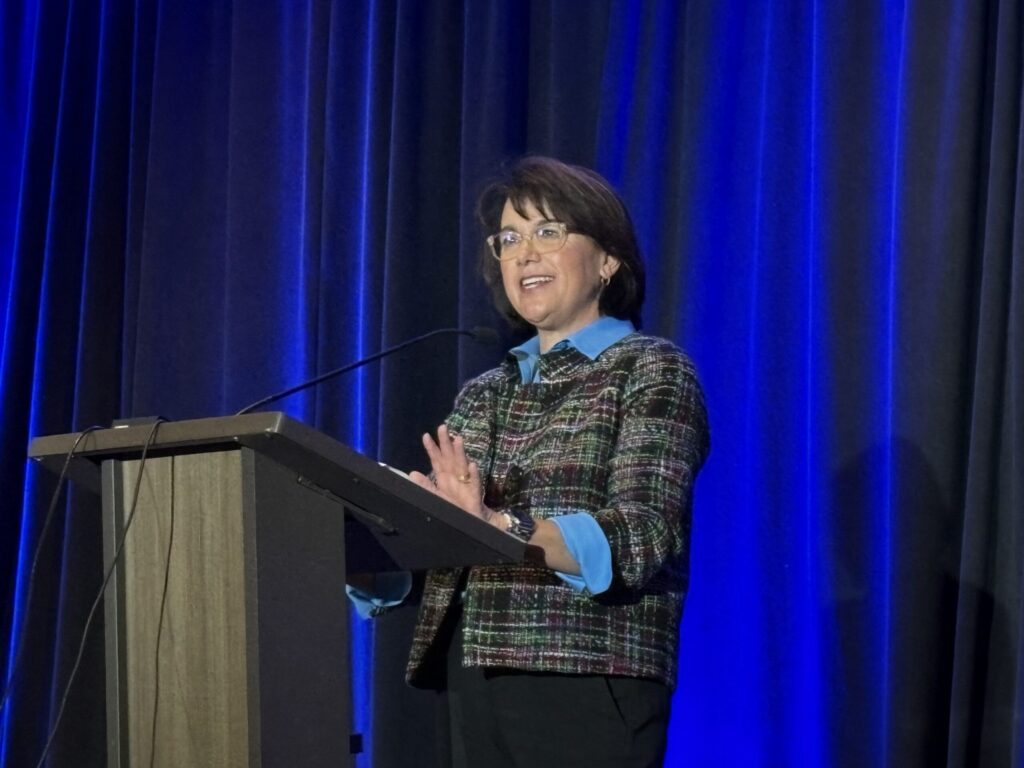
Democratic candidate in Colorado’s 4th CD urges long-term water planning
Marianne Goodland
marianne.goodland@coloradopolitics.com
Updated 1 day ago
The Democrat hoping to become the next representative of Colorado’s 4th Congressional District on Thursday made her case on the final day of Colorado Water Congress in Steamboat Springs. Eileen Laubacher, who spent 34 years in the U.S. Navy and...

Castle Rock council declines to censure member accused of misconduct
Nicholas Fogleman
nicholas.fogleman@denvergazette.com
Updated 2 days ago
A Castle Rock Town Council meeting Tuesday became consumed by allegations that a councilmember attempted to trade a town policy decision for the withdrawal of a recall effort against him. The allegations against Councilmember Mark Davis surfaced during public comment...

Proposal to cap Colorado income tax rate qualifies for November ballot
Thelma Grimes
thelma.grimes@coloradopolitics.com
Updated 12 hours ago
Election officials on Thursday confirmed that the proposal to cap the state’s income tax at the current rate submitted signatures and voters will consequently decide its fate this November. The fight over tax rates is part of the tug and...

Trump reaches deal to halt tariffs on beef for 90 days in bid to lower prices
Rena Rowe
rena.rowe@washingtonexaminer.com
Updated 2 days ago
President Donald Trump announced Friday that he had reached a deal to temporarily ease tariffs on beef imports, saying the move would help lower prices for families as the United States faces a severe cattle shortage and record-high beef prices....
PREV
PREVIOUS
Jared Polis, hundreds attend Colorado Politics annual gathering
Hundreds of state Capitol regulars, advocates of all stripes, elected officials, business leaders and others attended Colorado Politics’ signature annual legislative gathering on April 4. Gov. Jared Polis spoke about how Colorado is best positioned to face the challenges of the next century as it prepares to celebrate its 150th anniversary. (function(w,d,s,i){w.ldAdInit=w.ldAdInit||[];w.ldAdInit.push({slot:11095963150525286,size:[0, 0],id:”ld-2426-4417″});if(!d.getElementById(i)){var j=d.createElement(s),p=d.getElementsByTagName(s)[0];j.async=true;j.src=”//cdn2.lockerdomecdn.com/_js/ajs.js”;j.id=i;p.parentNode.insertBefore(j,p);}})(window,document,”script”,”ld-ajs”); The […]

Ex-Dominion executive's defamation claims may proceed against Trump campaign and supporters
Colorado’s second-highest court on Thursday agreed a former executive of Denver-based Dominion Voting Systems may proceed with his defamation lawsuit against Donald Trump’s presidential campaign and several prominent supporters who publicly accused him of rigging the 2020 election based on the unproven claims of a conservative podcaster. A three-judge panel for the Court of Appeals […]