

10th Circuit reinstates challenge to Colorado’s regulations on ballot issue advocacy groups
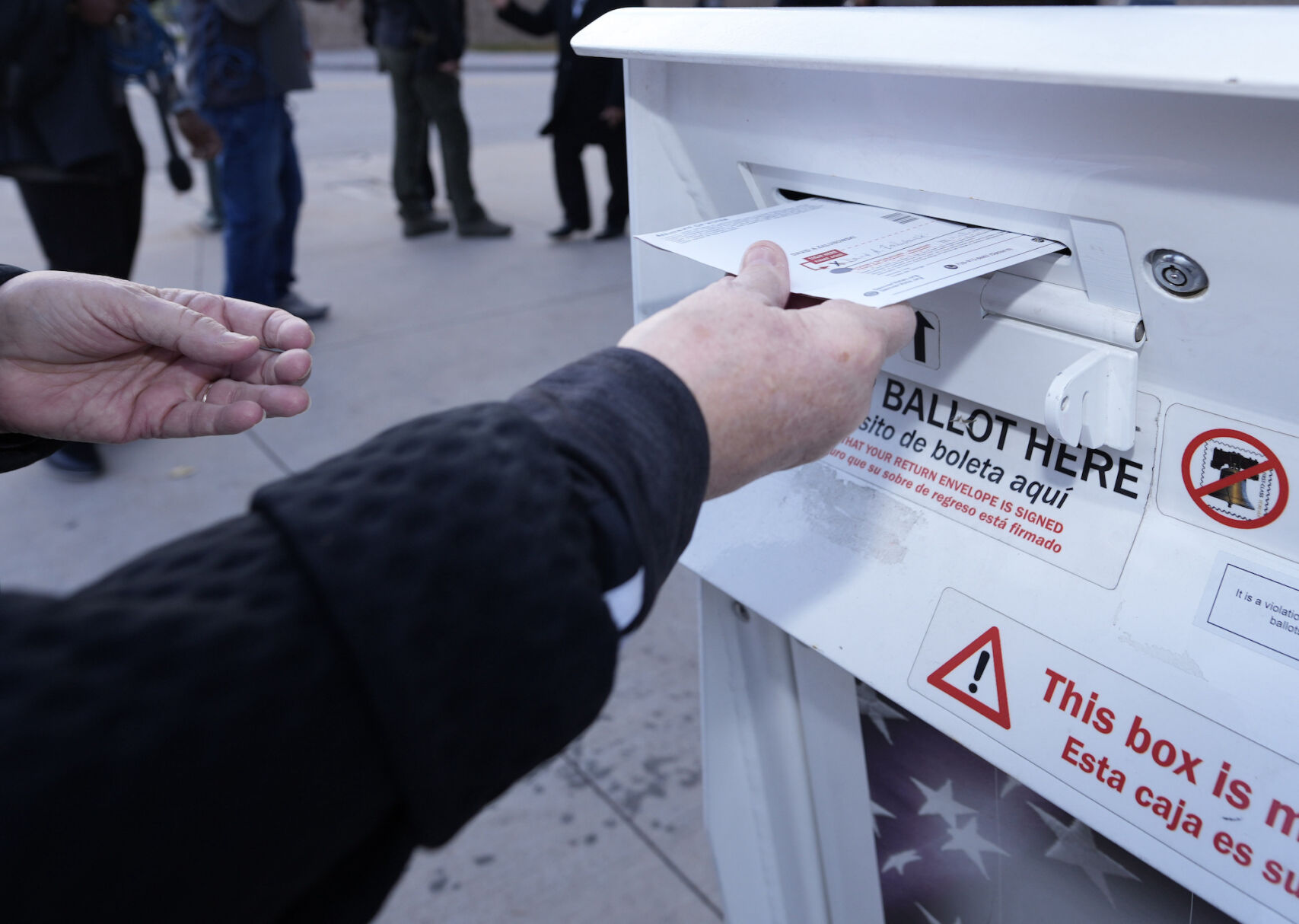
The federal appeals court based in Denver has reinstated a legal challenge to Colorado’s regulations on groups advocating for or against ballot initiatives, which require registration with the state and, in some instances, disclosure of donors.
Previously, a trial judge threw out the lawsuit from the Colorado Union of Taxpayers, Inc. after finding the conservative advocacy group had not shown the government was likely to take enforcement action against the organization for failing to comply with transparency rules.
But a three-judge panel of the U.S. Court of Appeals for the 10th Circuit decided on Wednesday that the group had a reasonable fear of drawing a complaint about its spending-without-registration, and, therefore, had the ability to sue over Colorado’s campaign finance regulations.
“Under Colorado law, the authority to file a complaint extends beyond prosecutors and agencies to any person,” wrote Judge Robert E. Bacharach in the panel’s Aug. 23 order. CUT “could fear complaints from political opponents trying to gain an edge on hotly contested ballot issues.”
The lawsuit now returns to the trial court, where a judge will decide whether to block enforcement of certain requirements imposed on issue committees through the state constitution and related laws.
“With this appeal behind us, we look forward to returning to the trial court and getting to the heart of the important First Amendment issues at stake here,” said attorney Daniel N. Nightingale on behalf of the Colorado Union of Taxpayers.
Secretary of State Jena Griswold, the defendant in the lawsuit, said in a statement that she “will always fight against dark money. I am optimistic that the facts of the case will result in another dismissal at the trial level.”
Although the 10th Circuit declined the group’s invitation to address the merits of its constitutional challenge on appeal, Bacharach did point out that Colorado’s regulations on issue committees, its laws and its constitution contain conflicting language. Griswold and the organization’s attorneys both declined to comment on the discrepancy in Colorado’s campaign finance framework.
Case: Colorado Union of Taxpayers v. Griswold
Decided: August 23, 2023
Jurisdiction: U.S. District Court for Colorado
Ruling: 3-0
Judges: Robert E. Bacharach (author)
Mary Beck Briscoe
Michael R. Murphy
Background: Judge denies advocacy group’s attempt to suspend Colo. campaign finance enforcement
Colorado law imposes various obligations on groups that engage in ballot initiative advocacy, known as issue committees. “Small-scale” issue committees that spend or raise between $200 and $5,000 in an election cycle must register with Griswold’s office and maintain a separate bank account. Issue committees that handle more than $5,000 have additional disclosure requirements on donations.
Two years after Colorado first enacted registration requirements for issue committees in 1974, the Colorado Union of Taxpayers was founded. The group largely advocates for decreased government spending, publishes ratings of bills and names lawmakers who are “taxpayer guardians.”
The group has never registered with the government. In 2019, it “arranged for” radio advertisements to advocate against Proposition CC, a taxation ballot measure. The expenditure was for $5,001, which would have required the group to both register and disclose its donations. The next year, it spent almost $3,500 on advertisements for two more initiatives.
The group then filed suit against the state seeking to void the requirements applicable to issue committees. It argued Colorado had no valid interest in regulating the political speech of groups that do not primarily advocate on ballot initiatives. Further, the $5,000 threshold, enacted in the wake of another court decision, was arbitrary. Finally, the organization contended the regulations needlessly apply to ballot initiatives that are still in the signature-gathering phase, many of which do not end up appearing before voters.
In March 2022, U.S. District Court Senior Judge Christine M. Arguello dismissed the group’s claims because it lacked standing to sue. Arguello explained it needed to show the government’s credible threat of enforcement was deterring the organization from engaging in advocacy.
“Plaintiff continues to spend money on advertisements and argues in favor of proposed initiatives,” she wrote. “There is no evidence that Plaintiff faces a credible threat of enforcement. Since its founding in 1976, CUT has never faced an enforcement action related to an allegation that it is an issue committee.”
The group appealed to the 10th Circuit. In arguing that CUT did, in fact, face consequences from the state, it cited 303 Creative v. Elenis, in which a Colorado graphic designer preemptively sued to stop the state from enforcing its anti-discrimination law against her. The 10th Circuit found the plaintiff had standing to sue, and the U.S. Supreme Court did not dispute that conclusion when it reviewed the case this past year.
The 10th Circuit agreed with the group. Bacharach noted Griswold’s office pursued enforcement action against another advocacy group while CUT’s lawsuit was ongoing. Although its expenditures were far less in comparison, the panel believed the organization’s fear was reasonable.
“Though there’s no evidence of an enforcement action against small-scale issue committees, the defendants didn’t disavow enforcement and any person could file a complaint,” Bacharach wrote.
He also noted a discrepancy in Colorado’s campaign finance regime. Regulations define an issue committee as a group whose “major purpose” involves ballot issue advocacy and also has accepted more than $200 related to ballot issues. The state constitution, on the other hand, only requires an issue committee to satisfy one of those criteria.
Bacharach further pointed out that state law offers a different interpretation of “major purpose” than the regulations do. The effect, he explained, is that the group is more likely to be in violation of the registration requirement.
The case is Colorado Union of Taxpayers, Inc. v. Griswold et al.


10th Circuit partially revives lawsuit over 2020 Denver protest injuries
Michael Karlik
michael.karlik@coloradopolitics.com
Updated 12 hours ago
The Colorado-based federal appeals court revived a man’s claims against Denver on Friday after concluding a trial judge resolved the case in the city’s favor without analyzing two of the three instances of alleged excessive force and other constitutional violations....
Federal judges find Colorado immigration judge violated several orders
Michael Karlik
michael.karlik@coloradopolitics.com
Updated 1 day ago
Multiple federal judges in Colorado have freed people from immigration custody after determining that one immigration judge violated their directives for properly conducting bond hearings. For nearly a year, Colorado’s U.S. District Court has faced a flood of habeas corpus petitions...

Misconduct complaints from ex-Colorado judicial discipline director dismissed against federal judges
Michael Karlik
michael.karlik@coloradopolitics.com
Updated 3 days ago
The administrative body for the Denver-based federal appeals court upheld a finding last week that misconduct complaints against Colorado’s chief federal trial judge and the chief appeals judge warranted dismissal and appeared to be a “litigation tactic” by the complaining...

First-ever Red Rocks naturalization ceremony draws most diverse group of new citizens
Michael Karlik
michael.karlik@coloradopolitics.com
Updated 1 day ago
Colorado’s federal trial court held its first-ever naturalization ceremony for nearly 300 new citizens on Thursday at Red Rocks Park and Amphitheatre. “We’re doing it to commemorate the 250th anniversary of the Declaration of Independence and the United States. Red...
Jeffco taxpayers could be on the hook for a possible child sex assault settlement
Matt Kyle
matt.kyle@denvergazette.com
Updated 3 days ago
Taxpayers may end up on the hook for a child sexual assault settlement, possibly worth up to $15 million, after Jeffco Public Schools failed to notify its insurance company in a timely manner about the case. The incident stems from...
10th Circuit finds no fair housing violation by Littleton landlord for worker’s alleged rape of tenant
Michael Karlik
michael.karlik@coloradopolitics.com
Updated 1 day ago
The Denver-based federal appeals court concluded on Monday that Littleton’s housing authority could not be held liable for a maintenance worker’s alleged rape of a tenant, as the worker’s employment did not provide any special access to the victim. A...

Jeffco Public Schools sues Trump administration to protect funding after alleged transgender policies violation
Matt Kyle
matt.kyle@denvergazette.com
Updated 4 days ago
In the wake of several threats by the Trump administration to revoke federal funding, Jeffco Public Schools filed a lawsuit against the Department of Education seeking to protect that badly needed money. Jeffco has been under investigation by the DOE’s...
Denver detox center did not violate man’s rights with 10-hour hold, 10th Circuit says
Michael Karlik
michael.karlik@coloradopolitics.com
Updated 5 days ago
The Colorado-based federal appeals court concluded on Tuesday that Denver’s detoxification facility did not violate a man’s rights by holding him against his will for 10 hours until his blood alcohol content was projected to reach zero. Unusually, Brian Garrett’s...

Federal judge clarifies ex-GOP treasurer candidate’s burden to prove defamation claims
Michael Karlik
michael.karlik@coloradopolitics.com
Updated 5 days ago
A federal judge clarified last week that businessman and former Republican statewide candidate Brian Watson will need to surmount a higher hurdle in proving his claim that a party guest’s alleged description of him as a “criminal” amounted to defamation....
Colorado board permits state to appeal injunction against arthritis drug price cap
Marissa Ventrelli
marissa.ventrelli@coloradopolitics.com
Updated 6 days ago
A Colorado board voted Friday to allow the Attorney General’s Office to fight an injunction against a price cap on a drug that treats arthritis. A U.S. district court judge had granted the company Amgen a preliminary injunction, temporarily blocking...
PREV
PREVIOUS
Colorado lawmakers: AZ, CA must do their part before state agrees to water cuts
A panel of state lawmakers who lead in the water and agriculture space said any water conservation program Colorado conceives of shouldn’t go into place until after California and Arizona first take action. The bipartisan panel spoke Wednesday at Colorado Water Congress about the water policies passed in the last legislative session, and where they […]

Denver prepares for second homeless encampment sweep Thursday
Denver officials gave homeless residents of an encampment site near Logan Street and 18th Avenue until 7 a.m. Thursday to move elsewhere. The city issued the notice for the cleanup on Tuesday. A shooting Monday that injured two homeless people in the encampment likely prompted the sweep. The shooting occurred at 1:30 p.m. the Denver […]