

Liability claim against Denver in excessive force case for tasing incident dismissed by federal judge

A federal judge on Thursday dismissed a claim against the City and County of Denver in an excessive force lawsuit against a former Denver police officer who tased a man four times in a hotel lobby last year. Attorneys for Nicholas Munden claimed the use of force “should not have come as a surprise” to the city because the officer was under investigation for felony wage theft at the time, showing a propensity for “unabashedly disobeying department rules and regulations for his own benefit.”
Munden sued the officer alleging excessive force under the Fourth Amendment and Colorado Constitution, and Denver for a claim the city has a widespread practice of failing to train and supervise officers around excessive force.
Last summer the Denver District Attorney’s office accused Michael Pineda and his son, also a Denver police officer, of billing a private contractor for thousands of dollars of security work they did not perform. Pineda has pleaded not guilty and has a bench trial scheduled for December, court records show.
Denver police officers charged with felony theft
But U.S. District Court Judge Charlotte Sweeney wasn’t persuaded, in a hearing Thursday morning on a request by Denver to dismiss Munden’s municipal liability claim to hold the city accountable for the tasing incident, that the police department’s investigation of Pineda for suspected wage theft would have put Denver on notice the officer would have a likelihood for excessive force. She added Pineda’s violation of the Denver Police Department’s rules for Taser use isn’t enough to show the city has failed to provide proper training.
Sweeney dismissed Munden’s claim against the city, but without prejudice, meaning his attorneys can amend and re-file it. The claims against Pineda personally remain, and Sweeney suggested Munden’s attorneys wait to amend their case against Denver until they have examined more evidence in the discovery stage.
Munden’s attorneys argued the Denver Police Department has a pattern of tolerating “shockingly common” excessive force, and Munden’s case illustrates that culture.
“The City of Denver’s failure to properly train, discipline, and supervise an officer it was actively investigating for fraud, or at a minimum, further investigate the conduct of Officer Pineda with respect to this use of force is indicative of a broader pattern of wrongdoing within the Denver Police Department,” according to the lawsuit.
One of Munden’s attorneys, Jon Topolewski, told The Denver Gazette after Thursday’s hearing he plans to re-file their claim against Denver.
Assistant City Attorney Kevin McCaffrey argued that while evidence of dishonesty can be used to call a person’s credibility into question, “You can’t use that type of evidence to show an individual has a propensity for violence. That goes a step too far.”
Topolewski and McCaffrey presented different versions of how the series of events unfolded that led to Pineda tasing Munden in the lobby of the Art Hotel on May 9, 2022: Munden’s lawsuit says he was trying to check a reservation he had made on his phone, but the hotel manager asked him to leave because of “complaints from other guests.”
The city’s request to dismiss the claim against Denver says the hotel manager claimed Munden was not a guest, had acted inappropriately toward female guests and could not show Pineda any proof of his reservation.
Munden’s attorney said Pineda “violently” grabbed his arm to restrain him, and Munden instinctively reacted to protect himself by pushing Pineda and telling the officer not to touch him. Pineda’s body-worn camera fell off at that point.
Surveillance footage from the hotel lobby then reportedly captured more of the incident. Munden’s attorneys say Pineda hit Munden with his baton without provocation, and Munden tried to grab the baton to stop the officer. He then ducked behind a sculpture to protect himself, Munden’s attorneys say.
When Munden then took his phone out and was distracted, Pineda tased him in the chest, and then three more times, all in under a minute, according to his attorneys. Munden didn’t pose any threat in that moment, they argue, and the force used by Pineda was excessive given he was responding to a trespassing complaint.
There can be argument over whether the first stun was reasonable, said Topolewski, but “What about the second? What about the third? What about the fourth?”
Denver Police Department arrests own officer on suspicion of theft
But McCaffrey painted Munden as the aggressor in Thursday’s hearing: He said Pineda tased Munden after he tried to grab the officer’s baton, push the statue onto Pineda and reportedly punched the officer. (Topolewski disputed that last part, saying there’s no evidence to support the allegation since it reportedly happened after Pineda’s body-worn camera fell off.) McCaffrey said Munden continued to resist arrest after being tased.
He argued Pineda did not “violently” grab Munden’s arm, as Munden claimed.
As Topolewski argued Pineda’s force was excessive, Sweeney pressed him on the city’s allegations that Munden assaulted the officer, even if the initial situation was a low-level trespassing accusation.
“Don’t we look at that to see what force was required later?” she asked.


Wrongfully deported man to be returned to U.S., Colorado federal judge orders
Michael Karlik
michael.karlik@coloradopolitics.com
Updated 16 hours ago
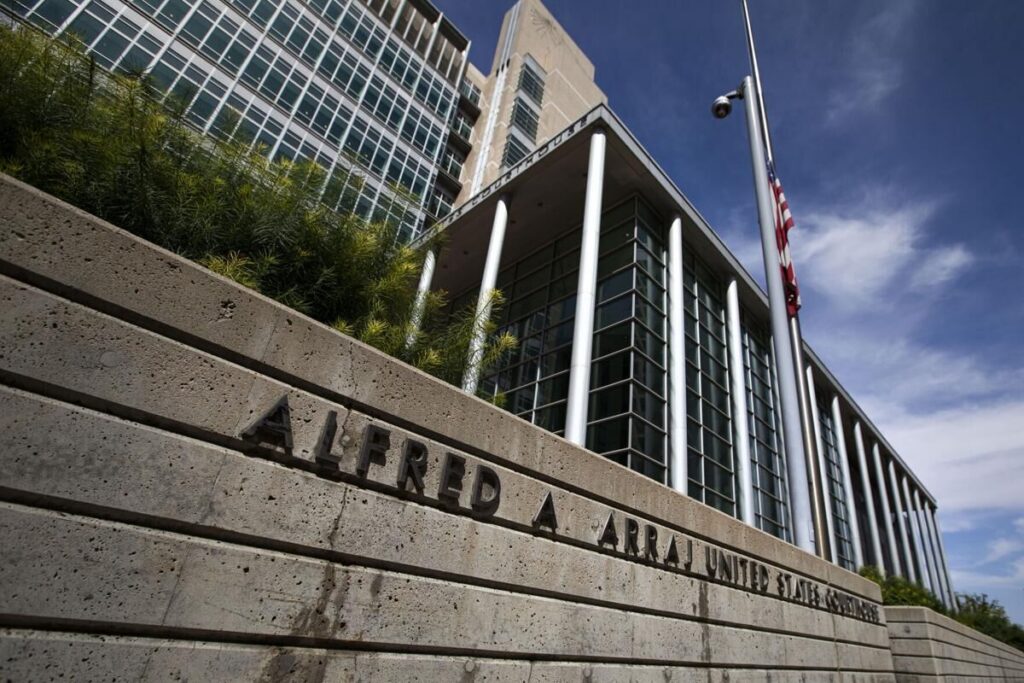
Colorado’s chief federal judge took the extraordinary step of directing the government on Tuesday to do everything it can to return a man it deported in violation of his order. At the same time, Colorado’s chief magistrate judge has set...
Denver murder, assault convictions reversed due to faulty jury instructions
Michael Karlik
michael.karlik@coloradopolitics.com
Updated 1 day ago
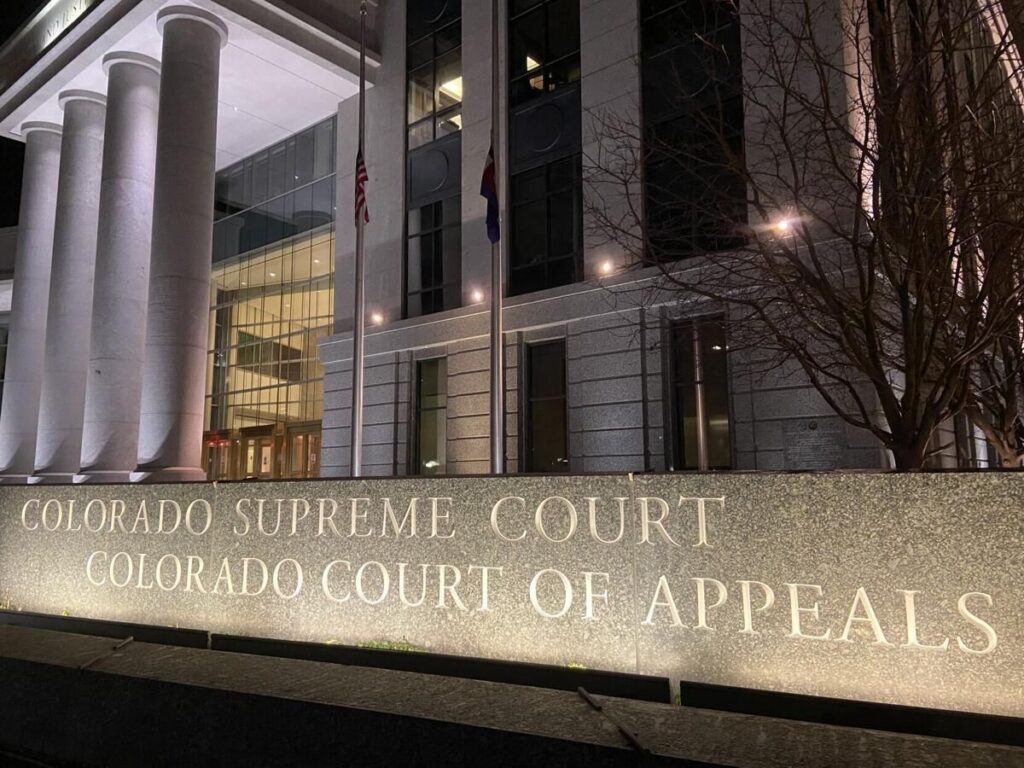
Colorado’s second-highest court reversed a defendant’s convictions for murder and assault last week after concluding a Denver judge incorrectly omitted key jury instructions that could have affected the verdict and sentencing. Stephen C. Swainson fatally stabbed Israel Casillas in downtown...
‘Understand people for who they are’: 2 federal judges talk about compassion in courtroom
Michael Karlik
michael.karlik@coloradopolitics.com
Updated 6 hours ago
Before taking the bench in 2022, U.S. District Court Judge Charlotte N. Sweeney was an employment discrimination attorney. While the cases could be emotionally charged, they were different from the criminal proceedings she is now handling. “It wasn’t necessarily affecting...

Denver murder conviction reversed for incomplete self-defense instruction
Michael Karlik
michael.karlik@coloradopolitics.com
Updated 2 days ago
Colorado’s second-highest court reversed a defendant’s murder conviction last week because a Denver judge gave an incomplete instruction to the jury about the man’s right to self-defense. Donald R. Gonzales and Gary McLaughlin met up in a Capitol Hill parking...
Colorado lawmaker, House leaders named in workplace-retaliation lawsuit
Marianne Goodland
marianne.goodland@coloradopolitics.com
Updated 2 days ago
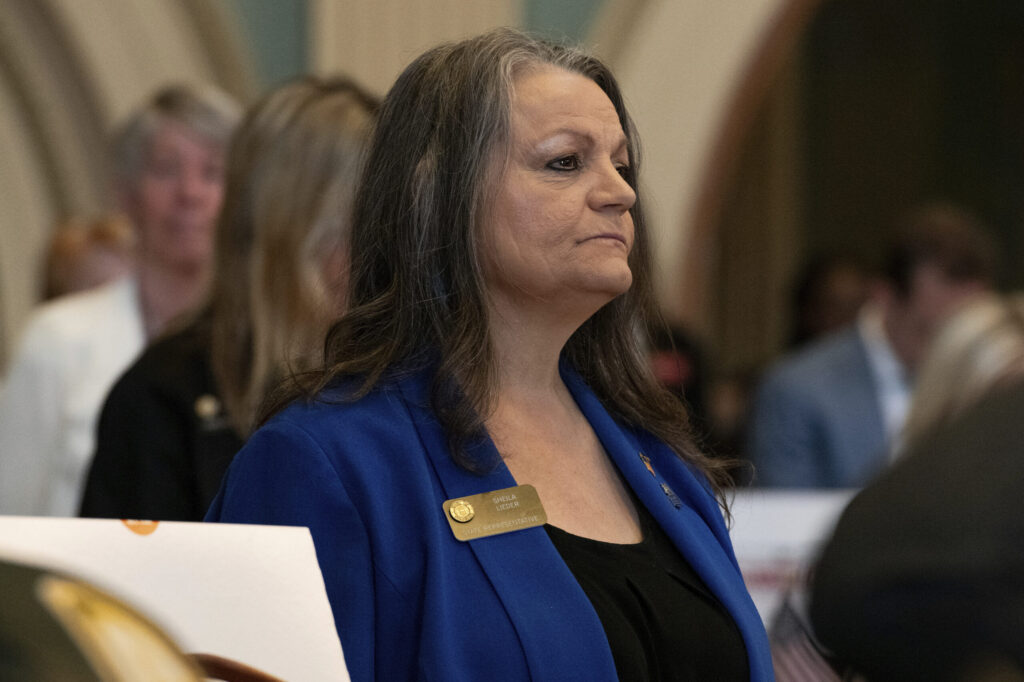
A former legislative aide has filed a lawsuit alleging she was mistreated, illegally directed to perform campaign work and harmed by a House leadership structure she charged was fragmented, politicized and ineffective at protecting employees. The lawsuit, filed by Jennifer...
Federal judge hears arguments about Colorado’s 3-day gun purchase waiting period
Michael Karlik
michael.karlik@coloradopolitics.com
Updated 3 days ago
A federal judge heard arguments on Monday about the constitutionality of a 2023 Colorado law that generally imposes a three-day waiting period on firearm purchases after the initiation of a background check. The test that the U.S. Supreme Court created...
Colorado Supreme Court intervenes in Weld County prosecution dismissed due to Missy Woods misconduct
Michael Karlik
michael.karlik@coloradopolitics.com
Updated 2 days ago
The Colorado Supreme Court ordered a Weld County trial judge last week to respond to the district attorney’s claim that he improperly dismissed a criminal case because of “outrageous” conduct by the Colorado Bureau of Investigation. Daniel Lee Eatinger stood...
Schoolchildren’s presence at child sex-related trial did not harm Arapahoe County defendant, appeals court says
Michael Karlik
michael.karlik@coloradopolitics.com
Updated 5 days ago
Colorado’s second-highest court decided on Thursday that the presence of a group of schoolchildren on the first day of a child sexual exploitation trial did not violate an Arapahoe County defendant’s constitutional right to a fair trial. Prosecutors charged Jerry...
Appeals court cites week-old Colorado law to reinstate child neglect case at child, father’s request
Michael Karlik
michael.karlik@coloradopolitics.com
Updated 5 days ago
Colorado’s second-highest court invoked a new state law for the first time on Thursday and reinstated a child neglect case that both the child and her father wished to reopen. House Bill 1227 took effect on Aug. 12, reversing a...
Colorado Supreme Court names William Hood as next chief justice
Michael Karlik
michael.karlik@coloradopolitics.com
Updated 10 hours ago
The Colorado Supreme Court has selected Justice William W. Hood III to be the next chief justice, the judicial branch announced on Friday. Hood will succeed Chief Justice Monica M. Márquez, who took over the role in July 2024. “I...
PREV
PREVIOUS
Maui wildfires could be triggering for Coloradans who have endured wildfire trauma, professor says
Images of the Maui wildfires could trigger intense feelings for Coloradans who have lived through a similar trauma, a health expert said Thursday. “Repeatedly viewing events like Maui’s fires online and on television may trigger feelings, such as anger, fear and hopelessness,” Ian Stanley, PhD, an assistant professor at the University of Colorado School of […]

Federal judge sends Muslim inmate's lawsuit to trial over denial of religious diet
A jury will decide whether Colorado Department of Corrections officials violated an incarcerated man’s rights by terminating his religious diet when he purchased multiple items that allegedly were in conflict with his meal plan. On Aug. 3, U.S. District Court Senior Judge William J. Martínez agreed a jury could believe Ray Anthony Smith’s claims that prison […]