

Colorado justices weigh need for tribal engagement in potential ‘Indian child’ cases
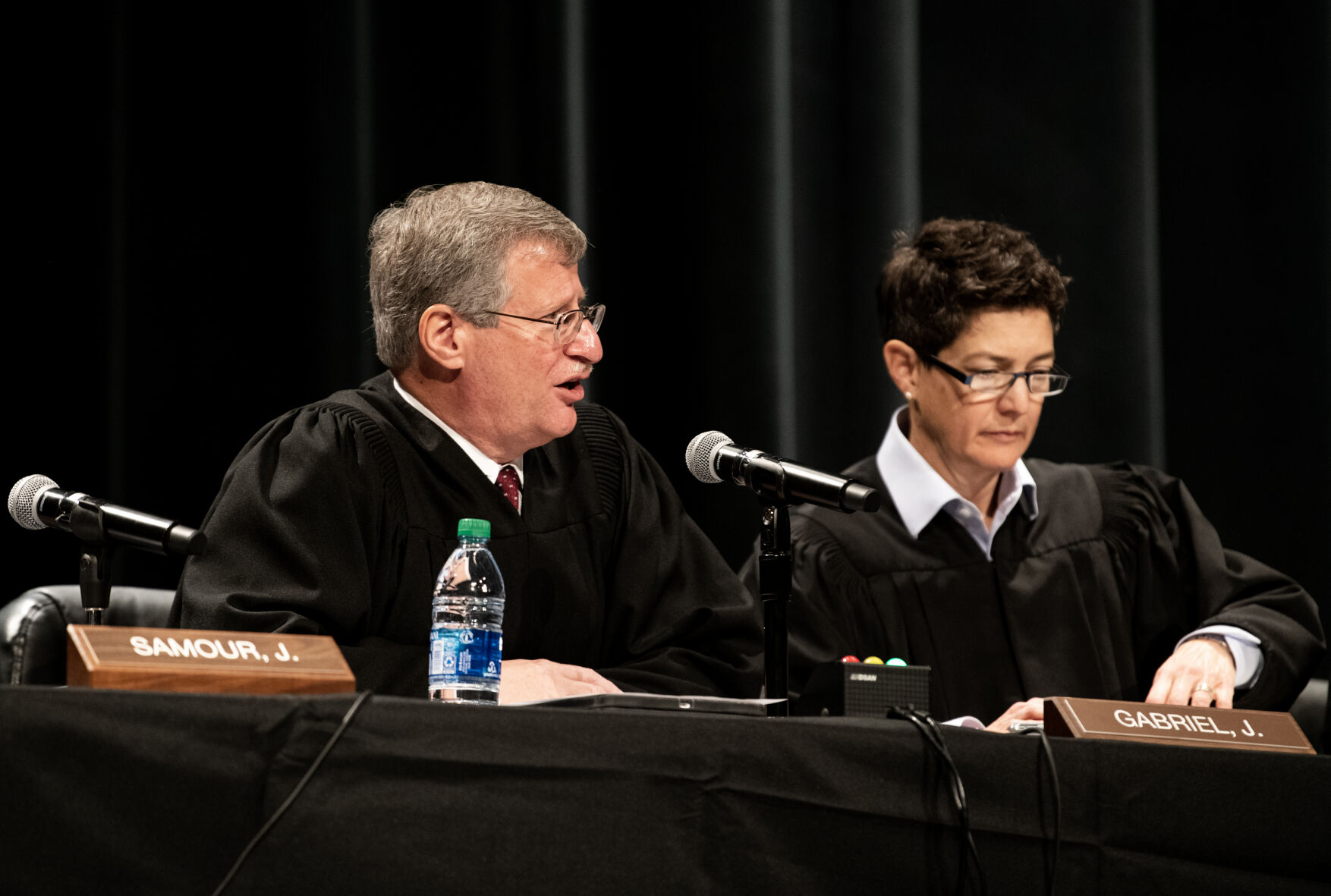
Members of the Colorado Supreme Court on Wednesday considered whether state law requires tribal nations to be contacted when a child in a welfare case potentially falls under the longstanding protections afforded to American Indian children, but the evidence of tribal lineage is still minimal.
Congress enacted the Indian Child Welfare Act of 1978 (ICWA) to prevent the further breakup of tribal nations and families. The law allows for tribal involvement in custody proceedings by requiring states to notify affected tribes when one of their members – an “Indian child” – is involved.
However, tribal nations are solely responsible for determining membership. The question the Supreme Court has agreed to resolve is whether, and how, counties must contact tribal nations that may have a stake in welfare cases, even if it is far from clear that a child actually has American Indian heritage.
“The tribes have the definitive answer,” argued attorney Kristofr P. Morgan in advocating for a broad requirement to reach out to tribal nations.
Some members of the court appeared receptive to the idea that an investigation of a child’s American Indian status should trigger the involvement of those tribal nations specifically identified as a source of possible heritage.
“Why is it so difficult, this notion of informal notification?” asked Justice Maria E. Berkenkotter. “You simply have somebody send out an email saying, ‘This is the information we have.’ Why is there resistance to that?”
The justices held oral arguments less than one week after a majority of the U.S. Supreme Court upheld Congress’s authority to enact ICWA. Justice Neil M. Gorsuch outlined the “existential threat” federal and state policies long posed to American Indian families – forcing children into schools aimed at eradicating tribal culture and enabling unjustified adoptions of children into non-tribal households.
“ICWA gives Tribes a voice,” he wrote.
Under ICWA, protections kick in once a state judge knows or has “reason to know” a child is American Indian – including, crucially, the obligation to notify the child’s tribe so that it may become involved in the case and have the opportunity to advocate for its culture.
Colorado law provides one additional requirement. If there is some information suggesting a child is American Indian, but not enough to have “reason to know,” counties must conduct “due diligence” to find the answer. Lawmakers, however, did not define what due diligence is.
“I understand the argument that in all cases, good practice would be to notify the tribes,” acknowledged Justice Richard L. Gabriel. “But why isn’t that something better addressed to the legislature? Put the tribes in the statute. Require that tribes be contacted.”
In the underlying case, Adams County initiated a child neglect case and took custody of a newborn child based on the mother’s alleged drug use. A judge ultimately terminated the mother’s legal rights over the child.
During the proceedings, the mother thought she had Cherokee or “Lakota Sioux” heritage, but it was not until the state’s Court of Appeals reviewed the case that Adams County investigated the assertion. The appeals court did not direct the county to contact the Cherokee or Sioux nations, and there was no tribal notification. Nonetheless, the court ultimately agreed there was no reason to know the child was American Indian, so ICWA’s protections did not apply.
On appeal to the Supreme Court, the mother, with the support of the two federally-recognized tribal nations in Colorado, argued that tribes’ exclusive authority to determine their membership means “due diligence” necessarily requires counties to go directly to the source when inquiring about a child’s American Indian status.
“Put simply, when a juvenile court answers the question of whether a child is an Indian child without requiring contact with the Tribe, the juvenile court is – by definition – substituting its determination for the Tribe’s,” argued Zaven T. Saroyan with the Office of Respondent Parents’ Counsel, which also supported the mother’s position.
Adams County responded that bare-bones claims of tribal lineage cannot support tribal notification in every instance, as that would amount to “inundating” nations with meritless inquiries.
“There are some tribes who readily respond. There are some tribes that don’t necessarily have the technology or respond when you call,” said Assistant County Attorney Katherine Gregg.
But the justices questioned why an email or phone call to a tribe – short of the formal notification that must occur when ICWA fully applies – is an unrealistic means of getting an answer.
“Help me better understand why it is so difficult to say that whenever Cherokee, Sioux heritage is mentioned, something sort of vague like that,” said Justice William W. Hood III, “that it doesn’t give you enough to contact tribes informally and get information that would allow us to cut to the chase.”
Some members of the court were also concerned that requiring tribal contact as part of due diligence would run contrary to their own recent ruling that unverified assertions of tribal lineage, without more, do not trigger ICWA and the obligation to notify tribes.
“You’re saying due diligence also requires notice?” Berkenkotter asked.
“Some type of tribal involvement. Because it’s the tribes that have the answer,” responded Morgan, the mother’s attorney.
Regardless of whether tribal contact was required, the justices wondered if Adams County had not performed its due diligence for another reason. The mother indicated the child’s great-aunt had the most reliable information about tribal membership. Yet, the county apparently never talked to her.
“What happened to the great-aunt?” Gabriel demanded. “This bothers me. When somebody says, ‘This is the person with the most information’ and there is no effort to contact her, how can that be due diligence?”
The case is People in the Interest of A.A.B.

10th Circuit finds no fair housing violation by Littleton landlord for worker’s alleged rape of tenant
Michael Karlik
michael.karlik@coloradopolitics.com
Updated 18 hours ago
The Denver-based federal appeals court concluded on Monday that Littleton’s housing authority could not be held liable for a maintenance worker’s alleged rape of a tenant, as the worker’s employment did not provide any special access to the victim. A...

Jeffco Public Schools sues Trump administration to protect funding after alleged transgender policies violation
Matt Kyle
matt.kyle@denvergazette.com
Updated 19 minutes ago
In the wake of several threats by the Trump administration to revoke federal funding, Jeffco Public Schools filed a lawsuit against the Department of Education seeking to protect that badly needed money. Jeffco has been under investigation by the DOE’s...
Denver detox center did not violate man’s rights with 10-hour hold, 10th Circuit says
Michael Karlik
michael.karlik@coloradopolitics.com
Updated 2 days ago
The Colorado-based federal appeals court concluded on Tuesday that Denver’s detoxification facility did not violate a man’s rights by holding him against his will for 10 hours until his blood alcohol content was projected to reach zero. Unusually, Brian Garrett’s...

Federal judge clarifies ex-GOP treasurer candidate’s burden to prove defamation claims
Michael Karlik
michael.karlik@coloradopolitics.com
Updated 2 days ago
A federal judge clarified last week that businessman and former Republican statewide candidate Brian Watson will need to surmount a higher hurdle in proving his claim that a party guest’s alleged description of him as a “criminal” amounted to defamation....
Colorado board permits state to appeal injunction against arthritis drug price cap
Marissa Ventrelli
marissa.ventrelli@coloradopolitics.com
Updated 2 days ago
A Colorado board voted Friday to allow the Attorney General’s Office to fight an injunction against a price cap on a drug that treats arthritis. A U.S. district court judge had granted the company Amgen a preliminary injunction, temporarily blocking...

Federal judge rejects constitutional claims, ‘expressions of hatred’ by Club Q defendant
Michael Karlik
michael.karlik@coloradopolitics.com
Updated 3 days ago
A federal judge rejected a defendant’s claims that he received constitutionally ineffective assistance of counsel while facing federal hate crime and firearms charges for murdering five people at a Colorado Springs LGBTQ nightclub in 2022. Anderson Lee Aldrich is serving...

Divided 10th Circuit upholds Colorado congestion fee on car rentals
Michael Karlik
michael.karlik@coloradopolitics.com
Updated 2 days ago
The Denver-based federal appeals court concluded on Monday that a 2024 “congestion impact fee” that lawmakers imposed on short-term vehicle rentals did not conflict with a federal prohibition on certain airport-related charges. Beginning in the 1970s, Congress began limiting the...
10th Circuit dismisses woman’s lawsuit following 10-year attempt to undo restraining order
Michael Karlik
michael.karlik@coloradopolitics.com
Updated 6 days ago
The Denver-based federal appeals court rejected a woman’s challenge on Friday to a restraining order imposed on her more than a decade ago, finding that she cannot credibly claim she will be prosecuted for violating the restraining order through her...
10th Circuit dismisses woman’s lawsuit following 10-year attempt to undo restraining order
Michael Karlik
michael.karlik@coloradopolitics.com
Updated 6 days ago
The Denver-based federal appeals court rejected a woman’s challenge on Friday to a restraining order imposed on her more than a decade ago, finding that she cannot credibly claim she will be prosecuted for violating the restraining order through her...
Colorado equal pay law does not require plaintiffs to allege gender-based retaliation, appeals court finds
Michael Karlik
michael.karlik@coloradopolitics.com
Updated 5 days ago
The 2019 Colorado law aimed at rooting out pay discrimination on the basis of sex does not require a plaintiff to allege their employer retaliated against them for sex- or gender-related reasons, the state’s second-highest court decided on Thursday. Lawmakers...
PREV
PREVIOUS

Denver City Council approves controversial rezoning in University Hills
The Denver City Council voted 10-3 to rezone several properties in the University Hills neighborhood following more than four hours of tense debate Tuesday. One of the sites had become an emotional sticking point as the owners of a medical center included in the rezoning pleaded with councilmembers to vote against it. They said the […]

Federal lawsuit alleges religious exemption denial for Buena Vista preschool unconstitutional
A Christian preschool in Buena Vista filed a federal lawsuit against the state of Colorado over its universal preschool program, arguing the school’s religious exemption denial is unconstitutional. Filed on Tuesday, the civil rights lawsuit seeks to prevent the Colorado Department of Early Childhood from “forcing a Christian preschool to surrender its religious character, beliefs […]