

Colorado Supreme Court considers whether criminal conviction suffered from undefined legal phrase
Colorado law does not define “universal malice.” No other state’s murder laws mention universal malice. And an Adams County judge did not tell Cristobal Fernando Garcia’s jury what universal malice meant.
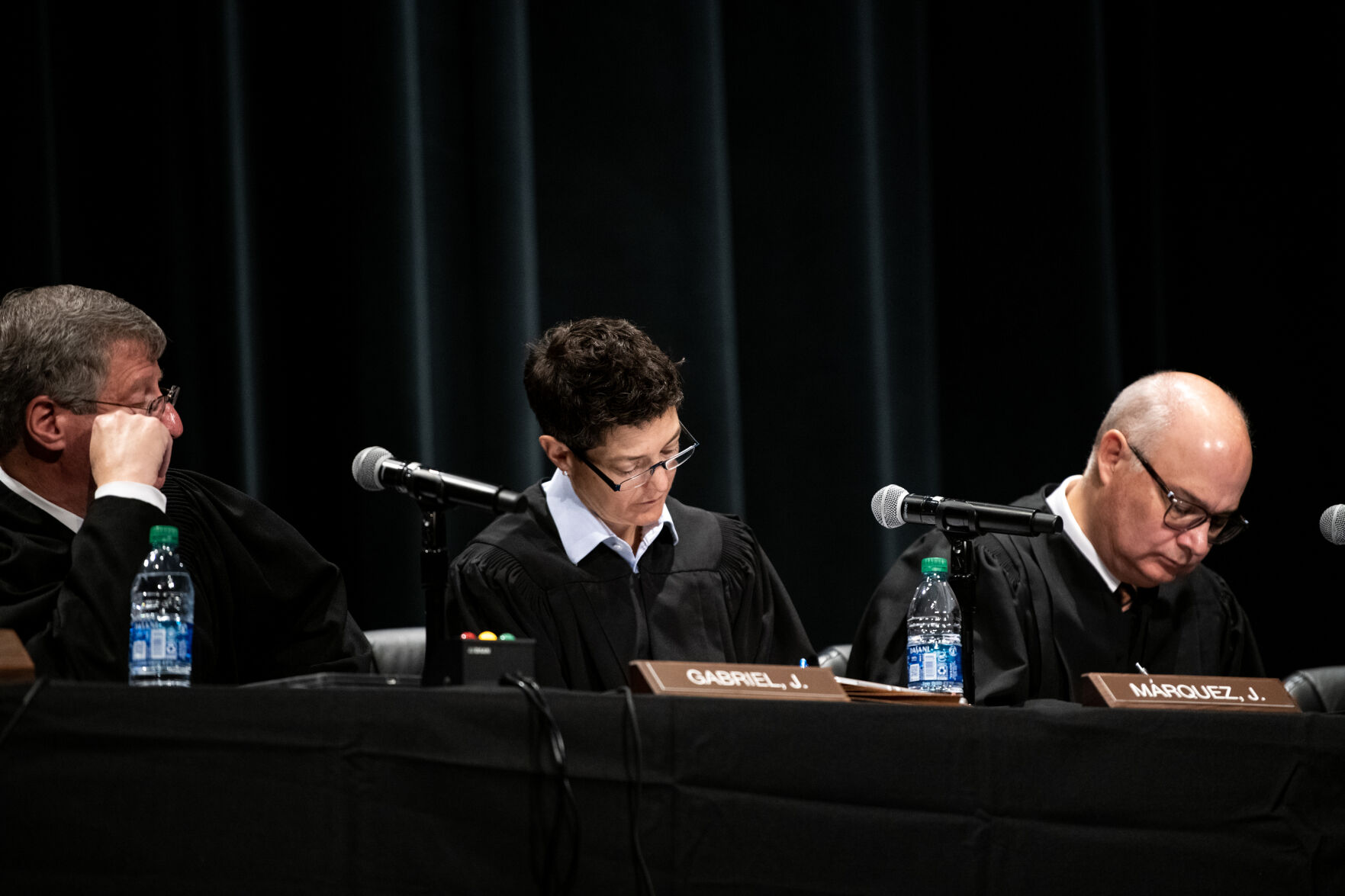
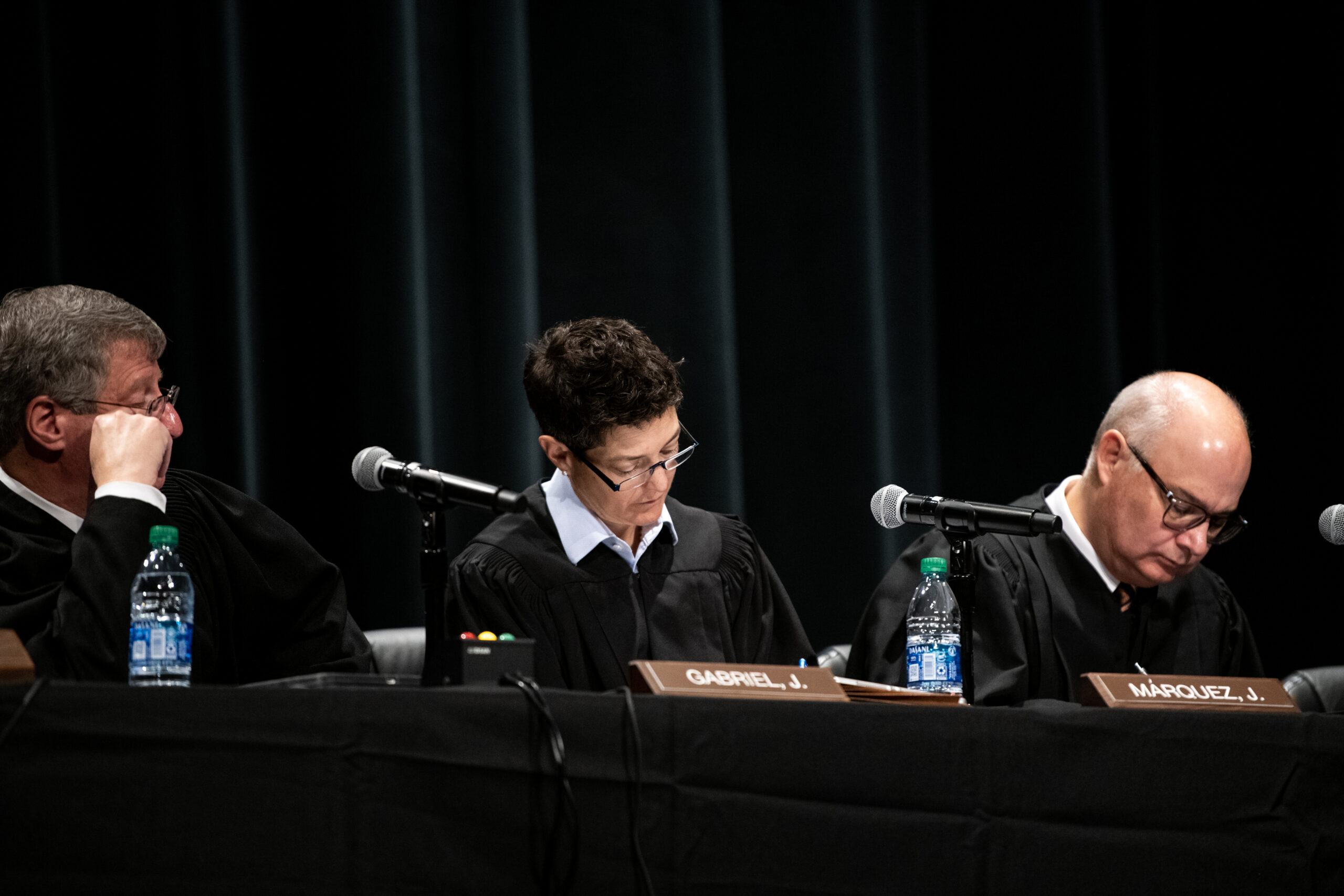
On Tuesday, the state Supreme Court considered the possibility that Garcia’s attempted murder conviction may require reversal if the absence of a definition led to a faulty understanding of whether he had “an attitude of universal malice” when he fired a gun on a public street.
“Without going to the case law, there’s no way I could recite a proper, accurate and full definition of the term ‘universal malice,’ and it’s unreasonable to expect lay jurors to be able to do so,” argued Deputy State Public Defender Joseph P. Hough.
The government countered that Garcia’s jury expressed no confusion about the term while they were deliberating, and trial judges are within their right to withhold a definition under that scenario.
“My son is about to be matched in Colorado’s first class of universal preschool – preschool for all 4-year-olds in the state. And in 2017, when the jury trial occurred, the jurors would have been well aware of the debate surrounding universal healthcare in the 2016 election,” said Senior Assistant Attorney General Erin K. Grundy. “When we add ‘malice,’ is ‘universal’ somehow less clear? It’s not.”
Prosecutors charged Garcia with attempted murder after he fired a gun in the vicinity of his girlfriend and her sister one night. The bullets did not hit anyone. The law under which he was charged required the government to prove Garcia acted under circumstances “evidencing an attitude of universal malice manifesting extreme indifference to the value of human life generally.”
Garcia’s counsel suggested a jury instruction defining universal malice as a “depravity of the human heart” which causes someone to kill “upon slight or insufficient provocation, without knowing or caring who may be the victim.” Chief Judge Don Quick rejected the definition and the jury never asked for one. It convicted Garcia on one count of attempted murder and a related, lesser offense.
On appeal, the Court of Appeals recognized Colorado law contains no definition of “universal malice,” nor do the template jury instructions. Nevertheless, the term “connotes an unrestricted willingness to do harm without sufficient justification,” concluded a three-judge appellate panel. Because the context conveyed that requirement, no further definition was necessary.
However, members of the Supreme Court were not so sure.
“Let’s say jurors didn’t express any confusion about reasonable doubt because they’ve heard it on TV,” said Justice Monica M. Márquez during oral arguments. “Are we saying that unless jurors express confusion about reasonable doubt, we need not instruct juries on reasonable doubt?”
Grundy replied that when there is a “technical or legal meaning that differs from the common understanding, courts should give that instruction.”
“Universal malice does have a technical meaning,” interjected Márquez. “It’s a willingness to take human life indiscriminately. That’s more than just generally being mad at the world.”
The government and the defense agreed that no other state apparently uses “universal malice” in their homicide laws. The Supreme Court has independently defined it to mean killing indiscriminately without provocation.
But Garcia’s argument centered around a basic logistical question: How were his jurors supposed to know that?
“It’s not something you hear on TV, it’s not something you read about,” argued Hough. To him, the circumstances could support a charge of menacing, but without guidance from the judge, Garcia’s jury might have wrongly believed the government proved attempted murder.
“Language is constantly changing, right?” observed Justice Maria E. Berkenkotter. “Are you suggesting that the rule should be, ‘Go and define everything that seems kind of archaic?'”
Yes, Hough answered, so that it is clear prosecutors proved the charges beyond a reasonable doubt.
“It feels like we’re being asked to rewrite this statute,” cautioned Chief Justice Brian D. Boatright.
While Grundy endorsed the idea that universal malice means a willingness to harm others indiscriminately, she disputed the broader need to define archaic terms and particularly in Garcia’s case.
“There were three bullets fired at night, in the dark, on a neighborhood street where there were at least five other people around,” Grundy argued. “Shooting into a public street without knowing who’s there is a quintessential example of universal malice.”
The case is Garcia v. People.

Colorado justices say insurers may access policyholders’ medical info in denied-benefits litigation
Michael Karlik
michael.karlik@coloradopolitics.com
Updated 2 days ago
The Colorado Supreme Court declined on Monday to expand its narrow prohibition on insurance companies accessing policyholders’ medical information, clarifying that a dispute over an insurer’s bad-faith decision to deny benefits is the only situation where a company is limited...

Colorado Supreme Court declines to loosen requirements for insurance company defendants
Michael Karlik
michael.karlik@coloradopolitics.com
Updated 15 hours ago
The Colorado Supreme Court declined last week to reconsider its longstanding expectations for insurance company defendants, and agreed that an insurer failed to properly raise its defenses against a policyholder’s breach-of-contract lawsuit. When an insured driver has an accident with...

Teen defendant properly transferred from youth detention to jail, Colorado justices conclude
Michael Karlik
michael.karlik@coloradopolitics.com
Updated 2 days ago
Colorado law required the transfer of a teenage murder suspect from youth detention to the county jail when he turned 18, the state Supreme Court ruled last week. Prosecutors have accused Issac James Lawrence of killing a younger boy and attempting to...
Divided Colorado Supreme Court finds parental anonymity in ‘safe haven’ law
Michael Karlik
michael.karlik@coloradopolitics.com
Updated 14 hours ago
Parents who surrender their newborns under Colorado’s “safe haven” law are entitled to anonymity and confidentiality in any subsequent adoptive proceedings involving the child, the state Supreme Court ruled on June 8. Colorado’s law, like its counterparts across the country,...
Safe2Tell tip, corroborated details provided grounds to search backpack, Colorado justices rule
Michael Karlik
michael.karlik@coloradopolitics.com
Updated 13 hours ago
The Colorado Supreme Court decided this month that a tip submitted through the state’s confidential school safety system, plus a Douglas County administrator’s corroboration of some details, provided reasonable suspicion to search a student’s backpack for drugs. Someone submitted a...
Appeals court finds opening in Colorado Supreme Court’s framework for child neglect cases
Michael Karlik
michael.karlik@coloradopolitics.com
Updated 3 days ago
Colorado’s second-highest court squeezed through an opening last week in a controversial state Supreme Court decision from 2025, concluding that the justices had not prohibited a child’s legal representative from being the one to request termination of parental rights in...
Colorado Supreme Court upholds police search of car based on arm movements
Michael Karlik
michael.karlik@coloradopolitics.com
Updated 15 hours ago
The Colorado Supreme Court decided last week that Denver officers’ search of a vehicle was constitutional, based on their perception of the occupants’ arm movements that a trial judge found to not be credible. Officers Keegan Grubb and Richard Eberharter...
10th Circuit tosses Pueblo County sheriff defendants’ appeal in fatal shooting lawsuit
Michael Karlik
michael.karlik@coloradopolitics.com
Updated 13 hours ago
The Denver-based federal appeals court rejected an attempt from Pueblo County sheriff’s employees on Wednesday to rely on their own version of the facts to escape liability for fatally shooting an unarmed man outside a middle school. A trial judge...
Colorado justices uphold strict interpretation of consumer protection law against debt collector
Michael Karlik
michael.karlik@coloradopolitics.com
Updated 15 hours ago
The Colorado Supreme Court concluded last month that a debt collector failed to comply with state law by suing a woman for an unpaid credit card debt without documentation that it owned her account. Portfolio Recovery Associates LLC filed a...
Colorado justices say judges can nearly eliminate parenting time without it being a ‘restriction’
Michael Karlik
michael.karlik@coloradopolitics.com
Updated 15 hours ago
The Colorado Supreme Court concluded last month that judges can reduce the number of days a parent spends with their child post-divorce to just above zero without it rising to the level of a “restriction” that requires more rigorous justification...