

Denver judge violated law in rescinding jury trial after mother was late
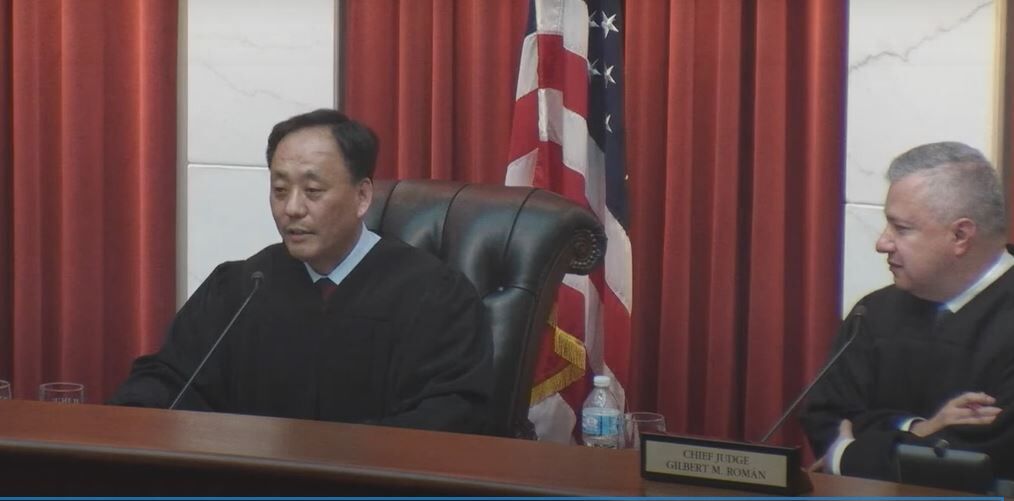
A Denver juvenile court judge violated a mother’s right to a jury trial in her child welfare case by dismissing jurors after she was 10 minutes late without finding out why, the Court of Appeals ruled on Thursday.
Although child welfare proceedings, formally known as dependency and neglect cases, are not criminal and have no constitutional guarantee of a trial by jury, the Colorado legislature has established in law the right to request a jury trial in such circumstances.
A three-judge panel for the Court of Appeals could find no Colorado court precedent establishing whether a parent waives that right by being late to arrive. Judge David H. Yun, writing in the panel’s July 21 opinion, decided the answer in this instance was no.
“In reaching this conclusion, we do not suggest that a parent can never waive her right to a jury trial by being late,” Yun cautioned. “However, before a court determines whether a waiver has occurred, it should inquire further about the parent’s whereabouts and the circumstances concerning her absence.”
A woman identified as C.L.E. denied the government’s allegations that her children were abused or neglected and requested a jury decide the question. Presiding Juvenile Court Judge D. Brett Woods scheduled a two-day trial, telling C.L.E. to arrive by 12:45 p.m. on the first day of trial so that proceedings could begin at 1 p.m.
He warned C.L.E. that if she was later than 15 minutes, she would “waive her right to a jury trial as a matter of law.”
By 1:10 p.m. on the first day, C.L.E. was not present, although her lawyer was. Woods then dismissed the jurors who had shown up. C.L.E.’s lawyer objected when Woods indicated the trial would proceed as a bench trial, with only the judge deciding the outcome.
“I did get a text from (C.L.E.) after 1 o’clock saying that there was a problem with her Lyft,” the lawyer explained, adding there was “some sort of detour.”
“Well, it’s now pushing 1:16, and she’s still not with us,” Woods replied. “We had 50 jurors here who were on time and had no trouble getting here, and she didn’t make it. So it’s not fair to the jury to keep them waiting.”
By 1:30, C.L.E. was in the courtroom.
“I have been a judge now for about 15 years, and I can tell you this is the first time in all that time that I’ve released a jury. But you weren’t here,” Woods told her. “And the rules are pretty clear that if you’re not here, you waive your right to a jury. So that’s what happened.”
The next day, Woods tried the case on his own and determined C.L.E.’s children were dependent and neglected. Such a decision can eventually lead to a judge’s termination of the legal relationship between a parent and child. C.L.E. appealed, arguing her tardiness did not amount to a relinquishment of her state law right to a jury trial.
In looking to other states for guidance, the appellate panel agreed the law did not support Woods’ decision. The judge should have asked about C.L.E.’s whereabouts and potentially given her more time to arrive before dismissing the jurors.
“The court failed to make such inquiries or accommodations, and while its concern about inconveniencing the jurors was understandable, it was an insufficient reason to overcome the mother’s statutory right to a jury trial,” Yun explained.
The Court of Appeals reversed Woods’ order and returned the case to the juvenile court for a jury trial.
The case is People in the Interest of C.C. and R.R.E.G.

Local party leaders, incoming judge among members of judicial performance commission that violated law
Michael Karlik
michael.karlik@coloradopolitics.com
Updated 15 hours ago
A local Democratic leader and 2024 presidential elector. A legislative aide and leader in the Young Republicans. An incoming county court judge freshly appointed by the governor. They are among the eight members of the northeastern Colorado judicial performance commission...
Judge dismisses lawsuit seeking records from Colorado Democratic group
Marianne Goodland
marianne.goodland@coloradopolitics.com
Updated 15 hours ago
A lawsuit seeking to obtain records from Democratic lawmakers affiliated with a caucus has been thrown out by a Denver District Court judge. On July 17, Judge Ericka Englert dismissed the April lawsuit filed by progressive activist Derrick Blanton, who...
Colorado Springs mother Deborah Nicholls’ murder conviction overturned
Nick Smith
nick-smith@coloradopolitics.com
Updated 2 days ago
A Colorado Springs mother convicted in 2008 of murdering her three children in a house fire might get a new trial after a judge ruled that prosecutors withheld key evidence that could have impacted the jury’s verdict. Deborah Nicholls, whose...
Colorado court overturns illegal $7,000 restitution order
Michael Karlik
michael.karlik@coloradopolitics.com
Updated 11 hours ago
Colorado’s second-highest court overturned a Weld County defendant’s obligation to pay more than $7,000 in crime victim restitution on Thursday because a trial judge failed to issue a legally compliant restitution order at the time of sentencing. In Colorado, as...

Appeals court rejects former DougCo commissioner’s legal fee claim
Nicholas Fogleman
nicholas.fogleman@denvergazette.com
Updated 22 hours ago
The Colorado Court of Appeals rejected a former Douglas County commissioner’s bid for reimbursement of attorney fees she incurred while responding to multiple investigations into her conduct. The dispute stemmed from a 2019 anonymous letter sent to county officials alleging...
Appeals court orders second look at Denver Water’s immunity for cyclist’s injury
Michael Karlik
michael.karlik@coloradopolitics.com
Updated 2 days ago
Colorado’s second-highest court ordered another look at a bicyclist’s negligence lawsuit against Denver Water on Thursday, concluding that a trial judge needed to evaluate the utility’s potential immunity using the state Supreme Court’s new guidance. Joseph A. “Joey” Scott alleged...
Labels, duration not definitive proof of ‘intimate relationship,’ Colorado court rules in domestic violence case
Michael Karlik
michael.karlik@coloradopolitics.com
Updated 16 hours ago
Colorado’s second-highest court clarified on Thursday that the length of a couple’s relationship and the labels they attach to it are not conclusive evidence of whether it is an “intimate relationship” that can give rise to a domestic violence prosecution....

Colorado AG urges Supreme Court to let Boulder climate lawsuit proceed
Marissa Ventrelli
marissa.ventrelli@coloradopolitics.com
Updated 2 days ago
Colorado Attorney General Phil Weiser has filed a court brief with the U.S. Supreme Court in a lawsuit brought by Boulder city officials seeking to hold oil companies liable for their environmental impact. The case began in 2018, when the...
10th Circuit says landowner cannot sue ex-Routt County judge for statements in decision
Michael Karlik
michael.karlik@coloradopolitics.com
Updated 3 days ago
A Routt County landowner cannot sue a former judge for his allegedly inaccurate statements in a case where the landowner was not a party, the Denver-based federal appeals court decided on Wednesday. Anne Fitzsimmons, who lives in Germany, owns a...
Defendant’s competency in question in El Paso County case involving slain Army police officer
Nick Smith
nick-smith@coloradopolitics.com
Updated 2 days ago
It will be another 60 days before a 4th Judicial District court determines if a man charged in the shooting death of an Army police officer is competent to proceed in his case. Judge Erin Sokol granted a request Wednesday...
PREV
PREVIOUS

Appeals court overturns Garfield County murder conviction due to coerced confession
Local, state and federal interrogators coerced a confession out of a murder suspect in Garfield County, and his resulting statements could have affected the jury’s verdict, Colorado’s second-highest court determined on Thursday. There was no question that Gustavo Olivo-Tellez shot and killed his wife in Glenwood Springs early in October 2016. The dispute at trial […]
Appeals court finds no error in dismissal of Black juror from El Paso County case
Colorado’s second-highest court has determined an El Paso County judge appropriately allowed prosecutors to dismiss a Black juror from a criminal trial for reasons other than his race. The U.S. Supreme Court recognized in the 1986 decision of Batson v. Kentucky that juror dismissals, or strikes, motivated by a juror’s race are unconstitutional. Consequently, trial judges evaluate […]