

Appeals court overturns Garfield County murder conviction due to coerced confession

Local, state and federal interrogators coerced a confession out of a murder suspect in Garfield County, and his resulting statements could have affected the jury’s verdict, Colorado’s second-highest court determined on Thursday.
There was no question that Gustavo Olivo-Tellez shot and killed his wife in Glenwood Springs early in October 2016. The dispute at trial was Olivo-Tellez’s mental state at the time, for which prosecutors pointed to Olivo-Tellez’s confession to police, when he suggested the slaying was premeditated.
However, Olivo-Tellez argued the trial court should have suppressed his confession because it was the product of impermissible coercion. A three-judge panel for the Court of Appeals agreed, concluding it was only after interrogators promised that Olivo-Tellez’s girlfriend, Michelle Castillo, was going to prison if Olivo-Tellez did not confess that he relented.
“The conditional nature of this statement indicated, in no uncertain terms, that Castillo’s freedom was contingent on Olivo-Tellez’s confession,” wrote Judge Terry Fox in the panel’s July 21 opinion. “Indeed, implicit in this statement was both a threat and a promise: if Olivo-Tellez did not confess, Castillo would go to prison; if he did confess, she would be released.
“And it was only after this statement – indeed, immediately after – that Olivo-Tellez confessed,” she added.
Police arrested Olivo-Tellez on the morning of Oct. 8, 2016 and interrogated him in Grand Junction. His sister had contacted authorities the prior day, after Olivo-Tellez arrived at her house with Castillo and told her he had shot and killed his wife, Blanca Salas, near Glenwood Springs. At the time, Olivo-Tellez and Salas had been separated.
Olivo-Tellez spent approximately seven hours in custody for his interrogation, and was left alone and handcuffed for extended periods. Initially, Detective Dave Hatch of the Garfield County Sheriff’s Office and Agent Renzo Scavazzon of the U.S. Department of Homeland Security interviewed Olivo-Tellez. With Olivo-Tellez’s limited English proficiency, Scavazzon acted as a translator.
After agreeing to waive his Miranda rights and speak with the investigators, the interaction lasted from approximately 9 a.m. until 1 p.m., including breaks. Olivo-Tellez admitted to nothing about Salas’ murder, although Castillo, who was speaking to officers in another room, had already relayed information about what Olivo-Tellez had done.
At 12:48 p.m., Agent John Zamora of the Colorado Bureau of Investigation joined Olivo-Tellez’s interrogation along with Detective Matt Jenness from the sheriff’s office, and with Scavazzon still translating. The interrogation took a more assertive tone.
“What I do know is that she was with you,” Jenness said in English, speaking of Castillo. “She’s an accessory. … And she’s going with you.”
“She is going to jail, too,” translated Scavazzon.
Olivo-Tellez denied Castillo had done anything. The interrogators said that was untrue and Scavazzon reiterated Castillo would be jailed.
The interrogators continued to explain how Castillo could be criminally charged for helping Olivo-Tellez. After six hours in detention without a confession from Olivo-Tellez, there was a breakthrough after a brief exchange translated through Scavazzon.
“Say adiós to her daughter,” Zamora said in English. “I’m not playin’ a game. I’m giving you a chance to help her out – maybe she’s still going to prison – by telling the truth.”
Scavazzon, in turn, translated that Olivo-Tellez had a chance “to tell the truth, because if not, she’s going to jail.”
“Yes, I did it,” Olivo-Tellez then replied. He confessed to shooting Salas, saying he had known for several days he was going to kill her and was “burning inside” to do it.
District Court Judge John F Neiley would later rule Castillos’ statements in custody could not be used at trial because they were the product of police coercion. But Neiley denied Olivo-Tellez’s similar motion to suppress his confession. Olivo-Tellez defended himself at trial by claiming he was intoxicated and impaired through methamphetamine use, and also that he killed Salas in the “heat of passion.”
A jury convicted him of second-degree murder and Olivo-Tellez received a prison sentence of 48 years.
On appeal, Olivo-Tellez contended his statements were not the product of his free will, but a result of Scavazzon’s representation that Castillo was definitively going to jail unless Olivo-Tellez confessed.
“This is both a promise and a threat … if he did confess, she could be saved,” wrote Deputy State Public Defender Jessica Sommer. “Telling Olivo-Tellez that his confession could help Castillo out of lengthy prison sentence was highly coercive.”
The government claimed the interrogators’ comments were more benign, specifically that “they were giving him a chance to maybe help her even through she was going to prison by telling them the truth about killing Salas,” wrote Senior Assistant Attorney General Kevin E. McReynolds.
Fox, in the appellate panel’s opinion, explained that a defendant’s statements to police must be voluntary to be used as evidence. Several factors determine whether law enforcement used coercion, including the presence of threats or promises.
“Having reviewed the interrogation video – with the aid of the translation transcripts in the record – we conclude that Olivo-Tellez’s confession to police was involuntary,” she wrote. “Specifically, the video reveals that Scavazzon made an implied threat and promise that, considering the totality of the circumstances, overbore Olivo-Tellez’s will.”
The problem lay solely with Scavazzon’s representation that Castillo’s freedom was contingent upon Olivo-Tellez confessing. Given that Olivo-Tellez had denied committing a crime for six hours, only to change course almost immediately after learning he could prevent Castillos’ incarceration, the appellate court saw clear evidence of coercion.
Because the jury heard Olivo-Tellez’s confessional statements suggesting premeditation, which undermined his defenses at trial, the coerced confession plausibly affected the verdict, Fox added. The panel consequently ordered a new trial.
The Court of Appeals did not address two other claims Olivo-Tellez made. He had argued he did not knowingly and intelligently relinquish his Miranda rights due to, among other things, Scavazzon’s allegedly-faulty translations. Also, Olivo-Tellez alleged the prosecutor excused a Hispanic juror because of the man’s race, which the U.S. Supreme Court has long deemed a constitutional violation.
The case is People v. Olivo-Tellez.


10th Circuit tosses Pueblo County sheriff defendants’ appeal in fatal shooting lawsuit
Michael Karlik
michael.karlik@coloradopolitics.com
Updated 2 hours ago
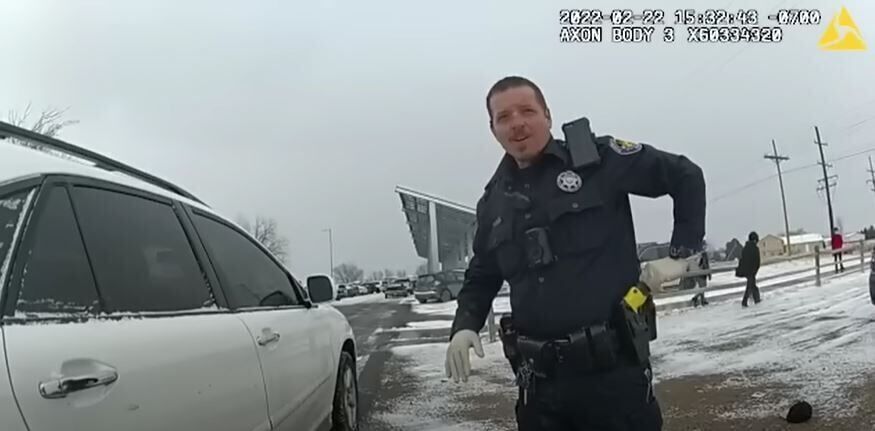
The Denver-based federal appeals court rejected an attempt from Pueblo County sheriff’s employees on Wednesday to rely on their own version of the facts to escape liability for fatally shooting an unarmed man outside a middle school. A trial judge...
Colorado justices uphold strict interpretation of consumer protection law against debt collector
Michael Karlik
michael.karlik@coloradopolitics.com
Updated 5 hours ago
The Colorado Supreme Court concluded last month that a debt collector failed to comply with state law by suing a woman for an unpaid credit card debt without documentation that it owned her account. Portfolio Recovery Associates, LLC filed a...
Colorado justices say judges can nearly eliminate parenting time without it being a ‘restriction’
Michael Karlik
michael.karlik@coloradopolitics.com
Updated 22 hours ago
The Colorado Supreme Court concluded last month that judges can reduce the number of days a parent spends with their child post-divorce to just above zero without it rising to the level of a “restriction” that requires more rigorous justification...

Colorado Springs may be sued for faulty intersection, state Supreme Court rules
Michael Karlik
michael.karlik@coloradopolitics.com
Updated 1 day ago
The Colorado Supreme Court decided last month that Colorado Springs can be sued over a collision that occurred as a result of traffic lights that were functioning normally in one direction, but were inoperative in the perpendicular direction. The question...
Internal appeals of parole revocation must come before judicial review, Colorado justices conclude
Michael Karlik
michael.karlik@coloradopolitics.com
Updated 1 day ago
The Colorado Supreme Court ruled last month that criminal defendants whose parole is revoked must appeal the decision internally to the state’s parole board before seeking review by a judge. The process for returning someone to incarceration for violating the...
Judge approves injunction for Colorado Springs counselor after SCOTUS rules in conversion therapy case
Michael Karlik
michael.karlik@coloradopolitics.com
Updated 6 hours ago
A federal judge last week blocked Colorado from enforcing its restriction on conversion therapy for LGBTQ children against a Colorado Springs counselor, after both sides agreed that the state will not pursue professional disciplinary action while the case proceeds. The...
Colorado Supreme Court to decide whether out-of-state defendant may be prosecuted for in-state crime
Michael Karlik
michael.karlik@coloradopolitics.com
Updated 22 hours ago
The Colorado Supreme Court recently announced that it will decide whether Douglas County prosecutors had grounds to pursue criminal charges against a woman in New York whose conduct occurred outside of Colorado. Erin Brennan and her children lived in New...
Colorado justices, 4-2, say defendant cannot be retried after judge rejected jury’s partial acquittal
Michael Karlik
michael.karlik@coloradopolitics.com
Updated 2 days ago
If a jury clearly indicates that it has acquitted a defendant of certain charges while remaining deadlocked on others, judges must accept that partial acquittal verdict, a divided Colorado Supreme Court ruled on Monday. Justice William W. Hood III, in...
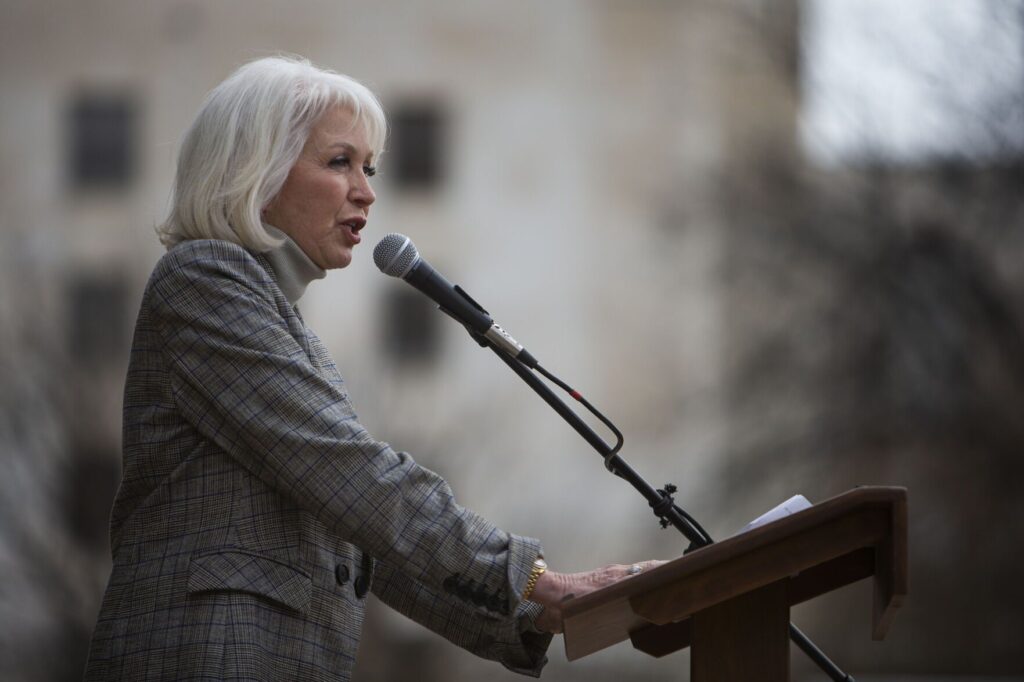
After prison release, Tina Peters faces tight parole limits, ongoing legal troubles
Marianne Goodland
marianne.goodland@coloradopolitics.com
Updated 5 days ago
Released from prison this week, former Mesa County Clerk Tina Peters now begins a parole term that outlines strict limits on her movements and conduct, while separate ethics and campaign‑finance cases continue to move forward. Peters’ parole, as first reported...

Paramedics’ convictions tossed in Elijah McClain’s death
9News
9news@coloradopolitics.com
Updated 6 days ago
AURORA, Colo. — Two former Aurora Fire Rescue paramedics convicted in connection with the 2019 death of Elijah McClain will be retried following a ruling by the Colorado Court of Appeals. In September 2021, a statewide grand jury indicted Cooper and fellow...
PREV
PREVIOUS

Peters surrenders, booked and released after posting bail
Mesa County Clerk and Recorder Tina Peters on Thursday night surrendered to the Pitkin County Sheriff’s Office, was booked and released after posting $1,000 bond, the sheriff’s office confirmed to Colorado Politics on Friday. She was booked at 9:22 p.m. and released at 10:22 p.m. after posting the bond, per the sheriff’s office. The Mesa County […]

Coloradans could legalize psychedelic mushrooms in November
A measure to legalize psychedelic mushrooms and create a system of healing centers across Colorado has made it onto the November ballot. The Natural Medicine Health Act, otherwise known as Initiative 58, has qualified for the general election ballot, according to the Colorado Secretary of State’s Office. The office said in a news release that […]