

Colorado Senate OKs changes to missing person investigations targeting marginalized women
Legislation advanced by the Colorado Senate aims to improve missing persons investigations involving women from marginalized groups.
If enacted, Senate Bill 95 would shorten the timeframe before a person can be reported missing from 24 hours to two hours for minors and eight hours for adults. The bill would also require state law enforcement to collect and report data and trends regarding missing women and girls from marginalized groups, including people of color, LGBTQ+ people and older adults.
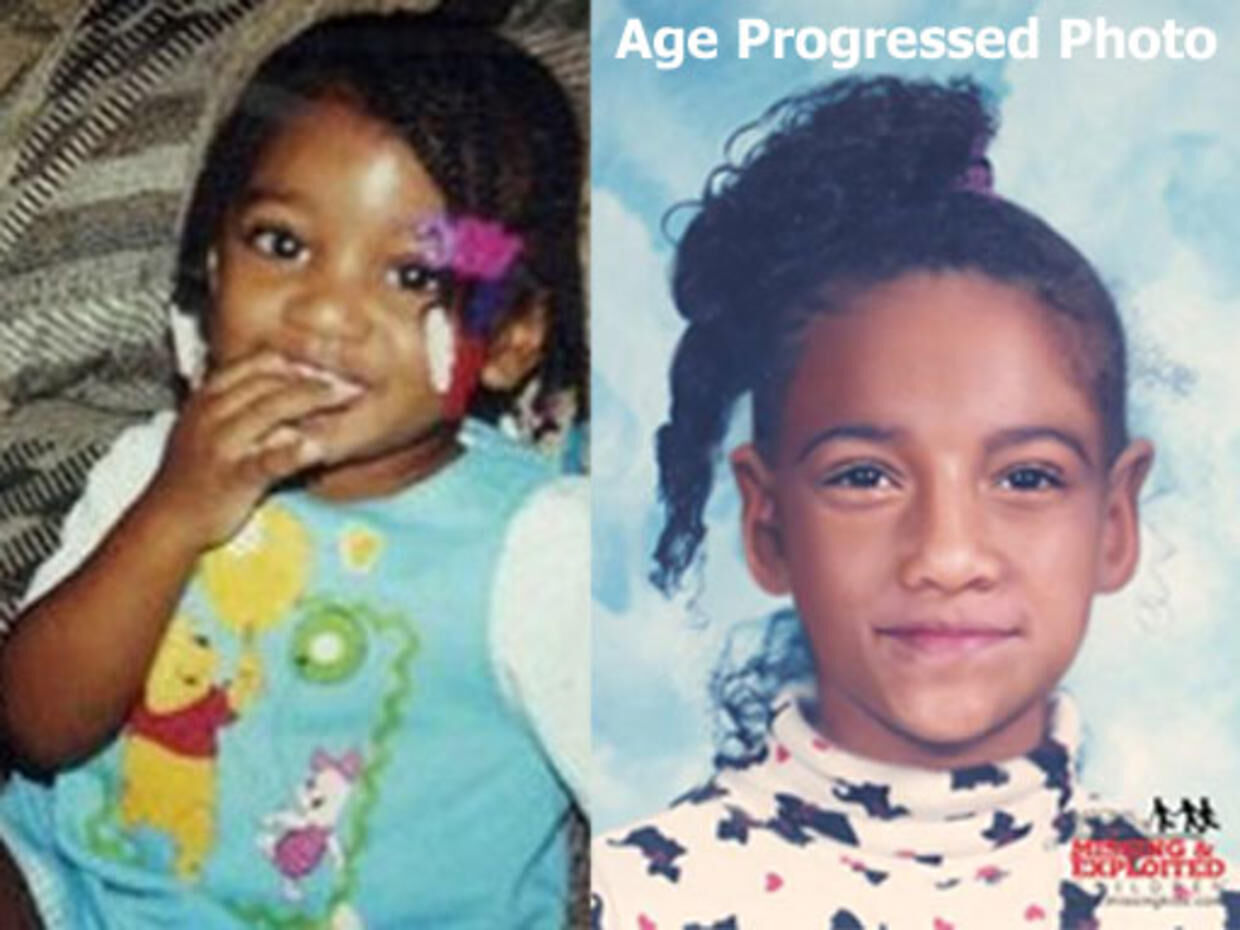
Bill sponsor Sen. Rhonda Fields, D-Aurora, said the bill is partially inspired by Aaroné Thompson, a 6-year-old Black girl who went missing in Aurora.
Thompson’s father reported her as a runaway in 2005, though investigators believe she may have died up to two years before the report. Thompson’s body was never found, and her father wasn’t convicted for her death until 2009.
“We hear about a lot of women that are not of color that get news coverage nationally and are found,” Fields said. “Far too often when there is a Black young girl or a transgender woman or an Indigenous woman or someone who is from the aging population, sometimes they are not found.”
Fields said it is important to protect women of color as they are disproportionately victims of crimes, such as homicide and domestic violence. In 2020, one-third of the nearly 300,000 girls and women reported missing in the U.S. were Black, according to the National Crime Information Center.
The bill passed the state Senate in a nearly unanimous 33-1 vote on Wednesday, with Douglas County Republican Sen. Chris Holbert being the only “no” vote.
“I’m not opposed to ‘improving missing persons investigations,’ which is the title of the bill. I am, however, reluctant to support unequal protection under the law,” said Holbert, who serves as Senate Minority Leader. “Treating some people differently than others isn’t equal protection and/or equal application of law.”
Supporters of the bill argue that protection under the law is already unequal.
Micaela Parker, a student at the University of Denver, said her friend has been missing from Aurora since mid-January without any leads or media coverage. While the data requirements of SB-95 would not apply to men, Parker said more needs to be done to protect people of color in general.
Parker compared the treatment of her friend – a 24-year-old Black man named Terrell Whitley – to that of Gabby Petito, a 22-year-old white woman who went missing while traveling with her fiancé, Brian Laundrie.
Amplified by public pressure after videos of the couple went viral, the search for Petito garnered national media attention and law enforcement involvement across several states. The massive investigation resulted in the discovery of Petito’s body and, later, of Laundrie’s body. A medical examiner concluded he committed suicide and authorities said he claimed responsibility for Petito’s death in a notebook.
“We are seeing the scary difference, not only in the cases being publicized, but the help being given and the resources allocated between BIPOC communities who are dealing with missing people and white-identifying communities who are dealing with missing people,” Parker said.
During the search for Petito and Laundrie, nine other bodies were discovered, the Daily Mail reported. One of the bodies was of Lauren Cho, a Korean American woman whose missing person case gained attention on social media after people criticized the unequal coverage of her compared to Petito.
The bill has received no opposition and is supported by groups including County Sheriffs of Colorado, Colorado Fraternal Order of Police and Colorado Organization for Victim Assistance.
“Far too many people are coming up missing every day. There are predators out there and they’re looking for the most vulnerable people,” Fields said. “This sends a strong message: When you decide to snatch and grab a person of color or anybody, we are going to quickly and swiftly report it and we’re going to make sure that information is available.”


Colorado lawmakers advance bill to tackle Colorado’s prison capacity issues
Marianne Goodland
marianne.goodland@coloradopolitics.com
Updated 13 hours ago
As lawmakers move the 2026–27 state budget toward completion, they are intensifying efforts to address overcrowding and capacity challenges within the Department of Corrections and related agencies—issues that have contributed to increased spending in the budget. The state Senate on...
Colorado justices, lawyers speak with rural students through outreach program
Michael Karlik
michael.karlik@coloradopolitics.com
Updated 13 hours ago
Members of the Colorado Supreme Court appeared before students from eight rural schools on Thursday to hear a pair of cases, field questions, and mark the first time the state’s newest justice participated in the long-running program. “I had such...
Democrats want Colorado colleges to provide medication abortion
Marissa Ventrelli
marissa.ventrelli@coloradopolitics.com
Updated 10 hours ago
A bill proposing to require Colorado colleges and universities to provide abortion medication services cleared a legislative committee on Thursday. Advocates said the measure — which exempts religious-based institutions but applies to public, private, and community colleges — will improve...

Trump ‘in discussions’ with IRS to cut deal in tax record lawsuit
Brady Knox, Washington Examiner
brady.knox.washington.examiner@gazetteedit.wpenginepowered.com
Updated 11 hours ago
President Donald Trump is in talks with the Internal Revenue Service to strike a deal over the release of his tax records. The news was revealed in a legal filing, where his legal team said they were in “discussions” with...
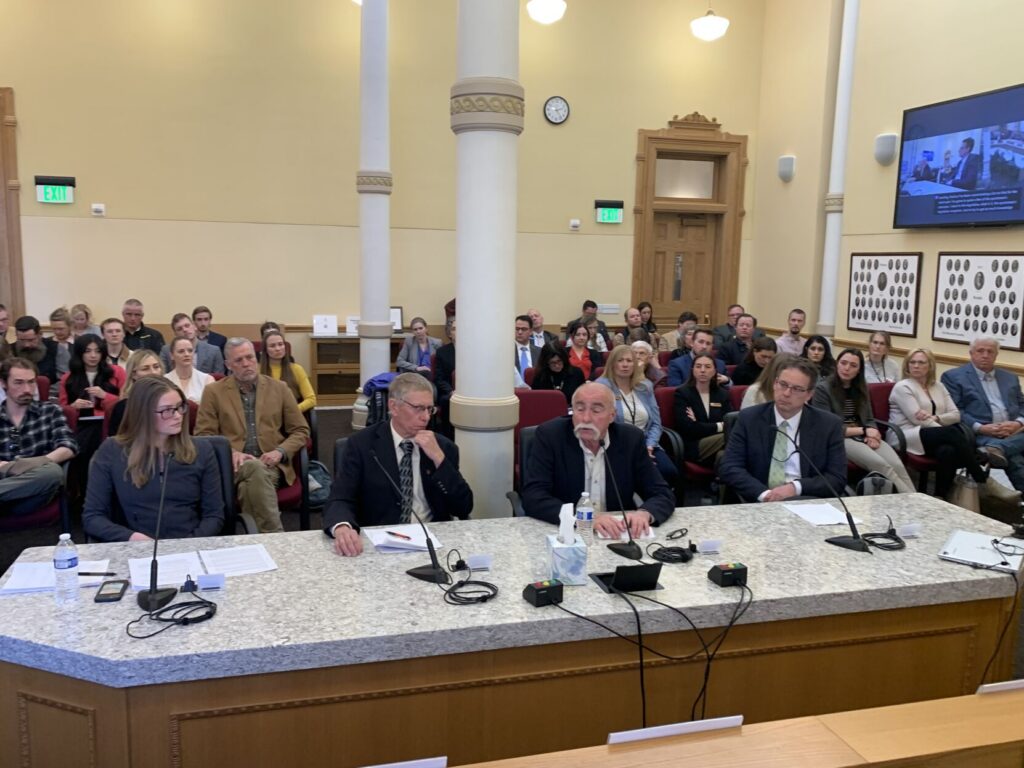
Governor’s wildlife commission picks face pushback ahead of Colorado Senate hearing
Marianne Goodland
marianne.goodland@coloradopolitics.com
Updated 11 hours ago
Colorado’s largest coalition of hunters, anglers, and wildlife conservation groups is urging state lawmakers to reject two of Gov. Jared Polis’ latest nominees to the Colorado Parks and Wildlife Commission, setting up a contentious confirmation hearing before the Senate Agriculture...
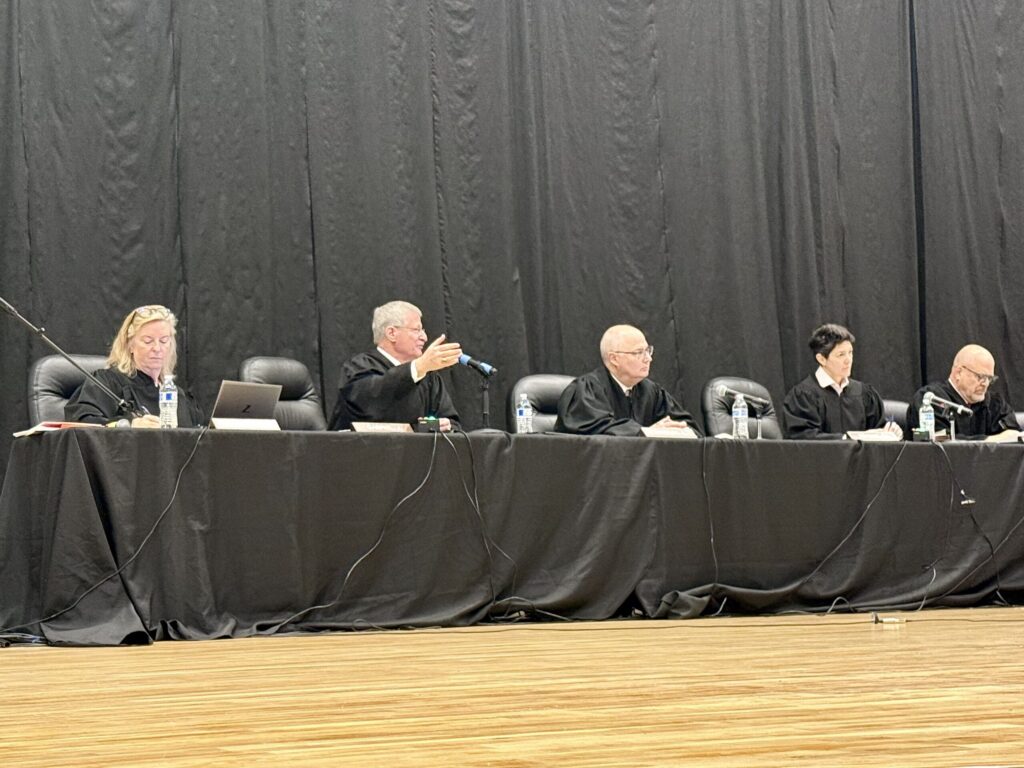
Colorado justices skeptical of snowboarder’s bid to revive injury lawsuit after signing new waiver
Michael Karlik
michael.karlik@coloradopolitics.com
Updated 12 hours ago
The Colorado Supreme Court seemed to agree on Thursday that a plaintiff is not entitled to continue his snowboarding injury lawsuit because he purchased another pass in the middle of litigation that released all past legal claims. “It says you’re...
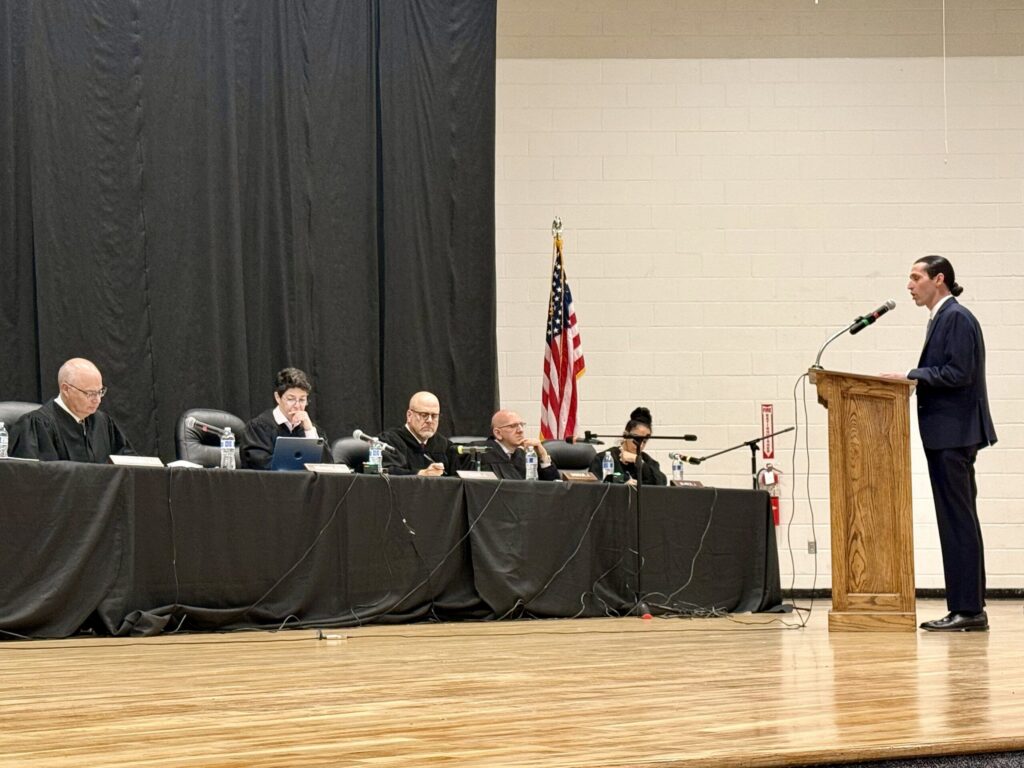
Colorado Supreme Court appears OK with revised ‘reasonable doubt’ instruction
Michael Karlik
michael.karlik@coloradopolitics.com
Updated 17 hours ago
The Colorado Supreme Court appeared largely comfortable on Thursday with the recently revised definition of “reasonable doubt” that is now part of the template jury instructions for criminal cases. To date, multiple Court of Appeals decisions have endorsed the constitutionality...
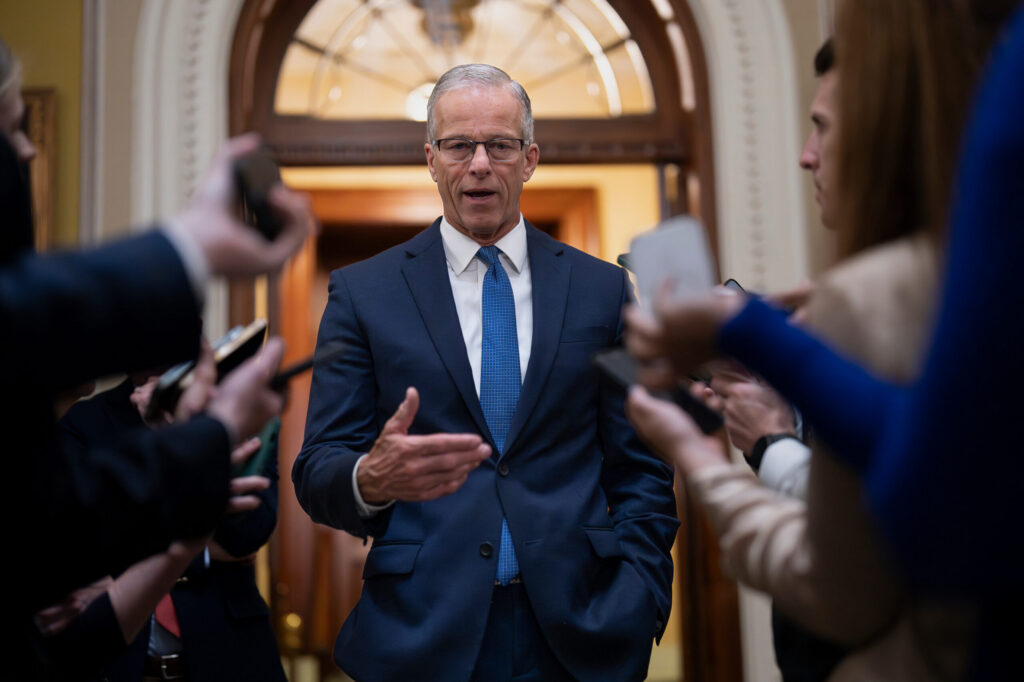
Senate passes 10-day extension of federal surveillance powers without debate
Hailey Bullis, Washington Examiner
hailey.bullis.washington.examiner@gazetteedit.wpenginepowered.com
Updated 13 hours ago
The Senate unanimously passed a 10-day extension of the federal government’s power to surveil individuals suspected of being national security threats without debate on Friday. Senate Majority Leader John Thune (R-SD) brought the measure to the floor during a brief...

Ex‑Bronco Montee Ball backs push at Colorado Capitol for stronger concussion protocols
Marissa Ventrelli
marissa.ventrelli@coloradopolitics.com
Updated 12 hours ago
Amid rising worries about the long‑term effects of head injuries in youth sports, a Colorado committee began reviewing legislation that would tighten concussion protocols and expand mental health awareness among coaches. Senate Bill 060 would require youth sports coaches to...
Colorado drivers, mad about rising gas prices, may turn midterm election ire on Republicans
Callie Patteson, Washington Examiner
callie.patteson.washington.examiner@gazetteedit.wpenginepowered.com
Updated 10 hours ago
WELD COUNTY, Colorado — The touch-and-go race for House control in the Nov. 3 midterm elections could very well be decided in places like this wind-swept stretch of Interstate 25. Specifically, at gas stations in this rapidly growing area north...
PREV
PREVIOUS

Appeals court rules police may forcibly draw blood from conscious drivers despite objection
Police may forcibly draw blood in certain circumstances over the objection of motorists, the state’s second-highest court determined, expanding upon a prior decision of the Colorado Supreme Court that found there is no constitutional right to refuse a chemical test. Under Colorado law, people who drive in the state have expressed consent to have their […]
10th Circuit directs Gunnison condo operators to comply with anti-discrimination agreement
After the federal government reported that the owners of a Gunnison housing complex refused to abide by the terms of an agreement meant to avoid further discrimination, the U.S. Court of Appeals for the 10th Circuit has now ordered them to comply. David Welch, John Welch and Ruth Welch signed an agreement in early 2020, […]