

Hemp beverage bill puts profits over Colorado kids | OPINION

By Rachel O’Bryan
The hemp THC beverage industry wants to sell its high-inducing drinks in Colorado everywhere that beer or wine is sold — including stores and restaurants near schools. This self-serving bill, Senate Bill 164, would blow Colorado’s regulated marijuana system wide open.
For the past 12 years, marijuana sales to persons 21 years and older occurred in age-restricted dispensaries that checked identifications at the door. Many local governments voted not to allow marijuana sales at all, and others enacted distance restrictions to keep these stores up to 1,000 feet away from schools, daycare centers, recreation centers, and other places where children are present.
The intoxicating hemp industry, which has been operating nationally by exploiting a loophole in the 2018 Federal Farm Bill, quickly developed ways to convert non-intoxicating cannabinoids present in hemp into mood-altering THC products. Hemp-derived THC is psychoactive, just like marijuana-derived THC.
Hemp-derived THC products, including beverages, have been significantly restrained in Colorado. In 2023, the legislature put limits on THC potency in hemp products to ensure intoxicating THC products are only sold in regulated marijuana stores.
Now, the hemp beverage industry has proposed a money-grabbing bill that would allow the sale of beverages containing up to 10 milligrams of THC per serving — the same potency per serving as adult-use marijuana products — in any location where liquor can now be sold (liquor stores, restaurants, and bars). Convenience and grocery stores, which can sell only beer and wine currently, could offer beverages with a lower THC dose, but still potent enough to produce a high (just like beer and wine, while not as strong as distilled spirits, are intoxicating).
Regardless of the strength, these hemp THC beverages contain the same psychoactive ingredient at the same potency as marijuana. These beverages are really just marijuana products. These hemp industry players are wolves in sheep’s clothing, representing to the public that their products are somehow less harmful.
Expanding the sale of these marijuana beverages could explode the number of locations where marijuana can be sold from approximately 700 dispensaries and hospitality locations now across the state to more than 13,000 locations (based on current liquor licenses listed by the Colorado Department of Revenue).
This bill will bring THC beverage sales into communities that have chosen not to allow commercial sales of marijuana unless those local governments actively opt out of such sales through ordinance or ballot measure. And they have to act fast, only a measure in this November’s general elections will be timely to stop sales.
Many local marijuana regulations include distance restrictions, separating dispensaries from places where children congregate. This added protection originated in the fact that, despite Amendment 64’s passage in 2012, marijuana is still federally illegal, and there is still a federal drug-free school zones law that prohibits this drug within 1,000 feet of any public or private elementary, vocational or secondary school, college, university, or playground.
But many liquor-licensed establishments are located quite close to schools in Colorado, and even welcome children inside, like grocery and convenience stores and restaurants. This bill would allow the THC beverage industry to blatantly thumb their nose at a federal law meant to protect kids.
Marijuana sales and consumption around children will continue to normalize the use of marijuana and lower the perception of harm in the eyes of youth.
Research shows that young people who live in neighborhoods with more THC sales outlets and storefront signage use marijuana more frequently and have a more positive view of the drug than their peers in other neighborhoods. This is especially troubling because science shows that THC can be harmful to the developing brain.
When it comes to marijuana commercialization, Colorado has been a slow-boiling pot for 14 years. The state went from just store sales to allowing delivery, then social consumption. Also introduced this legislative session is a bill allowing for temporary marijuana festivals at events like a county or state fair. Every year brings another bill aimed at expanding sales of this addictive drug, attempting to upend hard-won regulatory frameworks designed to protect kids.
Coloradans may have jumped willingly into this pot 14 years ago, but the industry has kept turning up the heat on us, hoping we have become desensitized to the danger presented by the widespread sale of marijuana in the state. The industry will never be satisfied if there’s more money to be made.
The relentless efforts from the deep pockets of the THC industries means one thing for kids and that’s convincing them that THC isn’t harmful when in fact the evidence is more damning than ever.
It will only stop when we decide to jump out of the pot. Let’s make this the year, and this the bill, that provides the push we need to say enough is enough.
Rachel O’Bryan is co-founder of One Chance to Grow Up, a nonpartisan nonprofit organization that safeguards kids from today’s marijuana through community education and groundbreaking policy.


Colorado can’t forget the lessons of COVID | Jon Caldara
Jon Caldara
jon-caldara@coloradopolitics.com
Updated 3 days ago
We are finally getting a clearer picture of what happened during COVID. Not because the people who locked us up, masked our faces and forced unproven chemicals into our bodies have suddenly become transparent, but because Anthony Fauci’s COVID-era diary...

Historic preservation supporters organize to oppose Trump changes | Bob Loevy
Tom Cronin
tom-cronin@coloradopolitics.com
Updated 2 days ago
Historic preservation organizations in Colorado Springs, the remainder of Colorado and across the nation are organizing to resist a recent effort to relax and weaken historic preservation laws in the United States. In Washington, D.C., the Advisory Council on Historic...

At conservative summit, Colorado Republican leaders concede Democrats’ election edge
Marissa Ventrelli
marissa.ventrelli@coloradopolitics.com
Updated 1 day ago
Four Republican state lawmakers told attendees at a gathering of conservative leaders on Friday they doubt their party can win statewide races, noting that Colorado’s electorate has been shifting toward Democrats but adding they see an opening in several pockets....
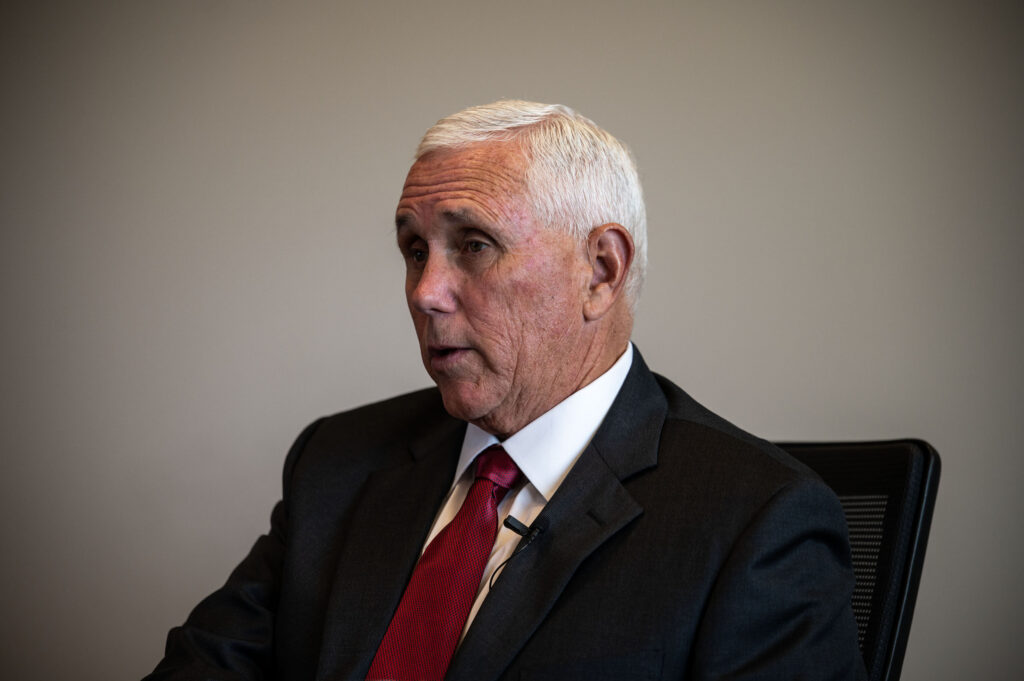
Q&A with Mike Pence | Former vice president says GOP’s populist turn from conservatism isn’t permanent
Ernest Luning
ernest.luning@coloradopolitics.com
Updated 1 day ago
Former Vice President Mike Pence says he’s concerned that the Republican Party has taken a populist turn away from bedrock conservative principles during President Donald Trump’s second term, but he believes the party will return to its roots when Trump...

Republican Victor Marx taps George Markert as his lieutenant governor pick in Colorado’s gubernatorial race
Ernest Luning
ernest.luning@coloradopolitics.com
Updated 2 days ago
Colorado Republican gubernatorial nominee Victor Marx named George Markert, a retired Marine colonel, as his running mate for lieutenant governor Friday morning, saying the former U.S. Senate candidate will bring “exceptional character, proven leadership and a lifetime of serving others”...

Pueblo mayor, council concoct Trumpian Texas Two-Step | Dennis Maes
Dennis Maes
dennis-maes@coloradopolitics.com
Updated 3 days ago
Several weeks ago, an article was published positing Pueblo Mayor Heather Graham is a disciple of the calamitous Donald Trump school of governance — specifically as it related to questionable ethical practices and the misuse of public funds. Recently, Graham...

Colorado can’t afford to turn its back on proven public safety technology | GUEST COLUMN
Colorado Politics
colorado-politics@coloradopolitics.com
Updated 3 days ago
By Samuel G. Michael I recently saw a report that said Colorado is leading the way in artificial intelligence adoption for businesses. Across our state, more business owners and employees than ever before use AI for their everyday functions —...

Colorado lawmakers start crafting strategy to manage $200 million in federal rural health funds
Marissa Ventrelli
marissa.ventrelli@coloradopolitics.com
Updated 3 hours ago
Colorado officials have begun to strategize as the state is set to receive hundreds of millions of dollars from a federal program meant to boost rural health. Cristen Bates, deputy Medicaid director at the Department of Health Care Policy and...

Democrat Jessica Killin’s internal poll shows dead heat with U.S. Rep. Jeff Crank in Colorado’s 5th CD
Ernest Luning
ernest.luning@coloradopolitics.com
Updated 3 days ago
Jessica Killin, the Democratic nominee in Colorado’s 5th Congressional District, is in a statistical tie with Republican U.S. Rep. Jeff Crank, according to an internal poll released this week by Killin’s campaign. The poll of likely general election voters, conducted...

Colorado’s 72-hour social media warrant law takes effect Aug. 12
Marissa Ventrelli
marissa.ventrelli@coloradopolitics.com
Updated 3 days ago
A law requiring social media platforms to respond to search warrants within 72 hours goes into effect on Aug. 12. Senate Bill 011 also requires platforms to create a staffed hotline for Colorado law enforcement agencies to contact regarding pending...
PREV
PREVIOUS

Nebraska Sandhill ranching wrecked by Morrill Fire | Rachel Gabel
The Nebraska Sandhills are made for cattle grazing, and that is, in large part, what keeps the area thriving and supports the small communities throughout western Nebraska. In Arthur County, most operations are cow-calf producers with a few operators who run yearlings on grass during the summer. On a good year, the grass is dense […]

When former friends conclude we are the problem, we have a problem | Miller Hudson
April arrived in Colorado this year displaying the Janus-like dual visages that characterize MAGA America. The ecstatic, giddy enthusiasm of the Artemis crew which just circled the moon before returning to a near perfect splashdown off San Diego reminded each of us why we are so proud of our country — its daring, its commitment […]