

Colorado drivers, mad about rising gas prices, may turn midterm election ire on Republicans
WELD COUNTY, Colorado — The touch-and-go race for House control in the Nov. 3 midterm elections could very well be decided in places like this wind-swept stretch of Interstate 25. Specifically, at gas stations in this rapidly growing area north of Denver, which is evolving from rural, agricultural roots into a key commuter region.
In Weld County, along the Wyoming and Nebraska state lines, spiking gas prices are causing sticker shock among drivers. Six-plus months out from Election Day, that puts increased pressure on Republicans, as Democrats claw for the three seats — and in their view, hopefully many more — needed to win the House majority.
The highway, part of Colorado’s primary north-south artery, sits squarely in an uber-competitive House district crucial to both parties’ House majority plans. To be sure, surging gasoline prices aren’t the only issue that will decide whether freshman Rep. Gabe Evans, R-CO, wins a second term in the 8th Congressional District. The congressman’s campaign website touts his fight “to secure the border, strengthen public safety, and make life more affordable for hardworking Coloradans.”
But it’s that last agenda item that has become so politically tricky, as gas prices are the ultimate pocketbook issue. And as the war in Iran continues, even President Donald Trump recently admitted that soaring gas prices could go “a little bit higher” before the midterm elections.
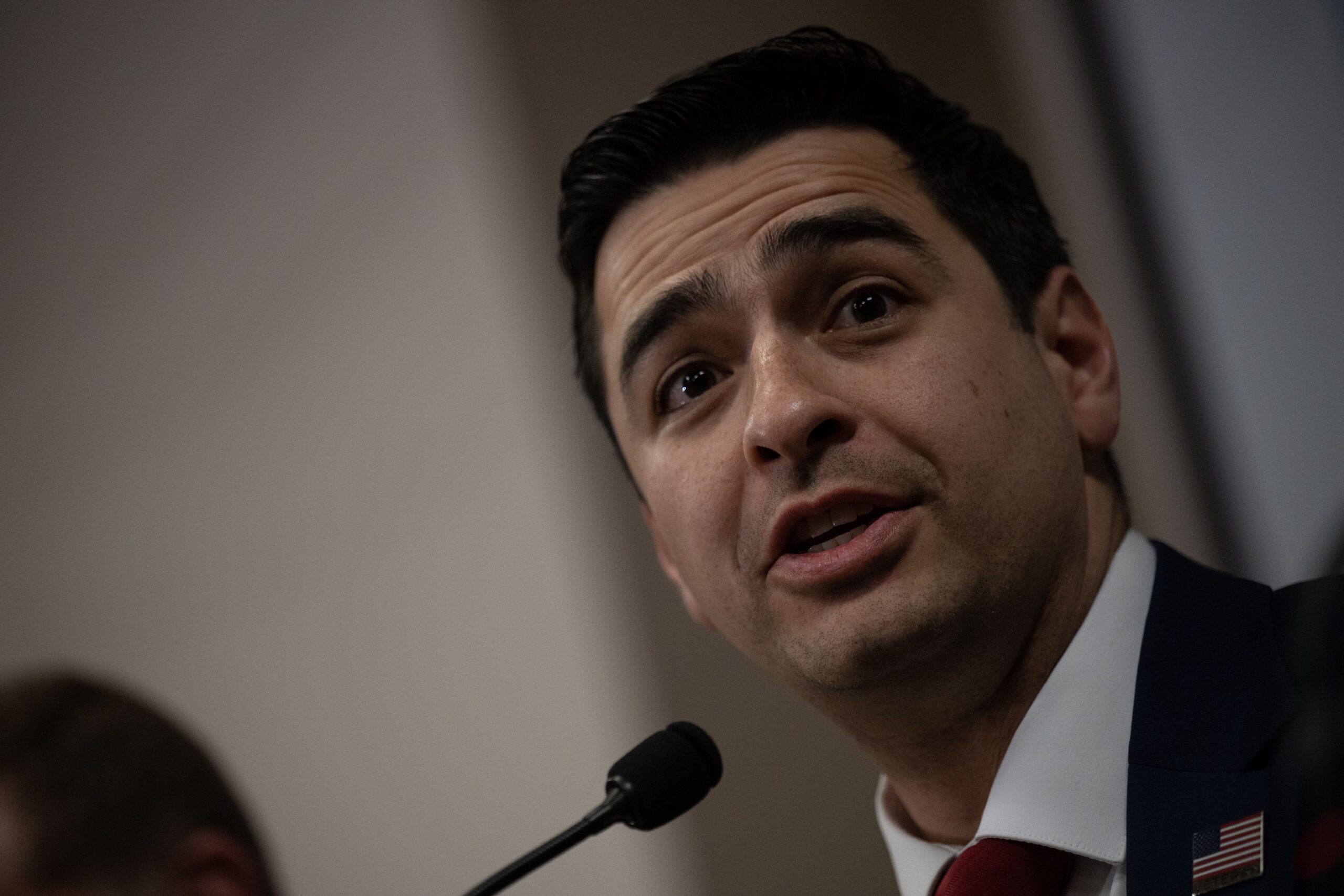
Drivers spending $30 or more more than usual when pumping gas has become a major political headache for Evans in this swing district. Where, in 2024, voters backed Trump over Democratic rival Kamala Harris 49.6% to 47.8% while then-state Rep. Evans beat an incumbent freshman House Democrat.
“I’m just, unfortunately, just paying more for gas, for day to day. It sucks,” Austin M., a 28-year-old from Loveland, Colorado, told the Washington Examiner while filling his truck with gas.
Wallet strain
Gas price shocks date back to early March, when Iran effectively shut down the Strait of Hormuz, blocking thousands of tankers from entering or exiting the Persian Gulf. That’s preventing tens of millions of barrels of crude and other products from passing through each day.
Before the war began, roughly 20 million barrels passed through the Middle East waterway each day, equivalent to around one-fifth of global demand.
Crude oil is the largest component of the retail price of gasoline, making up around 50% of the final price. As a result, major disruptions to global crude supply chains have sent shockwaves through national gasoline prices. Prices at the pump have shot above $4 a gallon in just one month.
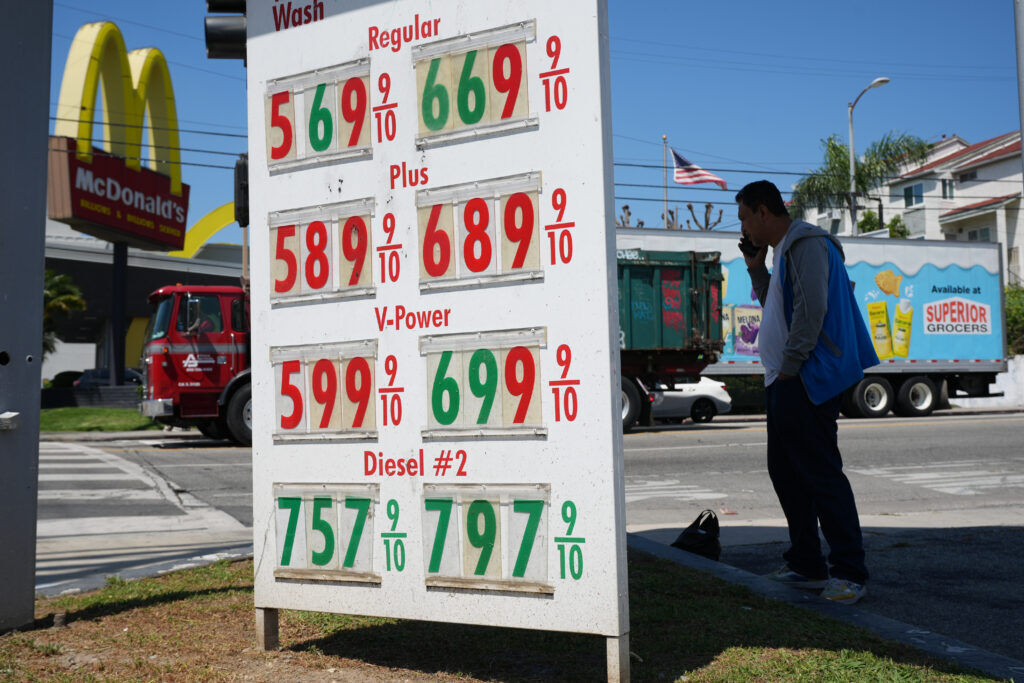
In Colorado, the average cost of gasoline was around $3.77 per gallon as of April 6. While this is below the national average of $4.12, it is still a more than $1 hike compared to early February, when the state’s average remained around $2.72 per gallon.
The sharp price hikes are straining drivers’ wallets, causing some to rethink how often they hit the roads and even completely change their lifestyles.
Austin M., the motorist from Loveland, Colorado, about 46 miles north of Denver, pointed out that gas prices in the state are not as drastic as those seen in states such as California. The Golden State average sat just below $6 per gallon in early April. However, higher fuel costs were a significant reason he decided to shut down his trucking company in recent weeks.
At another gas station off Interstate 25, Kristy Hutson, 41, from Aurora, Colorado, told the Washington Examiner she is paying more than $60 to fill up her work and personal vehicles.
Hutson, who works for a construction services company, said that it previously cost $70 to fill up her work truck’s tank every day. It’s now around $110. It also costs Hutson roughly $70 to fill her personal car, up from around $40.
Higher gasoline prices can be directly traced to major oil disruptions in the Middle East, brought on by the war in Iran.
As of April 6, the average price of gas nationwide is now at $4.119 per gallon. The average price of diesel also sat at $5.618, just 20 cents below the record set in 2022, which was driven by post-COVID-19 demand and Russia’s invasion of Ukraine.
Western states such as Colorado have minimal regional public transportation systems, forcing residents to rely on their own vehicles to get to and from work, doctors’ appointments, grocery stores, and more. While motorists feel the pressure from higher prices, a growing consensus says there is not much they can do to alleviate the pain as Americans continue to live their lives.
“People are just doing the basic behaviors right now,” Patrick De Haan, head of petroleum analysis at GasBuddy, told the Washington Examiner in early April.
“Nobody’s really taking vacations or doing road trips because it’s not warm enough yet. So there’s not an opportunity to reduce demand right now like there might be in summer,” he said.
Until consumption slows, De Haan warned that prices will keep rising, with gasoline potentially reaching 2022 levels by the end of the month.
A tight race
It’s here, in Colorado’s 8th Congressional District, where soaring gas prices could cost House Republicans a crucial seat in their bid to hold the majority. Evans, 39, has demonstrated serious political chops since winning a state House seat in 2022. Two years later, he flipped the district red, even as then-Vice President Harris easily beat Trump in Colorado, 54% to 43%.
Evans’s 2026 reelection bid is expected to be a tight race no matter who the Democrats nominate. Evans in 2024 beat then-Democratic Rep. Yadira Caraveo 49% to 48.2%, a difference of 2,449 votes out of 333,316 cast.
The 2026 Democratic field is getting crowded, with state Rep. Manny Rutinel and former state Rep. Shannon Bird leading in fundraising for the 8th District so far. Though first-time candidate and Army veteran Evan Munsing believes he has a real shot at unseating Evans.
Munsing, who lives in Thornton, just outside Denver, was the first candidate to qualify for the Democratic primary in February after submitting sufficient petition signatures.
During an interview with the Washington Examiner at the end of March in Thornton, Colorado, Munsing explained that as a fellow military veteran, he can go toe-to-toe with Evans. Before running for office, Evans spent 12 years “in the U.S. Army and Colorado Army National Guard as a UH-60 Black Hawk helicopter pilot and company commander,” per his campaign website. “He completed a combat deployment to the Middle East and responded to wildfires and search and rescues throughout Colorado.”
Munsing explained that there is discontent among independent and conservative residents in the district over Trump leading the United States into a war with Iran, an operation that has been supported by Evans.
Evans, in a phone interview, said he’s confident about winning reelection. Voters know about his record and public service, which includes over a decade as a police officer in Arvada, a 125,000-person city northwest of downtown Denver.
As for rising gas prices, he referenced the record-high national average that occurred during former President Joe Biden’s single term. In June 2022, prices reached over $5 per gallon. By August, however, prices had fallen below $4.
“The only reason people know the gas prices are back to Biden-era levels is because Republican policies make energy more affordable,” Evans told the Washington Examiner at the end of March.
“For the last three-and-a-half weeks or so, with the events going on over in Iran, gas prices have spiked,” he added. “But we also know that the situation in the Middle East is going to get wrapped up here soon. And so as soon as that situation is resolved, I think again you’re going to see gas prices go right down.”
Evans did not offer a specific timeline for how long it could take for prices to tick back down. But added, “by election time, gas prices are going be right back to where people want to see them.”
Shaping voter behaviors
How significantly higher gasoline prices seen this spring will influence the November election results remains an open question, though research suggests there will be at least some small impact.
A 2022 study by economists from Harvard University, the Financial Markets Group, and the World Bank found a correlation between higher oil prices and voters’ intentions to vote for an incumbent party.
The study found that a roughly 1% increase in oil prices was associated with a 0.4 percentage point reduction in support for the incumbent party. This might seem minuscule; however, a margin that small could still have a substantial effect in a race like the 8th Congressional District.
Many voters in the district and surrounding areas have already confirmed that surging prices will affect how they cast their ballots in a few months.
“Of course, absolutely,” said 27-year-old Cynthia L. from Greeley, Colorado.
“I think [gasoline is] like, one of the biggest things I spend my money on right now,” 22-year-old Ayla T., also from Greeley, told the Washington Examiner. “It’s really important to me because if I don’t have my car, I have no lifeline.”
Meanwhile, several self-proclaimed Trump supporters appear to hold a much more accepting perspective regarding the high prices.
“I’m not going to be happy if they escalate,” Christina Forman, a truck driver who lives in Boulder County, said. “It’s not going to change the way I vote, absolutely not. It might change my day-to-day routine.”
Forman told the Washington Examiner that the high prices were “absolutely” worth it for Trump’s overall agenda, saying she would pay “double.”
“I understand that our fuel prices have escalated. But guess what didn’t escalate. My interest rate on my mortgage went down 2.5% this year,” she said.
Though as gasoline prices tick up, continuing to influence the costs of other goods and services, not all Trump voters agree.
From a gas station along U.S. Route 34, Ricky Castro, a 35-year-old Trump voter who lives in Denver, said he likely spends around $1,200 a month on gasoline as he works as a medical courier.
Castro said he isn’t happy with Trump, wasn’t happy with Biden, and remains dissatisfied with both Republicans and Democrats, as both parties struggle to come to any agreement on how to address the high cost of living.
“The question that people should ask right now is, ‘What is it that our government is doing for us to better the economy?’ Because right now, it doesn’t matter who’s in office, it keeps getting worse and worse,” he said.
Callie Patteson (@CalliePatteson) is an energy and environment reporter for the Washington Examiner.

Democrat John Hickenlooper hauls in $1.3 million in 2nd quarter in Colorado’s U.S. Senate race
Ernest Luning
ernest.luning@coloradopolitics.com
Updated 4 days ago
U.S. Sen. John Hickenlooper’s reelection campaign raised just over $1.3 million in the year’s second quarter and finished the period with $2 million in the bank, leaving the first-term Democrat with nearly 80 times as much cash on hand as...
Forward Party nominee for Colorado’s U.S. Senate seat puts $1.1 million into his campaign
Ernest Luning
ernest.luning@coloradopolitics.com
Updated 1 week ago
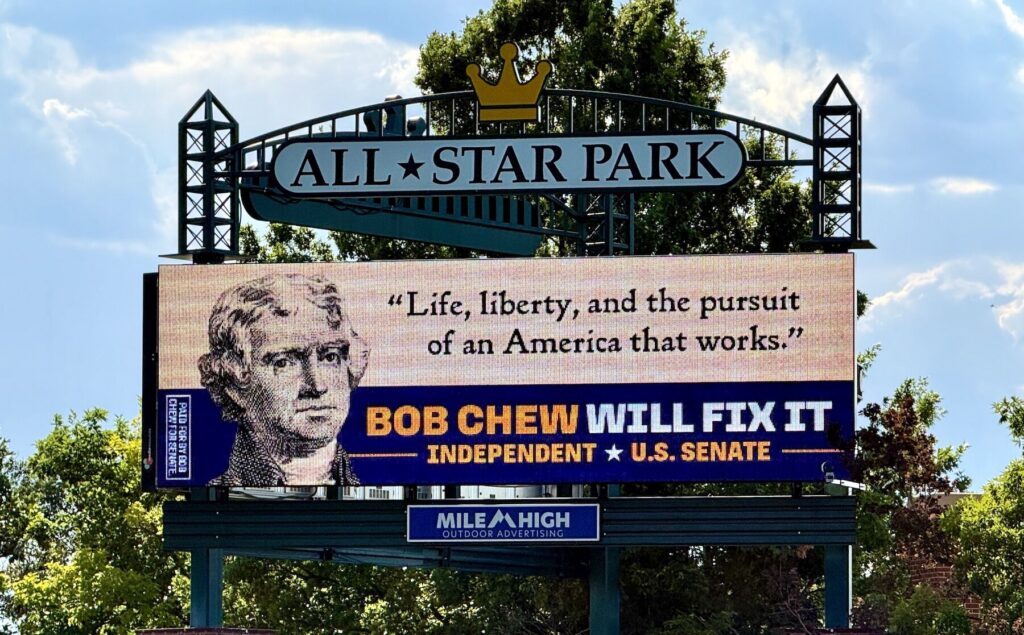
Bob Chew, the Colorado Forward Party nominee for the seat held by Democratic U.S. Sen. John Hickenlooper, plans to report donating $1.1 million to his campaign and raising an additional $20,000 in the most recent quarter, his campaign told Colorado...

Turnout surges and winning margins stretch as final returns post in Colorado’s 2026 primary
Ernest Luning
ernest.luning@coloradopolitics.com
Updated 2 weeks ago
County clerks finished posting unofficial results in Colorado’s primary election on Friday, drawing a line under a series of nominating contests that witnessed upsets, surprises and outright shockers by the time the votes were tallied. While the outcome changed in...
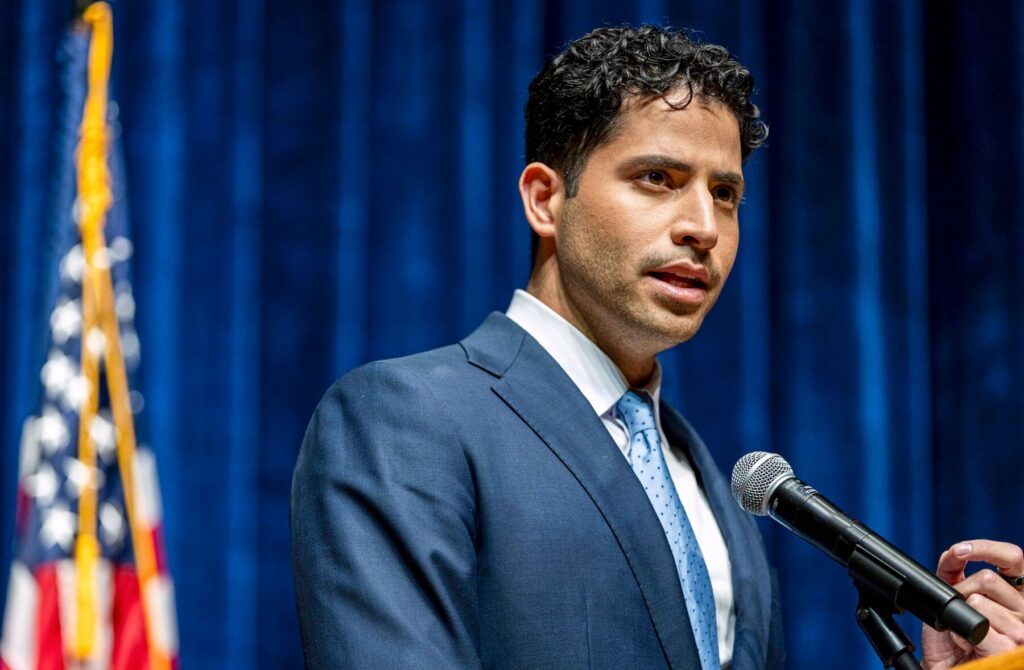
Gabe Evans challenger Manny Rutinel makes House Democrats’ ‘Red to Blue’ program in Colorado’s 8th CD
Ernest Luning
ernest.luning@coloradopolitics.com
Updated 1 week ago
The House Democrats’ main campaign arm on July 9 added state Rep. Manny Rutinel to its “Red to Blue” program, saying the party’s freshly minted nominee in Colorado’s battleground 8th Congressional District is primed to flip the seat held by...
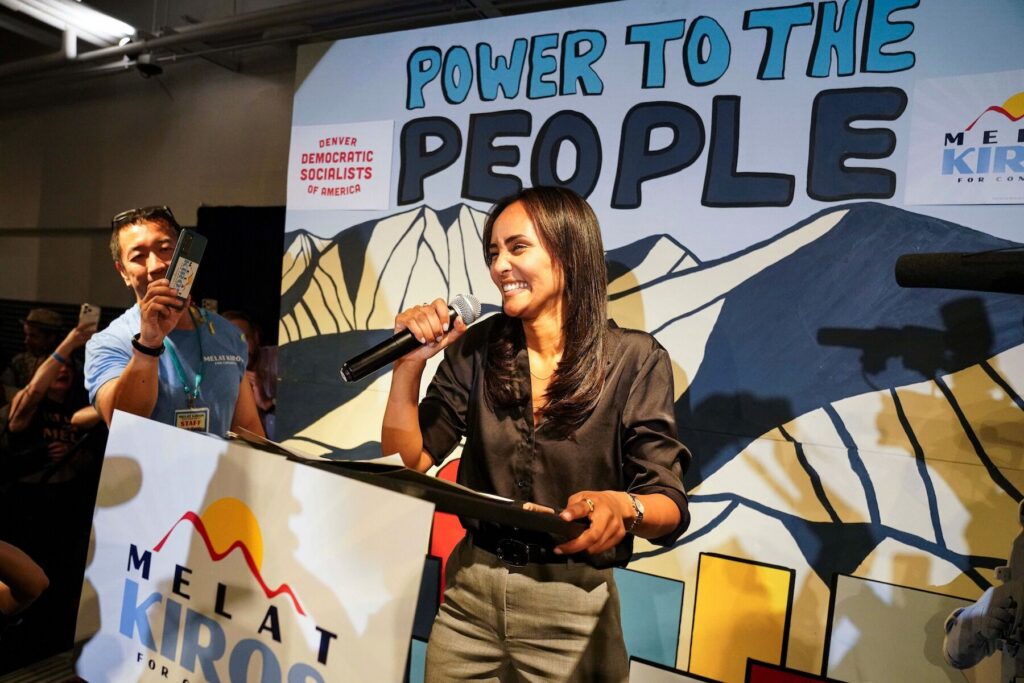
How Melat Kiros pulled Democratic Party left in upset win over Diana DeGette
Ernest Luning
ernest.luning@coloradopolitics.com
Updated 3 weeks ago
“It’s time for change,” Democratic congressional candidate Melat Kiros, a political newcomer and self-described democratic socialist, said in her campaign’s TV ad. On Tuesday night, primary voters in Denver agreed, giving the nomination to the 29-year-old, while at the same...

Melat Kiros shocks 15-term incumbent Diana DeGette, winning Colorado’s 1st CD Democratic primary
Ernest Luning
ernest.luning@coloradopolitics.com
Updated 3 weeks ago
In the equivalent of a political earthquake, 29-year-old Democratic socialist Melat Kiros defeated 15-term U.S. Rep. Diana DeGette in Colorado’s Denver-based 1st Congressional District primary, according to unofficial election results Tuesday night. The Associated Press called the race at 10:03...

Dwayne Romero wins Democratic primary, will face Republican Jeff Hurd in Colorado’s 3rd CD
Ernest Luning
ernest.luning@coloradopolitics.com
Updated 3 weeks ago
Democrat Dwayne Romero has defeated challenger Alex Kelloff in the primary in Colorado’s 3rd Congressional District, where Republican U.S. Rep. Jeff Hurd fended off a challenge from a former state lawmaker, according to The Associated Press. In returns posted at...

Democrat Jessica Killin claims victory in Colorado’s 5th Congressional District primary
Ernest Luning
ernest.luning@coloradopolitics.com
Updated 3 weeks ago
Jessica Killin walked out to the song American Girl in a bright red dress to claim victory in the democratic primary race for Congressional District 5 at a hotel in downtown Colorado Springs on Election Day. She beat her fellow...

Phil Weiser defeats Michael Bennet in Colorado’s Democratic gubernatorial primary
Ernest Luning
ernest.luning@coloradopolitics.com
Updated 3 weeks ago
Attorney General Phil Weiser took an early lead over three-term U.S. Sen. Michael Bennet in Colorado’s Democratic gubernatorial primary and held onto it, defeating the state’s longest-serving senator in more than 50 years to win a nomination that’s likely to...
Crank challenger Jessica Killin signs on to new centrist Democratic group’s ‘Promise to America’
Ernest Luning
ernest.luning@coloradopolitics.com
Updated 3 weeks ago
Jessica Killin, one of the Democrats running in Tuesday’s primary for the chance to challenge U.S. Rep. Jeff Crank in Colorado’s 5th Congressional District, joined with more than a dozen incumbent Democratic lawmakers and candidates this week signing on to...
PREV
PREVIOUS

'Right to repair' makes sense for Colorado consumers, but critical infrastructure is different | OPINION
By Chris Bresee For many consumer products, the case for “right to repair” is easy to understand. If a phone, tractor, or household device breaks, people want fair access to the tools, parts and information needed to fix it. But critical infrastructure is different. As Colorado lawmakers consider Senate Bill 26-090, the goal should be […]

Ex‑Bronco Montee Ball backs push at Colorado Capitol for stronger concussion protocols
Amid rising worries about the long‑term effects of head injuries in youth sports, a Colorado committee began reviewing legislation that would tighten concussion protocols and expand mental health awareness among coaches. Senate Bill 060 would require youth sports coaches to complete training on the mental health impacts of concussions. It would also require them to […]