

Democrats want Colorado colleges to provide abortion medication
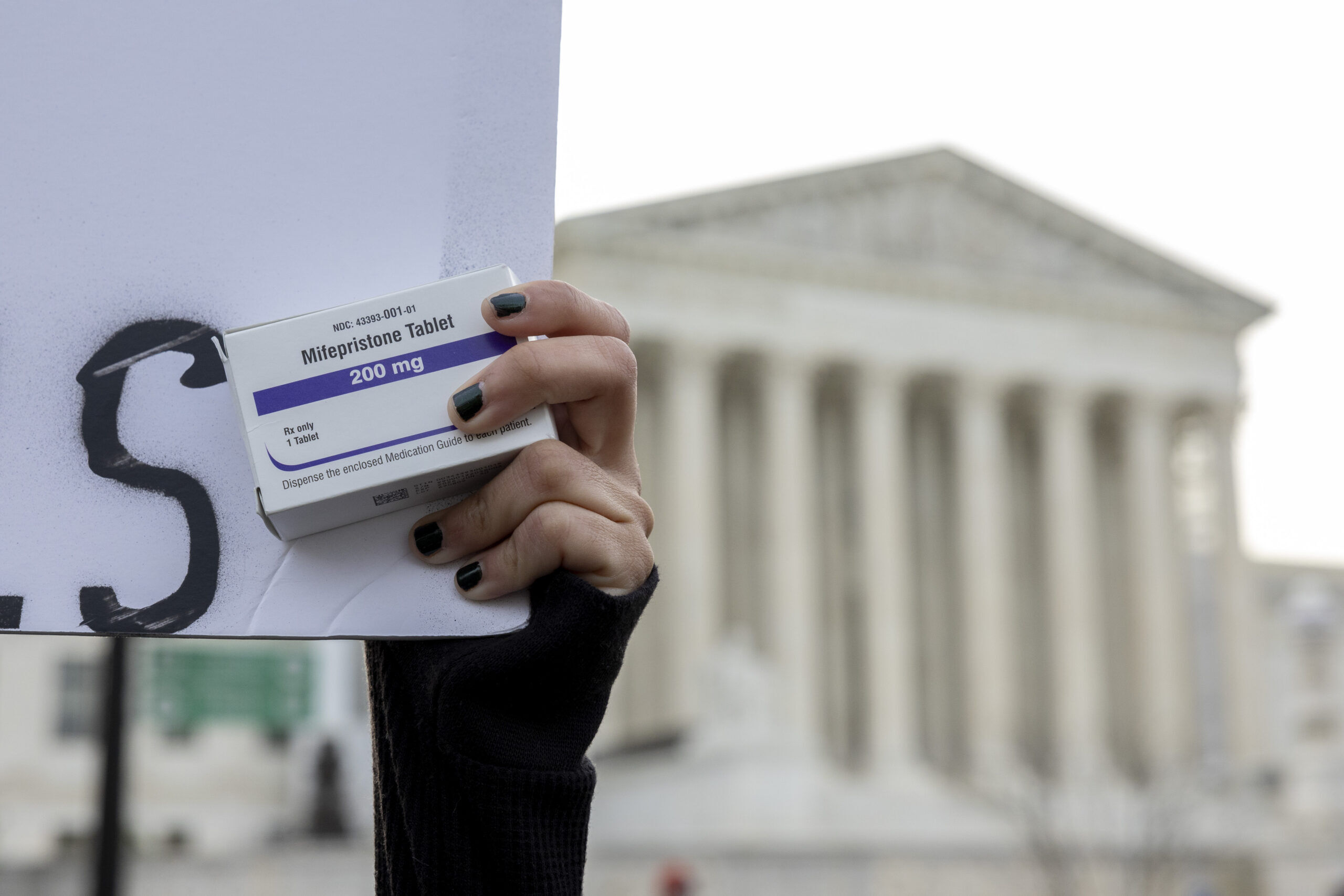
A bill proposing to require Colorado colleges and universities to provide abortion medication services cleared a legislative committee on Thursday.
Advocates said the measure — which exempts religious-based institutions but applies to public, private, and community colleges — will improve access to abortion, while opponents argue it would force educational institutions to take a side in the debate.
House Bill 1355, sponsored by Reps. Lorena Garcia, D-Adams County, and Kenny Nguyen, D-Broomfield, passed out of the House Education Committee.
In pushing the bill, sponsors cited Amendment 79, a constitutional amendment enshrining the right to abortion, which voters approved in 2024.
Nguyen said states like California, New York, and Illinois have all passed similar laws requiring abortion medication to be made available at college health centers.
“I believe that reproductive rights are truly under attack in the federal government, and this continues to codify laws in the state of Colorado to protect access to abortion,” he said.
Critics of the measure argued it should also require campus health centers to provide pregnant students with information about adoption and the potential negative side effects associated with abortion medication.
Colleen Enos of Christian Home Educators of Colorado said a study found that about 10% of women who take mifepristone, the most common form of abortion medication, experience “serious adverse effects.”
The bill would force universities to “destroy preborn lives and womens’ health,” she said.
Nathan Fisher of the Colorado Catholic Conference said the bill ultimately hurts young women “who may be in distressing circumstances” by providing them with a medication that “will likely cause long-lasting harm” and “lead to the destruction of more human life in Colorado.”
Sponsors said the bill will create more equality; Fisher argued it would achieve the opposite.
“While House Bill 1335 is intended to support young women in college, it is hurting them,” he said. “Where is the support for students who may regret this decision or who are being coerced into it? Instead of providing life-affirming and women-supporting options, HB 1335 focuses entirely on ending the life of a preborn child to the detriment of a young mother.”
College students from around the state, including several who have had abortions themselves, said campus health centers already provide essential services to students who may not have the time or transportation to visit an off-campus clinic — but that should include abortion.
Paola Ordonez Sanchez, a senior at Colorado State University, said she had an abortion last fall after an unintended pregnancy.
Coordinating her school schedule and finding transportation to an off-campus clinic was “incredibly difficult,” especially on top of the emotional stress she was dealing with at the time, Rojas said.
“If abortion medication had been accessible through a campus health center, it would have significantly reduced the logistical, financial, and emotional burden that I navigated during such a vulnerable moment,” she said. “College campuses in our state already provide essential health care services because they recognize that students face unique challenges when accessing care off-campus, and reproductive health care should be no different.”
Stephanie, a student at the University of Colorado, said her campus health center was a lifeline during her freshman year, when she was new to the area and didn’t have a car to get around.
“Because I was isolated from what was familiar, being able to access health care on campus eased a lot of anxiety,” she said. “It is the most convenient way to access the care I need.”
Campus health centers serve as pharmacies, drug stores, and care providers all in one convenient location, and students often build trusting relationships with providers during their entire college careers, the students said.
“As a student taking a full credit load, working two part-time jobs, involved in clubs, and with many career aspirations, pregnancy would derail my life,” Stephanie said. “If I were to get pregnant, I would decide to get an abortion in order to continue my education as planned. All college students in Colorado deserve to have that option, without transportation, financial or educational barriers.”
The bill passed on an 8-5 party-line vote, with Democrats voting in favor and Republicans voting in opposition.
While abortion is a moral issue, the question of whether or not to pass HB 1335 is not about morality because it is a constitutional right in Colorado, Garcia said.
“Given the fact that now we have a constitutional right to abortion care in this state, it’s imperative that we make sure that all of our institutions ensure that that right exists,” she said.
Several Republicans on the committee expressed confusion over the bill’s fiscal note, which said it would cost the state nothing.
Rep. Anthony Hartsook, R-Parker, said that, when California passed a similar law, it cost the state $6 million. Garcia said the bill would not impose any cost on the state because students would be the ones paying for the medication.
Rep. Lori Garcia Sander, R-Eaton, called the bill an unfunded mandate and argued that students could just purchase abortion medication online if they want it.
“I’m not sure why we need a bill for this when there is so much access,” she said.
The bill’s next stop is a debate by the full House.

Who’s spending in Colorado to get your vote?
Marianne Goodland
marianne.goodland@coloradopolitics.com
Updated 11 hours ago
Groups that raise unlimited amounts of money have spent about $20 million in May and June to try and influence Colorado voters’ choices in the upcoming June 30 primaries. By law, these groups cannot coordinate with the candidates they support....

Tina Peters tells supporters to ‘stand up and fight back’ at Castle Rock event
Marissa Ventrelli
marissa.ventrelli@coloradopolitics.com
Updated 14 hours ago
Tina Peters, the former Mesa County clerk recently released from prison, warned supporters that what happened to her could happen to them, too, if they did not “stand up and fight back” at an event at the Douglas County Fairgrounds....
Will one unqualified AG replace another? | George Brauchler
George Brauchler
george-brauchler@gazette.com
Updated 2 days ago
Colorado Democrats are poised to nominate another attorney general candidate with de minimis relevant credentials or experience. Far from disqualifying, Colorado’s recent voting history mirrors that of America in favoring biography over experience, partisanship over policy, and emphasizing what divides...
Pueblo’s mayor keeps stirring the pot | Dennis Maes
Dennis Maes
dennis-maes@coloradopolitics.com
Updated 2 days ago
Pueblo Mayor, Heather Graham, has clearly proven to be a disciple of the Donald Trump school of governance. And, like her mentor, she is experiencing the same catastrophic results. The format is to ignore what the electorate approved and expects...

The perils of Colorado’s unregulated abortions | GUEST COLUMN
Colorado Politics
colorado-politics@coloradopolitics.com
Updated 2 days ago
By Tom Perille How did the movement which grew out of a genuine concern for the health and safety of women become the same movement that undermines women’s health and safety today? Despite good intentions, it was a long route...

Colorado to participate in Great American State Fair in Washington
Marissa Ventrelli
marissa.ventrelli@coloradopolitics.com
Updated 18 hours ago
Visitors to Washington, D.C. for the country’s 250th anniversary will have the opportunity to learn about Colorado’s natural beauty and culture during the Great American State Fair, a World’s Fair-style event that opened Thursday at the National Mall. While all...

Phil Weiser leading Michael Bennet in Colorado’s Democratic gubernatorial primary, internal poll finds
Ernest Luning
ernest.luning@coloradopolitics.com
Updated 21 hours ago
Attorney General Phil Weiser holds a lead over U.S. Sen. Michael Bennet among likely voters less than a week before ballots are due in Colorado’s Democratic gubernatorial primary, according to a new poll released Thursday by a group backing Weiser....
Sans seniors, what does Colorado’s uninterested early turnout say about our disengaged electorate? | Paula Noonan
Paula Noonan
paula-noonan@coloradopolitics.com
Updated 3 days ago
This primary election is poorly attended. Evidence is in the numbers. About 10% of active registered voters are deciding this year’s primaries with seven days to go. If that number triples by June 30, only 30% of voters will decide...
Who gets to decide Colorado’s economic future? | GUEST COLUMN
Colorado Politics
colorado-politics@coloradopolitics.com
Updated 3 days ago
By Sarah Blackhurst Colorado’s prosperity depends on industries that grow our food, build our future and power our homes. But today, these sectors face an invisible threat from 5,000 miles away: the European Union’s Corporate Sustainability Due Diligence Directive (CS3D)....
Colorado’s ‘right to natural gas’ measure submits signatures to qualify for November ballot
Marissa Ventrelli
marissa.ventrelli@coloradopolitics.com
Updated 3 days ago
A natural-gas rights initiative backed by Advance Colorado is likely headed to the November ballot, triggering a parallel campaign by environmental groups seeking to impose new liabilities on oil and gas operators. Petitions for Initiative No. 177 were turned in...
PREV
PREVIOUS

Colorado lawmakers cut newer programs to close $1.2 billion budget shortfall
With Colorado facing a budget gap exceeding $1.2 billion, lawmakers are preparing to wind down or sharply reduce a slate of recently-created programs — from teacher training to wildfire mitigation — as they search for for savings across state government. While some of these newer programs will continue with reduced funding, others are being eliminated […]

Colorado justices, lawyers speak with rural students through outreach program
Members of the Colorado Supreme Court appeared before students from eight rural schools on April 16 to hear a pair of cases, field questions, and mark the first time the state’s newest justice participated in the long-running program. “I had such a unique opportunity to get to work with so many people in my career. […]