

Colorado justices, lawyers speak with rural students through outreach program
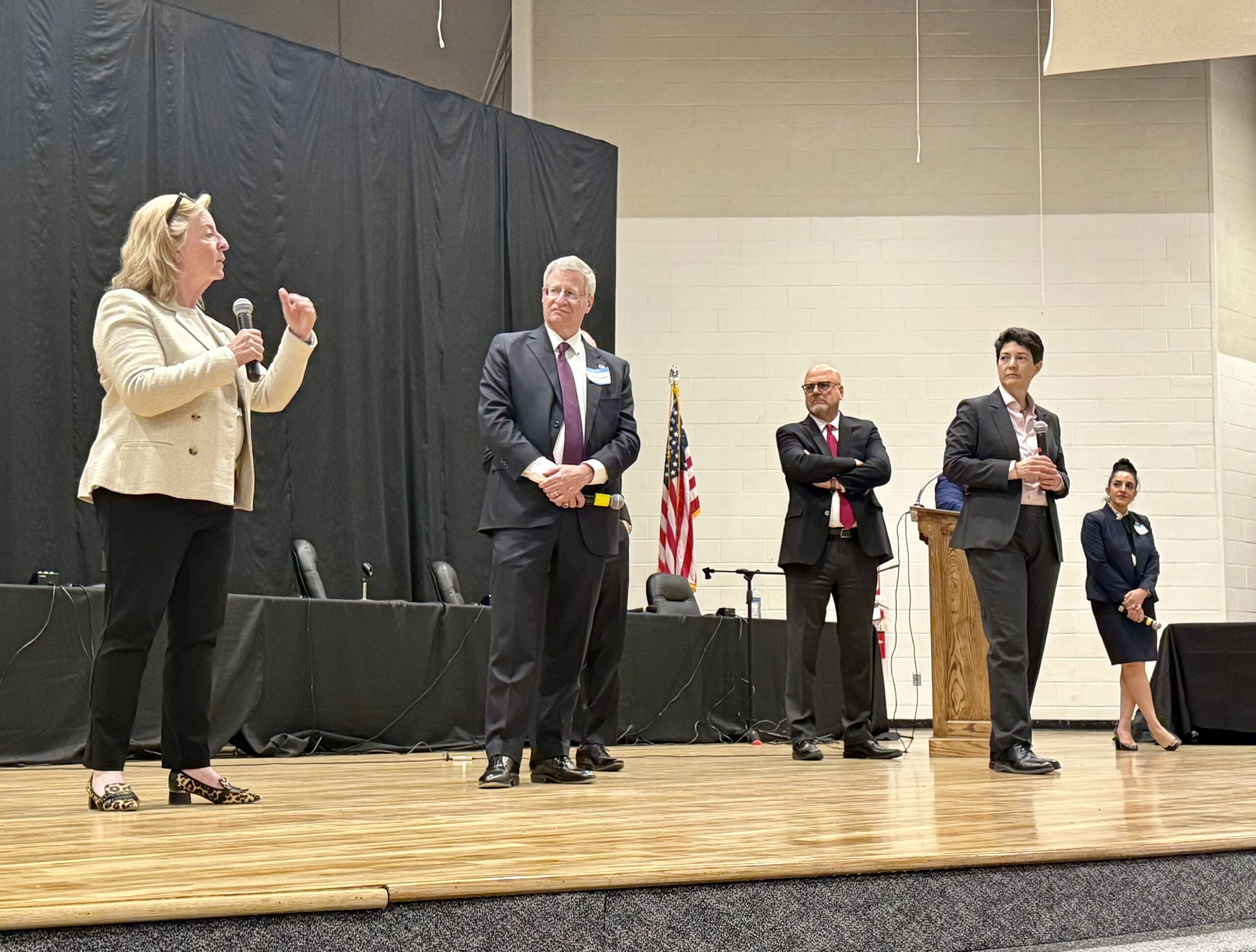
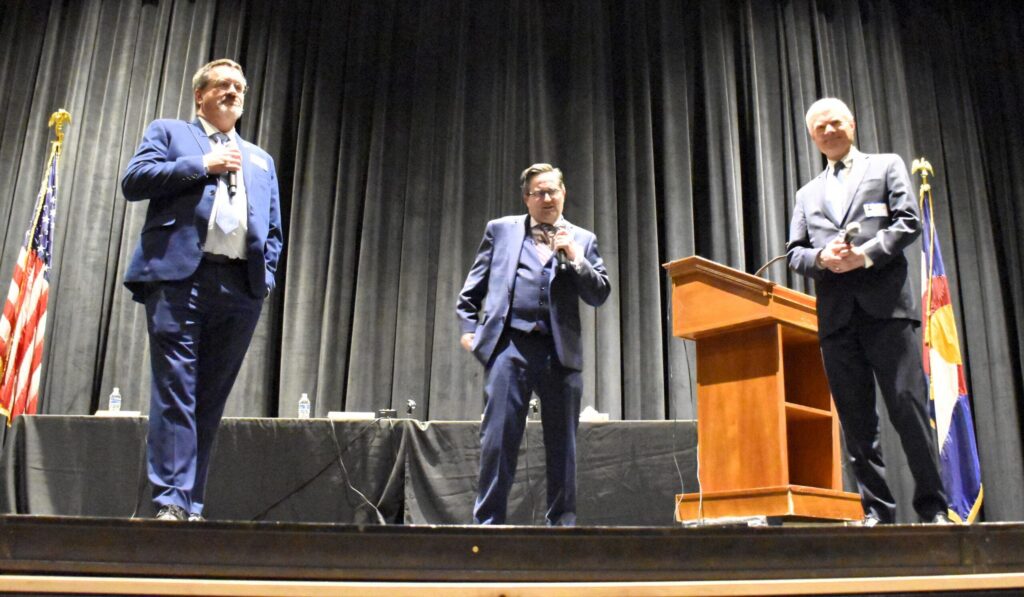
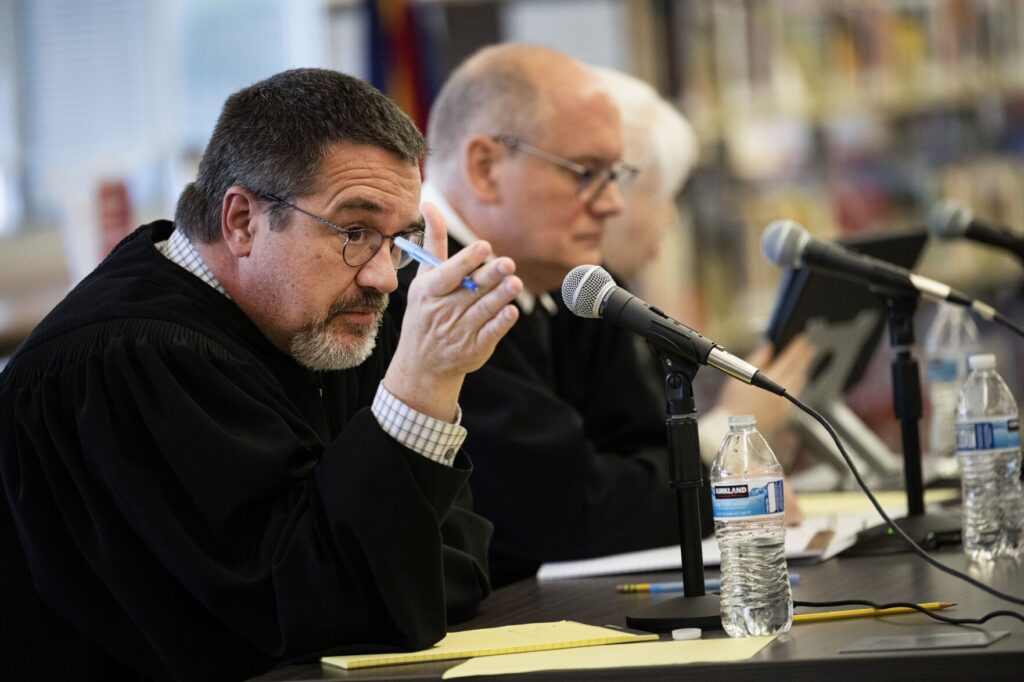
Members of the Colorado Supreme Court appeared before students from eight rural schools on April 16 to hear a pair of cases, field questions, and mark the first time the state’s newest justice participated in the long-running program.
“I had such a unique opportunity to get to work with so many people in my career. And making the decision to apply to the Supreme Court was a hard decision for me, in that now I’m taking one more step away from being in a courtroom with people all the time,” said Justice Susan Blanco, who is in her sixth week on the court.
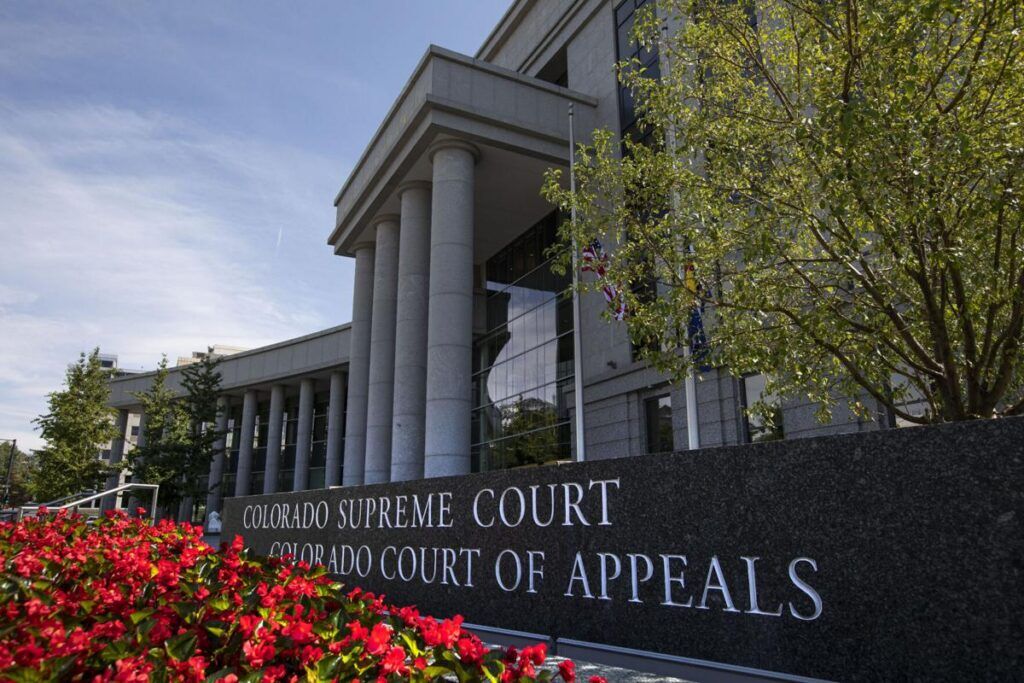
The court visited Holyoke Junior/Senior High School as part of the “Courts in the Community” initiative, celebrating its 40th anniversary this year. Multiple times per year, the Supreme Court and the Court of Appeals travel outside their downtown Denver courthouse to hear oral arguments in real cases, usually in front of an audience of high school students.
The Holyoke students were joined by their peers from seven other schools throughout the 13th Judicial District, which encompasses seven counties in northeastern Colorado. Students from Peetz and Otis traveled the furthest to attend, from roughly 70 miles away.
Among other things, the justices described their paths to their current roles. Blanco spoke about being a lawyer, then a trial judge, and finally a justice.
“Every step, you’re like a little bit more removed from working with people, which was hard for me because I love working with people,” she said. “But the impact of the decisions this court makes was very compelling to me.”
Chief Justice Monica M. Márquez said she was at the same private law firm with Justice Richard L. Gabriel at the beginning of her career.
“I worked with Justice Gabriel when I was a young associate,” she said. “He edited the you-know-what out of everything I wrote.”
“Still do,” said Gabriel, to laughter.
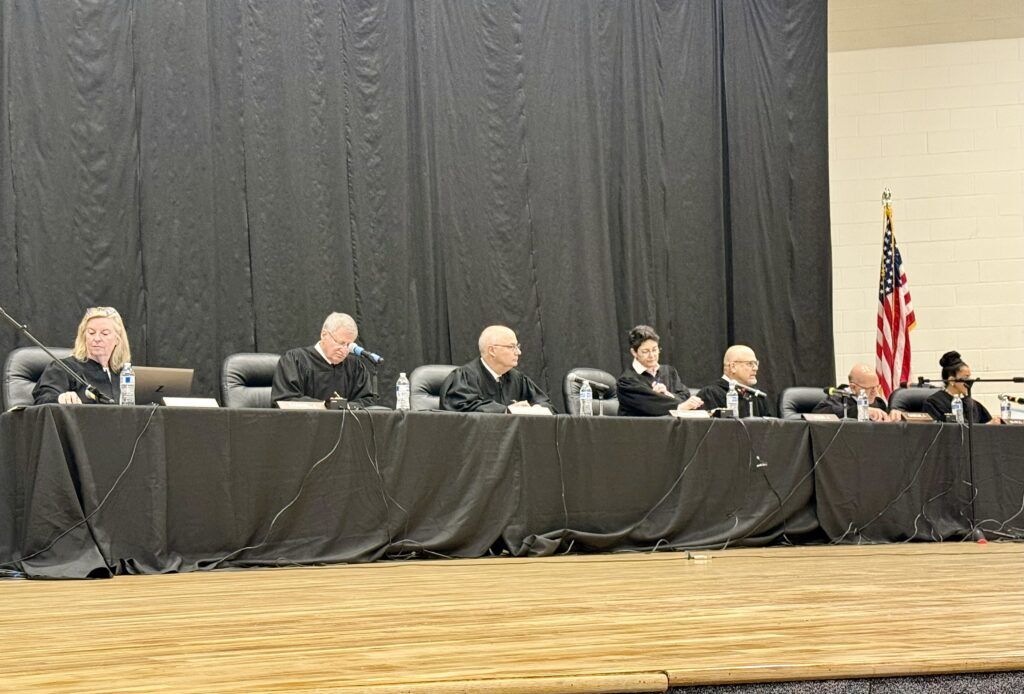
In response to a question about the decision-writing process, Márquez said she assigns the majority opinions to the person who can best capture the court’s view.
“Your job is to write the group’s decision, not your decision,” she said.
Justice Maria E. Berkenkotter said she was initially surprised at how much time the entire process takes.
“I’ll use Speechify, and after I’ve read the briefs, I’ll also go and listen to the briefs. It can be really time-consuming,” she said.
One student asked what career the justices would have chosen if they had gone in a different direction. Most of them responded that they would not change anything.
“I wish I had spent time in the military, actually. My dad spent time in the Air Force,” said Márquez. “It wasn’t really an option for me because at the time, it was outright barred to be gay in the military under ‘Don’t Ask, Don’t Tell.'”
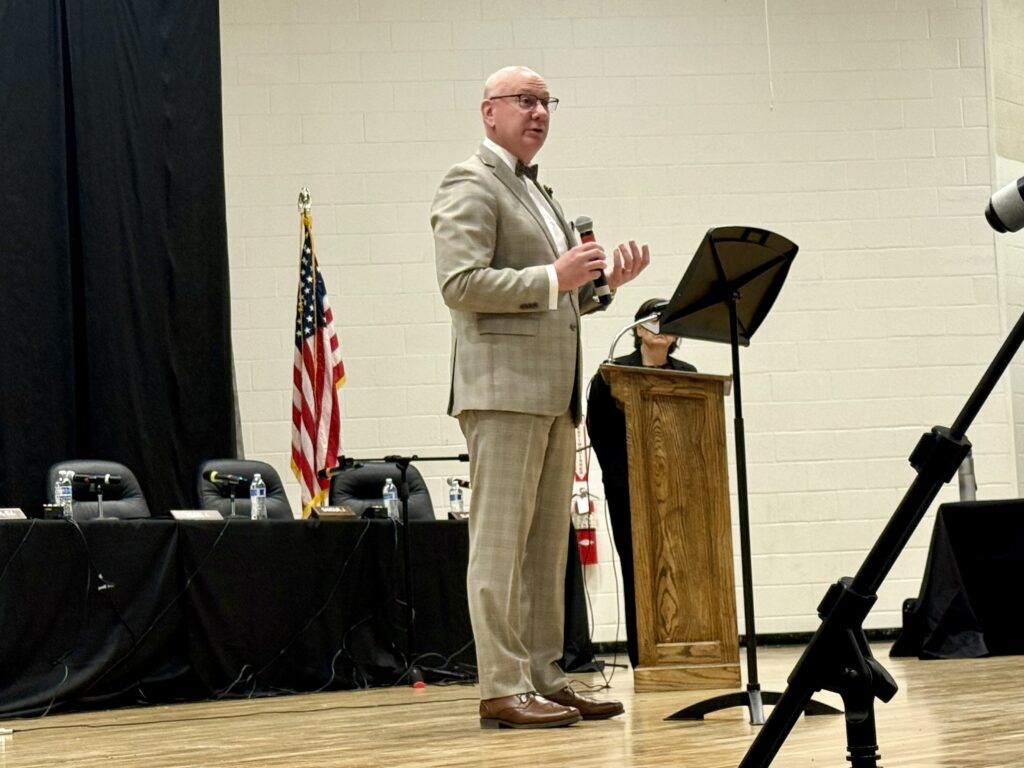
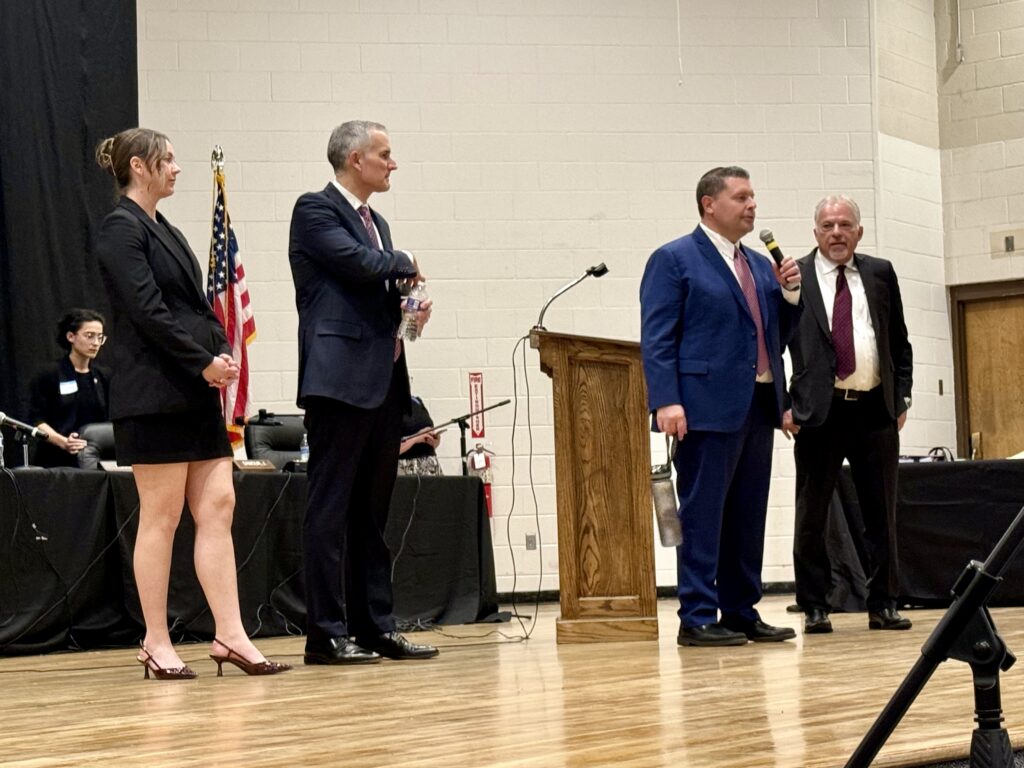
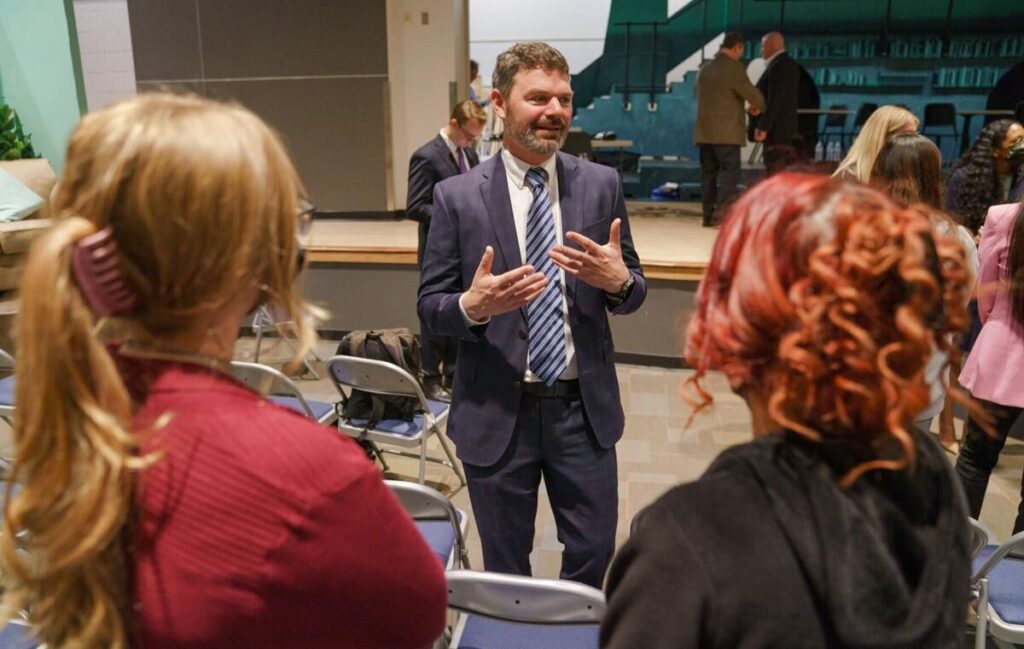
The students also interacted with the attorneys who argued the cases, one of which was a criminal appeal and the other involved a negligence lawsuit against a ski resort operator.
Responding to a question about whether there are any types of cases the lawyers would not take, former Adams County prosecutor Todd Bluth said there probably are, but he generally does not find himself forced to compromise on his values.
“As an attorney, you have to be open to understanding other people’s points of view,” he said. “This is an industry where you can be yourself, hold true values, and abide by your true convictions.”
Attorney Yun Wang, who has civil and criminal defense experience, said there is one type of client he will not represent on principle.
“I will not defend organized human traffickers,” he said. “I find that whole process disgusting.”
Attorney Trenton J. Ongert said he typically gets to choose his cases, ensuring his morals and values align with his work.
“There are a few times where the facts change, we find out something new about the case, and we have a candid conversation with our clients,” he said. “If we see moral issues, the jury certainly would.”
“I agree with that. I think it’s very important,” said Michael J. Hofmann, who argued opposite Onglert. “I think it’s important for the lawyer to think the client is doing the right thing. And if we think you’re not, to tell the client.”
Lori Nelson, the school’s business education teacher, said she heard about Courts in the Community through one of the district’s trial judges. It took around five years from the initial idea to the Supreme Court’s visit becoming a reality.
“The biggest thing for me with them being here is all of the planning that goes into having them come out,” Nelson said. “And all of the setup and the rooms and just the details and specifics. And how much our principal had to do to be able to hold this here.”
“I think it was interesting to get all the information about the case to see how it actually goes down in the Supreme Court,” said Cozner Ring, a senior.
Mason Sprague, also a senior, said he was surprised by how frequently the justices asked questions during the first set of arguments.
“We went over the cases and common things they would cover,” he said. “I don’t have a strong opinion on either, but I think it’s interesting to see how both sides go at each other.”

Parenting from prison: Inmates hope to be present in their children’s lives, while physically absent
Marianne Goodland
marianne.goodland@coloradopolitics.com
Updated 2 hours ago
The room was decorated with balloons, the tables sparking bright with colors as the smell of pizza and cake wafted through the air. As did music. This was, after all, a father-daughter dance. Except this was not a typical father-daughter...
Appeals court confirms Colorado judges can compel electronic records from out of state
Michael Karlik
michael.karlik@coloradopolitics.com
Updated 24 hours ago
Colorado’s second-highest court clarified on Thursday that judges are empowered to compel out-of-state companies to produce electronic records under state law. El Paso County jurors convicted Mischa Jargowsky on three counts of money laundering and one violation of Colorado’s organized...

10th Circuit upholds finding of no racial discrimination against family at Denver Chili’s
Michael Karlik
michael.karlik@coloradopolitics.com
Updated 3 days ago
The Denver-based federal appeals court agreed on Wednesday that a Black plaintiff failed to show that a Chili’s manager’s request for her family to provide valid payment at the outset of their meal amounted to racial discrimination. Markesha Futrell-Smith filed...
Appeals court reinstates Mesa County defendant’s request for DNA testing under new Colorado law
Michael Karlik
michael.karlik@coloradopolitics.com
Updated 4 days ago
Colorado’s second-highest court revived a Mesa County defendant’s petition for DNA testing in his three-decade-old attempted murder case on Thursday, concluding that a trial judge wrongly interpreted a recent Colorado law in dismissing the request outright. Jurors convicted Billy Joe...
Appeals court reverses Denver juvenile’s conviction due to improper expert testimony
Michael Karlik
michael.karlik@coloradopolitics.com
Updated 2 days ago
Colorado’s second-highest court reversed a juvenile defendant’s conviction for unlawful sexual contact on Thursday after an expert witness’s testimony improperly suggested the child victim was telling the truth. The defendant, identified as S.H-S., was around 16 years old when he...

Judge orders home confinement for Barry Morphew
Dennis Huspeni
dennis.huspeni@gazette.com
Updated 4 days ago
An Alamosa County district judge has ordered home confinement for Barry Morphew, who is accused of murdering his wife. Barry Morphew, 59, faces a first-degree murder charge in the death of his wife, Suzanne Morphew, who disappeared Mother’s Day weekend...
Appeals court says jury does not need to view porn to determine if it’s ‘obscene’
Michael Karlik
michael.karlik@coloradopolitics.com
Updated 2 days ago
Colorado’s second-highest court ruled for the first time on Thursday that a jury does not always need to view pornographic material to determine if it meets the criteria for obscenity. Mesa County jurors found Shayla Ann Simpson guilty of child...
10th Circuit disagrees Sterling officer had no basis to arrest motorist who lacked insurance details
Michael Karlik
michael.karlik@coloradopolitics.com
Updated 5 days ago
The Denver-based federal appeals court disagreed on Tuesday with a trial judge’s decision to bar evidence from a pat-down search from being used against a defendant. Federal prosecutors obtained an indictment of Jorge Sigala-Baray for being a felon in possession of a...

Colorado Springs officers’ tasing, threats prompt federal judge to block use of suspect’s statements
Michael Karlik
michael.karlik@coloradopolitics.com
Updated 5 days ago
A federal judge blocked the government last month from using some of a defendant’s statements as evidence, reasoning that the defendant made them involuntarily as Colorado Springs officers tased him five times and one officer threatened to kill him. Officers...
Appeals court rejects CDOT employee’s discrimination, retaliation claims
Michael Karlik
michael.karlik@coloradopolitics.com
Updated 3 days ago
Colorado’s second-highest court agreed last week that a Colorado Department of Transportation employee had not shown that his employer discriminated and retaliated against him due to his religion and national origin. Ayman Salloum, who described himself as a 70-year-old Muslim...
PREV
PREVIOUS

Democrats want Colorado colleges to provide abortion medication
A bill proposing to require Colorado colleges and universities to provide abortion medication services cleared a legislative committee on Thursday. Advocates said the measure — which exempts religious-based institutions but applies to public, private, and community colleges — will improve access to abortion, while opponents argue it would force educational institutions to take a side […]

Mysterious letter causes uproar, investigation in Mesa County GOP | A LOOK BACK
Twenty Years Ago This Week: An unregistered activist group calling themselves ‘The Colorado Republican Caucus’ mailed letters to at least 160 Republicans in Mesa County calling various Grand Junction Republicans “turncoats” and “traitors.” “The danger was that the letters were mailed by a group, with an official-sounding name, and many people thought it was from […]