

Fight over road funding intensifies as Colorado Democrats look to offset prospective $700M ballot measure
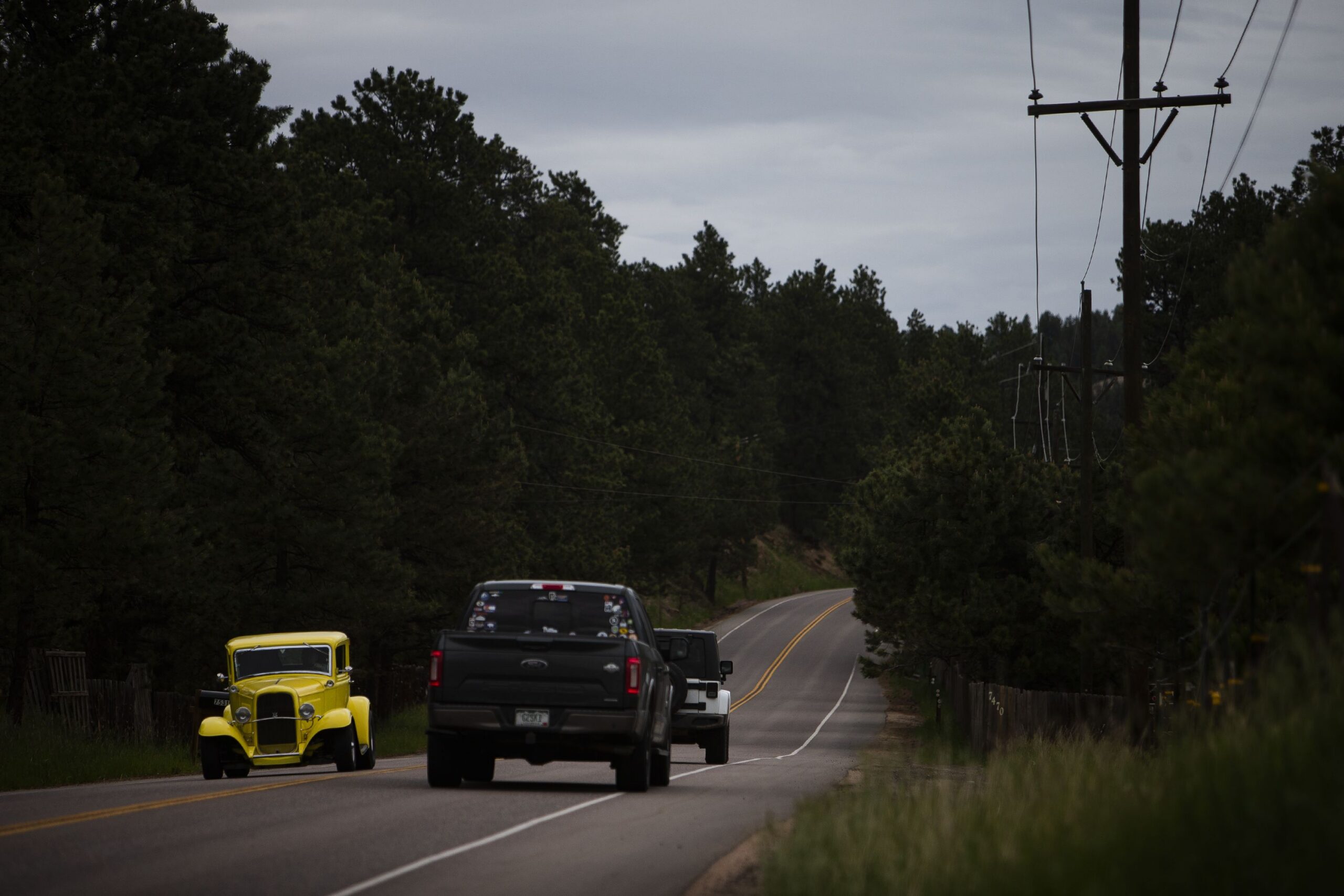
Colorado lawmakers’ introduction of an alternative to a proposed road‑funding ballot measure has prompted debate at the Capitol, as supporters of the initiative question the timing of the bill and the level of stakeholder involvement in its development.
Introduced last week, House Bill 1430 would take effect only if ballot measure No. 175 passes in November. The initiative would require that transportation-related revenues be spent only on building and repairing roads and bridges, safety improvements, transportation planning and engineering, and Colorado State Patrol operations. Currently, about 67% of the revenue affected already comes from funds dedicated to highways under the Highway Users Tax Fund.
To date, the initiative has gathered about 75% of the required signatures to qualify for the ballot.
House Bill 1430, sponsored by Reps. Andrew Boesenecker, D-Fort Collins, Emily Sirota, D-Denver, and Sens. William Lindstedt, D-Broomfield, and Judy Amabile, D-Boulder, would essentially negate the initiative by reducing excise taxes on fuel, certain registration fees, and road usage fees from 2027 to 2030.
The bill also creates the “Support Road Transportation Fund” for revenue generated by Initiative 175 and clarifies that state revenue collected to support road transportation does not include enterprise fee revenue.
According to the bill’s sponsors, the measure is necessary to maintain funding for critical services across the state, like health care and education. Sponsors estimate that Prop 175 would divert more than $700 million in state funds from areas like K-12 and higher education, the Department of Motor Vehicles, and the Peace Officer Standards and Training cash fund solely to roads. A Legislative Council staff analysis puts that number closer to $539 million.
In Boesenecker’s opinion, the ballot measure’s language does not make clear that increasing road funding means taking funds from elsewhere.
“Nobody would argue that we need to better fund roads in our state,” he told Colorado Politics. “However, if you’re going to propose that the voters are being asked to do this for the price of nothing, of course the voters are going to say yes, but if you ask, ‘what if it may close the hospital?’ That’s a very big question.”
Boesenecker said he and his cosponsors are happy to discuss how to better fund infrastructure improvements in Colorado, but “jeopardizing core services” wasn’t the way to do it.
Backers of Initiative 175, including the Colorado Contractors Association, say the bill undermines the will of the voters, who have overwhelmingly expressed a desire for additional funding for road improvements.
According to CCA’s executive director, Tony Milo, the state’s crumbling roads are costing each Colorado driver over $2,000 per year in time sitting in traffic and wear-and-tear on their cars.
A recent report by the Reason Foundation named Colorado’s highway system 42nd in the nation in terms of overall cost-effectiveness and condition. The state’s rural and urban interstate pavement conditions ranked 46th and 45th in the U.S., respectively.
“If Colorado would just invest a small percentage of its budget annually to improve roads, it would save lives, improve congestion, create thousands of jobs, and save thousands of dollars of wear and tear on Coloradans’ cars,” Milo said.
The sponsors of HB 1430 say the state is making progress on its road conditions, including improvements on over 2,500 miles of rural roads in the past five years and more than 800 lane miles improved through the Colorado Department of Transportation’s 10-Year Plan.
Milo argued the bill serves as the legislature’s attempt to circumvent the will of the voters before they’ve even had a chance to cast their ballots.
“House Bill 1430 is the General Assembly saying that they know better than the taxpayers where their money should be spent,” he said. “It’s an end around the voters, and it is as anti-democratic as it gets. Every legislator who votes for this bill is facing a real prospect of having to explain to their constituents why they voted to stifle their voices.”
Wade Haerle, executive director of Club 20, a coalition of businesses on the Western Slope, alleged the bill’s sponsors and the governor’s office refused to engage with backers of Prop 175.
When reached for comment, a spokesperson for Gov. Jared Polis sent the following statement: “The price of gas is now over $4 a gallon thanks to President Trump and his war in Iran. Of course, the Governor would support a bill to cut taxes and save Coloradans money, and that includes cutting the gas tax while protecting the state budget.”
It was former state lawmaker and Club 20 Chairman Dan Noble who first proposed using sales taxes on vehicles and vehicle parts to fund transportation infrastructure. A 1979 piece of legislation known as the Noble Bill allocated two-thirds of sales and use taxes on cars and car parts to the Highway Users Tax Fund. Seven years later, legislation was passed increasing the allocation to 100% of all sales tax from vehicle and parts purchases, but the measure was repealed in 1988, according to Haerle.
“Taking the taxes that Coloradans already pay to maintain their automobiles to be used on roads is very popular, and [the sponsors] know it’s very popular,” he said. “So this legislation, put in at the last minute late on a Friday evening, would do all kinds of legislative gymnastics to reduce the gas tax, to move vendor funds, all of these different things, to guy Initiative 75 before the voters have even passed it.”
Boesenecker said he has continued to discuss with the proponents of 175 “what it means to fund transit in our state.”
“I would hope we could find a compromise, but absent that, we also need to make sure that folks are protected,” he said.
Sirota, Boesenecker’s co-prime sponsor, serves as the chair of the Joint Budget Committee. As such, she’s familiar with the dismal state of Colorado’s budget.
“We cannot be in a structural deficit, making billions of dollars of cuts to crucial core services and have another $700 million in cuts to make because one special interest has decided that they want a bigger piece of a finite pie,” she told members of the House Transportation, Housing, and Local Government Committee on Tuesday.
Colorado’s health care providers — particularly those that accept patients on Medicaid, which accounts for the largest portion of the state’s budget — are at risk of facing even more devastating cuts should Initiative 175 pass without House Bill 1430, said Jennifer Riley of Memorial Regional Health in Craig.
The small rural hospital is absorbing over $150,000 in Medicaid provider rate cuts this year, and like 82% of rural hospitals in the state, is operating on unsustainable margins.
Combined with the Medicaid spending cuts outlined in the federal budget bill passed last summer, Colorado hospitals are facing a “compounding crisis” of state cuts on top of federal cuts.
“Further reductions will force hospitals like mine to consider service reductions,” Riley told the committee. “House Bill 26-1430 is not a political statement; it’s a lifeline for communities like Craig.”
The bill passed out of committee on a 9-4 party-line vote, with Republicans expressing concerns about undermining voters’ will.
“By moving this bill now, legislators are telling Coloradans their votes don’t matter,” said Rep. Ron Weinberg, R-Loveland. “If politicians can rewrite the rules to get around a citizen-led road-funding measure before it even reaches the ballot, they’re not just undermining transportation policy; they’re overriding the will of the voters and setting a dangerous precedent for every future statewide campaign.”
Rep. Elizabeth Velasco, a Glenwood Springs Democrat, agreed that it was clear voters wanted more money diverted to road maintenance, but believed they didn’t want to do so at the expense of other essential services, such as hospitals and education.
“I agree that it’s a really difficult time for our state to want to continue to invest in our values and our communities when our hands are tied by TABOR, and I also agree that we must look at our communities in a holistic way,” she said. “We cannot afford to let hospitals and schools and essential services be defunded because of a ballot initiative.”
House Bill 1430 passed through the House Appropriations Committee on Wednesday morning and is now up for debate on the House Floor.
Scott Weiser contributed to this story.


Colorado adds 1,400 jobs in March, but state still on track for annual job losses
Bernadette Berdychowski
bernadette.berdychowski@denvergazette.com
Updated 2 minutes ago
Colorado added 1,400 jobs to the economy in March, according to new state data. The Colorado Department of Labor and Employment reported the state had job growth in March and kept its unemployment rate at 3.9% amid a slowing labor...
Colorado lawmakers to get automatic pay increase as $1.5B shortfall forces cuts to Medicaid, other services
Marianne Goodland
marianne.goodland@coloradopolitics.com
Updated 20 minutes ago
Colorado’s $1.5 billion budget deficit is driving widespread cuts across state services, including reduced reimbursement rates for Medicaid providers and steep income losses for families caring for relatives with intellectual and developmental disabilities. However, as those reductions take effect, an...
Two new members to join Lone Tree City Council
Nicholas Fogleman
nicholas.fogleman@denvergazette.com
Updated 50 minutes ago
The Lone Tree City Council elections concluded Tuesday, with two new members set to join the board once final results are certified later this month. Michelle Béchamps and Tara Meekma Collins defeated their opponents to serve as District 1 and...

Colorado wolf-depredation claims exceed $1.07 million, far exceeding budget estimates
Marianne Goodland
marianne.goodland@coloradopolitics.com
Updated 14 minutes ago
After paying more than $706,000 in March to ranchers for livestock lost to wolves, the Colorado Parks and Wildlife Commission is poised to approve two additional claims totaling over $262,000 at its May 7 meeting. Those approvals would bring total...
Hickenlooper hears stories on Medicaid, health costs at Denver Health
Nico Brambila
nico.brambila@denvergazette.com
Updated 17 minutes ago
U.S. Sen. John Hickenlooper went to Denver Health on Tuesday to hear how rising health care costs and federal policy changes are affecting patients. He got an earful. Hospital staff shared stories about Medicaid patients who lost eligibility — and...

Overtime for farms, school safety, public office rules: What’s new in Colorado law
Marianne Goodland
marianne.goodland@coloradopolitics.com
Updated 22 hours ago
Gov. Jared Polis signed 25 bills into law Monday, bringing changes that will affect workers, families, schools, and local governments across Colorado. The new laws deal with a range of issues – from overtime rules for farmworkers to limits on...

From social media trusts to 3D-gun restrictions: How Colorado’s latest laws affect residents
Marissa Ventrelli
marissa.ventrelli@coloradopolitics.com
Updated 22 hours ago
Gov. Jared Polis on Monday signed two new laws — one requiring parents to set up trusts for children who appear on social media and another banning the production of firearms using 3D‑printing technology. Under House Bill 1058, parents must create...
Democrat Jena Griswold holds wide lead in Colorado attorney general primary, her internal poll shows
Ernest Luning
ernest.luning@coloradopolitics.com
Updated 22 hours ago
Democratic attorney general candidate Jena Griswold, Colorado’s term-limited secretary of state, holds a wide lead over her three primary opponents just weeks before ballots are set to go out to voters, a new internal poll released by her campaign on...
Crank challenger Jessica Killin named to House Democrats’ ‘Red to Blue’ program in Colorado’s 5th CD
Ernest Luning
ernest.luning@coloradopolitics.com
Updated 22 hours ago
The House Democrats’ campaign arm on Monday added Jessica Killin to its nationwide “Red to Blue” program in Colorado’s Republican-leaning 5th Congressional District, calling the first-time candidate a “top-tier” challenger in a seat the party is aiming to flip in...

Colorado lawmakers advance rewrite of 2024 law to regulate artificial intelligence
Marianne Goodland
marianne.goodland@coloradopolitics.com
Updated 2 days ago
With just nine days left in the 2026 legislative session, a revised proposal to amend the 2024 artificial‑intelligence law is finally advancing — even though it’s not the bill Senate Majority Leader Robert Rodriguez had hoped for. Senate Bill 189,...
PREV
PREVIOUS
Colorado wolf-depredation claims exceed $1.07 million, far exceeding budget estimates
After paying more than $706,000 in March to ranchers for livestock lost to wolves, the Colorado Parks and Wildlife Commission is poised to approve two additional claims totaling over $262,000 at its May 7 meeting. Those approvals would bring total payouts to $969,229.68, with another $55,845.71 in claims rejected across the March and May meetings. […]
Two new members to join Lone Tree City Council
The Lone Tree City Council elections concluded Tuesday, with two new members set to join the board once final results are certified later this month. Michelle Béchamps and Tara Meekma Collins defeated their opponents to serve as District 1 and District 2 representatives, respectively. The Lone Tree City Council is composed of four councilmembers representing […]