

Divided 10th Circuit takes no issue with surprise police encounter with suspect
Police officers who unexpectedly encountered a Durango-area man while they were preparing to search his nearby home did not commit a constitutional violation by seizing his phone during the ensuing traffic stop, the Denver-based federal appeals court ruled last week.
Kalub Sean Jackson pleaded guilty to one count of possessing child pornography and received a sentence of three years in prison. On appeal, he challenged whether police violated his Fourth Amendment right against unreasonable searches and seizures.
Specifically, police had obtained a warrant to search his Hesperus home and, at the same time, to search him. But because Jackson drove past law enforcement personnel as they were getting ready down the road, a detective pulled him over and took his phone from the vehicle. Therefore, the defense argued, the search and seizure did not take place as the warrant envisioned.
By 2-1, a three-judge panel of the U.S. Court of Appeals for the 10th Circuit did not address that question. Instead, the majority believed the traffic stop was not a “search” of Jackson in the first place. Rather, police lawfully stopped him because they already had grounds to believe Jackson committed a crime when they obtained the search warrant.
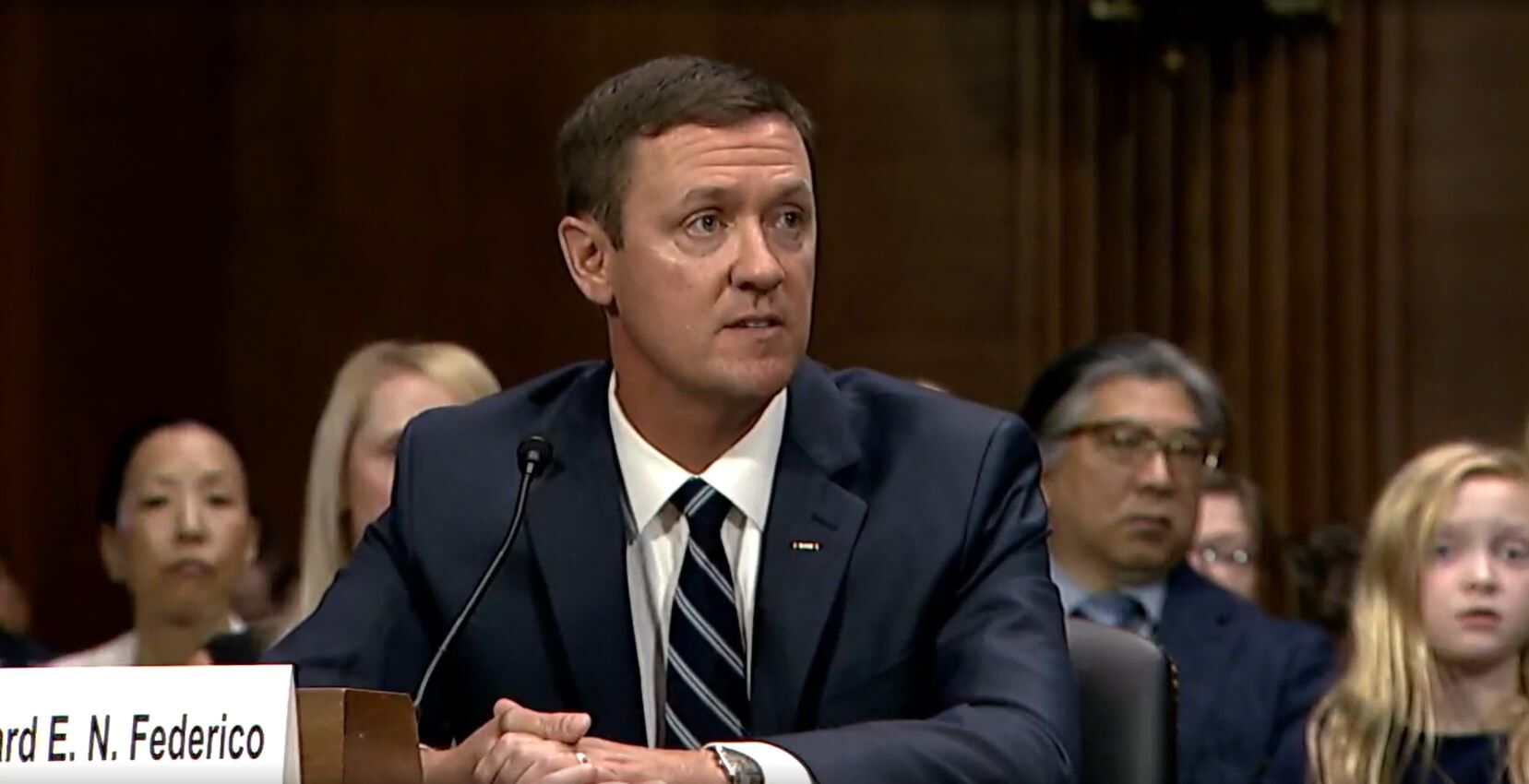
“Even if the warrant itself did not authorize the stop, the officers had at least reasonable suspicion to conclude that Jackson had committed a crime,” wrote Judge Richard E.N. Federico in an April 16 order. “Jackson’s theory of reversal is that the officers improperly executed a search warrant. But neither here nor in the district court did he lay the groundwork for concluding that the roadside stop was a search, or something else occurring pursuant to a search warrant.”
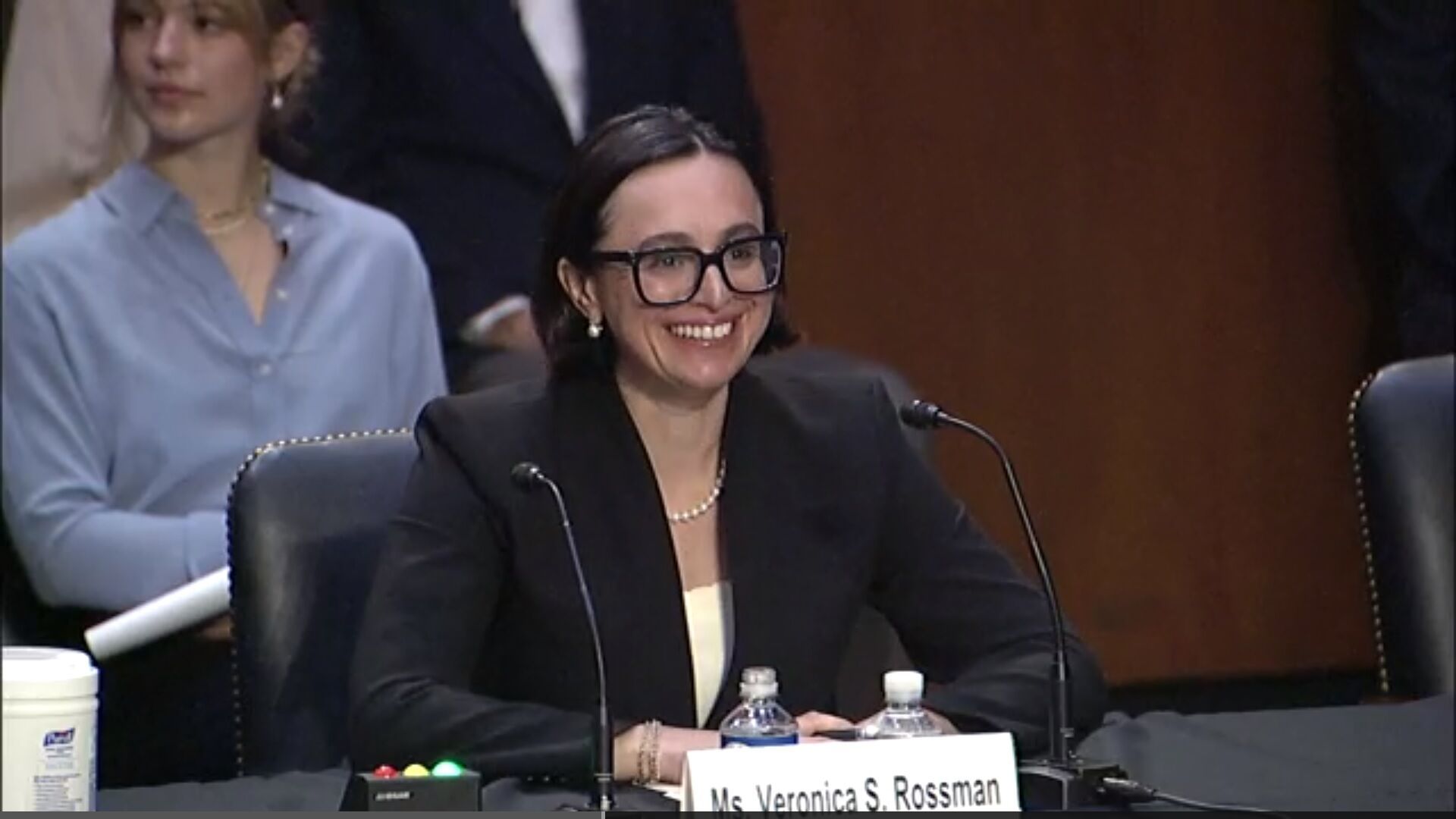
Judge Veronica S. Rossman dissented, noting the prosecution had not presented that argument to the court. She accused the majority of raising “an alternative argument crafted for the government.”
“Law enforcement told Mr. Jackson he was being stopped under the warrant,” she wrote. “Given its practical reading, the warrant conditioned the search of Mr. Jackson’s person on his presence at the residence when the warrant was executed. Because law enforcement disregarded that condition when they stopped and searched Mr. Jackson, they violated the Fourth Amendment.”
Durango Detective Josh Newman traced the existence of child pornography to an online account linked to Jackson. After confirming Jackson’s presence at a Hesperus home, Newman applied for a search warrant for the address. The warrant also authorized a search of “the person of Kalub Sean Jackson at the time of the search warrant execution.” A federal magistrate judge approved the warrant.
While Newman and other officers were huddling down the road one morning in advance of the search, Jackson drove past them on his way to work. Officers scrambled and pulled him over.
Newman informed Jackson about the warrant and the suspected child porn offense. Although Newman said Jackson was not under arrest, he began to question Jackson. Newman said he would be seizing Jackson’s electronics and asked where his cell phone was.
“Let me go ahead and have your cell phone real fast,” said Newman.
Jackson handed over the device and allowed Newman to unlock it using facial recognition. Jackson accompanied the officers back to his home. Police did not seize anything from the house, nor did they find any evidence in his car. However, they discovered evidence of child porn on his phone.
The defense moved to exclude the cell phone evidence from trial, alleging a Fourth Amendment violation. U.S. District Court Judge Gordon P. Gallagher sided with the government, believing the search warrant did not strictly require police to search Jackson at the property itself.
Gallagher added that even if Newman did commit a constitutional violation, he reasonably relied on the warrant and would have inevitably found the cell phone evidence.
Case: United States v. Jackson
Decided: April 16, 2026
Jurisdiction: U.S. District Court for Colorado
Ruling: 2-1
Judges: Richard E.N. Federico (author)
Michael R. Murphy
Veronica S. Rossman (dissent)
During the oral arguments to the 10th Circuit panel, Federico raised the possibility that the traffic stop was not a search after all.
Senior Judge Michael R. Murphy then suggested the encounter was actually a “Terry stop,” named for the U.S. Supreme Court’s Terry v. Ohio decision. The Supreme Court has authorized police to forcibly stop a person when they have reasonable suspicion to believe the suspect is committing or has committed a crime.
Regardless of what the government actually argued, said Murphy, police had probable cause that Jackson had committed a crime when they obtained the warrant.
“I’m saying I think the government mislabeled the theory,” he said, wondering if it was “unfair” to decide the case according to his view.
“I’m not even sure how to answer that,” responded public defender Elena Carter. “That wasn’t something that came up.”
Ultimately, the majority adopted that line of reasoning. Federico, who, along with Rossman, is one of two former public defenders appointed by Joe Biden to the 10th Circuit, criticized Rossman’s position that the officers acted unconstitutionally by failing to comply with the terms of the warrant.
“Had the officers not obtained a warrant at all and engaged in exactly the same conduct, the dissent appears to concede that their conduct would have been constitutional,” he wrote.
Rossman countered that the “specific focus” of the warrant was Jackson’s home, and that officers’ actions stemmed from it.
“I am aware of no case — and neither the government nor the majority cites one — where Terry can be invoked as an excuse for flouting the terms of a warrant,” she wrote.
The case is United States v. Jackson.

Federal judge green-lights civil trial against ex-Fort Collins DUI officer
Michael Karlik
michael.karlik@coloradopolitics.com
Updated 2 days ago
A federal judge ruled on Thursday that Fort Collins’ former “DUI officer” will face a civil trial for allegedly investigating a motorist for impaired driving without any reasonable suspicion to do so. In recent years, several people arrested by Officer...

Colorado Supreme Court suspends Mesa County judge pending misconduct investigation
Michael Karlik
michael.karlik@coloradopolitics.com
Updated 1 day ago
The Colorado Supreme Court suspended Mesa County Court Judge Michael J. Grattan on Thursday amid a misconduct investigation. The court’s Sept. 10 order gave Grattan 21 days to explain why his paid suspension should not continue through the end of...
Colorado Supreme Court changes course, dismisses case about special district bonds
Michael Karlik
michael.karlik@coloradopolitics.com
Updated 1 day ago
The Colorado Supreme Court declined on Friday to decide a dispute between a large-scale Commerce City development and the various districts financing it, after initially showing interest in the ongoing case. Colorado has roughly 2,800 special districts, which are local...

10th Circuit tosses GEO Group’s pretrial appeal in human trafficking lawsuit
Michael Karlik
michael.karlik@coloradopolitics.com
Updated 3 days ago
The Denver-based federal appeals court dismissed an attempt by The GEO Group on Wednesday to appeal a trial judge’s non-existent decision two months before the company is scheduled to face a civil trial over alleged trafficking violations at the Aurora...
Denver sues Trump to block armed ICE agents from polling sites
Deborah Grigsby
deborah.smith@denvergazette.com
Updated 3 days ago
The city of Denver, along with several groups, sued the Trump administration Thursday, seeking to block U.S. Immigration and Customs Enforcement officers who are armed from polling sites during the upcoming midterm elections. In fact, there are no official orders...
Federal judge takes no action against ICE in Colorado after hearing about mistakes, not ‘blatant violations’
Michael Karlik
michael.karlik@coloradopolitics.com
Updated 24 hours ago
A federal judge declined to take action against U.S. Immigration and Customs Enforcement on Thursday after hearing that a pattern of alleged lawbreaking amounted to mistakes and a misunderstanding of the government’s position in court. For nearly a year, Colorado’s...
Colorado doctors, dentists challenge state law on gender‑transition services in new federal lawsuit
Marissa Ventrelli
marissa.ventrelli@coloradopolitics.com
Updated 21 hours ago
A group of Christian doctors and dentists has filed a federal lawsuit challenging a Colorado law they say requires them to provide gender‑transition services that conflict with their religious and ethical beliefs. The lawsuit, filed by the Christian Medical and...
Federal judge directs plaintiff to revise complaint alleging Denver officers’ constitutional violations
Michael Karlik
michael.karlik@coloradopolitics.com
Updated 24 hours ago
A federal judge directed a plaintiff to revise his allegations on Wednesday to more precisely state what two Denver officers and the city itself allegedly did to violate his constitutional rights by facilitating his prosecution for murder until prosecutors dropped...
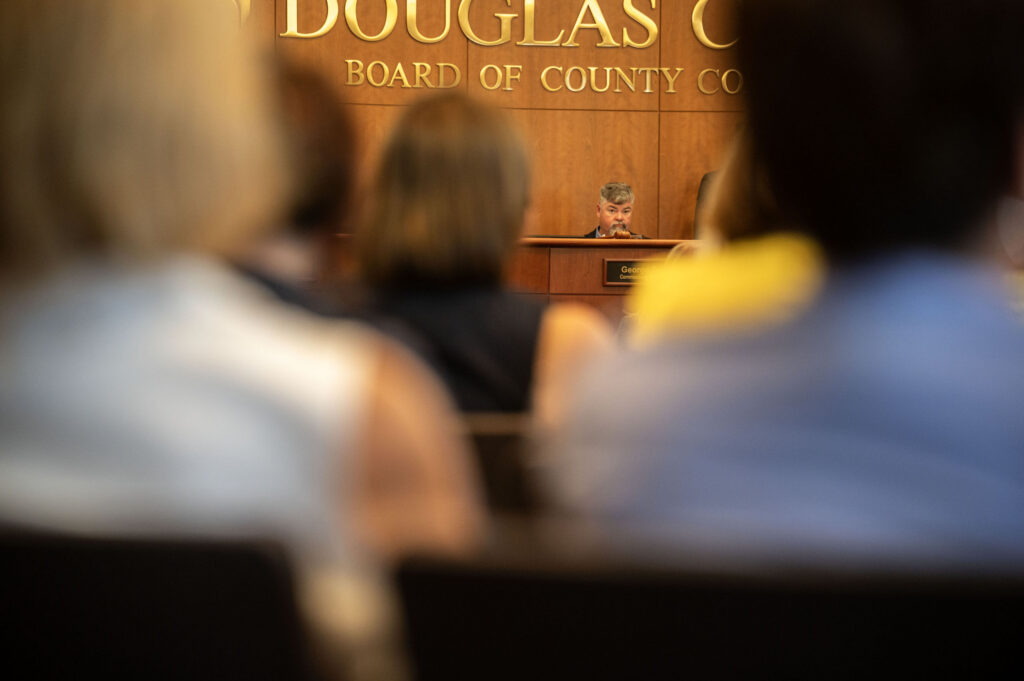
Lawsuit challenges Douglas County commissioners’ ballot actions
Nicholas Fogleman
nicholas.fogleman@denvergazette.com
Updated 3 days ago
A new lawsuit against Douglas County commissioners seeks to invalidate the board’s intervention in efforts to expand the commission from three members to five and restore the original ballot language approved by more than 20,000 petition signers. The suit marks...
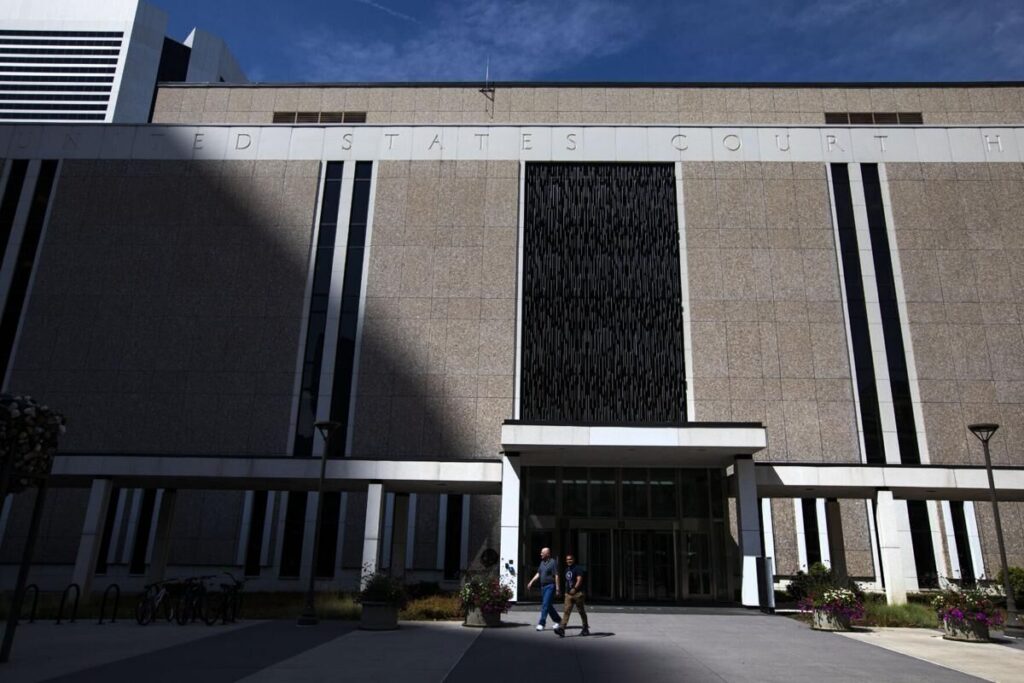
Federal judge explores new sanctions against ex-Colorado judicial discipline director
Michael Karlik
michael.karlik@coloradopolitics.com
Updated 1 day ago
A federal judge on Wednesday directed Colorado’s former judicial discipline director, for the third time this year, to explain why she should not sanction him for his latest conduct in his litigation against the state’s judiciary. Christopher S.P. Gregory, who served...
PREV
PREVIOUS
Colorado lawmakers set Jan. 11 start date for 2027 General Assembly
Legislative leaders on Tuesday confirmed that the 2027 session of the Colorado General Assembly will begin on Monday, Jan. 11. Ordinarily, legislative sessions start on the second Wednesday in January. That schedule shifts in years when a new governor is elected, because the General Assembly must first certify the results of the general election. In […]
Colorado Senate candidate charged with felony child neglect after daughter nearly drowns in Florida pool, police say
Frederick Alfred, Jr., the sole Republican candidate for Senate District 21 in the June primary and November general election, was arrested in Key West, Florida, late Monday night. Alfred, 38, was charged with two counts of felony child neglect and is scheduled to be arraigned on May 5. Alfred did not respond to an email […]