

Colorado bill reshaping RTD board advances
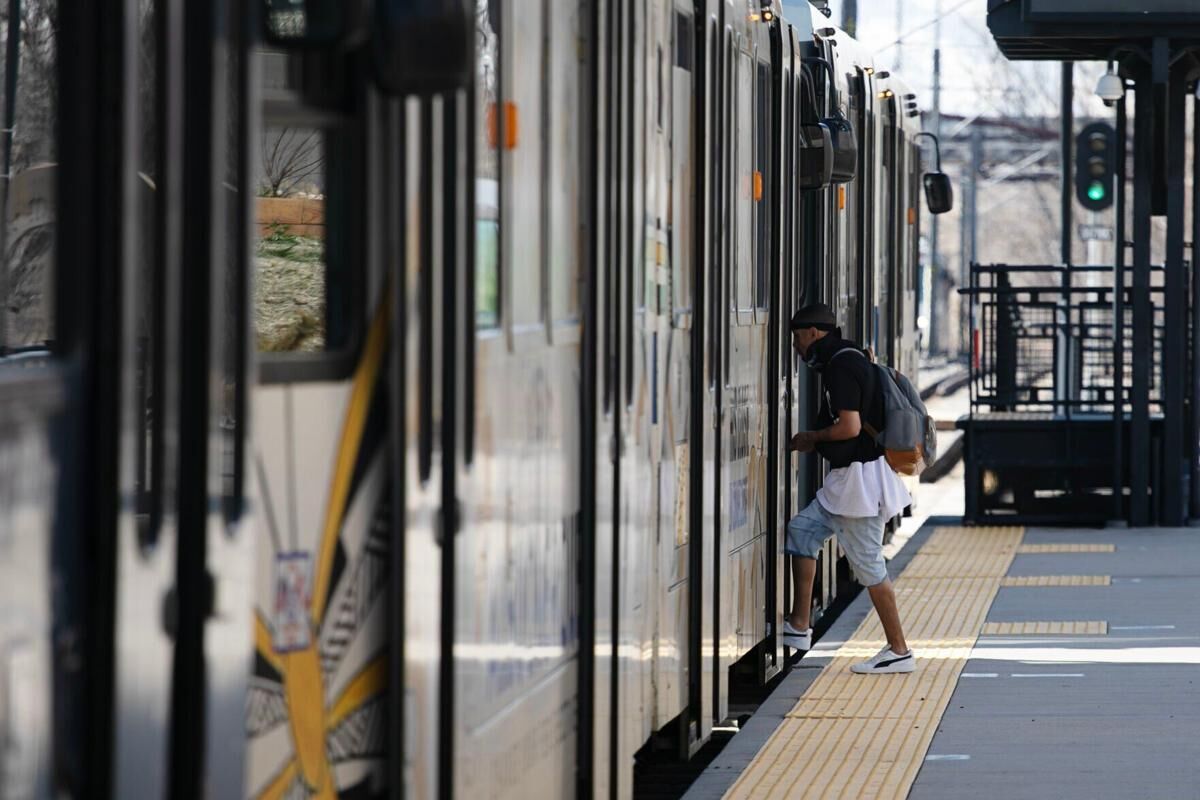
A proposal to reshape the Regional Transportation District’s leadership easily cleared a committee vote Wednesday, advancing the bill sponsors say is needed to revive a transit system still struggling to regain riders and public trust.
Critics have countered that, while they agree that RTD faces deep-seated problems, the legislation won’t fix them.
Senate Bill 150 mark the latest of several attempts by lawmakers over the years to make changes to the RTD system, arguing they are needed to return RTD ridership numbers to pre-pandemic levels.
The bill — sponsored by Sens. Matt Ball, D-Denver, and Iman Jodeh, D-Aurora, and Reps. Meg Froelich, D-Englewood, and Jamie Jackson, D-Aurora — passed the Senate Transportation and Energy Committee on an 8-1 vote, with Sen. Mark Baisley, R-Roxborough Park, voting against it. Its next stop is the Senate Floor for debate.
The bill proposes reducing the board’s membership from 15 to nine, with two members appointed by the governor and two selected by the Denver Regional Council of Governments. The number of signatures required for an RTD board candidate to qualify for the ballot would also increase from 250 to 1,000.
The measure includes salary increases for board members and requires RTD to conduct an assessment of possible improvements to Access-a-Ride and other services for riders with disabilities.
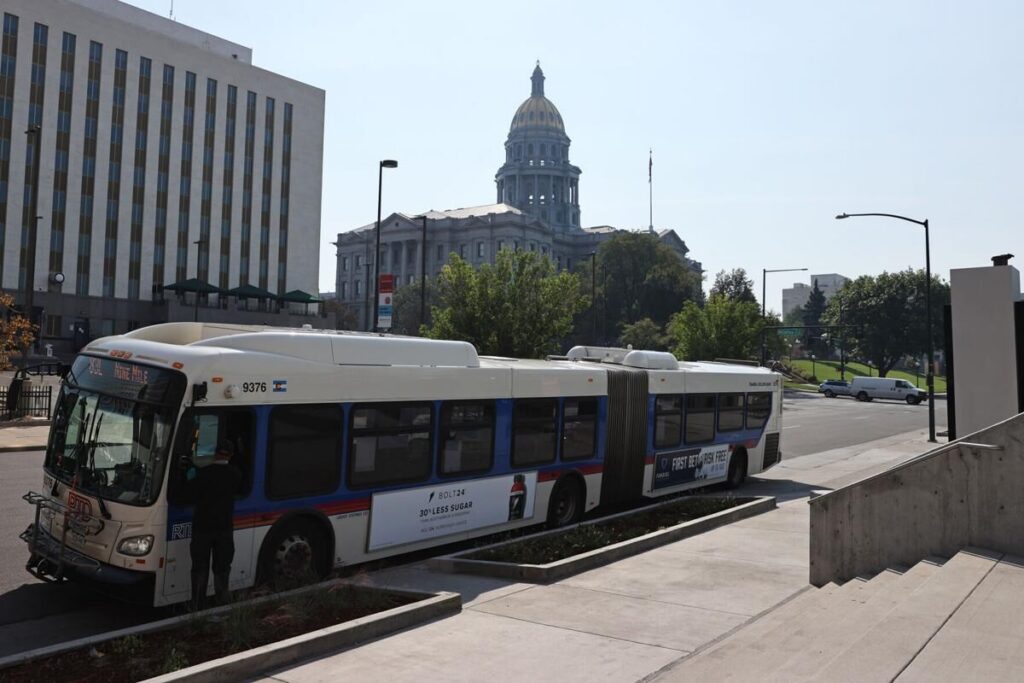
RTD, which serves eight counties across the Denver Metro Area, has recovered only 60% of pre-pandemic ridership, far below that of transit agencies in similar-sized cities.
“There are a lot of transit agencies in our state, but the one that keeps coming back to our state legislature and keeps coming back to this committee is RTD,” Jodeh told the committee on Wednesday. “That’s because RTD is simply not working that well, and it hasn’t worked well in a long time.”
Last session, lawmakers passed a bill establishing the RTD Accountability Committee, a 15-member board tasked with making recommendations to the legislature for improving RTD’s paratransit services, local government representation, and governance structure.
The committee, which released its report in January, was the third group the legislature has created in six years to look into RTD issues.
“Simply put, RTD has failed to deliver the transit system our region needs to thrive,” Jodeh said.
The RTD Board’s 15-member structure is “unusually large” compared to other transit agencies around the country, Jodeh said, and over 40% of all board races are uncontested. In 2022, half of the board seats up for election had no candidates running.
Jodeh said the bill is in no way a slight against RTD board members, who, she said, are trying their best to resurrect the agency.
“But what has been seen over time is that our current structure leads to parochial decision making, competition between communities for service, and a lack of consistent statewide oversight,” she said.
Almost everybody agrees that the RTD board needs to change, but very few people agree on what that change should look like, noted Ball.
Senate Bill 150 is the result of months of stakeholder involvement and includes changes that were approved almost unanimously by the accountability board, according to sponsors.
“I think as a matter of policy, it is a very good solution to this problem,” Ball said.
Longmont City Manager Harold Dominguez served on the RTD Accountability Committee, which he said, “was not easy, but worth it.”
Dominguez said he supports the bill, particularly its proposal to reduce the size of the RTD board and include experts appointed by the governor.
“The business of RTD is complicated, serves a large geographic area with distinct needs that must connect with each other,” he said.
Community members, local businesses and tourism groups all agree that RTD is not fulfilling its purpose of connecting the metro area, Dominguez said.
He added, “Ultimately, this impacts the success of our residents, businesses, and future of economic development.”
Some tied RTD’s success to Colorado’s climate goals.
Renee Larate of Conservation Colorado said the state will never achieve those goals without a dependable, widely used transit system. Amid its current financial issues, worker shortages, and reliability concerns, many Coloradans have no interest in using RTD’s services and are opting to drive instead, contributing to more traffic congestion and air pollution, she said.
“RTD is not performing at the level we need,” Larate said.
Reducing the board to nine members enables “faster and more accountable” decision-making, she added.
‘This bill does not fix that’
Denver Councilmember and former RTD Director Shontel Lewis said Senate Bill 150 was just one several attempts by lawmakers to solve RTD’s woes — especially ridership numbers.
“Let’s be honest, RTD is not working as it should, but this bill does not fix that,” she said. “If the goal is to improve ridership, I have to ask: How does changing the composition of the board accomplish that?”
Lewis argued that ridership has failed to return to pre-pandemic levels because more people are working from home, rather than commuting to the office.
“We either need to restore the workforce or redesign the system to meet the realities of hybrid work,” she said. “We know that this bill does not meaningfully solve the challenges in front of us, and if there’s a genuine desire to change the composition of the board, then put that decision to the voters.”
Kathleen Chandler, who currently serves on the RTD board, took issue with the proposal to appoint nearly half of the board’s members, rather than elect them.
“RTD is funded by taxpayers and serves the public, and its leadership should remain directly accountable to those same voters,” she said. “Reducing elected representation while increasing the role of appointed positions risks weakening that accountability and diminishing the voice of citizens, whom we are entrusted to serve.”
Elected members bring real-world experience and community knowledge to the board, Chandler said.

9 Colorado hospitals at risk of closing due to Medicaid cuts
Nico Brambila
nico.brambila@denvergazette.com
Updated 4 hours ago
The $900 billion in Medicaid cuts over the next decade could threaten the viability of more than 400 hospitals nationally and at least nine in Colorado, a new report has found. The hospitals span the Front Range and rural communities,...
Lakewood mayor calls for unity, community in State of the City speech
Sage Kelley
sage.kelley@denvergazette.com
Updated 6 hours ago
Lakewood held its first State of the City address since 2018 on Wednesday — timing Mayor Wendi Strom attributed to fate. “We got bumped a few times on dates,” Strom said to a room of nearly 100 residents and officials....

Colorado Senate reworks key programs, gives preliminary nod to $46B budget
Marianne Goodland
marianne.goodland@coloradopolitics.com
Updated 5 hours ago
With the Senate’s traditional Budget Day barbecue setting a lighter tone, lawmakers worked through the $46.8 billion state budget Wednesday, navigating a long list of amendments but avoiding the partisan clashes that defined the House debate last week. The Senate...
Colorado budget plan seeks to keep $306 million by canceling TABOR refunds
Marianne Goodland
marianne.goodland@coloradopolitics.com
Updated 6 hours ago
Tucked deep within the hundreds of pages of the proposed $46.8 billion 2026–27 state budget is a line item showing $306.1 million in savings — achieved by canceling Taxpayer’s Bill of Rights refunds. Gov. Jared Polis has recommended withholding TABOR...
RTD lays off two dozen managers in operations ‘realignment’
Scott Weiser
scott.weiser@gazette.com
Updated 5 hours ago
More than two dozen managers at the Regional Transportation District learned in March that their jobs would be eliminated, with their last day of work set for July 2. That’s according to documents provided to The Denver Gazette by an...
After internal strategy sessions, Colorado Senate to take up $46B budget debate
Marianne Goodland
marianne.goodland@coloradopolitics.com
Updated 36 minutes ago
Tax Day carries added weight at the state Capitol this year, as the Senate prepares to take up the 2026‑27 budget on Wednesday following a day of preparations by both Republican and Democratic caucuses. Senators are expected to raise some...

Douglas County approves AI system for sheriff’s investigations
Nicholas Fogleman
nicholas.fogleman@denvergazette.com
Updated 20 hours ago
Douglas County commissioners unanimously approved the purchase of an artificial intelligence system to assist the Sheriff’s Office with investigative analysis. The system is designed to help investigators process large volumes of data more efficiently and turn it into usable investigative...
Cherry Creek School District to pay assistant superintendent $190K to retire amid leadership shakeups
Nico Brambila
nico.brambila@denvergazette.com
Updated 23 hours ago
Cherry Creek School District taxpayers will pay Assistant Superintendent Anthony Poole more than $190,000 to retire at the end of the school year, according to the school district’s separation agreement. Obtained under the Colorado Open Records Act, the agreement stipulates...

Survey: Most Colorado teachers satisfied, but lack prep time
Nico Brambila
nico.brambila@denvergazette.com
Updated 6 hours ago
A biannual teacher satisfaction survey released today shows deep job satisfaction, even as educators struggle with inadequate time for lesson prep and professional learning. Released by the Colorado Department of Education, the 2026 Teaching and Learning Conditions Colorado found nine...
Congress presses Colorado court about rule tied to immigration enforcement
Nico Brambila
nico.brambila@denvergazette.com
Updated 6 hours ago
The U.S. House Judiciary Committee is seeking information from Colorado’s court administrator regarding a new requirement that attorneys certify they will not use court data for immigration enforcement, arguing it unlawfully obstructs federal law and compels political speech tied to...
PREV
PREVIOUS

Colorado Democrat John Hickenlooper pulls in nearly $1.4M in 1st quarter, heads into primary with $4M
U.S. Sen. John Hickenlooper’s campaign raised nearly $1.4 million in the first quarter of 2026 and plans to report more than $4 million on hand heading into Colorado’s June primary, the first-term Democrat’s campaign said Thursday. That brings Hickenlooper’s total receipts to about $9 million since the former two-term governor took office in 2021. He’s […]

New rules for private judges in Colorado include discipline oversight, campaign contributions
The Colorado Supreme Court recently determined the state’s private judges — retired jurists appointed to oversee civil cases that rarely get public scrutiny — can now make political contributions freely and without reserve, overruling a prohibition that had been in place for decades. The move comes a year after a Denver Gazette investigation into the […]