

Lakewood mayor calls for unity, community in State of the City speech
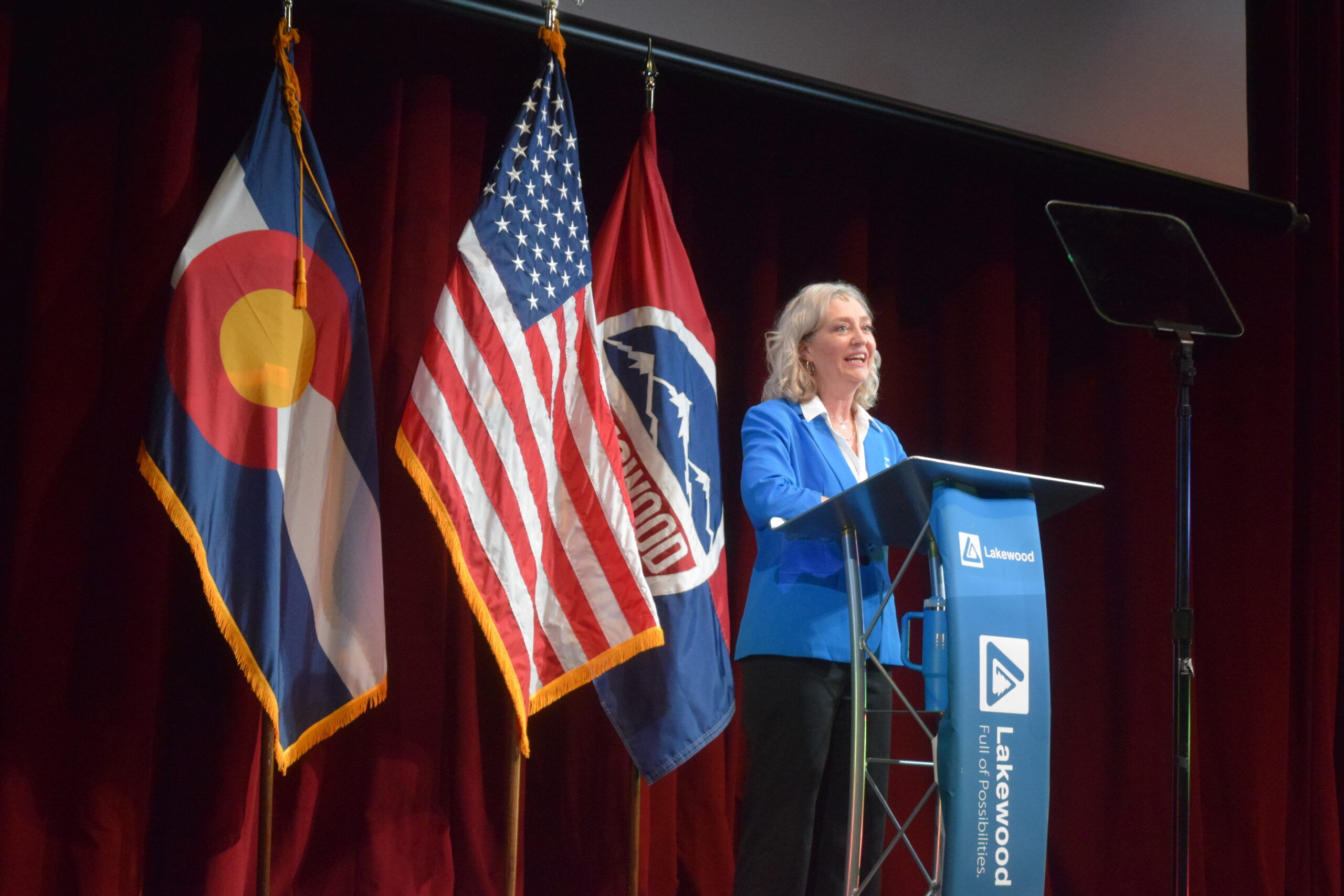
Lakewood held its first State of the City address since 2018 on Wednesday — timing Mayor Wendi Strom attributed to fate.
“We got bumped a few times on dates,” Strom said to a room of nearly 100 residents and officials. “It could not have ended up being at a better time. There are no coincidences.”
The address — highlighting the successes of 2025 and the challenges lying ahead — came just a week after the city held a special election regarding the zoning changes approved by the council last year.
Residents voted against the council’s decisions, with over 22,000 residents voting to keep the zoning code as it was. Though divided on the subject, Strom highlighted the importance of unity and community going forward, as well as a commitment to improving affordable housing in the city.
“For those that have concerns about housing affordability, know that the council’s commitment to coming up with solutions has not wavered,” she said. “For those who have worked hard and are already in a home you can afford today, protecting your ability to stay there for as long as you want to, and preserving that unique character in the neighborhood that you love is also important.”
The proposed ordinances looked to create more affordable housing by allowing residential buildings like duplexes and townhomes on once single-family lots.
Residents for the changes argued about the difficulty first-time homeowners have finding affordable homes. Residents against said the increased density would harm existing neighborhoods.
“It’s not that we don’t want affordability, it’s just that upzoning established neighborhoods won’t create affordability,” resident Joy Anderson said after voting against the changes. “You’re going to sacrifice quality of life in older neighborhoods. I’m not against affordability. We’re not rich.”
Strom highlighted the need for transparency and togetherness going forward — not only regarding zoning, but the city as a whole.
For example, Strom noted, volunteering in Lakewood was valued at around $1.53 million in 2025, with around 38,000 hours of work from volunteers.
“While we know we will never all agree, we all benefit when we work collectively for the betterment of our city.”
Trust and accountability was listed as the major accomplishment for 2025, followed by addressing affordable housing, homelessness and safety.
For the future, Strom highlighted five main goals.
First is the charter update, which was supposed to occur last year but was pushed back due to the zoning discussions.
The charter was first approved in 1983 and needs to be updated, according to Strom, with “any changes going to the ballot.”
Second is homelessness, especially after Jefferson County saw homelessness increase 27% between 2024 and 2025, the largest rate hike in the Denver metro area, according to the recent point-in-time count.
Strom said the city will discuss the increased police calls, rise in encampments and growing demand for cleanups in public areas.
Third is an investment in the local economy and businesses, especially along the West Colfax area where the city is already working to complete its West Colfax Transportation and Safety Project — a project that will see a bolstering in infrastructure to make the area safer for pedestrians.
Fourth is financial challenges as a whole. “The City Council will be exploring revenue options to pay for city services and looking at the intended uses for any new revenue,” she said.
Last is waste, with people complaining about the abundance of trash trucks in the area. To do so, the city will look at updating licensing to find a more efficient approach to collecting trash.
“Lakewood is seen as a model by other cities for a variety of reasons,” she said. “But we still have much to do to continue to serve and support our community members.”


Denver planning $50M improvements to Sloan’s Lake
Nicole C. Brambila
nicole-c-brambila@coloradopolitics.com
Updated 1 hour ago
Plans call for sediment removal in the urban lake Denver plans to sink $50 million dollars into Sloan’s Lake. Improvements, that is. Mayor Mike Johnston and Councilmember Amanda P. Sandoval announced the project launch not quite on the lake’s shores,...

Douglas County sheriff warns of scam impersonating officer
Nicholas Fogleman
nicholas.fogleman@denvergazette.com
Updated 1 hour ago
The Douglas County Sheriff’s Office is warning residents about an ongoing scam in which a caller impersonates a sheriff’s office commander in an attempt to solicit payment. Officials said the scammer is posing as Sheriff’s Office Commander Chad Walker and...
Colorado judges may use professional name in lieu of legal name, ethics panel says
Michael Karlik
michael.karlik@coloradopolitics.com
Updated 23 minutes ago
Colorado’s Judicial Ethics Advisory Board concluded on Tuesday that members of the bench may go by a professional name, rather than their legal name, so long as their intent is not to deceive. The board, which consists of judges, attorneys...

Amazon buys 70 acres in Aurora
Bernadette Berdychowski
bernadette.berdychowski@denvergazette.com
Updated 1 day ago
Amazon purchased 70 acres of land in Aurora with plans to build a distribution center, according to city and county records. The e-commerce giant bought a parcel at 825 N. Lisbon St. from a company tied to Northpoint Development for...

500 teens gather near, and in, Aurora King Soopers, prompting police response
Kyla Pearce
kyla.pearce@gazette.com
Updated 1 day ago
Hundreds of teenagers gathered at an Aurora King Soopers on Sunday, causing a public safety issue and prompting police response. Aurora Police Department officers responded to the King Soopers, at 655 Peoria St., just after 1:30 p.m. Sunday as about...
DougCo commissioners refer competing election measure on board expansion
Nicholas Fogleman
nicholas.fogleman@denvergazette.com
Updated 1 hour ago
Douglas County commissioners formally waded into the debate over a voter-led ballot initiative Monday by unanimously referring a separate measure that would give voters an additional option if they choose to expand the board from three members to five. The...
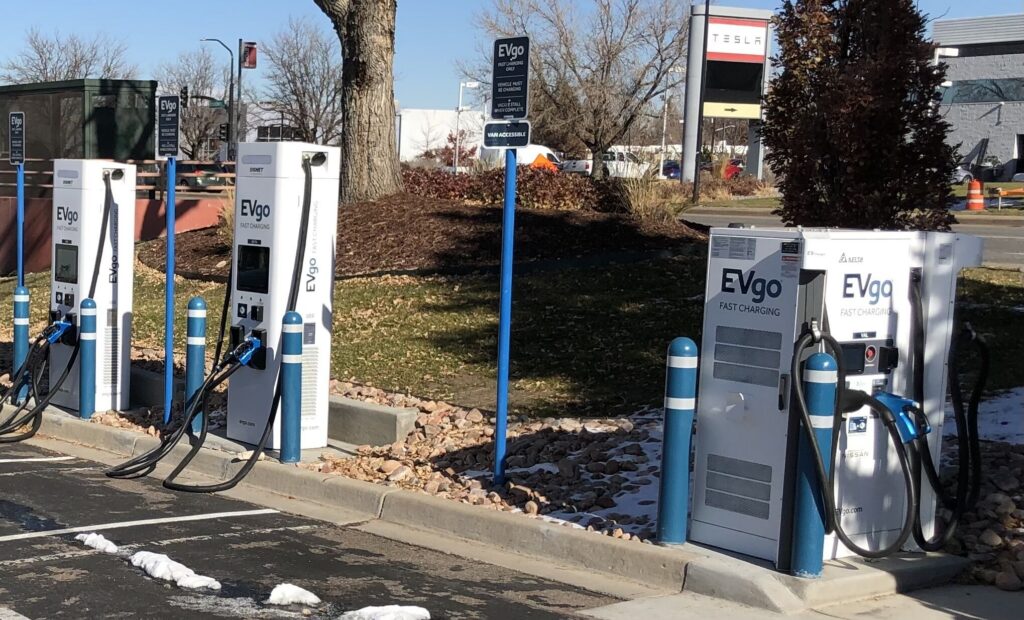
Colorado’s EV charging map nearly complete, state says
Scott Weiser
scott.weiser@gazette.com
Updated 1 day ago
Gov. Jared Polis and the Colorado Department of Transportation released a statement calling the state’s public fast-charging network nearly built out. The Aug. 27 news release reports there are now 486 DC fast-charging locations and 83% of the state highway...

DA calls out election opponent over confidential voter breach
Savannah Eller
savannah-eller@coloradopolitics.com
Updated 1 day ago
Fourth Judicial District Attorney Michael Allen said his office was investigating after a software glitch temporarily exposed his own personal information along with the information of more than 130,000 confidential voters in Colorado. “This represents a glaring safety issue,” he...

Denverites are wary of bus rapid transit and Waymo, voter survey says
Mark Samuelson Special to The Denver Gazette
mark.samuelson@denvergazette.com
Updated 1 day ago
As residents and commuters get their first look at how the Regional Transportation District’s Bus Rapid Transit project has narrowed East Colfax Avenue east of downtown, Denverites seem to be flashing a caution light about any further expansion of BRT...

Aurora seeks public input on gas station spacing, other requirements
Kyla Pearce
kyla.pearce@gazette.com
Updated 1 day ago
Aurora officials are asking for public input on a series of regulations for gas stations, including spacing and charging station requirements. Members of the public have until Oct. 31 to take the city’s survey, which is available on the Engage...
PREV
PREVIOUS

Colorado Senate reworks key programs, gives preliminary nod to $46B budget
With the Senate’s traditional Budget Day barbecue setting a lighter tone, lawmakers worked through the $46.8 billion state budget Wednesday, navigating a long list of amendments but avoiding the partisan clashes that defined the House debate last week. The Senate first moved through 44 of the 64 “orbitals,” which are bills that adjust state law […]

9 Colorado hospitals at risk of closing due to Medicaid cuts
The $900 billion in Medicaid cuts over the next decade could threaten the viability of more than 400 hospitals nationally and at least nine in Colorado, a new report has found. The hospitals span the Front Range and rural communities, from Denver Health — the region’s primary safety-net provider — to smaller hospitals in places […]