

9 Colorado hospitals at risk of closing due to Medicaid cuts
The $900 billion in Medicaid cuts over the next decade could threaten the viability of more than 400 hospitals nationally and at least nine in Colorado, a new report has found.
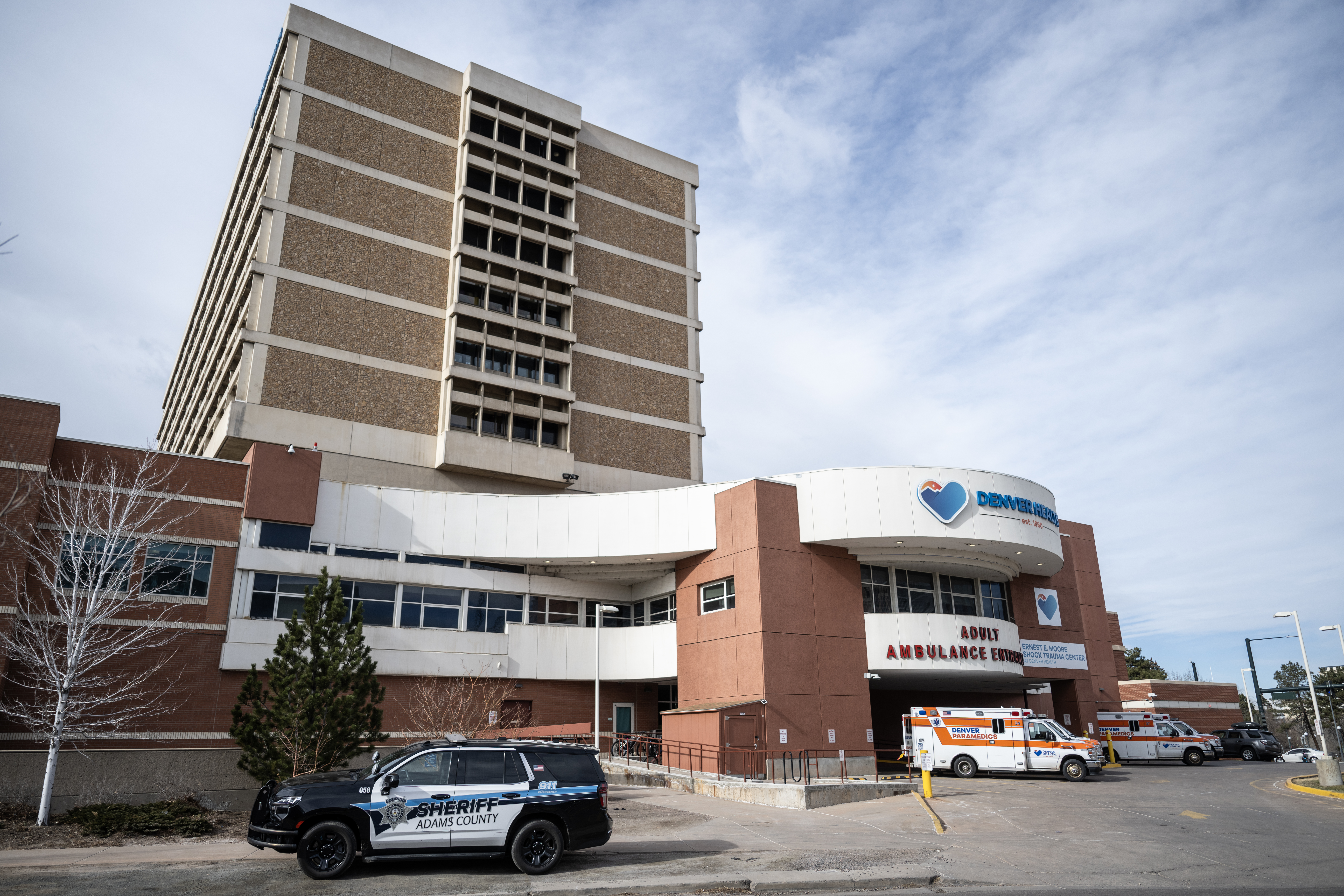
The hospitals span the Front Range and rural communities, from Denver Health — the region’s primary safety-net provider — to smaller hospitals in places like Leadville, Lamar and Fort Morgan, reflecting the mounting pressure across both urban and rural health systems.
“The cuts will be devastating to many low-income and disabled individuals who rely on Medicaid,” the report said.
“Moreover, they will have knock-on effects on hospitals that disproportionately serve these communities, deepening the financial strain already plaguing rural and safety-net hospitals and compromising their ability to deliver care, potentially leading many to close.”
The Public Citizen report identified the hospitals most at risk of reducing medical services or closing using three years of data. Hospitals with a high Medicaid payer mix (20% or greater) and a negative net profit margin were categorized as “at-risk.”
The Colorado hospitals at risk of closure are:
- North Colorado Medical Center (Greeley)
- Longmont United Hospital
- Platte Valley Medical Center (Brighton)
- St. Elizabeth Hospital (Fort Morgan)
- Denver Health
- St. Vincent General Hospital (Leadville)
- UCHealth Grandview Hospital (Colorado Springs)
- St. Mary-Corwin Hospital (Pueblo)
- Prowers Medical Center (Lamar)
The financial situation is dire, but officials at several of the Colorado hospitals identified as at risk — including Denver Health and UCHealth in Colorado Springs — said their health systems are not in danger of closing.
“A closure is really not on the table,” Donna Lynne, CEO of Denver Health, told The Denver Gazette. “We’re not closing the doors.”
Nor does Lynne foresee any service reductions.
But with nearly half of Denver Health’s 280,000 patients on Medicaid, the cuts will mean “belt tightening.”
Lynne said as many as 20,000 could lose their Medicaid eligibility with new requirements that include recertifying twice annually.
“We’re going to do everything that we can to make sure that they stay on Medicaid,” Lynne said.
In 2024, Denver voters approved a 0.34% sales tax increase to generate $70 million in additional revenue for Denver Health. Its passage made the city’s 9.15% sales tax rate the highest among the 10 largest cities on the Front Range.
Passed eight months before the Medicaid cuts to pay for direct care, the roughly $60 million the health system expects to lose essentially puts Denver Health in the position it was before passage.
“It’s almost a wash,” Lynne said.
Denver taxpayers annually support the region’s safety net.
“President Trump’s Big Beautiful Bill will make it more difficult for Denverites to access and afford healthcare and will create harm for low-income families and children,” Jon Ewing, a spokesperson for Denver Mayor Mike Johnston, said in a statement.
“We will continue to financially support our healthcare system as best we can, but no city or state can possibly hope to cover the funding gaps this bill has so cruelly created.”
UCHealth officials, facing similar concerns about Medicaid cuts, struck a similar tone.
“Like all hospitals, UCHealth is concerned about potential Medicaid cuts and a possible rise in uninsured patients,” Kelli Christensen, a UCHealth spokesperson, said in an email.
“Even so, UCHealth Grandview Hospital is not at risk of closing and will continue to provide emergency and specialty care for patients in Colorado Springs and the surrounding communities.”
Established in 2016, UCHealth Grandview Hospital is a 57-bed micro hospital.
In rural Colorado, St. Vincent Health in Leadville echoed its urban counterparts.
“While reports highlighting challenges facing hospitals across Colorado reflect real pressures in today’s health care environment, St. Vincent Health in Leadville remains positioned for and committed to maintaining access to high-quality care close to home,” Karen Onderdonk, a St. Vincent spokesperson, said in a statement.
The hospital has had financial uncertainties before. Just three years ago, cash strapped and unable to pay staff, the hospital might have closed if not for local, state and federal partners stepping in to avert the financial calamity.
Colorado has defied the closure trends seen elsewhere.
But with nearly seven in 10 operating on thin or negative operating margins, the streak could be coming to an end, said Cara Welch, a Colorado Hospital Association (CHA) spokesperson.
CHA estimates Colorado could lose $10.4 billion in federal funding by 2032 under the “One Big Beautiful Bill” Act signed into law on July 4.
“That reduction will be devastating to Colorado, as the state budget has no ability to backfill that amount,” Welch said in an email. “The entire health care system will feel the impact.”
In Colorado, Medicaid covers about one in four Coloradans.
The state program has also been a growing pressure point for the state budget, with costs rising sharply in recent years. The state’s top Medicaid official, Kim Bimestefer, stepped down last month.
As many as 150,000 Coloradans could lose health insurance, largely due to changes to Medicaid, according to a KFF analysis.
Jointly funded by the state and federal government, Medicaid provides health coverage to low-income residents, including children, pregnant women, seniors and people with disabilities.
The program is overseen by the Department of Health Care Policy and Financing, or HCPF.
Marc Williams, a HCPF spokesperson, said they were unable to provide additional comment on deadline, but directed The Denver Gazette to online materials outlining the expected impacts of H.R. 1.
Nicknamed the “Big Ugly Law” by opponents, the law is expected to cut up to $911 billion in Medicaid and CHIP (Children’s Health Insurance Program) spending over the next decade, according Congressional Budget Office estimates.
The bill passed with no Democratic support.
“We’re facing a health care crisis, and this administration is only making things worse,” U.S. Sen. John Hickenlooper said in a statement. “Colorado hospitals are at risk because the White House cut health care to fund tax breaks for the wealthiest, all while families are paying double or triple for care.”


Healthcare Freefall: AI arms race hits rural healthcare as hospitals fight to keep up
Thelma Grimes
thelma.grimes@coloradopolitics.com
Updated 5 days ago
Editor’s Note: Colorado’s healthcare system is entering a period of accelerating instability — a “tsunami,” as multiple leaders describe it — driven by collapsing hospital finances, shrinking Medicaid reimbursements, disappearing services and a political fight over who is responsible for...

Healthcare freefall: UNC’s new medical school aims to tackle Colorado’s rural doctor shortage
Hap Fry, Special to The Gazette
hap-fry@gazette.com
Updated 4 days ago
Editor’s Note: Colorado’s healthcare system is entering a period of accelerating instability — a “tsunami,” as multiple leaders describe it — driven by collapsing hospital finances, shrinking Medicaid reimbursements, disappearing services and a political fight over who is responsible for...

Healthcare freefall: Economic ripple effects grow as Colorado hospitals face financial strain
Thelma Grimes
thelma.grimes@coloradopolitics.com
Updated 4 days ago
Colorado’s hospital systems aren’t just a network of clinics and emergency rooms — they are also one of the state’s largest economic engines. So some 10 hospitals identified at any given time as vulnerable to closure, the alarm extends far...

Healthcare Freefall: Longer drives, fewer options for maternity care in Colorado
Thelma Grimes
thelma.grimes@coloradopolitics.com
Updated 1 week ago
Editor’s Note: Colorado’s healthcare system is entering a period of accelerating instability — a “tsunami,” as multiple leaders describe it — driven by collapsing hospital finances, shrinking Medicaid reimbursements, disappearing services and a political fight over who is responsible for...

Colorado schools reopen with measles vaccination rates below protective threshold
Nico Brambila
nico.brambila@denvergazette.com
Updated 1 week ago
Colorado is entering the new school year without active measles transmission, but health officials remain concerned as kindergarten MMR coverage sits at just 87.8% and most counties fall below the 95% threshold considered protective against outbreaks. “These declining vaccination rates,...
Healthcare Freefall: Telluride mother’s roadside birth underscores shrinking access to OB care in Colorado
Rachael Wright, Special to Colorado Politics
rachael.wright@coloradopolitics.com
Updated 2 weeks ago
Editor’s Note: Colorado’s healthcare system is entering a period of accelerating instability — a “tsunami,” as multiple leaders describe it — driven by collapsing hospital finances, shrinking Medicaid reimbursements, disappearing services and a political fight over who is responsible for...
Healthcare freefall: Breast cancer survivor shares strain of rural treatment travel
Hap Fry, Special to The Gazette
hap-fry@gazette.com
Updated 4 days ago
Editor’s Note: Colorado’s healthcare system is entering a period of accelerating instability — a “tsunami,” as multiple leaders describe it — driven by collapsing hospital finances, shrinking Medicaid reimbursements, disappearing services and a political fight over who is responsible for...

State health department directs GEO to assist in tuberculosis investigation at ICE facility
Kyla Pearce
kyla.pearce@gazette.com
Updated 2 weeks ago
The Colorado Department of Public Health and Environment issued a public health order directing the GEO Group to participate in the ongoing tuberculosis investigation at the Aurora ICE Processing Center. The Adams County Health Department confirmed an active case of...
Healthcare freefall: Once built on federal investment, rural hospitals today fight to survive
Thelma Grimes
thelma.grimes@coloradopolitics.com
Updated 7 days ago
Editor’s Note: Colorado’s healthcare system is entering a period of accelerating instability — a “tsunami,” as multiple leaders describe it — driven by collapsing hospital finances, shrinking Medicaid reimbursements, disappearing services and a political fight over who is responsible for...
Healthcare freefall: Subsidy cuts, insurance gaps reshape how Coloradans will seek care
Thelma Grimes
thelma.grimes@coloradopolitics.com
Updated 2 weeks ago
Editor’s Note: Colorado’s healthcare system is entering a period of accelerating instability — a “tsunami,” as multiple leaders describe it — driven by collapsing hospital finances, shrinking Medicaid reimbursements, disappearing services and a political fight over who is responsible for...
PREV
PREVIOUS
Lakewood mayor calls for unity, community in State of the City speech
Lakewood held its first State of the City address since 2018 on Wednesday — timing Mayor Wendi Strom attributed to fate. “We got bumped a few times on dates,” Strom said to a room of nearly 100 residents and officials. “It could not have ended up being at a better time. There are no coincidences.” […]

Taking Colorado workers' ID documents would be a crime under this proposal
After a narrow 6–5 vote, a bill to bar employers from taking workers’ identification documents is moving to the full Colorado House, sparking questions about how often such intimidation occurs and whether a new state law is necessary. House Bill 1283, sponsored by Democratic Reps. Junie Joseph and Naquetta Ricks, would make it a Class […]