

Colorado candidates for governor share plans to tackle youth mental health crisis
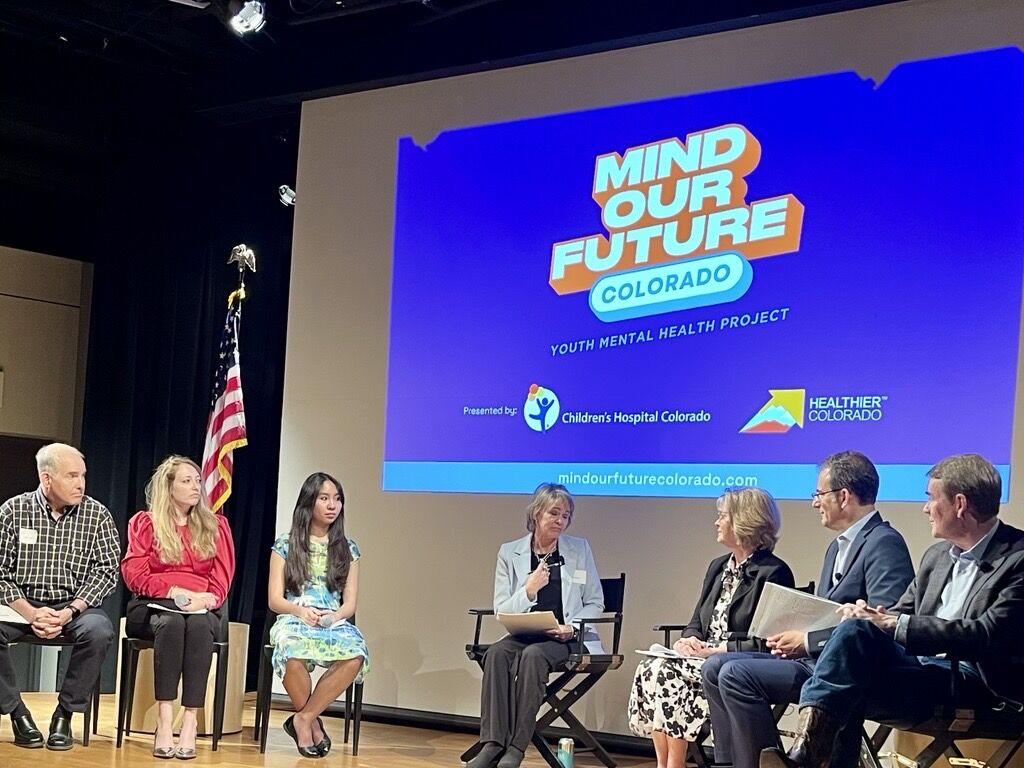
Three candidates for Colorado’s highest elected office laid out their plans to address the state’s youth mental health crisis during a forum on Thursday.
Democratic Attorney General Phil Weiser, U.S. Sen. Michael Bennet, and Republican State Sen. Barbara Kirkmeyer fielded questions about expanding access to mental health care for children, addressing the workforce shortage, and confronting big tech’s influence during the event hosted by Mind Our Future Colorado.
Policymakers, experts: Investment falls short
Kirkmeyer, who serves on the state legislature’s Joint Budget Committee, argued the $1.2 billion deficit the state faced last legislative session was more about mismanaged priorities than anything else.
Throughout her four years serving on the budget panel, Kirkmeyer said she has remained committed to her top priorities, notably education, Medicaid reimbursement rates, and social services for children.
She raised worries about the state’s fragmented mental health system, especially the Behavioral Health Administration, a cabinet‑level agency Gov. Jared Polis created in 2022, intending to unify Colorado’s mental health and substance abuse services.
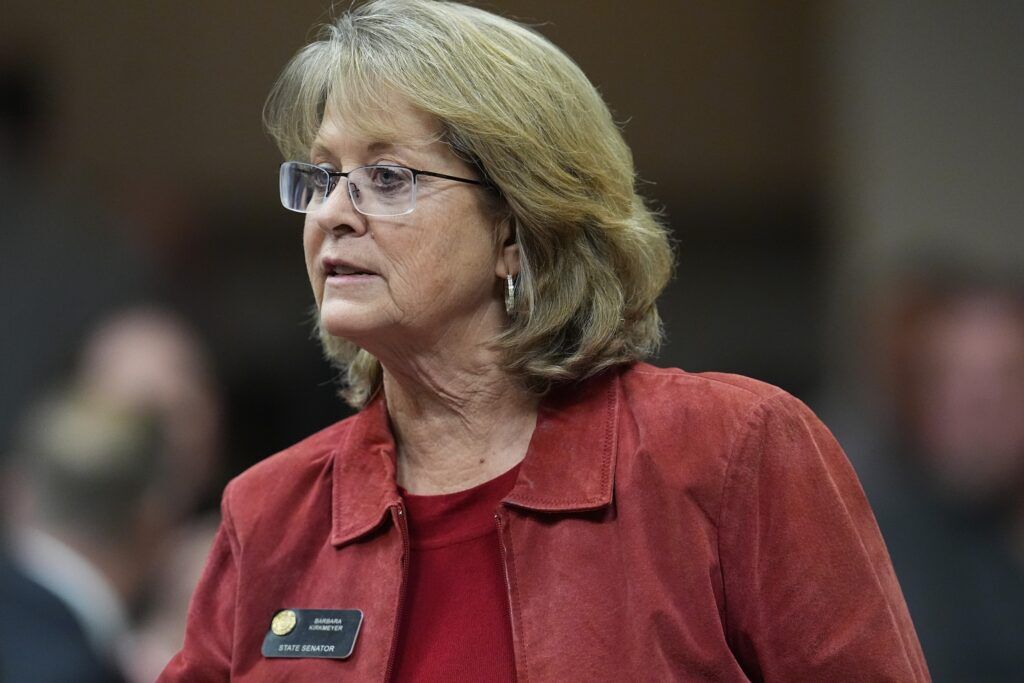
Four years later, the agency has done nothing of the sort, Kirkmeyer argued.
“I do believe that we have to figure out how to get these agencies on board, and it is beyond me why the governor doesn’t just tell his executive directors to get their act together and start working together for the betterment of everybody,” she said.
Weiser proposed an amendment to the Taxpayer’s Bill of Rights to direct more funding to youth mental health, a change that would require voter approval to implement.
At its core, TABOR, adopted by voter initiative in 1992, limits the revenue that the state and its political subdivisions can keep and spend. When more money is collected than the limit set by TABOR, the “excess” dollars are refunded to taxpayers.
Investing in kids now will result in savings down the road, he said.
“The resources are not there supporting behavioral health care,” Weiser said.
“We’re gonna pay for it one way or another as a state. Either we’re gonna make investments that are trauma-informed up front, helping kids live their best lives, feel supported, connected, and having hope about their future, or we’re gonna pay for the criminal justice system — increasing prisons, putting more people away because we have failed to make the crucial investments up front.”
Bennet said that Colorado students spend an average of 20 fewer days in school than kids in other states due to a lack of funding.
“We are falling short, and we have to make a commitment to a vision for the children in our state that actually will make this the best state in America to raise a child,” he said.
Candidates: Early intervention needed
Mental health care should start in early childhood, Bennet argued, and it can take many forms besides therapy.
Bennet called for a “true public option” for families, with mental and physical health care services covered in an “equal” manner.
“The insurance companies in the state and across the state are not doing that for the people that are living here,” he said.
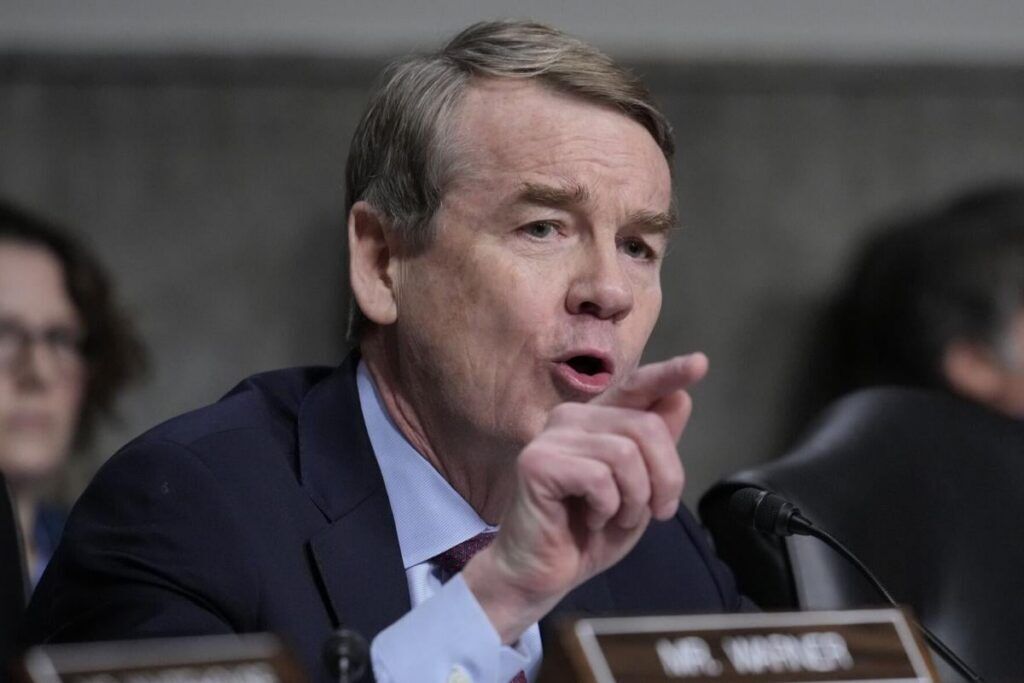
Bennet criticized the state’s universal preschool program, which Polis often cites as one of his proudest achievements as governor.
“We claim that we have universal preschool in Colorado, a little bit like we claim that the education system is fully funded,” Bennet said. “Neither of those things are remotely true.”
Colorado should look to states like New Mexico, which recently became the first in the country to offer universal child care.
Kirkmeyer noted her two decades as a Weld County Commissioner, during which she heard stories of toddlers in the foster care system who were kicked out of their daycare centers due to behavioral issues.
She worked with then-Rep. Dave Young, who now serves as state treasurer, to pass legislation ensuring children in the foster care system maintain their Medicaid coverage regardless of which regional accountability entity, or RAE, they move to.
“We are in a hole when it comes to early childhood,” Weiser said. The early years of a child’s life are some of the most important for development, he said.
“If we’re not providing resources and the support at the right time, we’re gonna change trajectories in the wrong direction.”
As part of his childcare policy platform, Weiser is advocating for what he calls a Childcare Solutions Fund, described by his campaign as a “public-private partnership to expand childcare options across the state.”
Candidates: Social media platforms exacerbate the problem
All three candidates agreed that social media and artificial intelligence have played a major role in the youth mental health crisis in recent years.
Bennet advocated for a total ban of cellphones in schools, arguing that a recent law requiring all districts to have an established cellphone policy has done “literally nothing.”
He said that when kids are in environments where their phones are taken away, and they have time to disconnect, many of them don’t want the devices back in their schools. They tell adults they’re finally talking to one another again — and treating each other more kindly.
Bennet likened the rise of social media and AI to the Gilded Age of the century prior.
“Rockefeller was the (Mark) Zuckerberg at the time, and he was drilling for oil wherever he wanted, and Teddy Roosevelt found a way to lead a movement and push back on that,” he said. “We have to have a movement to push back on this. We need a Mothers Against Drunk Driving to take on these companies and what they’re doing to our children for the sake of selling advertising to us, and no one has had that negotiation.”
Social media companies “absolutely” need to be held accountable for what they’re doing to kids, Kirkmeyer said.
“I think parents need to be watching what’s going on with their children, but they can’t see everything; they can’t know everything,” she said.
As a state legislator, Kirkmeyer said she supported bills establishing guardrails for AI chatbots and social media platforms, the latter of which she vetoed.
Kirkmeyer was one of several senators to vote in favor of overriding that veto, but the House didn’t have enough votes to do the same.
“I think the governor should step in and say there needs to be guardrails and that these companies need to be held accountable,” she said.
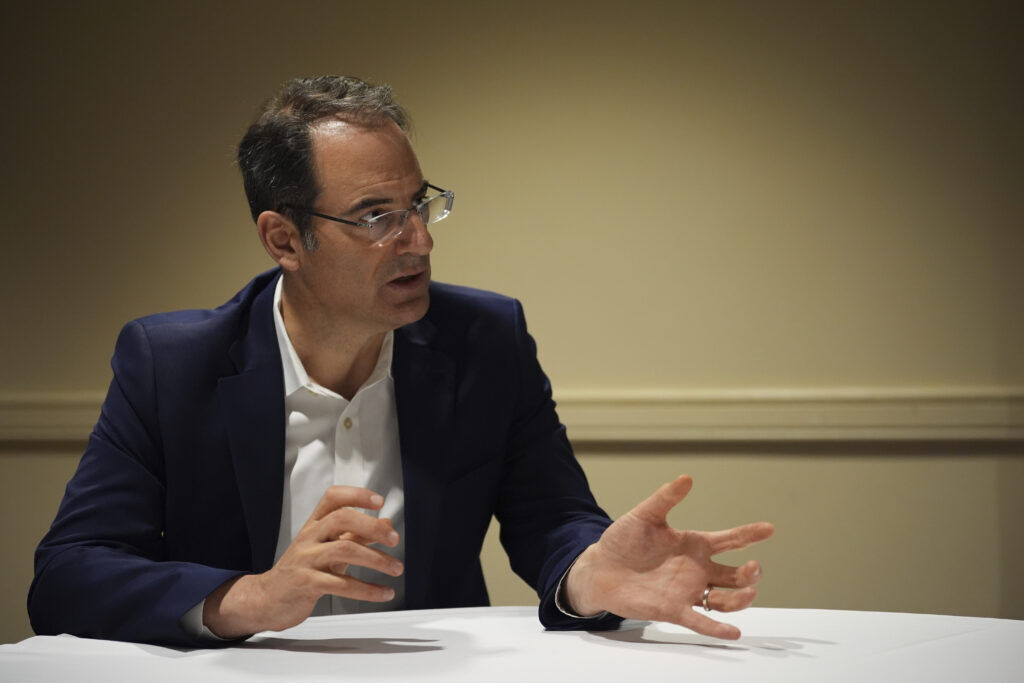
Weiser said the companies should be held responsible and noted that he is already pursuing that accountability in court through a lawsuit he and other state attorneys general have filed against Meta, the parent company of Instagram and Facebook.
Weiser also noted Polis’ veto of last year’s social media bill, saying, “When I’m governor, I’ll sign it.”
Candidates: Colorado needs to beef up its workforce
The state is short 4,800 mental health care providers, according to a report by the Colorado Health Institute.
The workforce shortage is the “underlying issue” in the state’s mental health crisis, Kirkmeyer said.
Safety net providers, or those that provide care to uninsured or underinsured patients, are being hit the hardest, Kirkmeyer said, especially because they are not being reimbursed equally for treating Medicaid patients.
She noted legislation she sponsored last year with Sen. Kyle Mullica, D-Thornton, which established a funding program for safety net providers across the state.
“We are in crisis mode with our health care and behavioral health care systems in this state,” Kirkmeyer said. “We have to look at the funding. It doesn’t mean we need to increase taxes; we actually need to look at what we prioritize in this state for funding.”
Resolving the mental health workforce shortage starts in the state’s schools, Bennet said.
He proposed forgiving student loan debt for mental health professionals working in rural and underserved parts of the state and providing incentives for students to work in the small communities where they grew up.
“I think one thing we’ve got to do is make sure we’ve got a much better and more robust pipeline so young people understand that this is a place they can go in and have a rewarding career in,” he said.
Weiser proposed a program he calls ColoradoCorps, which would train college students and young adults in fields like nursing, education, and counseling through a combination of paid work, volunteering, mentoring, and credentialing.
Weiser called the program “a two-prong opportunity to build a workforce we need in key areas and to give young people hope about their future and a sense of meaning and calling.”
The gubernatorial primary election is on June 30. Republican candidates Rep. Scott Bottoms of Colorado Springs and Victor Marx did not attend Thursday’s forum.


Colorado redistricting limits measure heads to November ballot
Marissa Ventrelli
marissa.ventrelli@coloradopolitics.com
Updated 3 hours ago
A proposed constitutional amendment that would prohibit Colorado’s congressional maps from being redrawn outside of election cycles has qualified for the November ballot, according to the Secretary of State’s Office. Under Initiative No. 256, redistricting changes for the 2028 election...
Polis announces ‘Governor for a Day’ contest for Colorado students
Marissa Ventrelli
marissa.ventrelli@coloradopolitics.com
Updated 5 hours ago
Colorado seventh and eighth graders have the chance to experience a day in the life of the governor through a new contest launched by Gov. Jared Polis. The “Governor for a Day” competition will give one student the chance to...
Colorado state House Democratic candidate arrested in Texas for public intoxication
Marianne Goodland
marianne.goodland@coloradopolitics.com
Updated 3 hours ago
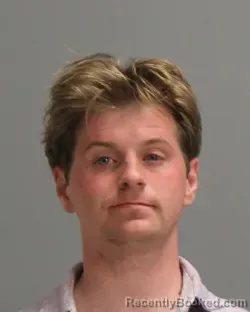
A Democrat from Lone Tree who is running for a House seat was arrested in Texas in May on charges of public intoxication and resisting arrest. Christian Schilder, the Democrat, is challenging Rep. Brandi Bradley, the Republican incumbent, in the...
Initiative asks Colorado voters to approve 8th-grade reading standard for ballot measures
Marissa Ventrelli
marissa.ventrelli@coloradopolitics.com
Updated 3 hours ago
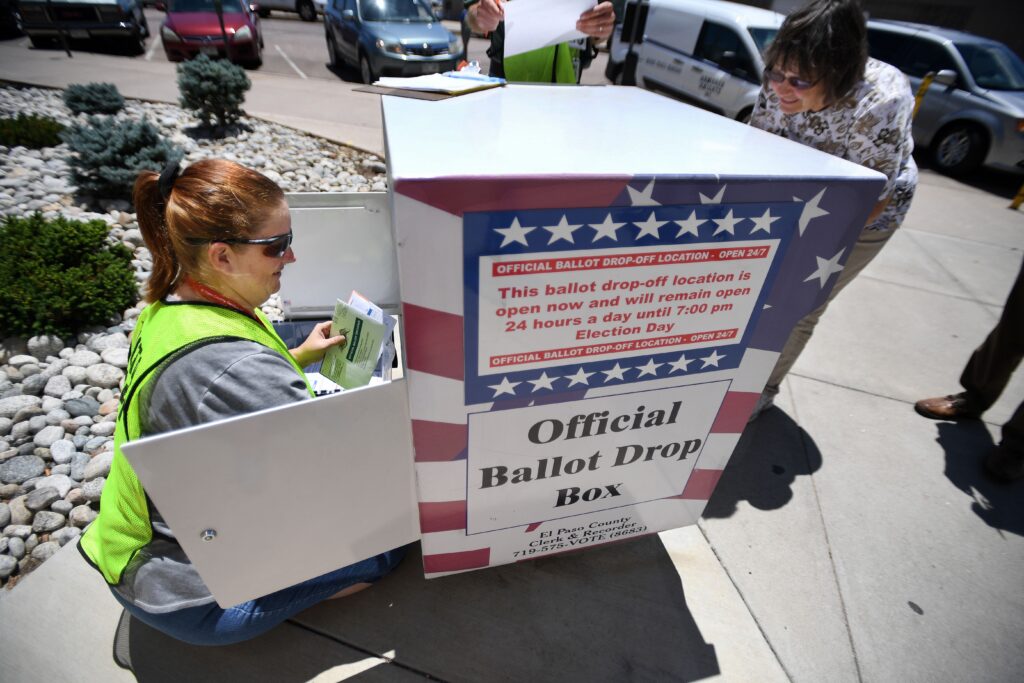
A ballot initiative that would require all ballot measures to be written at no higher than an eighth-grade reading level has qualified for the November ballot, according to the Colorado Secretary of State’s Office. The measure, backed by the group...

A course correction Canada would concur with | Miller Hudson
Miller Hudson
miller-hudson@coloradopolitics.com
Updated 3 days ago
I’ve always harbored a soft spot for Canada. My father was stationed there twice, once in the 1960s as the Atomic Energy Commission’s American liaison with the Canadian nuclear reactor program in Chalk River, Ontario and again in the 1970s...
Private property rights challenge rural Colorado communities | Rachel Gabel
Rachel Gabel
rachel-gabel@coloradopolitics.com
Updated 3 days ago
If there were ever a topic I believe deeply in, it’s private property rights. If there were ever a topic that leaves me in a moral conundrum more often than not, it’s private property rights. The northern portion of Weld...

Gaylord — you never check in, but still pay | Jon Caldara
Jon Caldara
jon-caldara@coloradopolitics.com
Updated 4 days ago
I go to a lot of conferences, often in beautiful cities I never actually see. Friends hear where I’ve been and ask depressing questions like, “Did you visit the famous museum?” No. I saw Ballroom C, the lobby bar and...
Reflections on Weiser-Lopez, Crank-Killian debates | Tom Cronin
Tom Cronin
tom-cronin@coloradopolitics.com
Updated 3 days ago
Thursday night, The Gazette and KOAA TV hosted two important candidate debates. The first featured incumbent Republican U.S. Rep. Jeff Crank, who is just completing his first term representing El Paso County in Congress, and Jessica Killian, a Democrat who has...

What courageous citizenship really looks like | Vince Bzdek
Vince Bzdek
vince.bzdek@gazette.com
Updated 2 days ago
By Vince Bzdek What exactly is courage? Ernest Hemingway famously called it grace under pressure. Mark Twain wrote that “courage is resistance to fear, mastery of fear — not absence of fear.” C.S. Lewis refined that even more: “Courage is...
Colorado measure adding ID checks to mail-in voting qualifies for ballot
Marissa Ventrelli
marissa.ventrelli@coloradopolitics.com
Updated 3 days ago
A ballot initiative that would require voters to include additional information on mail-in ballots has qualified for the November election, according to the Secretary of State’s Office. Backed by El Paso County Treasurer Chuck Broerman and former Deputy Secretary of...
PREV
PREVIOUS

Colorado advocates unveil youth mental-health 'playbook' for next governor
Colorado youth‑mental‑health advocates have released a new “playbook,” urging the next governor to streamline the state’s sprawling system of services and appoint a single leader to oversee them. In addition to hosting a gubernatorial candidate forum on Thursday, Mind Our Future Colorado released the playbook, which includes recommendations for how the state’s next leader can […]

Colorado governor signs new regulations on AI chatbots for minors
Colorado will impose restrictions on AI chatbots used by minors after Gov. Jared Polis on Friday signed a bill requiring developers to disclose when kids are talking to a machine and block features that can mimic intimacy or encourage addictive engagement. House Bill 1263 will require AI developers to disclose to minor users that they […]