

Tapped: Worst winter in memory triggers cascading economic strain in Colorado mountain towns
Editor’s Note: The Denver metro region sits at the center of one of the American West’s most complex and consequential water challenges. This series examines the interconnected systems that determine how the region secures, stores, and conserves its water while navigating the competing demands of fast‑growing urban communities and the increasingly unpredictable mountain snowpack that underpins the entire system.

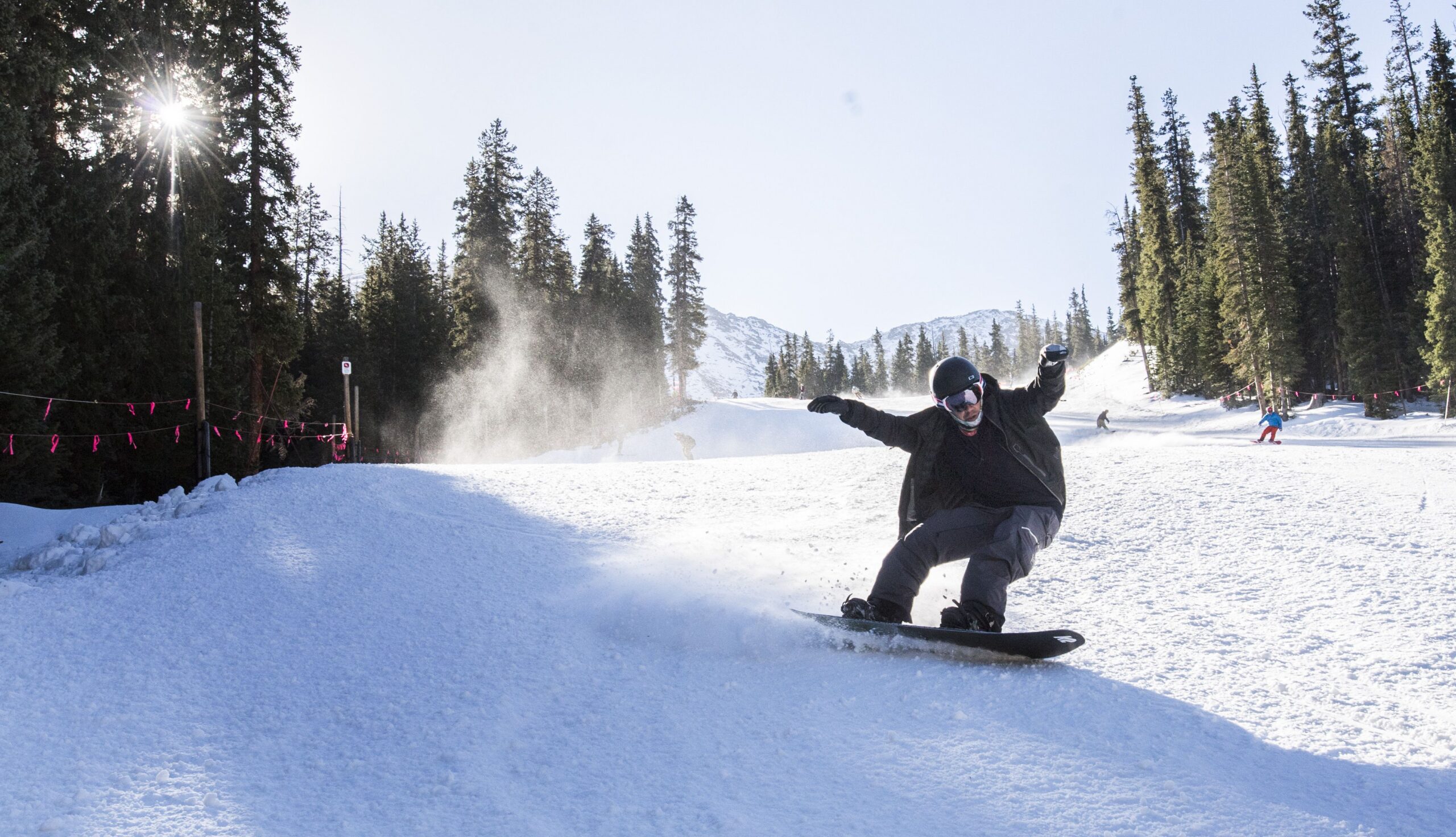
Rocky, snow‑starved slopes. Rivers rising too soon. Resorts shutting down in April. Drought rules spreading statewide.
These aren’t just signs of a bad winter — they’re red flags.
And now another one is flashing across the Rockies: falling sales‑tax revenues that threaten the budgets and stability of mountain towns already stretched thin.
Sales‑tax revenues — a key measure of local spending and a major source of city funding — dropped across many Colorado mountain towns in the first months of the year, largely because the unusually dry winter kept visitors away.
In December, some towns saw only slight declines or even small gains. In Breckenridge, businesses said tourists who had already booked their trips and couldn’t cancel still spent more time and money in town during the busy holiday season, despite the poor snow conditions.
But by January, declines had spread across nearly every mountain town.
February’s data shows how steep the drop became: taxable sales fell 10% in Vail, 2.5% in Steamboat Springs, 3% in Frisco, and nearly 7% in Glenwood Springs, according to a Mountain Communities Report by Steamboat Springs officials.
Because many cities collect sales tax at the end of the month, the numbers often lag by two months or more as businesses report their totals and officials process the data.
Most towns still haven’t released March figures — the month when the already thin snowpack rapidly melted during peak Spring Break travel — but many expect the financial hit to deepen into April, as ski resorts closed right after Easter, weeks earlier than normal.
window.addEventListener(“message”,function(a){if(void 0!==a.data[“datawrapper-height”]){var e=document.querySelectorAll(“iframe”);for(var t in a.data[“datawrapper-height”])for(var r,i=0;r=e[i];i++)if(r.contentWindow===a.source){var d=a.data[“datawrapper-height”][t]+”px”;r.style.height=d}}});Thin snowpack, thinning budgets
Snow is the backbone of many ski‑town economies — and this year, Colorado’s snowpack hit record lows, with some calling it the worst winter the state has ever seen.
The drought’s impacts are rippling far beyond the slopes, driving up wildfire risk, straining Denver’s water supply, and dealing a blow to the outdoor economy not just in winter but also heading into summer.
Colorado’s record‑dry winter couldn’t have come at a worse time, arriving just as the state’s outdoor economy has already been beginning to cool after its post‑pandemic boom.
In Breckenridge, taxable sales were down by 4.3% in January. By February, sales were down by 8.7%.
Sales tax data for March and April — some of the most difficult months for the state’s snowpack — will be released in the coming months.
“We still do have some more storms to weather,” Laura MacInnes, Breckenridge’s director of finance, told The Denver Gazette.
She was right, several storms have brought more moisture in May.
Still, the town had already forecast lower revenues before officials knew the extent of the dry ski season. Breckenridge decreased its 2026 budget by 5% compared to 2025, leaving it better prepared for the financial hit that came from the lack of snow, MacInnes said.
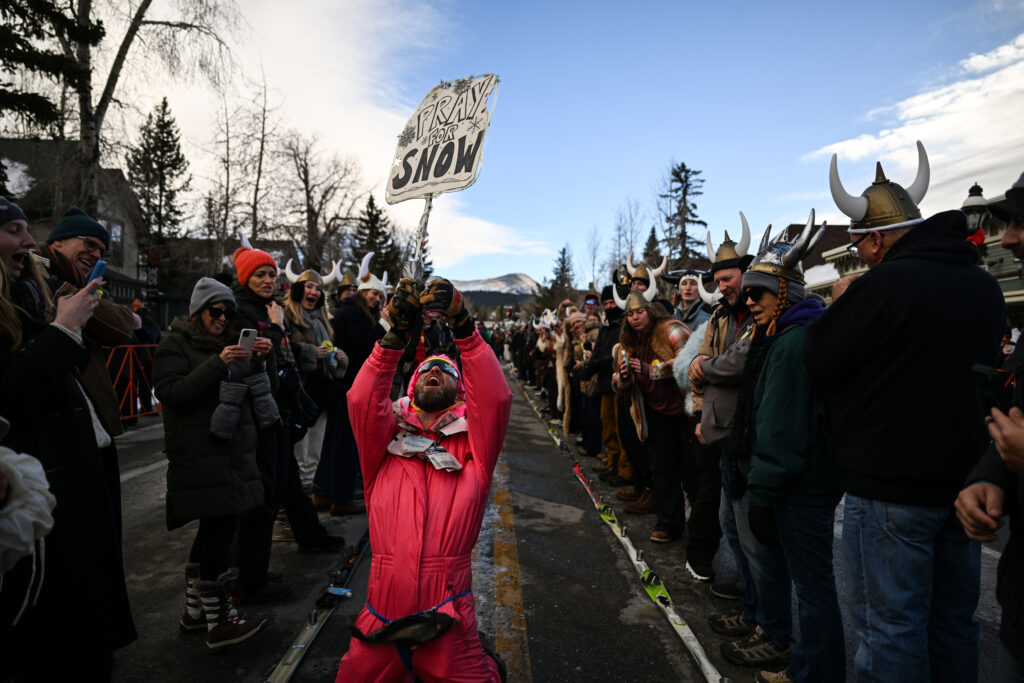
The ski season is the financial engine for mountain towns, with December through March bringing in their highest revenues of the year. In Breckenridge, those four months account for about half of the annual taxable sales. Each month of ski season pulls in more than $100 million, compared with just $35 million to $78 million per month from April through November.
“It counts for about 25% of our budget,” MacInnes said. “So, given that, we pretty much rely on all sales tax collection for everything we do within the town.”
Breckenridge saw a surge in sales‑tax revenue from 2020 to 2024, when pent‑up demand fueled a boom in outdoor recreation. But that momentum has faded, and the town’s finance department began scaling back expectations heading into 2026, MacInnes said.
window.addEventListener(“message”,function(a){if(void 0!==a.data[“datawrapper-height”]){var e=document.querySelectorAll(“iframe”);for(var t in a.data[“datawrapper-height”])for(var r,i=0;r=e[i];i++)if(r.contentWindow===a.source){var d=a.data[“datawrapper-height”][t]+”px”;r.style.height=d}}});Colorado’s slowdown is showing up in the data.
Recent federal figures revealed that the state’s outdoor economy grew more slowly in 2024 and even saw a slight decline — a 0.1% drop — in recreation jobs. Mountain towns that depend heavily on this sector are now being forced to adjust.
“In 2025, we saw the first decrease year over year in the past five years,” MacInnes said. “Before we even knew about the dry season, we were trying to find our new norm of sales tax.”
Economists warned the challenges go beyond climate. Breckenridge and other ski towns are also exposed to broader statewide economic trends, which have softened, as well.
“As state taxable sales grow, Breckenridge tends to grow more, tends to grow faster,” economist Brian Lewandowski of the University of Colorado Boulder told the town’s council members. “But you’re overexposed on the downside — when things slow, you really notice slower net taxable sales.”
The numbers showed that clearly.
In the first two months of 2023, Breckenridge recorded $232 million in taxable sales. That fell to $229 million in 2024, then below $221 million in 2025. In early 2026, the town brought in just $206 million — a 6.53% drop from the previous year.
MacInnes said the town can manage the early‑year decline for now, noting that unpredictable factors — from low snow to shifting tourism patterns — can swing revenues.
“That approach to our financials just gives us better leverage for being able to spend what we need to spend,” she said.
Still, at a town council meeting, the finance team warned that more headwinds are likely in the next two months. Breckenridge is watching closely as other mountain towns begin tightening their budgets, too.
Budget cuts hit Vail
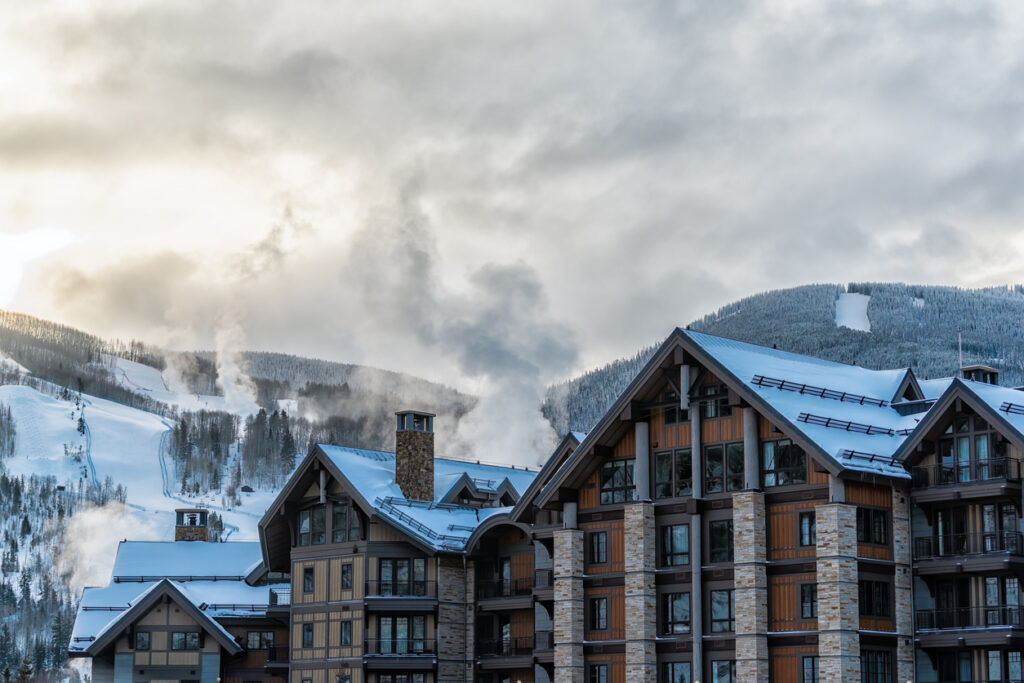
Vail’s record‑low snowfall and worsening drought forced the town to rethink its budget from the ground up.
Sales‑tax revenue fell more than 10% in February and March compared with 2025, according to a monthly city report. Town staff pointed directly to the limited snowfall, noting that the biggest hit came from fewer hotel stays — hotel‑related sales‑tax collections dropped more than 12%.
Retail sales taxes fell nearly 10%, and collections from restaurants and bars were down 6.5%, March’s report said.
The impact of the weak ski season is clearest in Vail’s lift‑ticket tax. Revenue from that tax dropped from $4.6 million in the first three months of 2025 to $4.1 million over the same period this year.
In early April, the Vail Town Council voted to amend its 2026 budget in response to the declining revenues, revising projected income downward by $5.5 million.
window.addEventListener(“message”,function(a){if(void 0!==a.data[“datawrapper-height”]){var e=document.querySelectorAll(“iframe”);for(var t in a.data[“datawrapper-height”])for(var r,i=0;r=e[i];i++)if(r.contentWindow===a.source){var d=a.data[“datawrapper-height”][t]+”px”;r.style.height=d}}});The financial strain became immediately visible during Vail’s budget discussions in April. City leaders noted they were struggling to fill several open positions — including jobs needed to expand the town’s bus service, a key effort to reduce car use. But the expansion depended on a Colorado Department of Transportation grant that would fund 10 positions.
Other city roles were put on hold because of falling revenues. One exception: Vail plans to move forward with hiring two fire‑department staff members, a decision Finance Director Carlie Smith said is necessary “especially given what could be a very hot summer.”
Despite the cuts, Town Manager Russell Forrest said the community remains financially “healthy.” The reductions, he said, are “a story of tightening our belt very strategically, surgically” to keep the town stable.
The months ahead look challenging.
March — a month of record heat that caused the already thin snowpack to melt early and quickly — was down more than 10%, though slightly higher than expected after the town adjusted its budget. April could drop by as much as 46% because of Vail Resort’s early closure.
Vail shut down on April 8; Breckenridge followed on April 19, later adding one final ski day on April 25.
On April 23, Vail Resorts released its end-of-season update, showing how the warm winter hit revenues across the company. Lift‑ticket revenue fell 5.6%, ski‑school revenue dropped 12%, dining was down 11.7%, and retail and rentals declined 6.6%.
While the Eastern U.S. saw better snowfall, visitation in the Rockies fell 25%, CEO Rob Katz said. Looking ahead, the company reported a “moderate decline” in early Epic Pass sales for the 2026–27 season.
“There were a lot of factors this year that were out of our control,” Vail Councilmember Dave Chapin said in April. Still, he expressed confidence: “We’ll get it back. We’ll be able to keep our town wherever it needs to be in time.”
Chapin also urged Vail Resorts to keep the mountain open later next year, especially since Easter falls in March. Forrest joked that “Mother Nature may have more to say than Broomfield,” but added he’s hopeful 2027 will be a much better season.
In May, the town’s leaders seemed more optimistic with summer approaching, as occupancy numbers have been trending above last year’s numbers.
Rebounding will take time
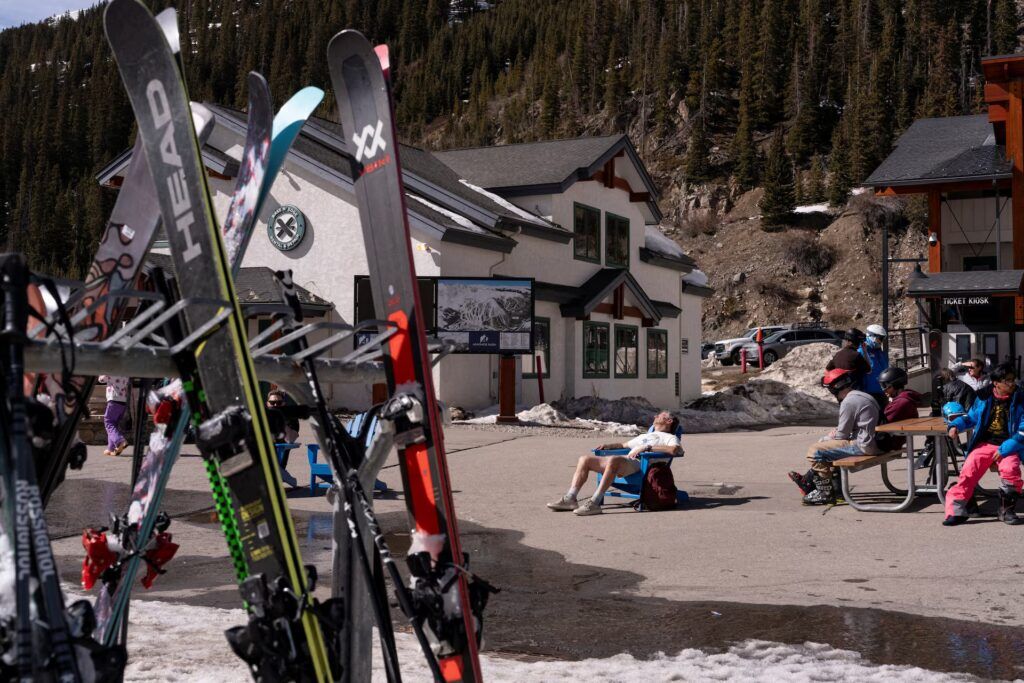
Mountain towns have changed dramatically over the past decade, said David Corsun, director of the University of Denver’s Fritz Knoebel School of Hospitality Management. They’re no longer just winter‑only resorts — more people now live there year‑round, and summer tourism has grown into a major draw.
“COVID made them more than just resorts,” he said. “A lot of people moved to the mountains to get away from COVID and cities.”
Still, Corsun warned that the recent “erosion” of ski‑season visitors will be hard to recover from.
“When the tourism they expected — and needed — doesn’t show up, the tax base shrinks,” he said. “So, towns are having to do more with less, or even try to do the same with less, which is certainly challenging.”
Steamboat Springs is already feeling that strain. The mountain area, which generates 32% of the city’s sales‑tax revenue, saw a nearly $140,000 drop in February compared with the previous year. Downtown revenues rose by $40,000, but that increase wasn’t nearly enough to offset the losses tied to the ski resort.
Winter still drives the economy in mountain towns, and even with stronger summer recreation industries, those warm‑weather months can’t fully make up for winter losses. A dry season means a tougher summer ahead.
Whitewater rafting companies expect shorter seasons on free‑flowing rivers like Clear Creek, and fly‑fishing guides worry that warmer water — a direct result of reduced snowmelt — will limit trips.

The Arkansas River Outfitters Association, which represents rafting businesses supported by dam releases, said trips may need to “shift in style” to adapt to lower flows. Demand remains steady, but the experience will change: slower canyon floats, more swim stops, and a likely shorter season on The Numbers near Buena Vista.
High heat in Denver could push more Front Range residents into the mountains this summer, boosting hiking tourism.
“It’s going to help not make things worse,” Corsun said. “It’s not going to provide full recovery.”
Weather isn’t the only challenge. Rising jet‑fuel prices tied to the U.S.–Israel conflict with Iran could push travelers to fly into Denver International Airport, instead of regional airports in Vail or Aspen to save money, Corsun said. That shift adds friction to mountain travel and could reduce visitor spending.
Labor shortages pose another long‑term problem. Restaurant and hotel workers laid off during slow periods may be reluctant to return, given the instability of hours and the high cost of housing.
“Attracting an employee base — a restaurant being able to stay open seven days a week with two meals a day — is going to be an issue,” Corsun said.
He also warned towns not to cut their marketing budgets to save money. Doing so now, he said, could worsen the financial fallout from the dry winter, since this is the moment to aggressively attract tourists for next year.
Mountain towns are especially vulnerable to tourism swings, and the longer the drought lasts, the harder the recovery will be. Yet their rapid growth over the past decade is also proof of how much tourism has built them.
“The towns almost wouldn’t exist but for tourism,” Corsun said. “Certainly, the infrastructure that’s there wouldn’t exist but for tourism.”
Read more from the Tapped series here:
Tapped: As fire risk climbs, Colorado faces threat to drinking water
Tapped: Denver residents face hotter, costlier summer under new drought rules
Tapped: Is water a problem for data centers in Colorado?
Tapped: Aurora cracks down on water use as reservoirs fall, runoff shrinks
Tapped: Douglas County looks to diversify water supply as population grows
Tapped: Colorado River overallocation collides with record drought conditions
Tapped: Golden tightens water rules as Clear Creek snowpack falters
Tapped: As snowpack levels shrink, Jefferson County cities take divergent paths on water
Tapped: Colorado River overallocation collides with record drought conditions


Healthcare freefall: Economic ripple effects grow as Colorado hospitals face financial strain
Thelma Grimes
thelma.grimes@coloradopolitics.com
Updated 1 day ago
Colorado’s hospital systems aren’t just a network of clinics and emergency rooms — they are also one of the state’s largest economic engines. So some 10 hospitals identified at any given time as vulnerable to closure, the alarm extends far...

Aurora police warn businesses of 5 shoplifters involved in 139 crimes
Kyla Pearce
kyla.pearce@gazette.com
Updated 21 hours ago
Aurora police are warning business owners to look out for five shoplifters involved in 139 crimes with some $60,000 in stolen merchandise. Four of the five shoplifters are wanted on active Aurora Police Department warrants, according to a news release...

Federal science agency gives CU Boulder $37.5M to supercharge its quantum studies
Bernadette Berdychowski
bernadette.berdychowski@denvergazette.com
Updated 21 hours ago
The University of Colorado Boulder was awarded $37.5 million from a federal research agency to propel its quantum research, the U.S. National Science Foundation announced Tuesday. The school was one of eight academic institutions to receive a total of $290...

Dance pros and their celebrity partners give it their all at 16th Dancing with the Denver Stars | NONPROFIT REGISTER
Joanne Davidson Special to Colorado Politics
joanne-davidson-special-to-colorado-politics@coloradopolitics.com
Updated 2 days ago
CLEO PARKER ROBINSON DANCE Denver News: Take 13 community and business leaders, pair them with members of the Cleo Parker Robinson Dance Ensemble and its Cleo II dance artists for a four-month intensive course in moving to the music and what do you...

On a night packed with events, this fundraiser did very well | NONPROFIT REGISTER
Joanne Davidson Special to Colorado Politics
joanne-davidson-special-to-colorado-politics@coloradopolitics.com
Updated 2 days ago
DENVER ZOO CONSERVATION ALLIANCE Denver ews: There were at least three other major events taking place on Aug. 22, the night when the Denver Zoo Conservation Alliance hosted its annual Flock Party: Cleo Parker Robinson’s Dancing with the Denver Stars, the Morgan...

Third ‘Pepper ‘Em with Love’ gala gave 500 guests a rockin’ good time | NONPROFIT REGISTER
Joanne Davidson Special to Colorado Politics
joanne-davidson-special-to-colorado-politics@coloradopolitics.com
Updated 2 days ago
PEPPER’S SENIOR DOG SANCTUARY Littleton News: There was so much to love about Pepper ‘Em with Love, the Aug. 19 fundraising gala for Pepper’s Senior Dog Sanctuary, that it’s hard to know where to begin or what not to overlook. But we’ll try. About...
Buc-ee’s and El Paso County: What to know ahead of the public hearing
Savannah Eller
savannah-eller@coloradopolitics.com
Updated 2 days ago
Controversial plans for the second Colorado location of the Texas travel chain Buc-ee’s are making their debut in El Paso County’s public hearing process. Interest in the project has been high from the start, defining over a year of local...
Pueblo City Council postpones vote on $885,000 funding for Leonardo da Vinci Museum
O'Dell Isaac
odell.isaac@gazette.com
Updated 2 days ago
In a highly contentious meeting that included outbursts, raised voices and several calls for decorum, the Pueblo City Council on Monday postponed its vote on the Leonardo da Vinci Museum’s request for $885,000 in funding from the city’s $60 million...
Colorado’s Ursa Major to go public in $2.3B deal as demand for missiles skyrockets
Bernadette Berdychowski
bernadette.berdychowski@denvergazette.com
Updated 21 hours ago
Ursa Major Technologies, one of Colorado’s biggest aerospace and defense companies, is undergoing a period of major growth. Following on the heels of solidifying the creation of more than a thousand jobs for the state, Ursa Major now plans to...

Aurora moves forward with data center regulations
Kyla Pearce
kyla.pearce@gazette.com
Updated 3 days ago
The Aurora City Council approved moving forward with two new regulations on data centers and directed staff to come back at the next study session with others. At a council meeting in early August, council members directed city management to...
PREV
PREVIOUS

Former state Senate candidate arrested in Colorado Springs murder
Editor’s note: This story has been updated regarding endorsements for Timothy Arvidson going back to his state Senate campaign in 2024. Colorado Springs police arrested a former state Senate candidate for allegedly shooting and killing a man in the 1900 block of Calle Da Seville on Sunday, according to a news release by the department. […]

Democrat Evan Munsing suspends campaign in primary to challenge Gabe Evans in Colorado’s 8th CD
Democratic congressional candidate Evan Munsing announced Wednesday that he is suspending his campaign to challenge Republican U.S. Rep. Gabe Evans in Colorado’s most competitive U.S. House district, saying his bid to run as an outsider committed to reform has been drowned out by a flood of spending by Washington insiders. Munsing’s withdrawal less than two […]