

Colorado Senate reworks key programs, gives preliminary nod to $46B budget

With the Senate’s traditional Budget Day barbecue setting a lighter tone, lawmakers worked through the $46.8 billion state budget Wednesday, navigating a long list of amendments but avoiding the partisan clashes that defined the House debate last week.
The Senate first moved through 44 of the 64 “orbitals,” which are bills that adjust state law to help balance the budget. Senators approved them through the consent calendar, a process that skips debate for measures deemed noncontroversial. That determination was made by the Senate Appropriations Committee, which reviewed the orbital bills on Tuesday.
The remaining 20 orbitals sparked more debate and were kept off the consent calendar.
A state program that supports teacher recruitment, education, and preparation, which pays high schools to cover postsecondary coursework for students planning to become teachers, received a lifeline through an amendment sponsored by Sens. Byron Pelton, R‑Sterling, and Janice Marchman, D‑Loveland.
The program is slated for elimination in the 2026-27 budget, but the funding approved Wednesday would allow currently enrolled seniors to finish their final year.
One of the big issues for the Senate on Wednesday was proposed cuts to caretaker hours for those who care for family members with intellectual and developmental disabilities.
The proposed budget, known as the long bill, intended to cut the hours to 56 per week. Currently, there is no cap on those hours, according to JBC member Sen. Jeff Bridges, D-Greenwood Village.
There’s also a waitlist for caregiver services. That waitlist, according to Sen. Lisa Frizell, R-Castle Rock, is seven years.
Through House Bill 1357, Frizell won approval to take $7.1 million from the cash fund for the governor’s Office of Information Technology, to fully fund family caregiver hours at the current level and eliminate the wait list. It would also require an accompanying change in the budget bill, also approved by the Senate on Wednesday.
Fritzell noted that the Office of Information Technology cash fund had a balance of nearly $62 million and, even after other transfers, is projected to retain more than $45 million in 2027–28.
“I don’t believe these large fund balances should sit idle” when critical care services are needed, Frizell told the Senate.
The measure dealing with Cover all Coloradans bill — House Bill 1411, which faced a lengthy debate in the House last week — wasn’t changed by the Senate. Cover all Coloradans is a program providing healthcare to children and pregnant women living in the U.S. illegally.
Progressive Democrats in the House backed an amendment to remove an enrollment cap on the program that serves undocumented children and pregnant women. But that amendment was stripped by the Senate Appropriations Committee, and an effort to restore that funding, as well as restore dental services, failed. The program’s cost has exploded over the years — as much as four times its original estimate of about $27 million.
Moving on to the full long bill, the Senate approved four House amendments, including a separate line item in the Department of Corrections budget for special needs parole and a new line item for contracts with private nursing homes.
Both line items had a $1 placeholder on the bill.
The amendment would address one of the problems plaguing the corrections department, which wants to contract with private nursing homes to house aging inmates approved for parole with complex medical issues.
Another House amendment, from Sen. Rod Pelton, R-Cheyenne Wells, would reduce the governor’s mansion maintenance fund by $74,654 in cash funds and move that money to the Colorado State Veterans Fund. It also succeeded.
The governor’s budget was also tapped for $400,000 to increase the funding for the Tony Grampsas Youth Services Program in the Department of Human Services. This program is a perennial favorite of lawmakers and was named after the former Golden lawmaker who served on the Joint Budget Committee, including three times as its chair, in the 1980s and 1990s.
A House amendment, from Sen. Matt Ball, D-Denver, to allocate $300,000 in general funds to the Veterans Treatment Courts within the judicial department, was added to the bill.
The amendment achieved the same goal as a similar House amendment but relied on a different funding source: unspent money from a grant program that helps school districts buy electric buses.
Sen. Iman Jodeh, D-Aurora, won support for $680,000 in Medicaid premium assistance. That amendment deals with the estimated increase Denver Health would need to implement federal budget cuts.
“Women over wolves,” said Sen. Larry Liston, R-Colorado Springs, as he introduced an amendment to take $2.1 million in general funds from wildlife operations in the Department of Natural Resources.
The amendment would direct those funds to obstetrical care within the Department of Health Care Policy and Financing to address the growing problem of dwindling obstetrical service availability throughout rural Colorado.
The amendment also took out an earlier footnote put into the long bill restricting Colorado Parks and Wildlife from using anything other than cash funds, including gifts, grants and donations, to pay for wolf acquisition.
Previous amendments to the long bill, as well as a bill in the August 2025 special session, restricted a far smaller amount of general funds, around $264,000, which is what CPW said they spent to acquire wolves from British Columbia in January 2025.
The $2.1 million taken from DNR is the entire general funds appropriation for 2026-27 for the wolf reintroduction program; in addition to acquisition, those dollars also pay for conflict-minimization efforts.
An amendment to allocate $500,000 in general funds to the Colorado Bureau of Investigation to accelerate its backlog of DNA samples by contracting with outside labs also won support. The amendment, from Sen. Mike Weissman, D-Aurora, takes the money from the governor’s Office of Economic Incentives and Marketing.
Sens. John Carson, R-Highlands Ranch, and Marc Snyder, D-Colorado Springs, teamed up on an amendment to put $3 million into the Colorado Auto Theft Prevention Authority, using general funds from a superintendent’s program in the Department of Corrections. The amendment is similar to one added to the long bill by the House.
Republicans also tried, but failed, to cut funding for the Office of Gun Violence Prevention and to halt the state from paying for abortions.
Then came an amendment from Sen. Byron Pelton proposing to remove the Department of Public Health and Environment from the state budget entirely.
Pelton told the Senate his amendment would save the state $856 million, including $132 million in general fund spending, and cut 1,866 full‑time equivalent positions. Local health departments should handle public health in their own counties, he argued.
“I love, er, loathe this amendment,” said JBC member Sen. Jeff Bridges, D-Greenwood Village. “I’m sure there’s things that CDPHE does that’s important for your districts.”
A second amendment from Pelton regarding CDPHE would restore the agency’s funding to its level prior to the COVID-19 pandemic, stripping $69.4 million in general funds.
Both amendments failed.
Pelton also introduced an amendment to stop all funding for Front Range Passenger Rail until Colorado’s Rural Pavement Condition ranking improves to 45th in the nation. According to the Reason Foundation, Colorado’s rural roads currently rank 47th, while its urban roads rank 45th.
Pelton pointed out that in 2022, the Colorado Department of Transportation announced it would spend $940 million on rural road repaving over a 10-year period, funded by Senate Bill 21-260, which set up several enterprises to pay for transportation projects, primarily multimodal.
In 2022, CDOT said in a news release it would spend $382 million to improve rural roads in 55 counties in the program’s first four years.
On Thursday, the Senate is expected to vote on the long bill and its 64 orbitals. After that, the bills go back to the Joint Budget Committee, which will serve as the conference committee to resolve differences between the versions passed in the House and Senate.


Denver planning $50M improvements to Sloan’s Lake
Nicole C. Brambila
nicole-c-brambila@coloradopolitics.com
Updated 14 minutes ago
Plans call for sediment removal in the urban lake Denver plans to sink $50 million dollars into Sloan’s Lake. Improvements, that is. Mayor Mike Johnston and Councilmember Amanda P. Sandoval announced the project launch not quite on the lake’s shores,...

CPW chair’s unilateral comment changes spark backlash from fellow commissioners
Marianne Goodland
marianne.goodland@coloradopolitics.com
Updated 2 hours ago
A decision to cap public comment, announced last week by Colorado Parks and Wildlife Commission Chair Jay Tutchton, set off a lively discussion at Wednesday’s meeting. In the end, Tutchton’s unilateral decision to cut public comment and to change who...

Douglas County sheriff warns of scam impersonating officer
Nicholas Fogleman
nicholas.fogleman@denvergazette.com
Updated 25 minutes ago
The Douglas County Sheriff’s Office is warning residents about an ongoing scam in which a caller impersonates a sheriff’s office commander in an attempt to solicit payment. Officials said the scammer is posing as Sheriff’s Office Commander Chad Walker and...
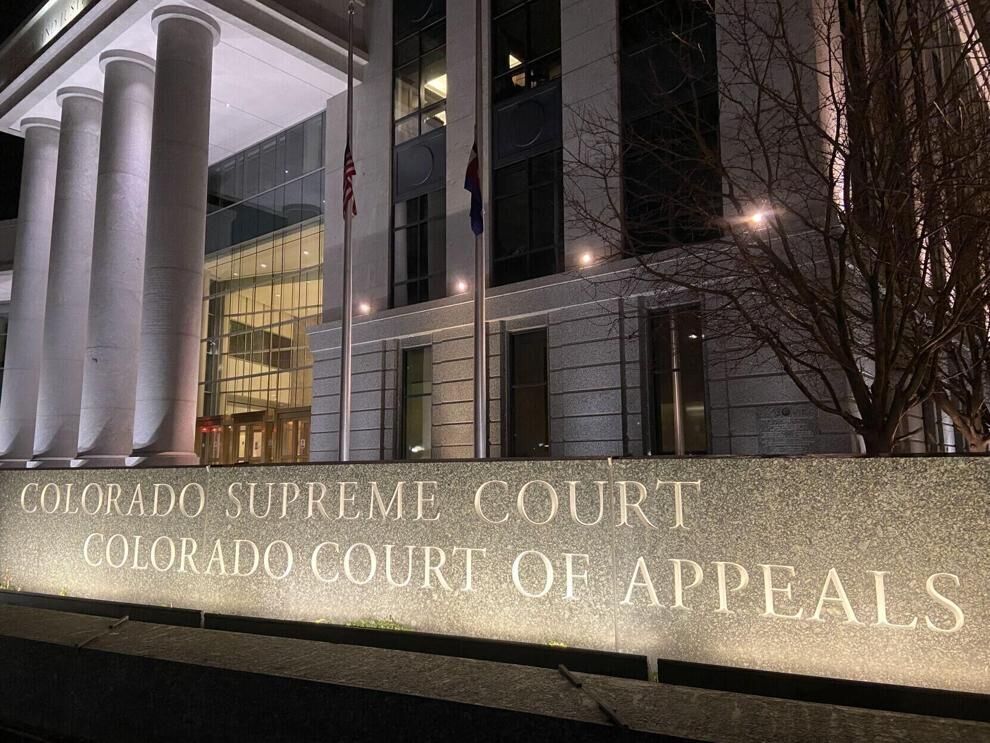
Colorado judges may use professional name in lieu of legal name, ethics panel says
Michael Karlik
michael.karlik@coloradopolitics.com
Updated 15 minutes ago
Colorado’s Judicial Ethics Advisory Board concluded on Tuesday that members of the bench may go by a professional name, rather than their legal name, so long as their intent is not to deceive. The board, which consists of judges, attorneys...
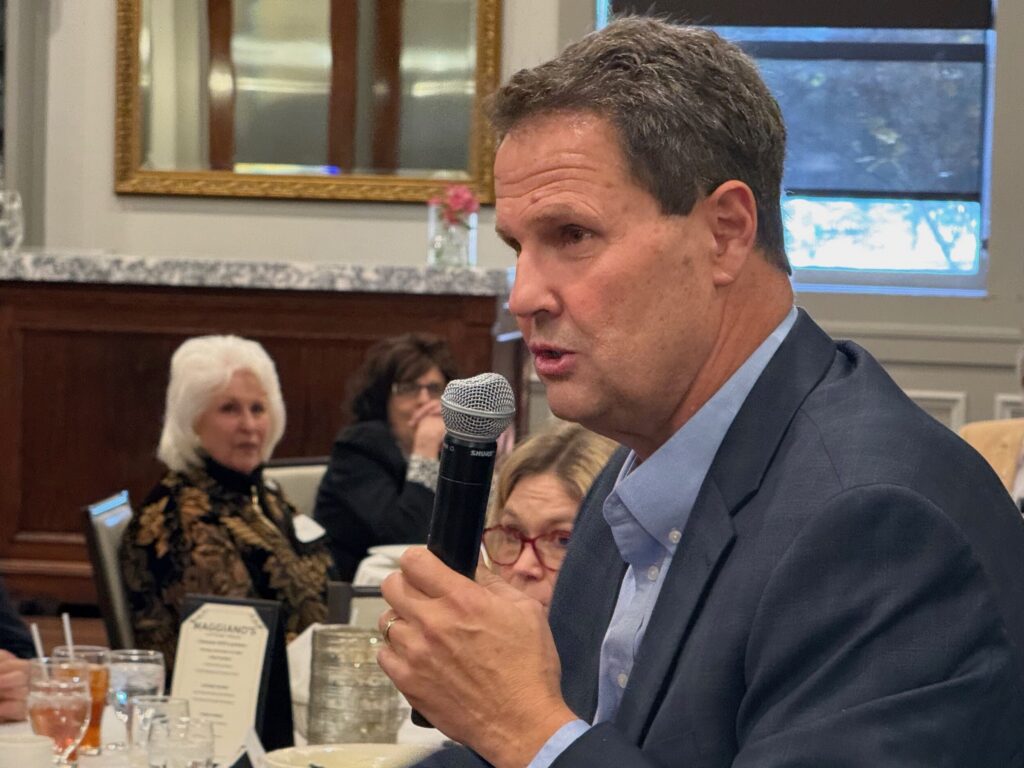
House adopts Republican U.S. Rep. Jeff Crank’s resolution condemning socialism, mostly along party lines
Ernest Luning
ernest.luning@coloradopolitics.com
Updated 1 hour ago
The U.S. House on Tuesday approved a resolution sponsored by U.S. Rep. Jeff Crank to condemn socialism in a largely party-line vote that the Colorado Republican characterized as a chance for lawmakers to “stand firm” against an ideology making inroads...

Capped or graduated income tax rate? Colorado voters to decide
Marianne Goodland
marianne.goodland@coloradopolitics.com
Updated 1 hour ago
The proposal to create income tax tiers — which would replace Colorado’s flat rate — has been certified for the November general election ballot, setting the stage for a major showdown between two competing forces seeking to define the parameters of...

Amazon buys 70 acres in Aurora
Bernadette Berdychowski
bernadette.berdychowski@denvergazette.com
Updated 1 day ago
Amazon purchased 70 acres of land in Aurora with plans to build a distribution center, according to city and county records. The e-commerce giant bought a parcel at 825 N. Lisbon St. from a company tied to Northpoint Development for...

A silver lining: Low water conditions at Green Mountain Reservoir open door for major repairs
Marianne Goodland
marianne.goodland@coloradopolitics.com
Updated 23 hours ago
One of the most striking signs of the low snowpack and drought that has plagued Colorado this year can be found by driving by Green Mountain Reservoir in Grand County. The reservoir, first filled in the 1940s, sits at its...

500 teens gather near, and in, Aurora King Soopers, prompting police response
Kyla Pearce
kyla.pearce@gazette.com
Updated 1 day ago
Hundreds of teenagers gathered at an Aurora King Soopers on Sunday, causing a public safety issue and prompting police response. Aurora Police Department officers responded to the King Soopers, at 655 Peoria St., just after 1:30 p.m. Sunday as about...
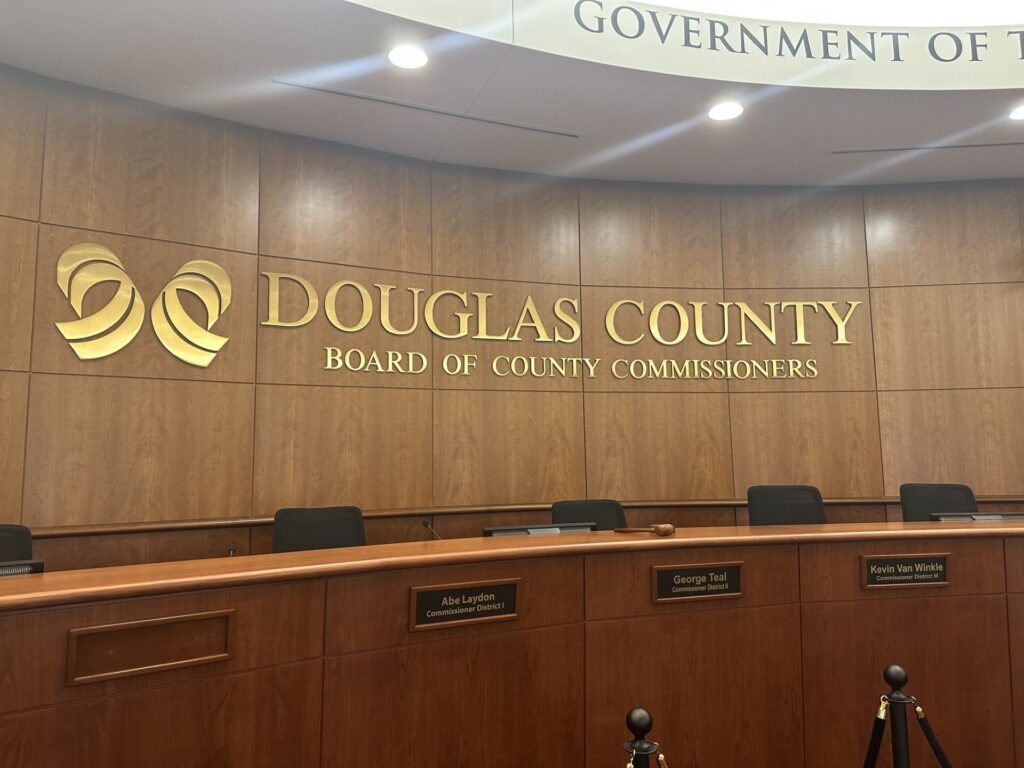
DougCo commissioners refer competing election measure on board expansion
Nicholas Fogleman
nicholas.fogleman@denvergazette.com
Updated 24 minutes ago
Douglas County commissioners formally waded into the debate over a voter-led ballot initiative Monday by unanimously referring a separate measure that would give voters an additional option if they choose to expand the board from three members to five. The...
PREV
PREVIOUS
Colorado budget plan seeks to keep $306 million by canceling TABOR refunds
Tucked deep within the hundreds of pages of the proposed $46.8 billion 2026–27 state budget is a line item showing $306.1 million in savings — achieved by canceling Taxpayer’s Bill of Rights refunds. Gov. Jared Polis has recommended withholding TABOR refunds in both 2026–27 and 2027–28. His budget proposal says the state accidentally overpaid $306.1 […]
Lakewood mayor calls for unity, community in State of the City speech
Lakewood held its first State of the City address since 2018 on Wednesday — timing Mayor Wendi Strom attributed to fate. “We got bumped a few times on dates,” Strom said to a room of nearly 100 residents and officials. “It could not have ended up being at a better time. There are no coincidences.” […]