

Colorado budget plan seeks to keep $306 million by canceling TABOR refunds
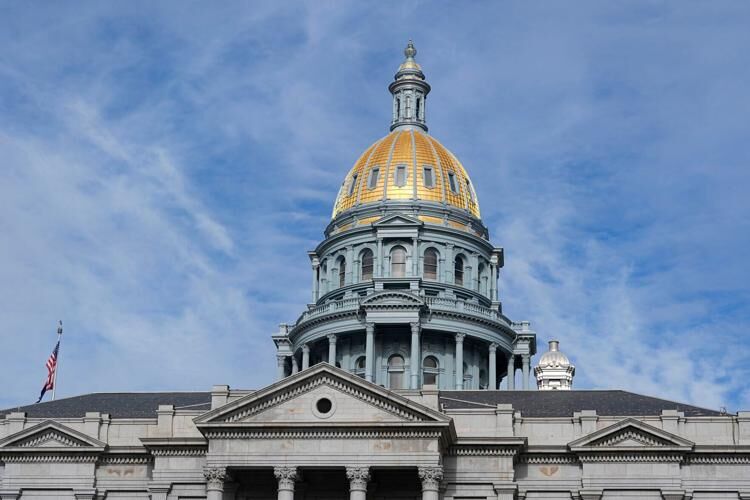
Tucked deep within the hundreds of pages of the proposed $46.8 billion 2026–27 state budget is a line item showing $306.1 million in savings — achieved by canceling Taxpayer’s Bill of Rights refunds.
Gov. Jared Polis has recommended withholding TABOR refunds in both 2026–27 and 2027–28. His budget proposal says the state accidentally overpaid $306.1 million in refunds during the 2025–26 fiscal year.
According to the governor’s office, the overpayment stemmed from federal budgetary changes that affected how the state calculated revenue for 2024–25. Those revised calculations led to higher-than-appropriate refunds being issued in 2025–26, according to the Polis administration.
The request argued that, if the federal budget’s impact on 2024–25 state revenues had been known at the time, the state would have fallen below the Referendum C cap that year — meaning no TABOR refunds would have been issued in the first place.
The recommendation drew pushback from Joint Budget Committee staff, who wrote in a Feb. 20 memo that keeping the $306.1 million — spread across the 2026–27 and 2027–28 budgets — would not be legal.
“JBC staff recommends the committee weigh the potential legal risks” of treating those funds like an over-refund against the potential benefits.
The TABOR certification, conducted annually by the state controller, did not account for the impact the federal budget would have on 2024-25 revenues, largely because the bill was signed into law on July 4, 2025, as the state’s fiscal year ended.
The JBC memo noted that state law has a way to correct over-refunds, directing the state controller to reduce refunds in a subsequent year by the amount of the over-refund.
But that doesn’t apply here, the memo stressed, because of the time gap between the end of the 2024-25 fiscal year and the actual signing of the federal budget.
The state could not have accrued the impact back to the 2024-25 fiscal year without violating accounting rules, the memo stated. Hence, there was no over-refund, as the term is used.
The JBC rejected the staff recommendation and decided to use half of the over-refund, $153 million in general funds, as part of the budget-balancing process for the 2026-27 fiscal year. The rest will be applied in the next budget year.
While the JBC intends to use the over-refund to help balance the budget, a bill to do so has not yet been introduced.
The JBC staff memo highlighted several key caveats, including uncertainty about whether the TABOR surplus in 2026–27 and 2027–28 will be large enough to cover those amounts.
Another factor is the senior and disabled veterans’ property tax refund, which is paid out of the TABOR surplus before anything else.
The homestead exemption is also being funded with general fund dollars in the 2026-27 budget because state revenues are not expected to exceed the TABOR cap that year.
The memo stated the 2026-27 TABOR refund would have to be much larger to avoid creating a general fund obligation for the homestead exemptions in the 2027-28 budget year.
The March 2025 revenue forecast from the governor’s economists at the Office of State Planning and Budgeting confirmed there would be no TABOR surplus in the 2025-26 year, paid in 2026, and the surplus in the following year could be as high as $711 million, more than enough to cover the homestead exemption and the $153 million over-refund the state would keep.
The forecast from the legislature’s economists, however, was far more pessimistic, estimating a $276 million general fund surplus for 2026-27, which is not enough to cover both the homestead exemption, estimated to be around $200 million, and the over-refund of $153 million.
The JBC, as it has done for the past four years, chose to go with the numbers, including a $1.1 billion general fund shortfall, from the March forecast.


CPW chair’s unilateral comment changes spark backlash from fellow commissioners
Marianne Goodland
marianne.goodland@coloradopolitics.com
Updated 1 hour ago
A decision to cap public comment, announced last week by Colorado Parks and Wildlife Commission Chair Jay Tutchton, set off a lively discussion at Wednesday’s meeting. In the end, Tutchton’s unilateral decision to cut public comment and to change who...
Colorado judges may use professional name in lieu of legal name, ethics panel says
Michael Karlik
michael.karlik@coloradopolitics.com
Updated 5 hours ago
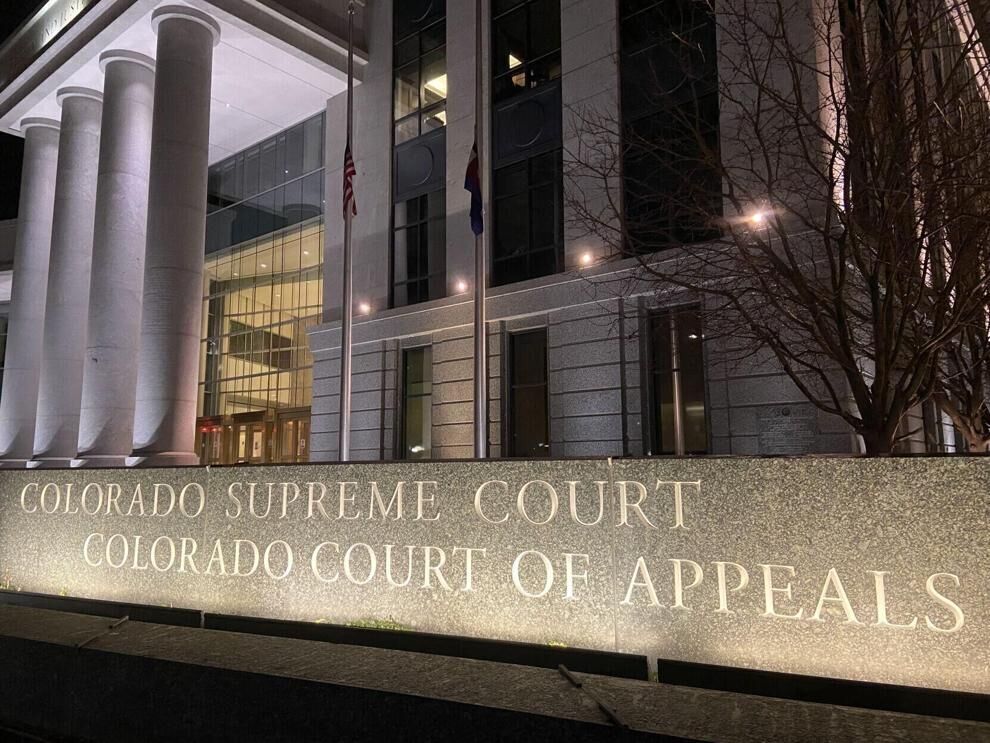
Colorado’s Judicial Ethics Advisory Board concluded on Tuesday that members of the bench may go by a professional name, rather than their legal name, so long as their intent is not to deceive. The Board, which consists of judges, attorneys...
House adopts Republican U.S. Rep. Jeff Crank’s resolution condemning socialism, mostly along party lines
Ernest Luning
ernest.luning@coloradopolitics.com
Updated 21 minutes ago
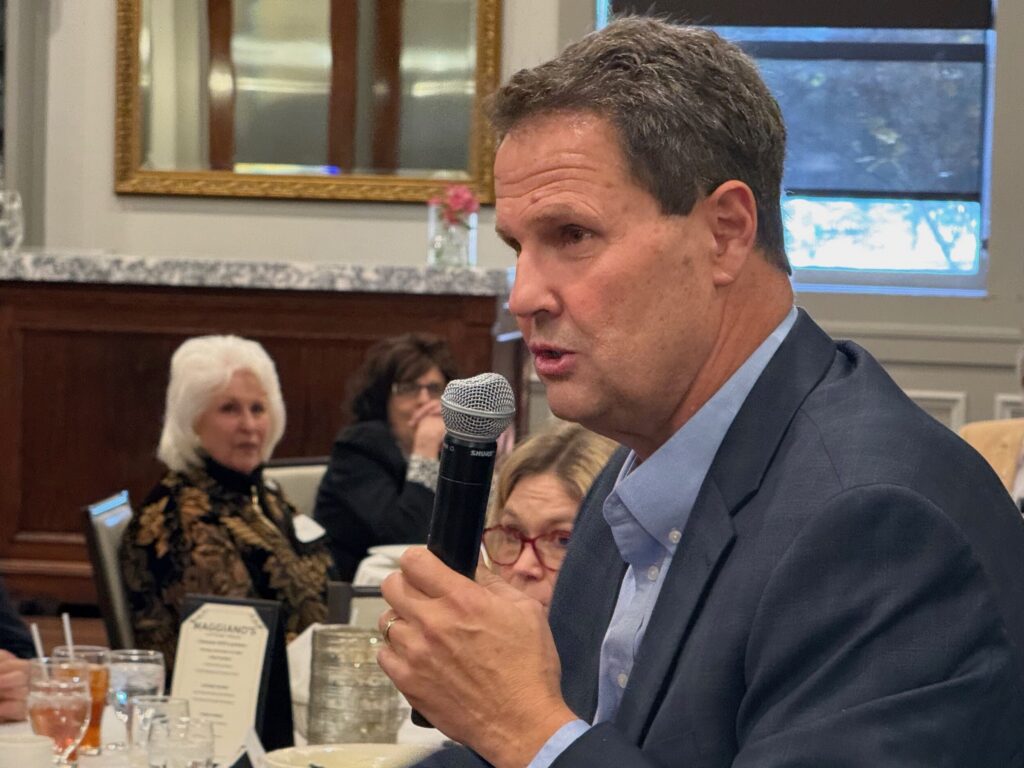
The U.S. House on Tuesday approved a resolution sponsored by U.S. Rep. Jeff Crank to condemn socialism in a largely party-line vote that the Colorado Republican characterized as a chance for lawmakers to “stand firm” against an ideology making inroads...
Capped or graduated income tax rate? Colorado voters to decide
Marianne Goodland
marianne.goodland@coloradopolitics.com
Updated 31 minutes ago
The proposal to create income tax tiers — which would replace Colorado’s flat rate — has been certified for the November general election ballot, setting the stage for a major showdown between two competing forces seeking to define the parameters of...

Amazon buys 70 acres in Aurora
Bernadette Berdychowski
bernadette.berdychowski@denvergazette.com
Updated 1 day ago
Amazon purchased 70 acres of land in Aurora with plans to build a distribution center, according to city and county records. The e-commerce giant bought a parcel at 825 N. Lisbon St. from a company tied to Northpoint Development for...
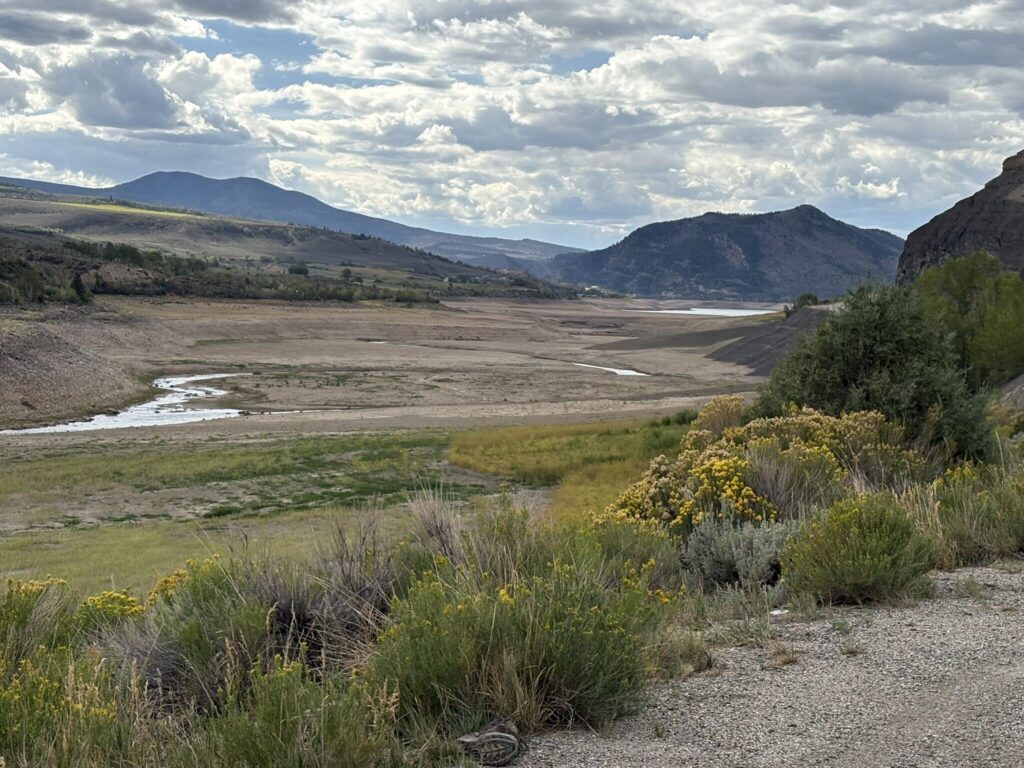
A silver lining: Low water conditions at Green Mountain Reservoir open door for major repairs
Marianne Goodland
marianne.goodland@coloradopolitics.com
Updated 23 hours ago
One of the most striking signs of the low snowpack and drought that has plagued Colorado this year can be found by driving by Green Mountain Reservoir in Grand County. The reservoir, first filled in the 1940s, sits at its...

500 teens gather near, and in, Aurora King Soopers, prompting police response
Kyla Pearce
kyla.pearce@gazette.com
Updated 24 hours ago
Hundreds of teenagers gathered at an Aurora King Soopers on Sunday, causing a public safety issue and prompting police response. Aurora Police Department officers responded to the King Soopers, at 655 Peoria St., just after 1:30 p.m. Sunday as about...
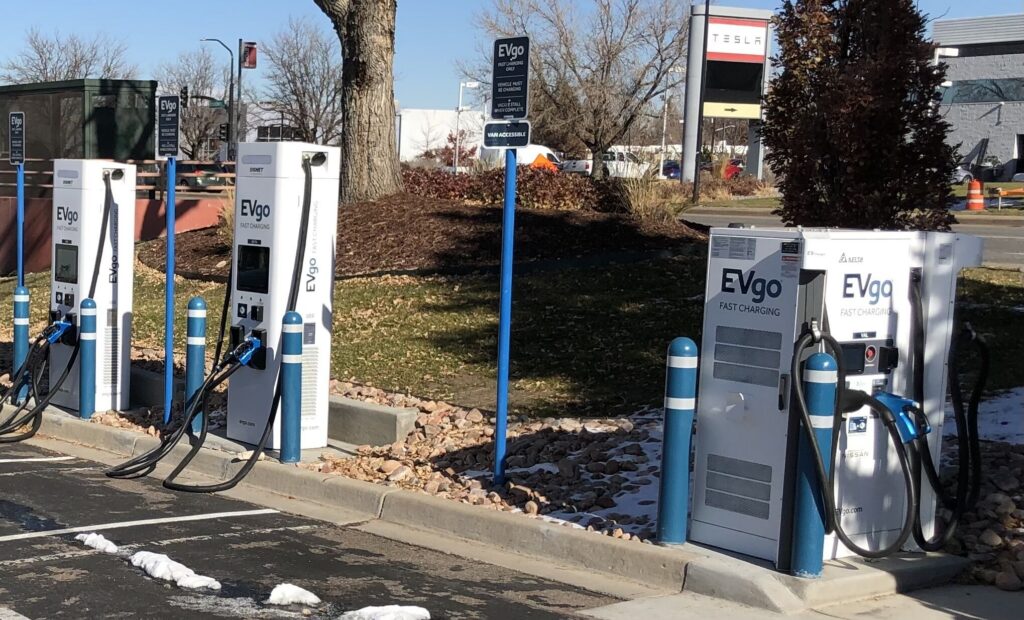
Colorado’s EV charging map nearly complete, state says
Scott Weiser
scott.weiser@gazette.com
Updated 1 day ago
Gov. Jared Polis and the Colorado Department of Transportation released a statement calling the state’s public fast-charging network nearly built out. The Aug. 27 news release reports there are now 486 DC fast-charging locations and 83% of the state highway...
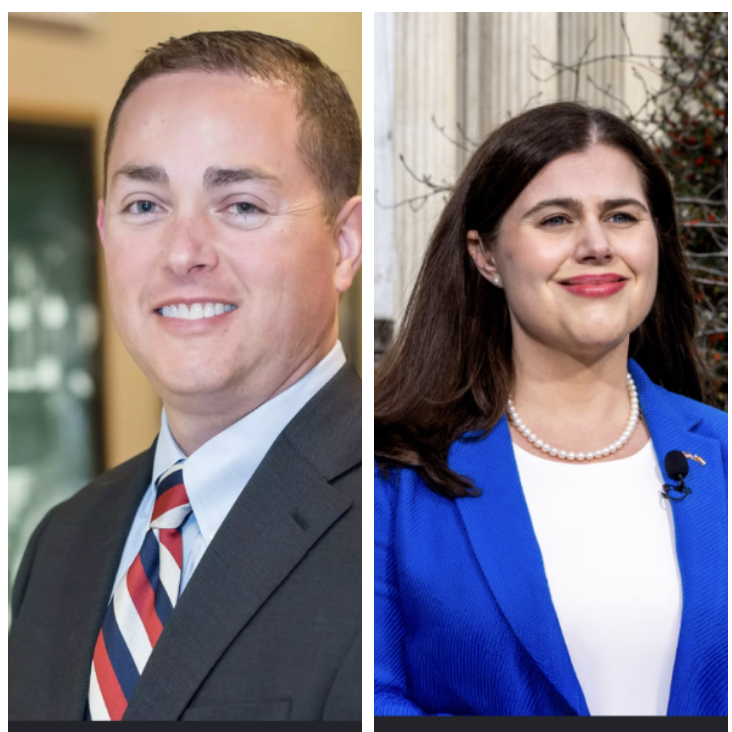
DA calls out election opponent over confidential voter breach
Savannah Eller
savannah-eller@coloradopolitics.com
Updated 1 day ago
Fourth Judicial District Attorney Michael Allen said his office was investigating after a software glitch temporarily exposed his own personal information along with the information of more than 130,000 confidential voters in Colorado. “This represents a glaring safety issue,” he...
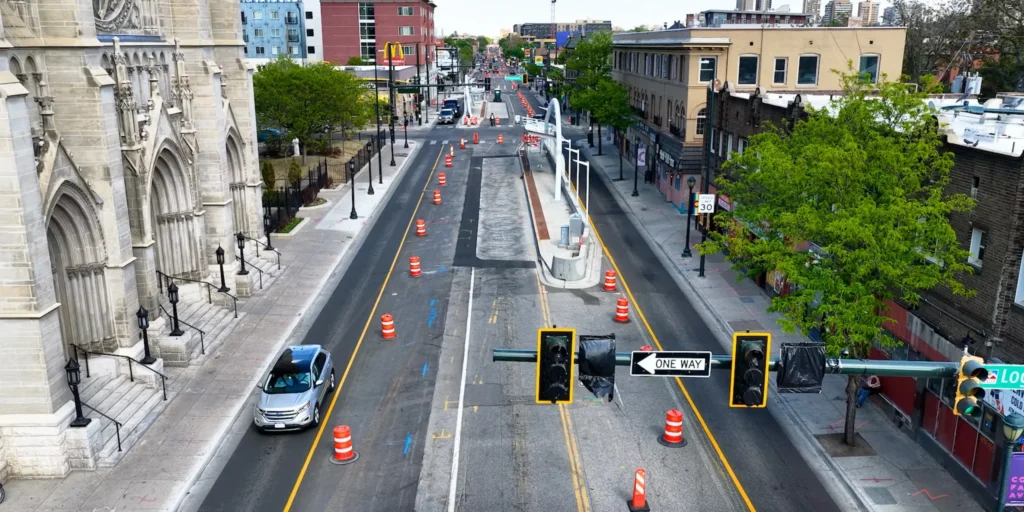
Denverites are wary of bus rapid transit and Waymo, voter survey says
Mark Samuelson Special to The Denver Gazette
mark.samuelson@denvergazette.com
Updated 1 day ago
As residents and commuters get their first look at how the Regional Transportation District’s Bus Rapid Transit project has narrowed East Colfax Avenue east of downtown, Denverites seem to be flashing a caution light about any further expansion of BRT...
PREV
PREVIOUS
RTD lays off two dozen managers in operations ‘realignment’
More than two dozen managers at the Regional Transportation District learned in March that their jobs would be eliminated, with their last day of work set for July 2. That’s according to documents provided to The Denver Gazette by an RTD employee who asked to remain anonymous because they are not authorized to speak to […]

Colorado Senate reworks key programs, gives preliminary nod to $46B budget
With the Senate’s traditional Budget Day barbecue setting a lighter tone, lawmakers worked through the $46.8 billion state budget Wednesday, navigating a long list of amendments but avoiding the partisan clashes that defined the House debate last week. The Senate first moved through 44 of the 64 “orbitals,” which are bills that adjust state law […]