

New rules for private judges in Colorado include discipline oversight, campaign contributions
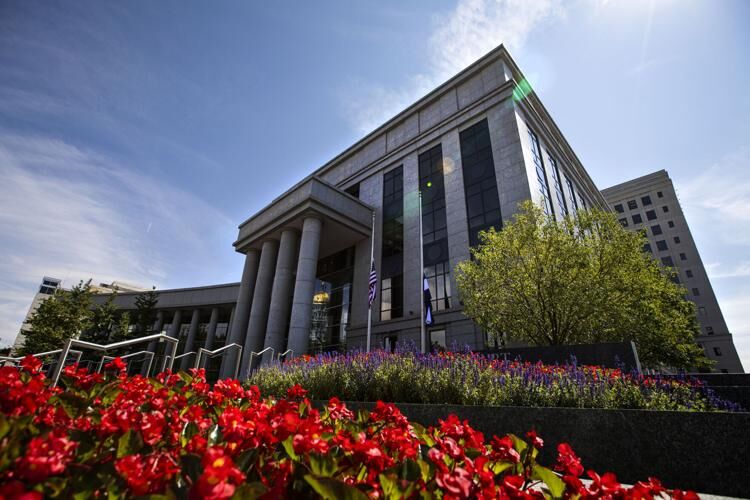
The Colorado Supreme Court recently determined the state’s private judges — retired jurists appointed to oversee civil cases that rarely get public scrutiny — can now make political contributions freely and without reserve, overruling a prohibition that had been in place for decades.
The move comes a year after a Denver Gazette investigation into the state’s lesser-known system of justice, in which appointed judges — as they are formally known — are exclusively used by Colorado’s wealthiest residents to do one thing and to do it privately: get divorced.
Additionally, the Colorado Commission on Judicial Discipline is proposing a rule that would put those judges under their jurisdiction, an omission that had been unnoticed until The Denver Gazette’s stories in March 2025.
The commission has jurisdiction over all sitting judges, retired or not — except the appointed ones.
The Denver Gazette also revealed how, for nearly two decades, Colorado has quietly maintained the two-tier process for civil cases: One that the public makes use of regularly, and the other a lesser-known, almost secret variety relied on by the rich, famous and well-to-do.

The cases that end up before a private judge are nearly always conducted off the grid, far from public eyes or scrutiny, ensuring a level of secrecy not afforded to those without the means to pay for it.
The range of litigants who have hired a private judge in Colorado ranges from the ultra-famous — including the founder and frontman of the heavy metal rock group Metallica — to the upper crust, such as the former U.S. ambassador to Austria, the super wealthy, such as the former co-CEO of Chipotle Mexican Grill, and the locally-famous, such as former Colorado Avalanche Mark Rycroft, who calls the team’s games on Altitude Sports.
“How they aren’t like any other judge I will never know,” former 10th Judicial District Chief Judge Dennis Maes said of the change. “A retired judge who handles one case here and there may be okay. But these judges are handling many cases at a time. They are no different.”
The Denver Gazette revealed how at least a half-dozen appointed judges made political campaign contributions — some of them dozens of times and totaling thousands of dollars. Such donations were prohibited in the Judicial Code of Conduct they agreed in writing to uphold.
The change appears to have been at the suggestion of the discipline commission, which saw little difference with the exemption appointed judges had for buying tickets to political fundraisers.
“The Commission had suggested this change to the Court after considering the public policy reasons behind this prohibition,” commission executive director Anne Mangiardi wrote in an email to the Denver Gazette.
The commission “reasoned that both campaign donations — which are publicly disclosed and available to the parties to the case (where the appointed judge presides) — and campaign events should be treated the same.”
In a letter to the Supreme Court, Mangiardi wrote that litigants who hire a private judge — whose appointment must come from the chief justice of the court — can seek any information about contributions themselves.
“The parties to these proceedings choose the appointed judge and may review public records of campaign donations before seeking that appointment,” Mangiardi wrote the court last month, according to a copy provided to the Denver Gazette.
In making the exemption, Judicial Department spokeswoman Suzanne Karrer said only that the court “agreed with the Commission’s recommendations and rationale.”
None of the dozens of private judges The Denver Gazette identified, except one, had filed a personal financial disclosure statement revealing any potential conflicts of interest in the years since they left the bench, even though all other types of jurists were required to do so.
Ordinarily, the discipline commission would have taken that matter under consideration — and a handful of people whose cases were being handled by a private judge said they filed a complaint — but the body determined it had no jurisdiction because their rules didn’t explicitly say so.
That will change under the proposed rule, which is scheduled for a public hearing on April 23. Then the commission will vote whether to adopt the rule.
The Denver Gazette in 2023 revealed that one in six sitting judges in Colorado had not filed the required disclosures, some of them for several years, a misdemeanor.
The commission initiated discipline proceedings against 48 active judges for not filing their disclosures, issued private discipline against 11 of them, censured one, dismissed 15 cases “with concern,” and dismissed the remainder outright.
The commission determined that “no evidence exists that any judge was dishonest or improperly secretive in disclosing their financial interests.”
The state’s private judge system is virtually a cottage industry, in which the same names of retired judges are regularly appointed and work for the same company. Their average hourly cost — about $450 — is roughly five times what they were paid when they were on the bench and pricier than some of the costliest divorce lawyers.
One litigant described the system as little more than “a money grab,” as expenses ran into tens of thousands of dollars more than initially estimated. It was enough to have liquidated nearly all her savings and left her sleeping in bunk beds with her children in a small apartment just years after having enjoyed an exclusive home in an affluent neighborhood.
Her case is ongoing.
The Denver Gazette found that none of the cases contained a financial accounting of what the private judge was ultimately paid, despite a requirement and oath to do so. That still hasn’t changed and the Supreme Court hasn’t stepped forward to enforce that requirement.
Also unchanged is the lack of any prohibition on a retired judge with a history of discipline from serving as an appointed judge, despite such a bar from serving as a senior judge. It has happened at least once in Colorado.


Two more wolves killed by Colorado wildlife staff
Marianne Goodland
marianne.goodland@coloradopolitics.com
Updated 11 hours ago
Two yearling wolves from the Copper Creek and Three Creeks packs in Pitkin and Rio Blanco counties, respectively, were killed by Colorado Parks and Wildlife staff on Monday. That brings to 19 the number of wolves that have died under...

U.S. Rep. Lauren Boebert calls Trump’s 90-day wolf-delisting review ‘real progress’
Marianne Goodland
marianne.goodland@coloradopolitics.com
Updated 10 hours ago
President Donald Trump has directed Interior Secretary Doug Burgum to launch a 90-day review on whether gray wolves and Mexican wolves should be removed from Endangered Species Act protections. The order drew mixed reactions for Colorado’s wolf-reintroduction effort, with ranchers...
Disgraced ex-CBI analyst Missy Woods sentenced to prison in DNA scandal
Jenny Deam
jenny.deam@gazette.com
Updated 12 hours ago
A Jefferson County district court judge on Tuesday sentenced a disgraced former Colorado Bureau of Investigation DNA analyst to a decade in prison for altering and deleting data in scores of criminal cases over several years. Jefferson County District Judge...

Jason Crow endorses Democrats up and down Colorado’s ballot, chips in $100K for campaign efforts
Ernest Luning
ernest.luning@coloradopolitics.com
Updated 12 hours ago
Democratic U.S. Rep. Jason Crow on Tuesday formally endorsed more than 60 Democrats running up and down Colorado’s ballot and said he’s putting $100,000 into statewide and county campaigns and organizing programs to drive turnout in the fall election. Crow,...

With its water source dry, a southeast Colorado town’s clock is ticking
Savannah Eller
savannah-eller@coloradopolitics.com
Updated 19 hours ago
The Cucharas is not a mighty river, but the people of La Veta knew they had a problem brewing when it ran dry at the beginning of June. “We’re getting by,” said La Veta Mayor Doug Brgoch. “It’s not great.”...

Fort Carson soldiers run Indonesian exercise, refine communications tech
Mary Shinn
mary-shinn@coloradopolitics.com
Updated 19 hours ago
Fort Carson soldiers are overseeing an expansive military exercise in Indonesia while honing new communications technology for the Army. More than 4,700 personnel are participating in the annual training, known as Super Garuda Shield 2026, taking place across several regions...

Parenting from prison: Inmates hope to be present in their children’s lives, while physically absent
Marianne Goodland
marianne.goodland@coloradopolitics.com
Updated 17 hours ago
The room was decorated with balloons, the tables sparking bright with colors as the smell of pizza and cake wafted through the air. As did music. This was, after all, a father-daughter dance. Except this was not a typical father-daughter...

Colorado House ethics committee issues ‘stern letter’ to Democrat over caucus funds mismanagement
Marianne Goodland
marianne.goodland@coloradopolitics.com
Updated 12 hours ago
The Colorado House ethics committee on Friday voted unanimously to issue a “stern letter” to Rep. Mandy Lindsay, D-Aurora, regarding her mismanagement of House Democratic caucus funds. The committee further voted to request that Lindsay resign as Democratic Caucus co-chair...

Secretary of Energy, congressmen push for reliable power over renewable outside CSU coal power plant
Brennen Kauffman
brennen-kauffman@coloradopolitics.com
Updated 19 hours ago
U.S. Secretary of Energy Chris Wright said Friday that the Trump administration would continue to fight against state efforts to close coal power plants, including the Ray Nixon Power Plant outside of Colorado Springs. Wright was joined by Colorado Republican...

State seeks $50K penalty against GOP candidate Victor Marx over alleged campaign finance violations
Deborah Grigsby
deborah.smith@denvergazette.com
Updated 12 hours ago
Republican gubernatorial candidate Victor Marx is looking at more than $50,000 in fines in what the Elections Division of the Office of the Secretary of State calls “unprecedented” campaign finance violations. The state has not imposed that fine yet, and...
PREV
PREVIOUS

Colorado bill reshaping RTD board advances
A proposal to reshape the Regional Transportation District’s leadership easily cleared a committee vote Wednesday, advancing the bill sponsors say is needed to revive a transit system still struggling to regain riders and public trust. Critics have countered that, while they agree that RTD faces deep-seated problems, the legislation won’t fix them. Senate Bill 150 […]

Colorado lawmakers grapple with spending cuts amid $1 billion-plus deficit
The battle over Colorado’s budget for next year — which stalled in the House over a procedural maneuver — entered a more difficult phase on Thursday, when legislators grappled with hundreds of millions of dollars in proposed reductions to balance the budget. The state constitution requires a balanced budget, although that rarely stays balanced for […]