

Colorado lawmakers grapple with spending cuts amid $1 billion-plus deficit
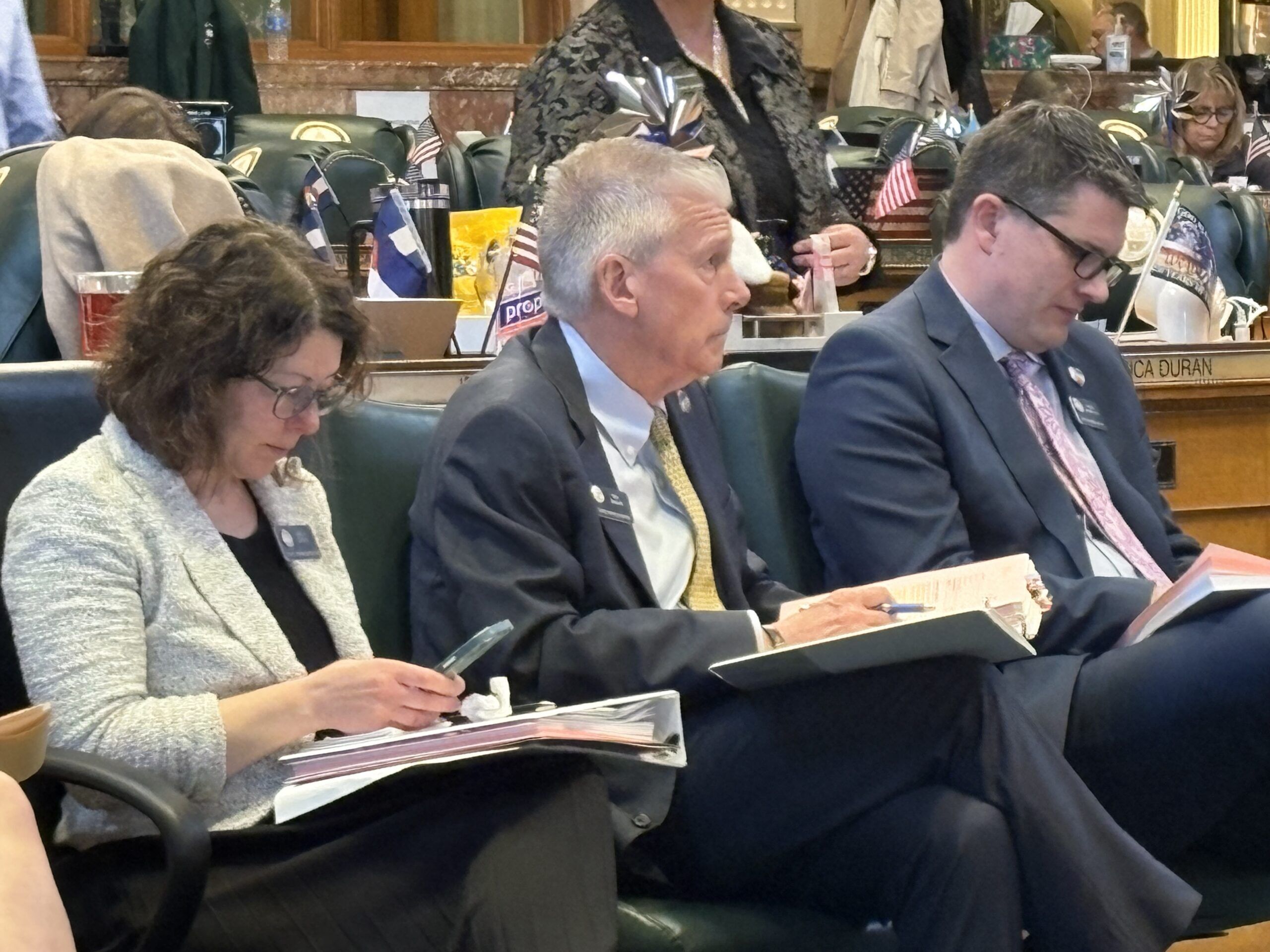
The battle over Colorado’s budget for next year — which stalled in the House over a procedural maneuver — entered a more difficult phase on Thursday, when legislators grappled with hundreds of millions of dollars in proposed reductions to balance the budget.
The state constitution requires a balanced budget, although that rarely stays balanced for long, and this year, lawmakers must plug a deficit of more than $1 billion.
The budget that started in the House Monday has already been tweaked, producing a deficit of $181,000 when legislators defeated one of the 65 “orbitals” — bills that change state law in order to balance the budget. The defeated orbital bill dealt with reimbursement for equine therapy, one of the services under scrutiny following the sharp rise in Medicaid costs.
In addition to the state’s Medicaid woes, Democrats have blamed Congress for Colorado’s fiscal woes, arguing the federal budget changed the revenue equation and caused the state budget to go unbalanced. Republicans, meanwhile, said the state’s fiscal problems resulted from Democrats’ decisions to expand services or spend on new programs, including refusing to reduce spending even when they knew the state is facing major deficits ahead.
The Joint Budget Committee, which spent the last five months working on the budget, faced a $1.2 billion to $1.5 billion general fund hole to fill for the 2026-27 budget, depending on whose revenue forecast the panel chose to use.
This year, the panel picked the forecast from the governor’s Office of State Planning and Budgeting, the more optimistic of the two, at a $1.2 billion shortfall.
On Thursday, legislators pushed off House Bill 1410, the main budget bill, until the orbitals were completed. Lawmakers closed out nine orbitals on Wednesday.
Among the bills approved Thursday was House Bill 1357, which repeals the final year of the Teacher Recruitment, Education and Preparation program. The program, which currently serves 193 students, was created in state law in 2021.
Under the program, high schools are paid at $10,721 per student per year, more than it would cost for a student to obtain the same education at a community college, according to JBC Chair Rep. Emily Sirota, D-Denver.
Under the bill, schools would be paid $7,104 instead of $10,000 for 2026-27, and the program would then come to an end.
Those already enrolled in the program will be allowed to complete it, but no new students can be enrolled, a savings of $1.6 million in 2026-27, which would come out of the state education fund.
“This program is nice to have but it isn’t core services,” Sirota said.
Rep. Lori Goldstein, D-Thornton, who is also president of the Adams County 12 school board, said she found money in the electric bus fund to cover the tuition and sought for the program to be paused, not ended. Twenty-nine school districts are participating in it, she noted.
Goldstein did not offer an amendment and said changes could take place in the Senate.

Another measure that invited a long discussion was House Bill 1360, which takes $130 million out of the Proposition 123 housing initiative and moves it to the general fund.
That drew angst from Republicans, who pointed out voters approved Proposition 123 to support affordable housing — not use it for the state budget.
The JBC sponsors said the ballot measure included language that allows for that purpose when the state doesn’t have a TABOR surplus, which is the situation for the 2025-26 fiscal year.
The $130 million would come from the portion of the funding that goes to the governor’s Office of Economic Development and International Trade, which funnels that money to the Colorado Housing and Finance Authority.
The funds would be transferred on June 30, 2026, which allows it to stay under the 2025-26 fiscal year, but it would be used for the 2026-27 budget, in which there is likely to be a TABOR surplus.
That didn’t go over well with Republicans, either.
Meanwhile, House Bill 1363 reduces the state’s general fund reserve from 15% to 13%. The reserve has already been tapped to cover the 2025-26 shortfall, and reducing it to 13% would save another $95 million in general funds.
‘Incredibly difficult and horrible decision’
The House also debated House Bill 1411, which caps enrollment for children in the Cover All Coloradans program, which provides health coverage to pregnant women and children illegally staying in the U.S. That program has cost the state four times more than the initial estimate.
Rep. Rick Taggart, R-Grand Junction, had told his caucus two days earlier it was the most difficult bill he’s ever sponsored, at times his voice breaking with emotion.
While Rep. Kyle Brown, D-Louisville, described the bill to the House Thursday, Sirota cried. She was comforted by House Majority Leader Monica Duran, D-Wheat Ridge.
When the 2022 bill creating the program was signed into law, its costs were estimated at $26 million.
The actual costs topped more than $100 million in 2025-26.
Taggart told his caucus Tuesday that the 2026-27 estimate to pay for the expenses stood at $130 million.
The program mostly draws general fund dollars, since children staying illegally in the U.S. are ineligible for Medicaid. The program receives some federal funds through Medicaid to cover pregnant women.
Under the budget proposal, the program would be limited to 25,000 children in 2026-27 — its current enrollment is around 21,000 — and with a dollar limit of $96 million.
It reduces dental benefits from $1,000 per year per person to $750 and also eliminates long-term care services.
Those changes would save $16.3 million in 2026-27 and nearly double that the following fiscal year.
House Democrats advocated for lifting the cap and restoring the dental benefits.
An amendment from Rep. Lorena Garcia, D-Adams County, would cut per diem rates for local jails and private prisons from $77.16 per inmate per day to $71.85.
Rep. Max Brooks, R-Castle Rock, said the issue strikes to the core of “who we are — loving humans” and said he would not overly politicize it.
It comes down to simple math, he said.
Lawmakers have, in the last several days, looked for efficiencies and they do not know just what the program will look like in two years, he said. Removing the cap in the middle of a very difficult budget time feels like lawmakers are being tone deaf about the math, he argued.
“There are alarm bells that should be blaring in your head that we are dangerously close to the edge of the cliff, teetering financially,” he said, noting the choices before legislators, such as whether to take money from unclaimed property trust fund or the general fund reserve.
“These are indicators that we are at a financial crisis,” he said.
The amendment — and the bill as modified — passed.
Taggart advocated for the amendment to be removed in a later procedural vote. That motion failed.
After the House finished its work on the orbitals at just after 4:30 p.m., the House proceeded to read the main budget bill aloud in full. Republicans had pushed for the procedural maneuver, which is meant to delay the budget’s advance. The reading could take as long as 15 hours.


Denver police reopen 13 sex assault cases after retesting Missy Woods’ CBI work
Jenny Deam
jenny.deam@gazette.com
Updated 1 day ago
Thirteen previously closed Denver sexual assault cases have been reopened after the city’s crime lab retested DNA evidence once analyzed by former Colorado Bureau of Investigation forensic analyst Yvonne Woods. A police spokesperson told The Denver Gazette the once-closed cases...

Ballot measure aims to shift Colorado sporting goods tax revenue to land, water and wildfire projects
Marissa Ventrelli
marissa.ventrelli@coloradopolitics.com
Updated 2 hours ago
Colorado voters this November will decide whether to direct a share of sales tax revenue from sporting goods — including bicycles and skiing equipment — toward land and water conservation, wildfire prevention and expanding outdoor recreation. Supporters say the measure...

‘The smell of jet fuel lingered for years’: Colorado veterans recall 9/11
Deborah Grigsby
deborah.smith@denvergazette.com
Updated 2 days ago
For many years after the Sept. 11 attacks in Washington, D.C., Mark Schoenrock said he could still smell the burning jet fuel from American Airlines Flight 77. “It was just such an overpowering sensation,” Schoenrock, a former Lone Tree resident...

Denver sues Trump to block armed ICE agents from polling sites
Deborah Grigsby
deborah.smith@denvergazette.com
Updated 2 days ago
The city of Denver, along with several groups, sued the Trump administration Thursday, seeking to block U.S. Immigration and Customs Enforcement officers who are armed from polling sites during the upcoming midterm elections. In fact, there are no official orders...

Colorado Parks & Wildlife staff kill third wolf in 3 days
Marianne Goodland
marianne.goodland@coloradopolitics.com
Updated 2 hours ago
Colorado’s wildlife division on Thursday said that staff and contracted agents killed an uncollared female yearling wolf a pack after confirming she had been killing livestock in Grand County. Three wolves from three separate packs have been killed in the...

Evergreen High School marks one year since shooting on campus
Kyla Pearce
kyla.pearce@gazette.com
Updated 2 days ago
Thursday marks one year since the Evergreen High School shooting that injured two students and left the shooter dead. On Sept. 10, 2025, Desmond Holly, 16, entered the school armed with a Smith & Wesson .38 revolver and opened fire...
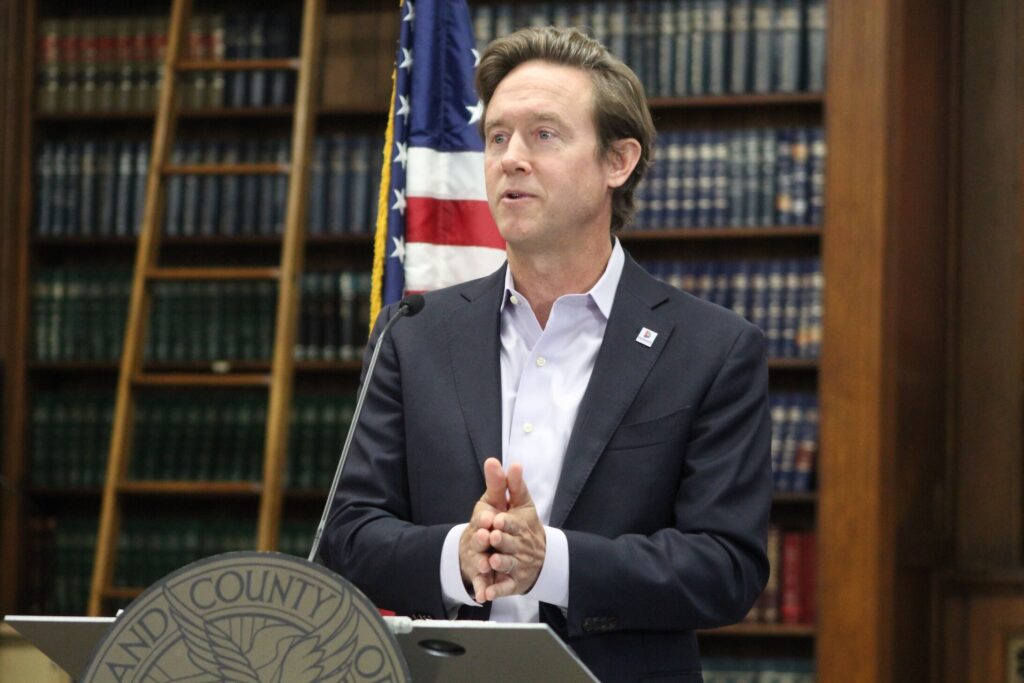
Denver mayor unveils 2027 budget after weeks of warning of tough choices
Nico Brambila
nico.brambila@denvergazette.com
Updated 2 days ago
Denver Mayor Mike Johnston unveiled his proposed 2027 budget Thursday after weeks of warning that the city is entering a tighter financial era despite stronger-than-expected revenue collections this year. The projected general fund revenue for 2027 is $1.684 billion, the...
Lawsuit challenges Douglas County commissioners’ ballot actions
Nicholas Fogleman
nicholas.fogleman@denvergazette.com
Updated 2 days ago
A new lawsuit against Douglas County commissioners seeks to invalidate the board’s intervention in efforts to expand the commission from three members to five and restore the original ballot language approved by more than 20,000 petition signers. The suit marks...

United abruptly cancels flyover marking 9/11 anniversary after ‘concerns in the community’
Mark Samuelson Special to The Denver Gazette
mark.samuelson@denvergazette.com
Updated 1 day ago
United Airlines had planned a dramatic flyover in Denver on Friday to mark the 25th anniversary of the 9/11 attacks, when it lost two of the four U.S. passenger jetliners hijacked by terrorists. But the airline abruptly cancelled plans late...

Denver Water proposes 6% rate increase for 2027
Nico Brambila
nico.brambila@denvergazette.com
Updated 2 days ago
Water could be more expensive for Denver residents next year. Denver Water commissioners received a staff proposal for rate increases Wednesday expected to generate about 6% more revenue in 2027. What individual customers pay would depend on where they live...
PREV
PREVIOUS

New rules for private judges in Colorado include discipline oversight, campaign contributions
The Colorado Supreme Court recently determined the state’s private judges — retired jurists appointed to oversee civil cases that rarely get public scrutiny — can now make political contributions freely and without reserve, overruling a prohibition that had been in place for decades. The move comes a year after a Denver Gazette investigation into the […]

H.R. 1 underscores unfairness in Colorado tax code | OPINION
By Caroline Nutter On July 4, 2025, Colorado’s budget was overturned with the stroke of a pen. When President Donald Trump signed into law H.R. 1, or the One Big Beautiful Bill Act, he didn’t only cut federal funding by $3.4 trillion, he also cut Colorado’s budget by more than $1 billion. H.R. 1 expanded […]