

Judge blocks federal retaliation against Boulder climate agency
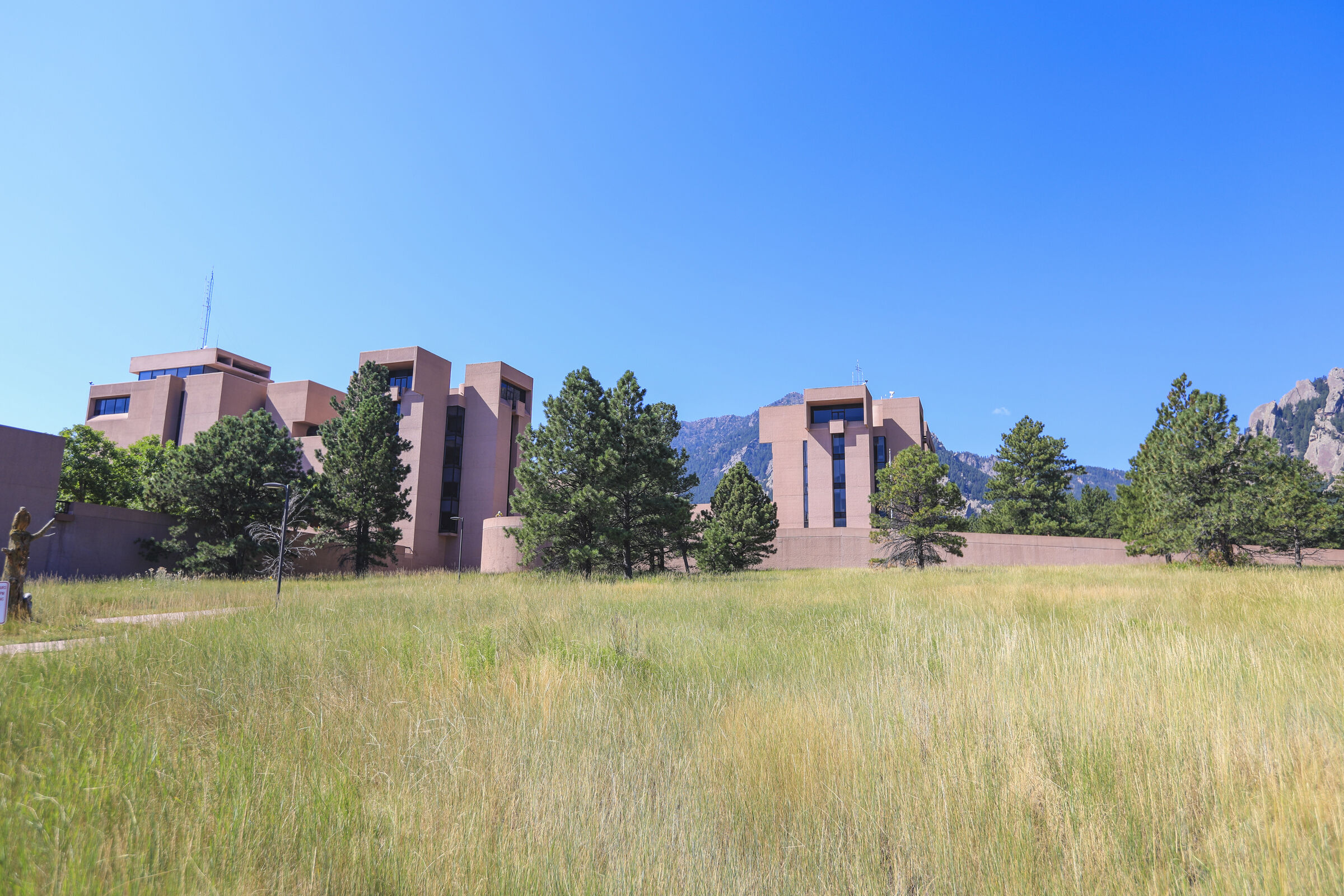
A federal judge in Colorado has blocked the Trump administration’s effort to transfer control of a climate research supercomputer, ruling the move likely violated federal law and may have been motivated by political retaliation.
U.S. Senior District Judge R. Brooke Jackson on Monday granted a preliminary injunction halting plans by the federal government to shift stewardship of the NCAR-Wyoming Supercomputing Center away from the National Center for Atmospheric Research (NCAR), a federally funded institution based in Boulder.
The NWSC, which NCAR began operating in 2012, supports researchers at more than 575 universities and institutions, providing high-performance computing for weather forecasting, climate modeling and Earth studies, according to court documents.
The lawsuit was filed in March by the University Corporation for Atmospheric Research, which manages NCAR, after the National Science Foundation announced plans to restructure parts of the nation’s weather research infrastructure.
UCAR argued the decision was part of a broader, unconstitutional retaliatory campaign against Colorado by the Trump administration.
“The Constitution prohibits the Agencies from punishing a State for the lawful exercise of sovereign powers. The Executive may not leverage government funds to undermine constitutionally protected interests and produce a result which it could not command directly,” plaintiffs wrote.
The suit cites Trump’s personal attacks against Gov. Jared Polis over Colorado’s mail-in ballot policy and the imprisonment of former Mesa County Clerk Tina Peters, who was convicted of felonies related to false claims about the 2020 election.
In August, Trump posted calls to free Peters, saying “if she is not released, I am going to take harsh measures.” In December, he called Polis “weak and pathetic.”
The following day, the federal government revoked $109 million in transportation funding exclusively for Colorado, while issuing hundreds of similar grants across the country, the lawsuit alleges.
That same day, the director of the Office of Management and Budget called NCAR “one of the largest sources of climate alarmism in the country” and said NSF would be “breaking up” NCAR, according to court documents.
“UCAR and NCAR are collateral damage,” the suit states.
The complaint also points to a White House statement suggesting Colorado residents would be better served if the governor “actually wanted to work with President Trump,” as well as other federal actions including denial of two requests for disaster aid, burdensome changes to food assistance requirements and Trump’s veto of a bipartisan water infrastructure project.
“Despite the bill’s broad support, when asked why he had vetoed it, President Trump said, “They’re wasting a lot of money and people are leaving (Colorado). They’re leaving the state in droves. Bad governor,” the lawsuit stated, noting later that day, the president said he hoped that Gov. Polis and Peters’ prosecutors would “rot in Hell.”
Jackson agreed with UCAR’s argument, citing “NSF’s failure to provide any explanation for its decision — let alone a reasonable one.”
“To the extent that the transfer decision was motivated, even in part, by political or personal animus, as opposed to an analysis of the relevant facts and data, it would demonstrate that the agency acted arbitrarily and capriciously,” he wrote.
Jackson, an Obama appointee, wrote that NSF’s “flagrant disregard” for its own procedures was “not in accordance with law.”
“One of the basic procedural requirements of administrative rulemaking is that an agency must give adequate reasons for its decisions,” Jackson wrote, noting one official’s explanation amounted to “because NSF has said so.”
In granting the injunction, the court ruled that the public had a compelling interest in the continued operation as the suit made its way through federal court and that NCAR would likely suffer irreparable harm.
“In addition to the ongoing ‘brain drain,’ UCAR faces irreparable harm in the form of financial injuries that are ‘difficult, if not impossible’ to quantify,” Jackson wrote.
In a statement, UCAR Interim President Eric Barron said the decision protects critical scientific infrastructure related to agriculture, water resources, wildfire risk, military operations and aviation safety.
“Today’s decision ensures that the NWSC will be able to continue its vital work on behalf of the United States,” Barron said. “We are pleased that Judge Jackson recognized how damaging the proposed transfer of the NWSC to another operator would be for the nation’s scientific community.”
The injunction preserves NCAR’s control of the supercomputing system while litigation proceeds, and the case will now move forward in federal court.


Parenting from prison: Inmates hope to be present in their children’s lives, while physically absent
Marianne Goodland
marianne.goodland@coloradopolitics.com
Updated 5 hours ago
The room was decorated with balloons, the tables sparking bright with colors as the smell of pizza and cake wafted through the air. As did music. This was, after all, a father-daughter dance. Except this was not a typical father-daughter...

Colorado House ethics committee issues ‘stern letter’ to Democrat over caucus funds mismanagement
Marianne Goodland
marianne.goodland@coloradopolitics.com
Updated 1 day ago
The Colorado House ethics committee on Friday voted unanimously to issue a “stern letter” to Rep. Mandy Lindsay, D-Aurora, regarding her mismanagement of House Democratic caucus funds. The committee further voted to request that Lindsay resign as Democratic Caucus co-chair...

State seeks $50K penalty against GOP candidate Victor Marx over alleged campaign finance violations
Deborah Grigsby
deborah.smith@denvergazette.com
Updated 3 days ago
Republican gubernatorial candidate Victor Marx is looking at more than $50,000 in fines in what the Elections Division of the Office of the Secretary of State calls “unprecedented” campaign finance violations. The state has not imposed that fine yet, and...

Judge puts Colorado Libertarians’ secretary of state candidate on ballot after party’s 1st nominee drops out
Ernest Luning
ernest.luning@coloradopolitics.com
Updated 2 days ago
A Denver judge ruled Friday that the Colorado Libertarian Party’s pick for secretary of state will appear on the November ballot after the party’s original nominee withdrew one day after the deadline to replace minor party candidates. Following a hearing...

Regulators knew this marijuana product was harming people. It stayed on shelves for more than a year
Christopher Osher
chris.osher@gazette.com
Updated 5 hours ago
Colorado’s Marijuana Enforcement Division can take months or even years to issue formal safety warnings about marijuana products even when it receives reports that the products are harming people’s health, The Denver Gazette and ProPublica found. This article was produced...
Douglas County commissioners reject challenge to ballot language for 3 to 5 petition
Nicholas Fogleman
nicholas.fogleman@denvergazette.com
Updated 3 days ago
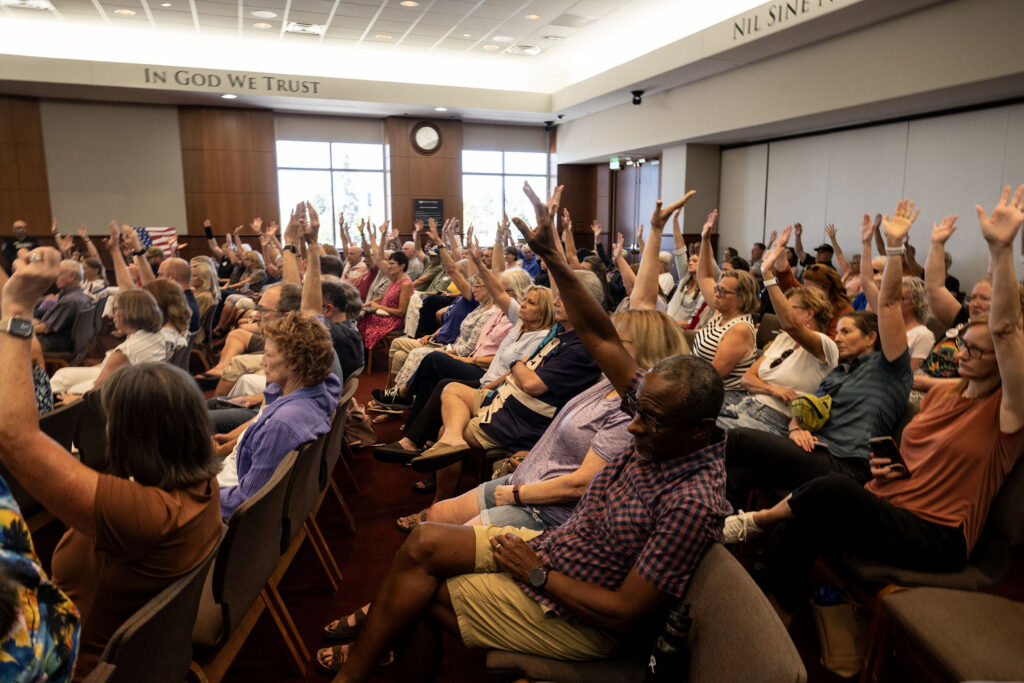
Douglas County commissioners denied a challenge Thursday to the language of a ballot initiative that would expand the board from three to five members. Following a contentious hearing that saw multiple audience members escorted out by police for disruptions, commissioners...

Favorability rating of Mayor Mike Johnston, Denver City Council slides
Nico Brambila
nico.brambila@denvergazette.com
Updated 3 days ago
Denver Mayor Mike Johnston’s favorability rating fell 7 percentage points over the past year, while the City Council’s favorability rating dropped 3 percentage points, a new poll has found. A little more than a year after taking office, Johnston had...

Judge orders home confinement for Barry Morphew
Dennis Huspeni
dennis.huspeni@gazette.com
Updated 4 days ago
An Alamosa County district judge has ordered home confinement for Barry Morphew, who is accused of murdering his wife. Barry Morphew, 59, faces a first-degree murder charge in the death of his wife, Suzanne Morphew, who disappeared Mother’s Day weekend...

Ikon Pass company Alterra to move into former Denver Post building, create downtown ‘outdoor hub’
Bernadette Berdychowski
bernadette.berdychowski@denvergazette.com
Updated 4 days ago
What was once the home of two of Colorado’s longest-running daily newspapers could soon become a central location for the state’s ski resort and outdoor companies, city and state leaders said Thursday. Alterra Mountain Co. is moving its headquarters to...
Fentanyl sentencing, tax overhauls, transgender issues anchor Colorado’s 14 ballot measures
Marissa Ventrelli
marissa.ventrelli@coloradopolitics.com
Updated 4 hours ago
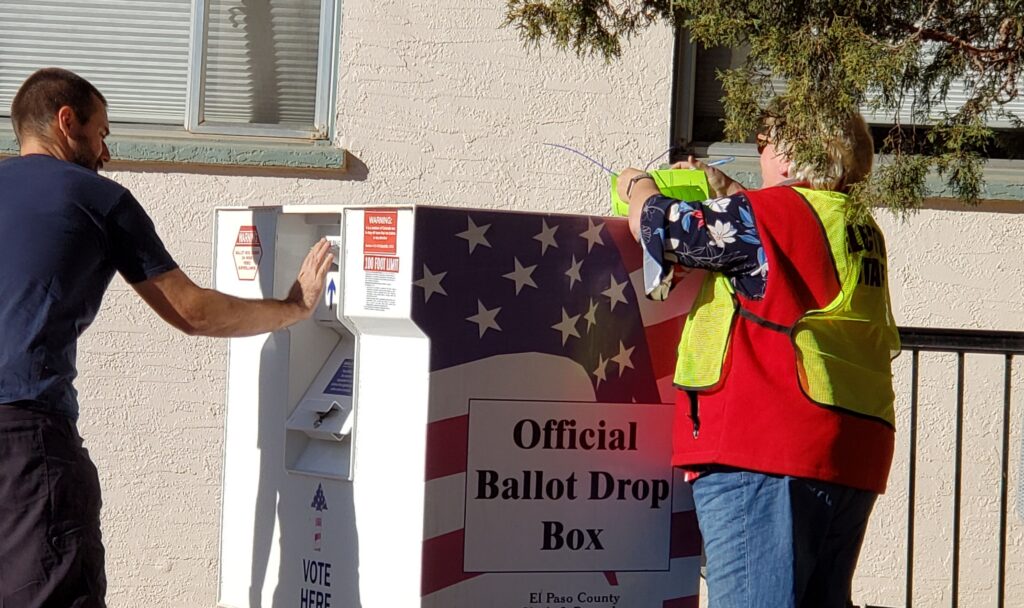
Fourteen statewide ballot measures await Colorado voters this November, offering a mix of criminal justice matters, tax overhauls and constitutional tweaks. Colorado’s 14 statewide ballot measures match the 2024 election for the most number in recent state history. The all-time...
PREV
PREVIOUS

Littleton school board denies STEM Highlands Ranch relocation proposal
The Littleton Public Schools Board unanimously denied an application from STEM School Highlands Ranch to relocate its high school to a site on Mineral Avenue within Littleton. The board voted 5–0 on May 28 against the proposal from STEM, a Douglas County-based K–12 charter school. Board members said their decision was driven by financial concerns, […]
Colorado’s 3 Republican gubernatorial candidates face off in heated primary debate
The three Colorado Republicans running for governor defended their qualifications, described their visions for the state and traded jabs over each other’s character at an often contentious televised debate that routinely veered into unusual territory Tuesday night in Denver. The 60-minute debate at the University of Denver, sponsored by 9News, The Denver Gazette and Colorado […]